Hooked Up and Wiped Out? Fatigue After Sex Might Mean More Than Pleasure
Quick Answer: Feeling tired after sex can be normal due to hormone shifts and physical exertion. “I Thought It Was a Sex Hangover, Turns Out It Was Mono” Julián, 26, brushed off the fatigue after a weekend hookup.

Quick Answer: Feeling tired after sex can be normal due to hormone shifts and physical exertion. But if fatigue comes with symptoms like swollen glands, sore throat, fever, or body aches, especially after unprotected sex, it could point to an infection like HIV, mononucleosis, or chlamydia.
“I Thought It Was a Sex Hangover, Turns Out It Was Mono”
Julián, 26, brushed off the fatigue after a weekend hookup. “I just assumed it was the come-down,” he said. “We stayed up all night, drank a little, had sex a few times. I figured I was just tired.” But four days later, Julián still had no energy. He also noticed a sore throat and mild fever. “At first I thought it was a cold, or maybe COVID. STD never even crossed my mind.” A rapid test at a walk-in clinic confirmed he had mononucleosis, sometimes known as the “kissing disease,” which can be passed through oral sex or even deep kissing.
“I felt dumb for not thinking of it. I just assumed feeling sick after sex wasn’t a thing,” he said.
Mono isn't the only infection that can masquerade as post-sex exhaustion. Some early-stage STDs, especially HIV, herpes, and chlamydia, can cause flu-like symptoms, fatigue, and body aches before any obvious signs show up.

Normal or Not? How to Tell What Your Body Is Saying
It’s important to start with this truth: feeling a little tired after sex is often completely normal. Sex uses up glucose and oxygen, stimulates intense hormone shifts (especially oxytocin, prolactin, and dopamine), and for many people, comes with a literal physical workout. But there’s a big difference between “tired and satisfied” and “wiped out and concerned.”
If your fatigue lasts longer than a few hours, is accompanied by other symptoms, or feels like a sudden crash out of proportion to the activity, you may need to investigate further. Here’s how to start decoding the signals.
| Post-Sex Fatigue Type | What It Likely Means | What to Do |
|---|---|---|
| Short-term tiredness (1–2 hours) | Hormone shift, exertion, emotional release | Rest, hydrate, no concern if it resolves |
| Persistent fatigue (12+ hours) | Possible viral exposure, immune response | Monitor for fever, aches; consider STD testing |
| Fatigue + flu-like symptoms (fever, chills, aches) | Possible acute HIV, mono, or herpes | Test within appropriate window period |
| Fatigue + swollen lymph nodes or sore throat | Could be HIV, syphilis, or chlamydia | Test and retest as needed; consult provider |
Table 1. Fatigue patterns after sex and what they may signal. Always consider timing, exposure, and symptom clusters when evaluating risk.
STDs That Can Cause Fatigue (Even Before Other Symptoms Appear)
Not all sexually transmitted infections come with visible signs right away. In fact, fatigue is often one of the first, and most ignored, early symptoms. Many people mistake it for a hangover, jet lag, or emotional crash. But your immune system is smart. When something foreign enters your body, it starts working overtime, even if you don’t see anything on the outside.
Here are some of the most common STDs that can lead to fatigue early on, sometimes within days of exposure:
| STD | Typical Onset of Fatigue | Other Early Clues |
|---|---|---|
| HIV (Acute Stage) | 2–4 weeks after exposure | Fever, sore throat, rash, swollen glands |
| Herpes (First Outbreak) | 2–12 days after exposure | Mild fever, body aches, tingling, painful sores |
| Chlamydia | 1–3 weeks after exposure | Fatigue, pelvic pain, burning during urination (often silent) |
| Syphilis (Primary or Secondary) | 10–90 days after exposure | Sore (chancre), followed by fatigue, rash, fever |
| Mononucleosis (non-STD, but often confused) | 4–7 weeks after exposure | Extreme tiredness, swollen tonsils, fever, body aches |
Table 2. STDs and fatigue: Onset timing and red flag signs. Keep in mind that many of these infections are symptomless in early stages, especially in women and queer individuals assigned female at birth.
What Early HIV Fatigue Feels Like (And Why It's Missed)
The fatigue that comes with acute HIV isn’t just “I need a nap” tired. It’s bone-deep. Readers often describe it as the kind of exhaustion that makes climbing stairs feel impossible, even when they’ve slept. But because HIV fatigue can hit within 2–4 weeks of exposure and feels flu-like, many people brush it off, especially after a hookup where condoms were used or where symptoms are delayed.
According to the CDC, early HIV symptoms can mimic the flu: fever, chills, night sweats, sore throat, swollen lymph nodes, and yes, profound fatigue. This stage is called acute retroviral syndrome (ARS), and it’s one of the most contagious periods, even though the person might not know they’re infected.
That’s why testing matters, even if you don’t see sores, discharge, or rashes. If you feel strange, different, or unusually drained after a sexual encounter, your body might be telling you something.
Is It Hormones, or Something More?
Hormonal drops after orgasm or sex are real. Oxytocin and dopamine spike during intimacy, and prolactin floods the body afterward, especially in people with penises. That mix can leave you feeling sleepy, satisfied, or downright depleted. But hormone-based tiredness usually fades within a couple hours, not days.
So how do you tell the difference between a “normal” hormone crash and fatigue that needs attention? Start by checking how long it lasts and what comes with it. Here’s a guide:
| Hormonal Crash | Infectious Fatigue |
|---|---|
| Starts shortly after sex, fades in 1–2 hours | May begin hours to days after sex, lingers for 24+ hours |
| No fever, aches, or swollen nodes | May include fever, sore throat, body aches, night sweats |
| Improves with rest, hydration, food | Persists even after rest; may worsen |
Figure 2. Distinguishing hormone fatigue from STD-related tiredness.
Your Body Isn’t Confused, It’s Communicating
One of the most overlooked truths in sexual health is that your body often knows before your mind does. If you feel off after sex, especially if you’re experiencing repeated fatigue, low-grade fever, or chills, listen to that voice. Testing doesn’t mean you’ve done something wrong. It means you’re taking your health seriously.
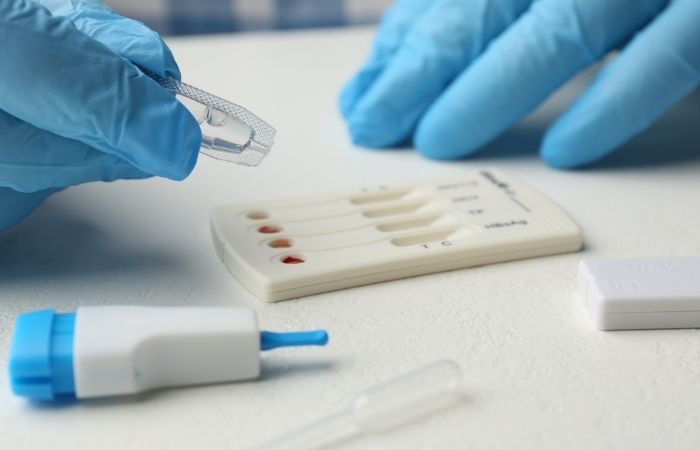
At-home STD tests like the Combo STD Home Test Kit can help you check for common infections like chlamydia, gonorrhea, syphilis, and HIV, without going to a clinic. If your head keeps spinning, peace of mind is one test away.
It’s Not Just Physical: When Emotional Exhaustion Mimics Illness
Sex is physical, yes, but it’s also chemical, emotional, and sometimes complicated as hell. That means fatigue after sex doesn’t always stem from infection. Emotional crashes are real, especially after casual or emotionally charged hookups. Hormones like oxytocin and prolactin can create a surge of intimacy followed by a sharp drop, leaving you teary, foggy, or straight-up drained.
This is even more common for people navigating sexual trauma, religious shame, or complex relationship dynamics. And if you’re queer, trans, or nonbinary? Multiply the emotional load. Post-sex exhaustion in these cases isn’t “in your head”, it’s biochemical. But, and this is important, it can coexist with physical symptoms, too. Don’t let stigma talk you out of testing just because you think it’s “just emotional.”
“After sex with my ex, I’d always feel totally hollow,” said one anonymous Reddit user. “I thought it was just because we weren’t good together. Turns out I had chlamydia and didn’t know it for months.”
Why Fatigue After Sex Often Gets Ignored in AFAB and Queer Bodies
Fatigue as a symptom is already easy to dismiss. When it shows up in people assigned female at birth (AFAB), queer folks, or trans individuals, it’s often mislabeled as “anxiety,” “PMS,” or “just being sensitive.” But here’s the problem: many STDs present differently, or less obviously, in these populations. That means fatigue might be the only early clue something’s wrong.
Common examples include:
- Herpes outbreaks that never produce visible sores, but trigger fatigue and fever in early stages
- Chlamydia infections that are asymptomatic genitally but affect the throat or rectum after oral or anal sex
- HIV symptoms showing up as subtle exhaustion or sleep disruption rather than flu symptoms
Because so many of these signs are internal, people often don’t get tested until much later, or not at all. That’s why we push testing not as a punishment, but as a form of body literacy. You deserve to know what’s happening in your body, even if no one else takes your symptoms seriously.
“I Waited Too Long, Now I’m Playing Catch-Up”
Rashida, 29, assumed the fatigue she felt after a weekend fling was emotional. “I’m demisexual, so casual hookups take a lot out of me,” she said. “I thought I was just tired from the social intensity.” But by day six, she still had no energy. She chalked it up to burnout, until her partner texted saying they tested positive for gonorrhea.
“I didn’t even feel sick, really. Just heavy and worn down. But once I got tested and saw that positive, it all clicked.” Rashida now encourages friends to test after any new encounter, not out of fear, but out of respect for their own body cues.
“If I had listened to my body instead of assuming I was overreacting, I could’ve started treatment sooner,” she said.
Don’t Guess, Test: When and How to Take Action
If you’re more than just a little tired, and especially if you’re also feeling off emotionally, running a low-grade fever, or noticing any swelling in your throat or groin, it’s worth testing. The Combo STD Home Test Kit checks for the most common infections discreetly and quickly. You don’t have to leave your house, and results are ready in minutes.
Whether it’s HIV, syphilis, gonorrhea, or something else, catching it early means faster treatment, less transmission risk, and a whole lot more peace of mind.
Return to STD Test Kits to explore discreet testing options and privacy-first tools like our at-home test kits.
FAQs
- 1. Can sex really make you feel sick, or is that just in my head?
- It's real. Sex messes with your hormones, heart rate, hydration, emotions, you name it. So yeah, it can leave you feeling lightheaded, drained, even flu-y. But if that "ugh" sticks around for more than a day or comes with a sore throat, fever, or aches, it might not just be a sex hangover. It could be your body reacting to a new infection, like HIV, mono, or herpes. Trust your gut, but also back it up with a test.
- 2. Why am I wiped out after a hookup even if I felt fine during?
- It happens. You might’ve felt great in the moment, endorphins, adrenaline, all that hot stuff, but then your body hits the brakes hard. If you suddenly feel exhausted hours later or the next morning, that’s your immune system maybe clocking in. Sex can stir up more than just feelings. If you had a new partner or skipped protection, that fatigue could be your early warning sign.
- 3. Could it just be my hormones crashing?
- Absolutely. After orgasm, your body floods with prolactin (sleepy hormone), dopamine dips, and if you’re prone to emotional swings, boom, instant slump. That’s totally normal. What’s not normal? If it lingers into the next day, feels flu-like, or comes with weird body signals like swollen lymph nodes or a sudden sore throat. That’s when it's time to ask if it's more than hormones.
- 4. I feel like I caught a cold after sex. Is that even a thing?
- Yes, and you wouldn’t be the first to search “flu after hookup” at 2 AM. Some infections mimic the common cold early on. Acute HIV is famous for this: fatigue, fever, chills, and sore throat. So is mono. And guess what? You don’t have to have penetrative sex to catch either one. Deep kissing, oral, skin contact, it all counts. If the timeline lines up, test just to be safe.
- 5. Can you have chlamydia and only feel…tired?
- Unfortunately, yes. Chlamydia is called a “silent” infection for a reason. No burning, no discharge, just a vague pelvic heaviness or fatigue you chalk up to stress. Especially in women and AFAB folks, it can fly under the radar. If your body’s whispering and you’re not sure why, don’t ignore it.
- 6. Do queer people experience symptoms differently?
- Not biologically, but definitely socially. Queer folks often get misdiagnosed or dismissed. Add in non-traditional sex acts, and you’ve got infections showing up in the throat or rectum instead of genitals, and docs miss it. So if you're feeling off, especially post-hookup, and you're not getting clear answers? Test anyway. You know your body better than anyone.
- 7. When should I actually test if I feel this way?
- If you're feeling wiped out and it’s been more than a few days since the hookup, you're in the window. For most rapid tests, 10 to 14 days post-exposure is ideal for chlamydia, gonorrhea, and syphilis. For HIV, aim for 2 to 4 weeks. If you're not sure when you were exposed, or you had multiple partners, get a combo test now, and retest in a few weeks if needed.
- 8. What if it’s just anxiety making me feel this way?
- Listen, anxiety is powerful. It can mess with your sleep, digestion, even mimic illness. But here’s the thing: the only way to know is to test. Otherwise, you're stuck spiraling in “what if” land. If it’s anxiety, testing gives you peace. If it’s something more, you catch it early. Either way, you win.
- 9. I’m scared to find out. What if it’s bad?
- Totally valid fear. But here’s a reframe: Knowing is power. Most STDs are treatable, and catching them early makes everything easier. Avoiding the test doesn’t make it go away; it just delays relief. Think of testing as an act of respect, for your body, your partners, your peace of mind. You’re not being dramatic. You’re being responsible.
- 10. Do I really need to test if I don’t have any “real” symptoms?
- Fatigue is a real symptom. So is “just feeling weird.” Your body doesn’t always scream when something’s wrong, it nudges. Don’t wait for a full-blown outbreak or scary discharge to take action. You deserve answers now, not later.
You Deserve Answers, Not Assumptions
Feeling tired after sex doesn’t mean something’s wrong, but it also doesn’t mean you should ignore your gut. Your body has ways of speaking, and sometimes it whispers before it screams. Whether it’s hormones, heartbreak, or an early-stage infection, paying attention is a form of self-care.
Don’t wait and wonder, get the clarity you deserve. This at-home combo test kit checks for the most common STDs discreetly and quickly.
How We Sourced This Article: We combined current guidance from leading medical organizations with peer-reviewed research and lived-experience reporting to make this guide practical, compassionate, and accurate. In total, around fifteen references informed the writing; below, we’ve highlighted some of the most relevant and reader-friendly sources.