Is AIDS Still a Death Sentence? What HIV Treatment Really Does
Quick Answer: AIDS is no longer a death sentence. With modern HIV treatment (ART), most people live long, normal lives and can reduce the virus to undetectable levels that prevent transmission. Those stories stuck.

Quick Answer: AIDS is no longer a death sentence. With modern HIV treatment (ART), most people live long, normal lives and can reduce the virus to undetectable levels that prevent transmission.
This Fear Didn’t Come From Now. It Came From Then
To understand why this question still hits so hard, you have to go back to the early days of the epidemic. In the 1980s and early 90s, HIV was often diagnosed late, treatments were limited, and progression to AIDS was common. People didn’t just fear HIV , they watched it devastate entire communities.
Those stories stuck. Even if you weren’t alive then, the cultural memory carried forward. Movies, health classes, and news coverage all reinforced one message: HIV equals death. That messaging hasn’t fully caught up with modern medicine.
But here’s the shift most people miss: today, HIV is understood as a manageable chronic condition, not a terminal illness. The difference comes down to treatment , specifically, something called antiretroviral therapy, or ART.
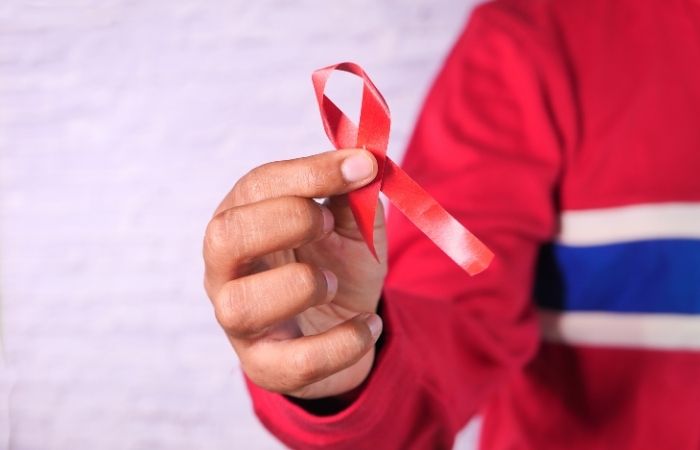
What HIV Actually Does in the Body (And Why Treatment Matters)
HIV is not a virus that kills. What it does is attack your immune system, specifically the cells called CD4 cells. These cells are what fight off infections. What HIV does is slowly reduce the number of those cells, making your body more prone to infections it can fight off easily.
This is where AIDS comes from. AIDS is not a new virus. What it is, is the end result of HIV. AIDS is what HIV turns into when it attacks your immune system. That is, when it is left untreated. Which it now cannot be. Not only cannot be, but modern medicine stops it from becoming AIDS.
| Scenario | What Happens Over Time |
|---|---|
| No treatment | HIV gradually weakens immune system, potentially leading to AIDS within 8–10 years |
| With ART treatment | Virus is controlled, immune system stays strong, progression to AIDS is prevented |
So when people ask, “Is AIDS still a death sentence?” what they’re really asking is whether untreated HIV still leads to serious outcomes. And the honest answer is: it can , but that’s no longer the typical path.
What Modern HIV Treatment (ART) Actually Does
Antiretroviral therapy sounds technical, but the idea is simple: it stops the virus from copying itself. HIV needs to replicate to spread inside your body. ART blocks that process at multiple stages, which keeps the virus under control.
Think of it like this. Instead of letting HIV multiply freely, treatment locks it down so it can’t take over. Over time, the amount of virus in your blood , called your viral load , drops dramatically.
For many people, this leads to something called being “undetectable.” That means the virus is still in the body, but at such low levels that standard tests can’t measure it. And this is where things really change , not just for health, but for life overall.
| Before Treatment | After Consistent ART |
|---|---|
| High viral load | Viral load drops to very low or undetectable levels |
| Immune system weakening | Immune system stabilizes or recovers |
| Risk of AIDS progression | Progression effectively prevented |
| Higher transmission risk | Transmission risk becomes effectively zero when undetectable |
One person described it this way: “The scariest part was the diagnosis. The treatment part? That became routine faster than I expected.”
That shift , from fear to routine , is what defines HIV care today.
From Fatal to Manageable: What Life Looks Like Now
This is the part that surprises people the most. With consistent treatment, many individuals with HIV now have life expectancies similar to those without the virus. That’s not an exaggeration , it’s backed by decades of data.
Daily life doesn’t revolve around illness the way people assume. For most, it’s a daily pill or small treatment routine, regular checkups, and then… life continues. Work, relationships, travel, sex , all still part of the picture.
Someone newly diagnosed often says the same thing: “I thought everything was over.” And then, a few months later: “It’s actually just something I manage.”
The biggest difference isn’t just physical , it’s psychological. Once people understand what treatment actually does, the fear starts to shrink. Not instantly, but steadily.
Undetectable = Untransmittable: The Part Most People Don’t Know
This is where the conversation about HIV shifts from fear to something much more grounded in reality. You’ll often hear the phrase “undetectable,” and it’s not just a technical term , it completely changes what living with HIV looks like.
When someone takes ART consistently, the amount of virus in their blood can drop so low that standard lab tests can’t detect it. That’s what “undetectable” means. And after decades of research, one of the most important discoveries in HIV science emerged: if the virus is undetectable, it is not sexually transmitted.
This concept is known as U=U , Undetectable equals Untransmittable. It’s been confirmed in large, real-world studies involving thousands of couples. One person living with HIV, one without, and over time, zero transmissions when the positive partner maintained an undetectable viral load.
For someone sitting there thinking, “Does this mean I could still have a normal relationship?” , the answer is yes. And not in a theoretical way. In a very real, medically backed way.
One patient put it bluntly: “The diagnosis felt like a wall. Learning about undetectable made that wall disappear.”
What Happens After an HIV Diagnosis (Step by Step)
Let’s slow this down, because this is the moment most people fear the most. You see a positive result , whether at a clinic or using an at-home test , and your brain immediately jumps ten years ahead. But in reality, the next steps are structured, predictable, and manageable.
First comes confirmation. If the test was done at home, a follow-up lab test is usually recommended to confirm the result. This isn’t because the first test is unreliable , it’s just standard medical practice to double-check before starting treatment.
Then comes something surprisingly simple: starting ART. In many cases today, treatment begins immediately or within days. There’s no waiting for things to get worse. The goal is to control the virus as early as possible.
And this is where the emotional shift often begins. Someone might go from panic on day one to something more grounded within weeks. As one person described it: “The first night I didn’t sleep. Two weeks later, I realized this was something I could actually handle.”
If you’re in that uncertain phase , not knowing your status yet , this is where testing matters most. You can explore discreet options through STD Test Kits, including simple at-home solutions that give you clarity without the waiting room anxiety.
For those wanting a broader check, a combo STD home test kit can screen for multiple infections at once, which is often the smartest move after a risky exposure.
Timing Matters More Than People Think (When to Test for HIV)
Here’s something that trips people up all the time: testing too early can give you a false sense of reassurance. You might feel symptoms, take a test the next day, get a negative result, and think you’re in the clear , when in reality, your body hasn’t had time to produce detectable levels yet.
This period is called the window period. It’s the gap between exposure and when a test can reliably detect HIV. And it varies depending on the type of test.
Imagine someone named Alex who had a condom break on a Friday night. By Monday, anxiety kicks in, and they test immediately. The result is negative , but it doesn’t mean much yet. Two weeks later, that same test becomes far more reliable.
| Test Type | Earliest Detection Window |
|---|---|
| RNA (NAT) test | 10–14 days after exposure |
| Antigen/antibody blood test | 18–45 days |
| Rapid finger-prick or oral test | 23–90 days |
The takeaway isn’t “don’t test early.” It’s “understand what your result means.” Early testing can give you a starting point. Follow-up testing gives you certainty.
If your brain keeps looping through worst-case scenarios, testing at the right time is what breaks that cycle. Not guessing. Not Googling. Just knowing.
Do People Still Die From AIDS Today?
This is where we need to be real, not just reassuring. AIDS-related deaths still happen , but not for the reasons most people think.
In places where treatment is accessible and started early, deaths from AIDS have dropped dramatically. The majority of people diagnosed and treated today do not progress to AIDS at all. That’s the key shift.
So when deaths do occur, they’re often linked to specific situations: late diagnosis, lack of access to treatment, or interruptions in care. It’s not because modern medicine “doesn’t work.” It’s because the system didn’t reach someone in time.
This is why testing is so important. Not because HIV is an automatic death sentence , but because early detection is what keeps it from ever becoming dangerous.
Think of it this way: HIV today is only as dangerous as how long it goes untreated. And that’s something you can control.
Life Expectancy With HIV: Then vs Now
If you grew up hearing about HIV in the 80s or 90s, the idea of living a full lifespan with it probably sounds unrealistic. Back then, it often was. But today, the data tells a completely different story , and it’s one of the most important mindset shifts to understand.
With early diagnosis and consistent treatment, many people living with HIV now have life expectancies close to those without the virus. That’s not a hopeful guess , it’s based on long-term studies tracking people on ART over decades.
Picture someone like Daniel, who gets diagnosed at 28. He starts treatment within weeks, reaches an undetectable viral load within months, and continues routine care. Ten, twenty, even thirty years later, HIV is still part of his life , but it’s not controlling it.
The difference between past and present isn’t luck. It’s treatment access and consistency.
| Time Period | Typical Outcome |
|---|---|
| Pre-1996 (before effective ART) | High progression to AIDS and significantly reduced life expectancy |
| Modern ART era | Near-normal life expectancy with consistent treatment |
This is why the phrase “death sentence” no longer fits. It describes a past reality, not the present one.
What HIV Medication Actually Feels Like Day to Day
One of the biggest unknowns for people is what treatment actually feels like. Is it intense? Does it take over your life? Are the side effects constant? The honest answer is: for most people, it becomes surprisingly routine.
Modern HIV treatment is often a single pill taken once a day. Early versions of HIV medication were more complicated and came with harsher side effects, which is part of why the old fear still lingers. But current regimens are much more streamlined.
That doesn’t mean there are never side effects. Some people experience mild symptoms when starting treatment , things like nausea or fatigue , but these often improve over time. And healthcare providers can adjust medications if needed.
One person described it like this: “I expected it to feel like I was constantly sick. Instead, it feels like brushing my teeth , just something I do and move on.”
That’s the reality most people don’t hear about. Treatment isn’t a daily reminder of illness , it’s what allows life to feel normal again.
Sex, Relationships, and HIV: What Changes (and What Doesn’t)
This is another area where old prejudices are causing a great deal of unnecessary fear. People believe that if they are diagnosed with HIV, that means the end of dating, intimacy, and any sort of normal sex life. This is simply not true anymore.
If someone is on treatment and has achieved an undetectable viral load, they cannot transmit HIV during sex. This is not up for debate; this is simply a medical fact that has been established through years of research.
It means that the relationship does not have to be defined by fear. Relationships between people where one has HIV and the other does not exist all over the world, living perfectly normal lives together.
Of course, the talk has to happen, and the relationship has to be defined by the issues that come up as a result of HIV, but that does not mean that the relationship cannot happen.
One individual said it best: “The hardest part wasn’t dating with HIV. It was unlearning what I thought HIV meant.”
Why Testing Is Still the Most Important First Step
By now, the picture should feel clearer. HIV is no longer a death sentence , but that reality depends on one critical factor: knowing your status.
A lot of people delay testing because they’re afraid of what they might find. Ironically, that delay is what creates risk. The earlier HIV is detected, the easier it is to control, and the less impact it has on long-term health.
Think about someone who avoids testing for months because they’re scared. During that time, nothing changes biologically , the virus is still doing what it does. But the opportunity to start treatment early is being missed.
On the other hand, someone who tests early and starts treatment quickly often never experiences serious complications at all. That’s the power of early detection.
If there’s even a small question in your mind , a symptom, a risk, a “what if” , getting tested is the fastest way to replace uncertainty with clarity. And today, that can be done privately, quickly, and without stepping into a clinic if you don’t want to.
FAQs
- 1. Is AIDS still a death sentence today?
- No. This is because, with modern antiviral therapy, it is now possible for people to live long and healthy lives without ever developing AIDS. The key is early diagnosis and adherence to antiviral therapy.
- 2. What is the difference between HIV and AIDS?
- HIV is the virus, and AIDS is the late-stage, untreated version of HIV. This means that, unlike AIDS, HIV is not fatal. In fact, it can be treated, and people can live long and healthy lives even when infected with it. This is because, unlike AIDS, it does not destroy the immune system. It can be treated, and it is not fatal. It is, therefore, not a death sentence. This is because, unlike AIDS, it does not destroy the immune system. It can be treated, and it is not fatal. It is, therefore, not a death sentence.
- 3. Can you live a normal life with HIV?
- Yes. This is because, unlike AIDS, it does not destroy the immune system. It can be treated, and it is not fatal. It is, therefore, not a death sentence. This is because, unlike AIDS, it does not destroy the immune system. It can be treated, and it is not fatal. It is, therefore, not a death sentence.
- 4. What does HIV treatment actually do?
- It halts the progression of the virus, suppresses it, and protects the immune system from damage.
- 5. Can HIV be cured?
- Currently, there is no cure for it, but it can be treated so well that it becomes undetectable and untransmissible.
- 6. How long can someone live with HIV today?
- Life expectancy is almost back to normal.
- 7. Is HIV still deadly if untreated?
- Yes, it is. This is because, unlike AIDS, it does not destroy the immune system. It can be treated, and it is not fatal. It is, therefore, not a death sentence. This is because, unlike AIDS, it does not destroy the immune system. It can be treated, and it is not fatal. It is, therefore, not a death sentence.
- 8. Can you transmit HIV if you’re undetectable?
- No. This is because, when it is undetectable, it is not transmissible. This is also known as U=U, or Undetectable=Untransmissible.
- 9. When should I test for HIV after exposure?
- Most tests are reliable from 18-45 days after exposure, although some tests can detect it earlier.
- 10. Are at-home HIV tests reliable?
- Yes, they are. This is because, when done correctly, they are reliable. However, it is
You Deserve Clarity, Not Fear
Let’s bring this back to the original question: is AIDS still a death sentence? The honest, modern answer is no , not when HIV is diagnosed and treated.
The fear people feel around HIV is real, but it’s often based on outdated information. Medicine has changed. Outcomes have changed. What hasn’t changed enough is how we talk about it.
If your mind is stuck in that loop , wondering, worrying, replaying possibilities , the next step isn’t more searching. It’s clarity.
Don’t wait and wonder. Get the answers you need with a discreet at-home STD test kit and take control of your health without the stress of uncertainty.
Our article was constructed based on current advice from the most prominent public health and medical organizations, and then molded into simple language based on the situations that people actually experience, such as treatment, reinfection by a partner, no-symptom exposure, and the uncomfortable question of whether it “came back.” In the background, our pool of research included more diverse public health advice, clinical advice, and medical references, but the following are the most pertinent and useful for readers who want to verify our claims for themselves.