Is That a Syphilis Chancre or Just a Cut? Here’s How to Tell
Quick Answer: A syphilis chancre is usually a single, round, firm sore that’s painless and appears about 3 weeks after exposure. It typically shows up where the bacteria entered your body. It may look almost too neat.
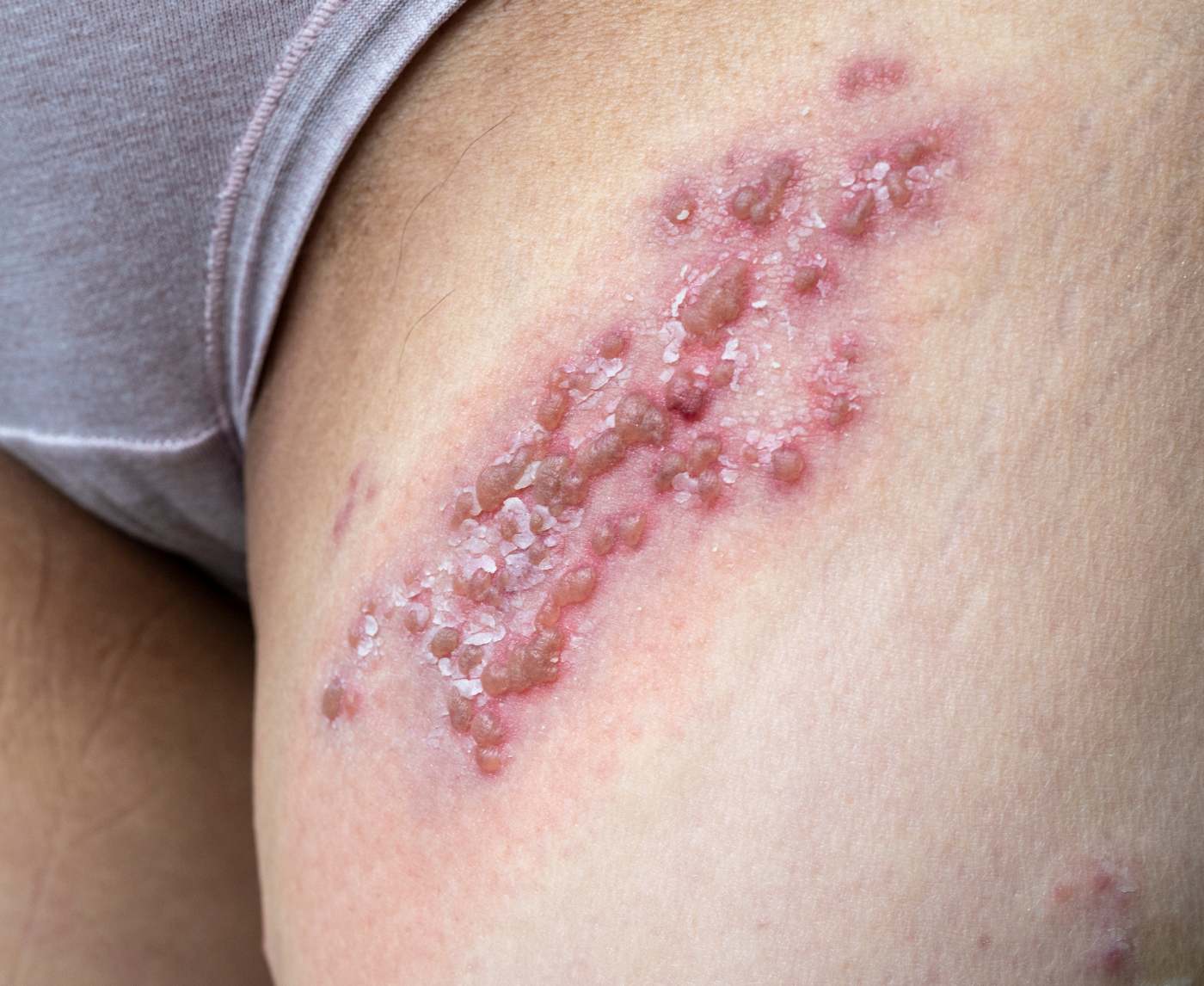
Quick Answer: A syphilis chancre is usually a single, round, firm sore that’s painless and appears about 3 weeks after exposure. If you notice a new genital sore and you’re unsure, testing for syphilis is the safest next step, especially if you’ve had recent sexual contact.
First: What a Syphilis Chancre Actually Looks Like
A chancre is the first visible sign of early syphilis. It typically shows up where the bacteria entered your body. That could be the penis, vulva, vagina, anus, rectum, lips, or even the mouth. The tricky part is that it often doesn’t hurt, which makes it easy to ignore or mislabel as something minor.
Most people expect an STD to burn or itch or throb. A chancre usually does none of that. It’s often described as firm to the touch, round or oval, with a clean base and raised edges. It may look almost too neat. That neatness is what throws people off.
One patient once described it like this: “It looked like a perfect circle. Almost like someone pressed a small coin into my skin.” He waited a week before testing because it didn’t hurt. By then, the sore had already started healing on its own.
Yes. That’s another twist. A syphilis chancre can disappear without treatment. But the infection does not.
Chancre vs Cut vs Herpes: The Side-by-Side Reality
Let’s slow this down and compare what you might be seeing. A shaving nick behaves differently from a bacterial ulcer. A herpes lesion behaves differently from both. When you’re staring at your skin, those distinctions matter.
| Feature | Syphilis Chancre | Minor Cut / Razor Nick | Herpes Lesion |
|---|---|---|---|
| Pain level | Usually painless | Often stings or burns | Often painful or tingling |
| Number of sores | Usually one | One | Often multiple clustered blisters |
| Texture | Firm, clean edges | Irregular, shallow | Fluid-filled blisters that break open |
| Healing | Heals in 3–6 weeks without treatment | Heals in days | Scabs over in 1–2 weeks |
| Swollen lymph nodes | Sometimes present | No | Sometimes present |
If your sore is completely painless and feels firm when you press near it, that’s when syphilis moves higher on the list. If it began as blisters that popped and then became raw, herpes is more likely. If it appeared right after shaving and looks jagged or irritated, a cut makes more sense.
But here’s the honest truth. You cannot diagnose this with your eyes alone. Even experienced clinicians confirm with blood testing.
The Timeline That Changes Everything
Timing matters more than most people realize. A chancre usually appears about 10 to 90 days after exposure, with an average of around three weeks. That delay is why people often disconnect the sore from the encounter that caused it.
You might be thinking about someone from last weekend. But the exposure could have been weeks ago. Maybe even a month. That disconnect creates confusion and, sometimes, misplaced blame.
Understanding the stages of syphilis helps you see where you might be in the process.
| Stage | What Happens | Symptoms | Contagious? |
|---|---|---|---|
| Primary | Chancre develops at infection site | Single painless sore | Yes |
| Secondary | Bacteria spreads through bloodstream | Rash, fever, swollen nodes | Yes |
| Latent | No visible symptoms | None | Early latent: YesLate latent: Usually no |
| Tertiary | Long-term complications | Organ damage, neurological issues | No (but severe health impact) |
The primary stage can be deceptively quiet. A single sore. Maybe a swollen lymph node in the groin. No pain. No fever. Nothing dramatic.
That quietness is exactly why testing matters.
“It Doesn’t Hurt, So Maybe It’s Nothing.” Why That Thought Is Risky
I once spoke with a woman in her twenties who found a painless ulcer on her vulva. She assumed it was friction from a new partner. “It didn’t feel infected,” she said. “It didn’t feel like anything.”
She waited until a faint rash appeared on her torso weeks later before seeking care. By then, she had entered secondary syphilis.
The absence of pain is not reassurance. In fact, with syphilis, it’s often part of the design. The bacteria enters quietly. It spreads quietly. It relies on you dismissing it.
This is not about shame. It’s about awareness.
What To Do Today If You See a Suspicious Sore
If you’re standing in that bathroom right now mentally replaying recent encounters, take a breath. You do not need to panic. You need a plan.
First, think about timing. When was your last sexual contact involving oral, vaginal, or anal contact without full barrier protection? If it was within the past three weeks, this timeline fits the window for a primary chancre.
Second, avoid picking at it. Do not apply random creams unless directed by a clinician. Over-the-counter antibiotic ointment will not treat syphilis. Steroid creams can mask symptoms without solving anything.
Third, test.
Syphilis is diagnosed through blood testing that detects antibodies. Testing too early can produce false negatives, which is why timing matters.
| Time Since Exposure | Likelihood of Detection | Recommended Action |
|---|---|---|
| Less than 2 weeks | Low | Test if anxious, but plan to retest |
| 3–6 weeks | Moderate to high | Ideal window for initial blood test |
| 6+ weeks | High | Testing strongly recommended |
If you want privacy and speed, an at-home syphilis rapid test kit can provide answers discreetly. If your head keeps spinning, clarity helps. You deserve that clarity.
You can also explore comprehensive options at STD Rapid Test Kits if you want broader screening. Many people choose combination testing because exposures rarely happen in isolation.
If the Sore Heals on Its Own, Does That Mean You’re Fine?
This is one of the most dangerous myths surrounding syphilis. The chancre almost always heals without treatment. It can vanish in three to six weeks. The skin looks normal again. Life continues.
But inside the body, the bacteria continues circulating. It moves into the bloodstream. Weeks later, you might notice a rash on your palms or soles. You might feel flu-like symptoms. Or you might feel nothing at all.
Healing skin does not equal cured infection.
The only way to know is testing.
How Accurate Are Syphilis Rapid Tests?
Modern rapid tests look for antibodies that your body makes in response to Treponema pallidum, the bacteria that causes syphilis. Accuracy depends on timing. Once antibodies have developed, sensitivity is high. Testing too early lowers reliability.
If a rapid test is positive, follow-up confirmation through a laboratory test is typically recommended. If negative but symptoms persist, retesting after the full window period adds confidence.
Accuracy is not just about the kit. It’s about when you use it.
What If It’s Not on Your Genitals?
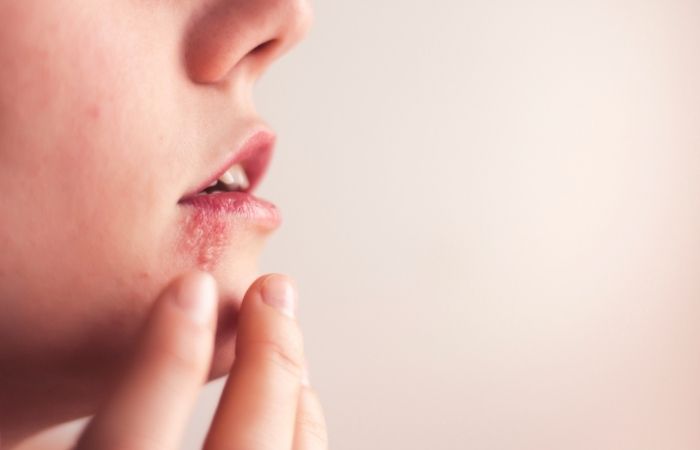
Not every chancre appears where you expect it. If you had oral sex, the sore could show up on your lips, tongue, or inside your mouth. If you had receptive anal sex, it could appear inside the rectum where you can’t see it at all. Some people only notice swollen lymph nodes or mild discomfort when sitting and never realize there was a visible ulcer.
I once spoke with a man who thought he had a canker sore. It didn’t hurt much. It sat on the inside of his lower lip for weeks. By the time he tested, he was already entering the secondary stage of syphilis. He had never once considered that oral sex could transmit it.
It can. And it does.
If you’ve had oral contact and now see a painless ulcer in your mouth, testing is still the move. Blood testing detects systemic infection regardless of where the chancre appeared.
The Emotional Spiral (And How to Interrupt It)
Let’s talk about the part no one puts in medical charts. The shame spike. The mental replay. The urge to Google images for three straight hours. The sudden suspicion of partners. The quiet fear that you did something reckless.
Pause.
Syphilis does not mean you are irresponsible. It does not mean you are promiscuous. It does not mean someone betrayed you. It means a bacterium found a route in. That’s biology, not morality.
Testing is not an admission of guilt. It is an act of self-respect.
If you need something practical to focus on, here it is. Look at the sore once more under good light. Notice its size. Notice whether it’s firm. Notice whether it hurts when pressed. Then stop touching it. Make a testing plan. That’s it. That’s today’s job.
Micro-Scene: Two Different Choices
Jordan noticed a small painless ulcer after a weekend trip. He told himself it was friction. He waited. It healed. He felt relieved. A month later, a faint rash appeared on his chest. That’s when he tested. Positive.
Marcus noticed a similar sore. He tested within three weeks using an at-home kit. Positive. He saw a clinician the same week, received treatment, and informed his recent partner. The infection never progressed beyond the early stage.
The difference wasn’t morality. It wasn’t luck. It was timing.
What Treatment Looks Like If It Is Syphilis
Early-stage syphilis is typically treated with an injection of benzathine penicillin G. It’s straightforward. It’s highly effective. Most people tolerate it well. In some cases, especially with penicillin allergy, alternative regimens may be used under medical supervision.
After treatment, your clinician may recommend follow-up blood tests to ensure antibody levels decline appropriately. That follow-up matters. It confirms that the infection is resolving the way it should.
The earlier you treat, the simpler this story becomes.
Why You Shouldn’t Wait for More Symptoms
Secondary syphilis can bring a rash that spreads across the torso, palms, and soles. It can cause fever, sore throat, patchy hair loss, or swollen lymph nodes. But not everyone experiences dramatic signs. Some people move quietly into latency.
The danger of waiting for something more obvious is that the infection continues spreading internally. Months or years later, untreated syphilis can affect the nervous system, heart, or other organs. That late stage is preventable. Entirely preventable.
Early testing interrupts that timeline.
What About Your Partner?
If your test comes back positive, recent partners should be informed so they can test and receive treatment if necessary. That conversation can feel heavy, but it is also an act of care. Most exposures occur unknowingly. Many people have no symptoms at all.
You do not have to script the perfect speech. A simple message works. “Hey, I tested positive for syphilis. I’m getting treated. You should consider testing too.” Clear. Direct. Responsible.
Public health departments can assist with anonymous notification in many regions if that feels safer.
When It Really Is Just a Cut
Sometimes, after all this analysis, it truly is a shaving nick or friction tear. Cuts usually sting at first. They heal within a few days. They are irregular, not firm and round. They appear immediately after skin trauma.
If your sore improves rapidly within three to five days and clearly correlates with shaving or injury, the likelihood of syphilis drops. But if doubt lingers, testing provides clarity.
Peace of mind is not dramatic. It’s practical.
The Part No One Tells You: Why Syphilis Is Rising Again
Let’s zoom out for a minute.
Syphilis rates have been climbing in many countries over the past decade. Not because people are suddenly more reckless. Not because everyone stopped caring. But because this infection is uniquely good at hiding, spreading quietly, and slipping past people who assume “I’d know if something was wrong.”
I’ve seen it in college students who thought condoms were enough protection for everything. I’ve seen it in long-term couples who assumed monogamy meant zero risk. I’ve seen it in people who test regularly but didn’t realize their last screen was before a new partner.
Primary syphilis does not scream. It whispers. A single painless sore. No drama. No emergency-room urgency. And when something doesn’t feel urgent, humans postpone action. That delay is where the bacteria wins.
This isn’t about fear. It’s about pattern recognition.
When public health data shows increases, it often reflects three realities happening at once. First, more people are meeting partners online, which increases network overlap. Second, oral sex is widely perceived as low risk, even though it can transmit syphilis. Third, early symptoms are subtle enough that they don’t interrupt daily life.
You finding a suspicious sore and investigating it? That’s not overreacting. That’s interrupting a transmission chain.
How Doctors Actually Confirm Syphilis (Behind the Scenes)
When you test for syphilis, clinicians don’t just look at one number and call it a day. The diagnostic process usually involves two types of blood tests. One detects antibodies that specifically recognize the bacteria. The other measures activity levels that help determine whether the infection is recent or older.
Think of it like this. The first test answers, “Has your immune system seen this before?” The second helps answer, “Is this happening now?”
That distinction matters because some people were treated years ago and still carry low antibody levels. That’s why interpretation isn’t always black and white. Context matters. Symptoms matter. Timing matters.
Rapid at-home tests typically screen for treponemal antibodies. If positive, confirmation through laboratory testing ensures accuracy and helps guide treatment decisions. If negative but taken early, clinicians often recommend retesting after the window period.
This is where people get tripped up. They assume one negative test equals final clearance. In reality, it’s about testing at the right biological moment.
Let’s Talk About Anxiety (Because It’s Real)
You might not even be scared of the infection itself. You might be scared of what it means. What it implies. Who it traces back to. Whether someone will judge you.
Sexual health still carries social weight. Even in 2026. Even among educated adults.
But here’s the clinical truth. Syphilis is a bacterial infection. It spreads through skin-to-skin contact with an infectious lesion. It does not check your relationship status. It does not screen for moral worth. It does not care how careful you usually are.
I’ve treated nurses. Lawyers. Married parents. People in open relationships. People who hadn’t dated in years and had one unexpected encounter. Infection does not equal identity.
If you’re staring at a sore right now, the most grounded move is this: separate the biology from the story you’re telling yourself.
Biology says test. Story says panic. Choose biology.
Red Flags That Mean Don’t Wait
Most early cases allow for calm, scheduled testing. But there are moments when waiting is not the right call.
If you develop vision changes, severe headaches, hearing disturbances, or neurological symptoms alongside a suspicious sore, seek immediate medical evaluation. Those symptoms are rare in early infection but important. If you are pregnant and suspect syphilis, urgent testing is critical because untreated infection can affect the fetus.
Outside of those scenarios, you usually have time to plan. A few days to schedule testing. A week to confirm timing. That breathing room is often enough to lower panic.
The Takeaway Before We Get to Your Questions
A painless, firm, round sore that appeared weeks after sexual contact deserves attention. Not hysteria. Not self-blame. Attention.
Sometimes it’s just a cut. Sometimes it’s friction. Sometimes it’s herpes. And sometimes it’s early syphilis.
Your job today isn’t to solve it with Google images. Your job is to move from uncertainty to evidence. That means testing at the right time, following up if needed, and treating promptly if positive.
Clarity beats guessing. Every single time.
FAQs
- 1. Be honest with me. If it doesn’t hurt at all, could it still be syphilis?
- Yes. In fact, that’s the part that makes early syphilis tricky. A chancre is often completely painless. I’ve had patients say, “If it hurt, I would’ve taken it seriously.” Pain is loud. Syphilis is quiet. If you’re seeing a firm, round sore that doesn’t sting or itch, that’s when testing matters most.
- 2. Okay but what if it’s just one tiny spot? Wouldn’t an STD look worse?
- Not necessarily. Early syphilis usually shows up as a single sore. One. Not dramatic. Not spreading. Not oozing. Just there. That’s why people mistake it for friction, a shaving nick, or an ingrown hair. The size doesn’t determine the seriousness. The timing and the context do.
- 3. Can I really get syphilis from oral sex? Even if it was quick?
- Yes. Transmission doesn’t require duration awards. If there was direct contact with a sore or infected tissue, that’s enough. Oral sex can absolutely transmit syphilis, and the chancre may appear in the mouth or on the genitals depending on who was exposed where. “Quick” doesn’t mean “zero risk.”
- 4. If the sore disappears, does that mean my body fought it off?
- I wish it worked that way. The chancre almost always heals on its own. That’s part of the illusion. The bacteria doesn’t disappear when the skin closes. It moves inward. Think of the sore as the opening scene, not the full story. Healing skin is not the same as a cleared infection.
- 5. How soon is too soon to test?
- If you test within the first two weeks after exposure, results may be negative simply because your body hasn’t produced detectable antibodies yet. That doesn’t mean you’re in the clear. Around three to six weeks after exposure is when detection becomes much more reliable. If you’re anxious now, you can test now , just plan to retest if needed.
- 6. What if my test is negative but I still feel uneasy?
- Trust your instincts. If the timing was early or the sore still looks suspicious, repeat testing after the full window period. I’ve seen people breathe a sigh of relief at a negative result taken too early, only to return weeks later confused. Timing is everything. Peace of mind sometimes comes in two steps.
- 7. Do I need to avoid sex while I’m figuring this out?
- If there’s a possibility you have an active chancre, yes , pause. Not forever. Just until you have clarity. Early syphilis is contagious, even if you feel completely fine. Protecting partners isn’t dramatic. It’s mature.
- 8. This is embarrassing. How do I even tell someone?
- Start simple. You don’t need a TED Talk. “Hey, I noticed a sore and I’m getting tested for syphilis. You might want to test too.” Direct, calm, adult. Most people respond better to honesty than silence. And if that feels overwhelming, local health departments often help with anonymous notification.
- 9. Is syphilis actually curable, or is this permanent?
- Early-stage syphilis is curable with antibiotics. One injection in many cases. The sooner it’s treated, the cleaner the outcome. What causes long-term problems is untreated infection, not early diagnosis. Catching it now is strength, not failure.
- 10. Am I overreacting by worrying about this?
- You found something unusual on your body and decided to investigate it. That’s not overreacting. That’s being attentive. Panic spirals aren’t helpful. But testing? That’s smart. Calm action beats anxious guessing every time.
You Deserve Answers, Not Assumptions
Staring at a new sore can feel isolating. Your thoughts race. Your body feels suddenly foreign. But information changes the tone of that moment. You now know what a syphilis chancre typically looks like. You know how it differs from a cut. You know the timeline. And you know that testing is straightforward.
If you’re ready for clarity, you can explore discreet testing options at this at-home syphilis rapid test kit or browse comprehensive screening at STD Rapid Test Kits. Your results. Your privacy. Your next step.
How We Sourced This Article: This guide draws from current recommendations issued by the Centers for Disease Control and Prevention, peer-reviewed infectious disease literature, and clinical best practices in sexually transmitted infection management. Research included epidemiological data, staging guidelines, and diagnostic timing studies to ensure accuracy and practical clarity.