Let’s Test Together: The Relationship-Saving Power of STD Kits
Quick Answer: STD test kits for couples offer a private, stress-free way to check your status without needing to schedule clinic visits or have an awkward conversation at the front desk. “But We’re Exclusive!”

Quick Answer: STD test kits for couples offer a private, stress-free way to check your status without needing to schedule clinic visits or have an awkward conversation at the front desk. They’re discreet, medically accurate, and increasingly becoming the smart, stigma-free choice for modern relationships.
“But We’re Exclusive!” Why Couples Still Need to Test
Here’s the first myth we have to break: exclusivity doesn’t guarantee immunity. You can be deeply in love, totally faithful, and still unknowingly pass something on. Many STDs, like chlamydia, herpes, and HPV, don’t show symptoms for months or even years. That means someone could have picked it up before the relationship began, and still be carrying it now, without a clue.
In a 2017 study on STI prevalence among “low-risk” couples, researchers found that a surprising number of people tested positive despite being in monogamous relationships. The problem wasn’t cheating. It was assuming testing wasn’t necessary once the condoms came off.
Testing as a couple doesn’t mean you don’t trust each other. It means you trust your relationship enough to face reality together. And that’s powerful.
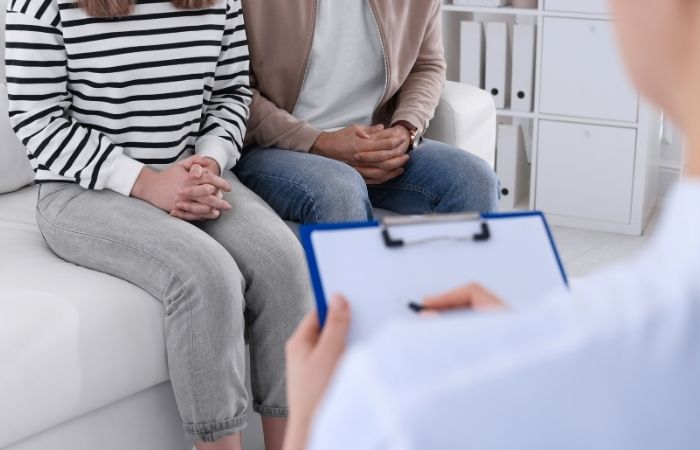
“We Were Fine, Until I Got a Call from My Gyno”
Talia, 28, had been in a committed relationship with her girlfriend for over a year. They were monogamous, deeply in sync, and had never discussed testing. “We hadn’t slept with anyone else in a long time. I figured we were good,” she said. But when her routine Pap smear came back showing signs of HPV, everything changed.
Her partner felt blindsided.
“She thought I’d cheated,” Talia said. “We had no idea HPV could sit quietly for years. I didn’t even know I had it.”
The trust wobbled, not because of betrayal, but because neither had tested before diving in.
It took time, and therapy, but they eventually retested together, with a shared understanding of how misinformation had nearly undone their connection. “Testing would’ve saved us weeks of pain. Now, it’s part of our routine.”
This isn’t a horror story. It’s a reality check. And one that’s becoming more common than most couples expect.
Table: Why Couples Test Together, And When
Below is a breakdown of common couple dynamics and what kind of testing moments they face. This is based on data, clinical guidance, and real-world scenarios.
| Situation | Why Testing Matters | Recommended Kit |
|---|---|---|
| About to stop using condoms | Baseline testing ensures you’re both starting clean before increasing risk | Combo STD Test Kit |
| Rebuilding after infidelity | Helps re-establish trust with medical clarity | HIV Test Kits |
| New relationship, no prior testing | Uncovers any infections carried from previous partners | Full Panel at Home |
| One partner shows symptoms | Testing both partners helps stop the spread and prevent re-infection | Disease-specific kits |
| Pregnancy or trying to conceive | STDs can affect fertility or cause complications during pregnancy | Full STD screening for both partners |
Table 1. Couples test together for all kinds of reasons, and it’s usually about more than symptoms. It’s about trust, timing, and taking care of your shared health.
“I Thought STD Testing Meant Someone Screwed Up”
This belief is why so many couples skip the test. It feels accusatory, like suggesting something is wrong, or someone did something they shouldn’t. But we’ve got to flip that narrative. STD testing isn’t punishment. It’s protection. It’s partnership. It’s saying, “I care enough about us to know for sure.”
And that’s not just emotional fluff. In a national survey on sexual communication, couples who discussed testing reported higher relationship satisfaction and more consistent sexual safety habits. When you normalize the test, you normalize the truth. That’s the real safety net.
How to Ask Your Partner to Test, Without Starting a Fight
There’s no perfect way to say it. The words always come out clumsy at first: “Hey, I was thinking maybe we should… you know… get tested?” It lands heavy. Like suspicion. Like accusation. But that’s not what it has to mean.
The trick isn’t perfect phrasing. It’s honesty. Say what you mean: “This isn’t about trust. It’s about health. And I’d rather we both be sure than keep guessing.” That lands better than tiptoeing. Better than jokes. It tells the truth: you’re doing this *with* them, not *to* them.
And yes, it might spark discomfort. But discomfort doesn’t mean damage. Sometimes it means growth. In fact, many couples who test together report that the conversation was harder than the test, and more rewarding.
Try framing it like a shared action plan. “Let’s get tested together so we can move forward feeling safe.” That “we” does a lot of emotional lifting. So does choosing a private option that doesn’t involve booking appointments or waiting in a crowded lobby.
What It’s Actually Like to Use a Couple’s STD Test Kit
Let’s take the mystery out of it. Here’s what happens when you test together at home:
You open the box. It’s discreet. No branding that screams “STD TEST” on the outside. Inside, everything is labeled clearly, what’s for who, what to do first, and how long it’ll take. Some kits involve a quick finger prick. Others ask for a urine sample or swab. Most results are ready in 10–20 minutes.
It doesn’t feel clinical. It feels personal. Quiet. Respectful. You’re not in a gown. You’re not being interrogated. You’re at home, in your own space, taking care of something most people put off for too long.
You can talk through it. Or not. You can be nervous. Or even laugh a little. Either way, you’re doing something bold together. And that changes things, not just your status, but your bond.
Which Tests Should Couples Use?
It depends on where you’re at, what kind of sex you’ve had, and what your risk looks like. For couples wanting full peace of mind before going condom-free, or after a period of separation, a comprehensive panel makes the most sense. If you’re checking for something specific, like chlamydia or herpes, single-target kits can give you quick clarity without the extra cost.
Accuracy matters. So does ease of use. Look for tests that are: - FDA-approved or CE-certified - Designed for self-collection - Lab-grade (NAAT or PCR where possible) - Delivered in unmarked packaging - Capable of detecting common infections like chlamydia, gonorrhea, herpes, syphilis, and HIV
All of these are available through at-home kits like the 8‑in‑1 Complete At-Home STD Test Kit, which includes multiple tests that can be used side-by-side with your partner.
Comparing STD Testing Options for Couples
Wondering how at-home kits stack up to clinic visits? Here’s a breakdown to help couples decide what fits best for their lifestyle and comfort level.
| Testing Option | Privacy Level | Turnaround Time | Cost Range | Best For |
|---|---|---|---|---|
| Clinic-based full panel | Low (in-person intake) | 2–7 days | $150–$400+ | High-risk exposure, insurance-covered tests |
| Telehealth + mailed lab test | Medium (online but lab visit required) | 3–10 days | $100–$300 | Rural areas, moderate privacy |
| At-home rapid test kits | High (no appointments) | 10–20 minutes | $45–$180 | Private couples, fast results |
Table 2. At-home testing is rising fast, because privacy, speed, and shared ease matter when you’re navigating intimacy.
“Testing Together Was the Most Intimate Thing We’ve Done”
Jordan, 34, and his partner had been dating for six months when the condom talk started. “We were getting serious, but neither of us had been tested since our last relationships,” he said. “I didn’t want to make it weird.”
They ordered a two-pack of rapid kits, opened them together, and did the tests side by side in Jordan’s kitchen.
“It felt awkward at first,” he admitted. “But once we were both sitting there with our little tests running, it felt... peaceful. Like we were taking care of something real.”
They both tested negative, and ditched the condoms two days later, feeling closer than they had in weeks. “It wasn’t about the result. It was about doing it together. That trust stayed with us.”
What If One of You Tests Positive?
It happens. You both sit there, watching the lines develop on the tests, and one of them comes up positive. For chlamydia. Or maybe herpes. Maybe something you didn’t even expect. Suddenly, it’s not just a test. It’s a test of everything else, too, trust, honesty, and the stories we tell ourselves about safety.
Here’s what you need to know: a positive result doesn’t always mean someone cheated. STDs don’t show up on a fixed schedule. Some, like herpes or HPV, can live quietly in the body for months or years. Others, like chlamydia, can be carried asymptomatically long before symptoms ever show, or never show at all.
If this happens, pause before reacting. Get confirmation if needed. Seek treatment. And most importantly: talk. Not just about what this means medically, but emotionally. Testing together doesn't guarantee everything will be easy, but it gives you a chance to deal with the truth side-by-side, not back-to-back.
In many cases, couples come out stronger, not because they avoided infection, but because they handled it with care and clarity.
“What If They Refuse to Test With Me?”
This one stings, and it’s more common than most people admit. You bring it up gently. You frame it around care. But your partner shrugs it off, gets defensive, or changes the subject. And now you’re left wondering: What are they hiding? Why wouldn’t they want to know?
Here’s the hard truth: someone refusing to test doesn’t necessarily mean they’re guilty of anything. They could be scared, ashamed, traumatized by a past clinic experience, or simply misinformed. But their refusal is still a signal, and you’re allowed to listen to it.
If you’ve been clear that this matters to you, and they still won’t budge, it’s worth asking yourself what that means about your shared values. Sexual health isn’t a solo journey in a relationship. You’re allowed to ask for this. You’re allowed to make it a dealbreaker.
Sometimes, offering a discreet, zero-pressure option like a home kit makes it easier. Other times, it reveals a gap in priorities you shouldn’t ignore.

From Emergency to Routine: Making Testing a Relationship Ritual
We test for things all the time, blood sugar, allergies, even cholesterol. But for some reason, STDs still feel like a red flag instead of what they actually are: a normal part of staying well. It’s time to break that pattern, especially in relationships where sex isn’t a one-time thing, it’s a shared lifestyle.
Couples who build testing into their rhythm, once a year, once every new partner, once before ditching barriers, report lower anxiety, more open communication, and higher satisfaction. Why? Because the guessing game is gone. The power struggle is gone. You stop performing “clean” and start being honest.
It’s not unromantic. It’s not paranoid. It’s intimacy at its most grown. Picture this: it’s a Sunday morning. You make coffee. You each take your rapid test in between feeding the dog and folding laundry. Twenty minutes later, you’re watching Netflix, safe, clear, and maybe even a little turned on by how well you handle adult life together.
That’s not a crisis. That’s a ritual. And it works.
When to Test Again in a Relationship
STDs don’t operate on your relationship calendar. That’s why even “safe” couples should know when to check in again. This table breaks it down clearly.
| Testing Moment | Why It Matters | Suggested Frequency |
|---|---|---|
| Before stopping condom use | Baseline testing protects both partners from unknown infections | Once, ideally with full panel |
| Annually (even in monogamy) | Accounts for long incubation or latent infections | Every 12 months |
| After a known exposure or scare | Quick testing can prevent spread or reinfection | Immediately, then again 2–3 weeks later |
| After periods of separation or non-monogamy | Protects both partners during re-entry into intimacy | Each time you reconnect sexually |
Table 3. Testing isn’t just for the beginning. It’s for the in-between, the “after,” and the ordinary days that deserve clarity.
FAQs
- 1. We’ve been together for years. Why would we test now?
- Because years don’t cancel biology. Some infections, like HPV or herpes, can chill in your system quietly for ages. Even if you’ve both been faithful, it’s still possible one of you brought something into the relationship unknowingly. Testing now doesn’t mean you’re suspicious, it means you care enough to keep learning about each other.
- 2. How do I bring it up without making it a huge thing?
- Skip the drama. Say what you mean. Something like: “Hey, I was thinking it might be smart for us to get tested together, just to make sure we’re good before going forward.” Whether it’s ditching condoms, trying for a baby, or just wanting that peace of mind, framing it as “us” instead of “you” changes the vibe entirely.
- 3. What if my partner doesn’t want to test?
- That’s rough, and telling. Sometimes people resist out of fear or embarrassment. But testing is about shared health, not blame. You can explain why it matters to you, maybe offer to use a private kit together. If they still say no? That’s information. And you deserve to make choices with your full health, and heart, in mind.
- 4. Are home STD kits even accurate?
- Yes, as long as you don’t buy them from sketchy marketplaces or mystery sellers. Kits like the Chlamydia, Gonorrhea & Syphilis At-Home STD Test Kit use legit science (we’re talking immunoassay or NAAT tech). Follow the directions, and you’re getting real answers without the waiting room whisper-fest.
- 5. Do we need to test again if we did it once already?
- Think of it like going to the dentist. You don’t just go once and call it done forever. If it’s been a year, if there’s been any outside contact, or if you’re about to make a change (like stopping condoms), it’s worth doing again. Nothing dramatic, just routine.
- 6. Can a positive test destroy our relationship?
- Only if you let it. A diagnosis isn’t a betrayal, especially if it’s from something picked up years ago. What breaks relationships isn’t the result. It’s the silence. The shame. The assumptions. Most infections are treatable. Honesty is repairable. What matters is how you respond to each other in the tough moments.
- 7. What infections should we be checking for?
- The big five: chlamydia, gonorrhea, herpes, syphilis, and HIV. If it’s been a while, or you’ve never tested, go for a full panel. Better to know than guess. And way better to catch something early than let it simmer silently.
- 8. Is testing together really less awkward?
- Totally. It turns “ugh, this is scary” into “hey, we’re in this together.” You’re not alone, you’re not being grilled by a nurse you’ll never see again, and you’re doing it on your schedule. Some couples even turn it into a bonding moment, test, chill, watch something dumb on Netflix while the timer runs. Intimacy isn’t just sex. It’s safety.
- 9. What if one of us has symptoms and the other doesn’t?
- Then you both test. Many STDs don’t show signs in everyone. One partner might carry and not feel a thing, while the other gets hit with symptoms fast. Testing both of you ensures you’re treating the full picture and not passing something back and forth like a hot potato.
- 10. Is this something we’re supposed to do... forever?
- Not every week, but yeah, it should be part of your long-term relationship wellness. Once a year is a solid rhythm for monogamous couples. More often if you’re non-monogamous, have new partners, or had a recent scare. Think of it as a tune-up, not a red flag.
This Isn’t About Fear. It’s About Power.
Getting tested with your partner doesn’t mean your relationship is weak. It means it’s strong enough to face reality. It means you care enough to build trust on facts, not feelings alone.
You don’t need a script. You don’t need a therapist in the room. You just need honesty, a little courage, and a good test kit.
Whether it’s your first time testing or your fifth, whether you’re rebuilding after hurt or building toward something deeper, testing together sends a message: We want to be safe, not sorry. And we’d rather know than wonder.
If that’s where you are right now, start with this discreet combo test kit. No drama. No pressure. Just truth, privacy, and one less thing to stress about.
How We Sourced This Article: We used a mix of medical studies, public health guidelines, and real-world experience from sexual health experts to create a guide that actually works for real couples. Around fifteen reputable sources informed the article; below, we’ve highlighted some of the most relevant and reader-friendly ones.