Tested Too Soon for HIV? Here’s What That Negative Could Mean
Quick Answer: A negative HIV test taken too soon after exposure, especially if it's an antibody-only test, may miss an early infection. After HIV enters the system, it doesn't show up on tests immediately. Let’s rewind.
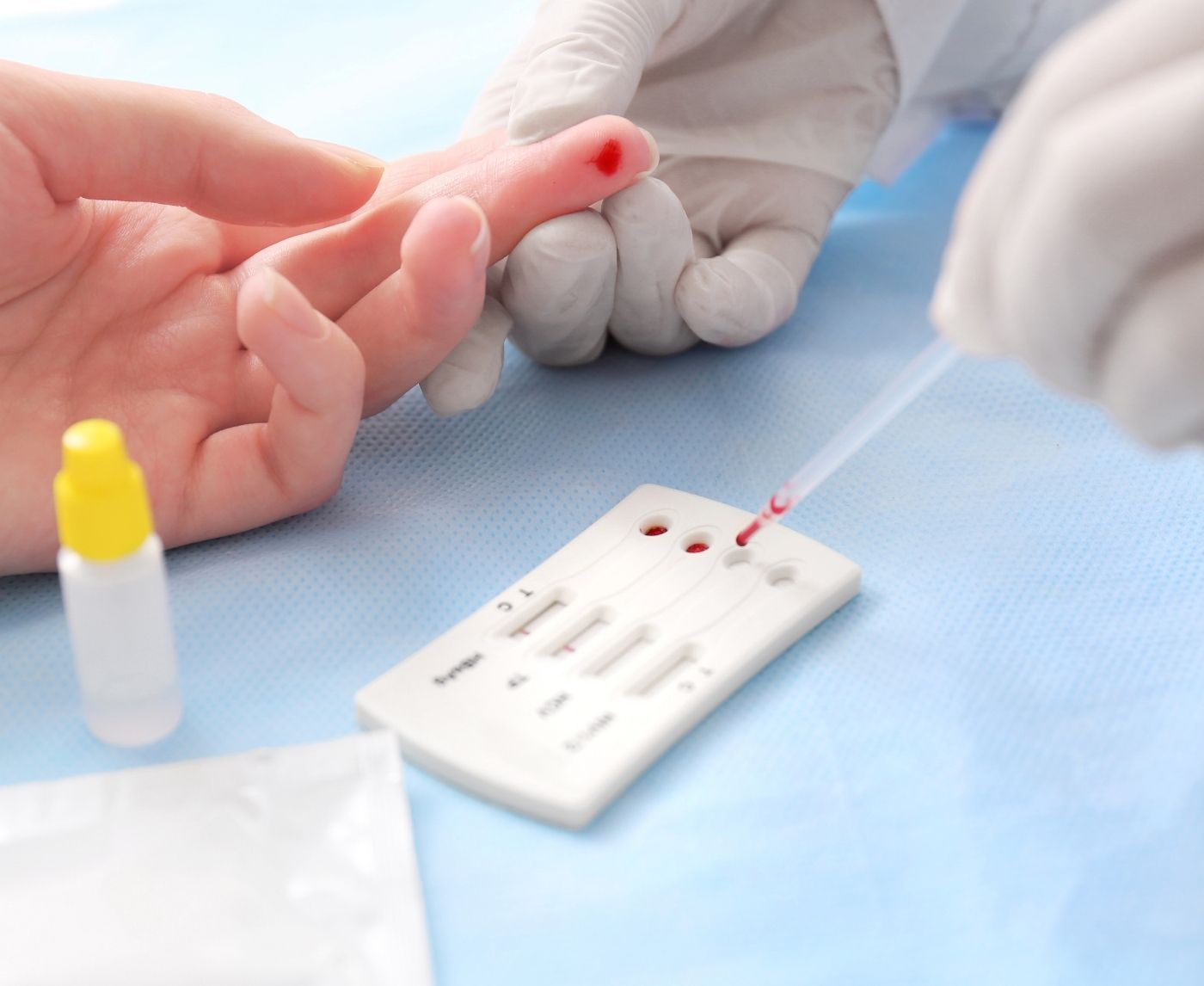
Quick Answer: A negative HIV test taken too soon after exposure, especially if it's an antibody-only test, may miss an early infection. Antigen/antibody combo tests (4th gen) can detect HIV earlier, but even they require a 2–4 week window after exposure for accuracy.
Why This Still Happens (Even in 2025)
You might assume that with all our advances, HIV testing is instant and foolproof. But testing technology, especially over-the-counter or rapid tests, still depends on how the virus behaves in the body. After HIV enters the system, it doesn't show up on tests immediately. This isn’t about flawed science, it’s about biology, and it’s frustratingly slow.
Let’s rewind. The first thing the body does when HIV enters the bloodstream is not sound an alarm. Instead, it takes time, sometimes weeks, to produce antibodies. Those are the things antibody tests detect. In contrast, some newer tests can detect a part of the virus itself called p24 antigen, which appears sooner but still not instantly.
That means if you test just days after exposure, your result might be negative, but not because you're in the clear. It’s because your body hasn't had time to give the test something to find.
What’s the Actual Difference Between HIV Antibody and Antigen Tests?
The difference isn’t just scientific, it’s practical. It changes how early you can get accurate answers, how soon you need to retest, and whether you’re truly safe. Let’s walk through the basics.
An antibody test checks for the body’s immune response to HIV. That response takes time, on average, two to eight weeks. These are often the tests used in at-home kits and many rapid clinic tests.
An antigen test, specifically the p24 antigen test, looks for part of the virus itself. It can often detect HIV within two to four weeks of exposure. When combined with an antibody check (as in a “4th generation” test), you get the best of both worlds, early detection with follow-up confirmation.
Let’s break that down visually:
| Test Type | What It Detects | Earliest Detection | Common Use |
|---|---|---|---|
| Antibody Test (3rd gen) | Body’s immune response (HIV antibodies) | 3–8 weeks | Rapid tests, many at-home kits |
| Antigen/Antibody Combo (4th gen) | p24 antigen + antibodies | 2–4 weeks | Labs, some clinics, select mail-in kits |
| Nucleic Acid Test (NAT) | HIV RNA (the virus itself) | 10–14 days | Special cases, often clinical only |
Table 1: Comparison of HIV test types, what they detect, and their timing windows.
People are aslo reading: Can You Get HIV from Oral Sex? What the Science Really Says
A Case Study: The Negative That Wasn’t
Alejandro, 28, had just started seeing someone new. After a weekend getaway, something felt off, not physically, but emotionally. He couldn’t shake the feeling that they’d taken a risk. So, five days later, he went to an urgent care center and took a rapid HIV test. It came back negative. He felt relief, briefly.
“But I kept googling things like ‘Can you test negative and still have HIV?’ or ‘HIV test too soon false negative,’” he recalls. “The more I read, the more I realized I might’ve jumped the gun.”
Three weeks after the encounter, Alejandro took a 4th generation antigen/antibody test at a clinic. This one came back positive. His initial rapid test had simply been too early.
He’s not alone. False negatives from early testing are a well-documented phenomenon, especially when using antibody-only tests within the first two weeks of exposure. That doesn’t mean those tests are bad, it means timing is everything.
So… When Can You Trust a Negative HIV Test?
If you're testing for peace of mind, here’s the hard truth: peace only comes when the test matches the right time frame. And for most people, that means waiting at least 28 days, or using a test designed for earlier detection.
If you test before the 3-week mark, a negative result doesn’t guarantee anything unless it’s from a NAT test or a lab-based 4th gen combo. Even then, a follow-up is often recommended. The CDC and WHO both emphasize the importance of retesting after potential exposures if the initial test is done within the window period.
Here’s a simplified way to look at it:
| Days Since Exposure | Best Test Option | Action Recommended |
|---|---|---|
| 1–7 days | Too early for any test | Wait and monitor; no test reliable yet |
| 8–21 days | 4th gen antigen/antibody or NAT | Early detection possible, but retest later |
| 22+ days | 4th gen, rapid antibody, or NAT | Most tests reliable; retest if high-risk |
Table 2: Timeline of best testing strategies based on days since exposure.
Bottom line: trust the science, but also trust the timing. A test taken too early is like checking the oven after 30 seconds. The process hasn’t finished yet.
The Window Period Trap: What It Is and Why It Matters
One of the most misunderstood concepts in HIV testing is the window period. It’s not a waiting game for bureaucracy, it’s your immune system’s timeline. After exposure, your body needs time to react. If you test during the window, the result might say “negative” even if the virus is there. That’s not a testing failure. It’s biology doing its thing on its own schedule.
Here’s how it plays out: The average person’s immune system starts producing detectable levels of HIV antibodies around three to four weeks after infection. The p24 antigen, however, often shows up earlier, about 14 to 21 days in. That’s why combo tests (antigen + antibody) can detect HIV earlier than antibody-only options.
It’s also why false negatives are more common in the first two weeks post-exposure. Your test might say you’re clear, but the virus could be silently replicating, undetectable to your chosen test type.
This is particularly important when it comes to at-home testing. Most at-home kits in the U.S. are still antibody-only, which means they’re not designed to catch an early infection. If you’re testing at home within three weeks of a risky encounter, plan on retesting after the 28-day mark, or choose a test that includes antigen detection.
Why “Just Testing to Be Safe” Isn’t Always Safe Enough
It’s common to see HIV testing framed as a precaution, something you do “just to be safe.” And that’s valid. But the danger in that thinking is assuming that any test result equals clarity, no matter the timing or test type. It’s a false comfort if not interpreted correctly.
Lena, 34, had a long-distance partner she saw every few months. After a weekend visit, she took a rapid test before flying home. “I wanted to be able to say I’d checked,” she said. “But it wasn’t even two weeks after we’d had sex. I had no idea the test wouldn’t pick anything up yet.”
She tested negative, but a month later began experiencing fatigue, swollen glands, and night sweats, classic early signs of HIV seroconversion. A follow-up test revealed the truth: the infection had been there all along. The first test had simply come too soon.
This isn’t about shame. It’s about setting expectations. An early negative doesn’t mean you’re safe, it means you’re not yet detectable. That distinction can change everything.
When Should You Retest for HIV?
If you’ve tested negative but still feel uneasy, maybe because of lingering symptoms, a known risky exposure, or just gut instinct, you’re not wrong to wonder about retesting. In fact, most public health guidelines recommend exactly that.
Here’s the general advice:
If your first test was within 1–3 weeks of potential exposure, it’s strongly advised to retest after 28 days with a 4th generation test. If that one’s negative and you have no ongoing exposures, you're likely in the clear. If symptoms arise, test again.
For people with repeated exposures or ongoing risk, like sex workers, people in non-monogamous partnerships, or those sharing injection equipment, regular testing every 3 months is considered best practice. In some cases, clinical providers may recommend even more frequent screening, particularly if PrEP is involved.
The main takeaway? A negative result is only as trustworthy as the timing and the test used. If either is off, retesting isn’t paranoia, it’s protection.
What If You Still Feel Off… But the Test Says Negative?
This is a hard one. You followed instructions. You chose a test. You got your result. And yet something in your body or your intuition says: “Something’s still wrong.”
Maybe you’re having flu-like symptoms a few weeks after a risky encounter. Maybe your lymph nodes feel tender. Maybe it’s just a sense of dread that won’t go away. This doesn’t mean you’re infected, but it also doesn’t mean you’re imagining things.
The symptoms of early HIV (also called acute HIV infection or seroconversion) are notoriously vague. Fever, fatigue, night sweats, sore throat, rash, they overlap with everything from mono to COVID. And they often show up 2–4 weeks after exposure, right when many people get their first (too-early) negative result.
In that case, listen to your body. Trust your instincts. A follow-up test could save you weeks, or years, of uncertainty.
This is where a good test becomes essential. Look for a 4th generation lab-based test, or if you’re going in-clinic, ask for a p24 antigen or HIV RNA test. Don’t settle for the fastest result, settle for the one that matches your timeline.
What Test Should You Use Now?
If you're standing at the pharmacy shelf or scrolling through test options online, the choices can feel overwhelming. Here’s the emotional truth: what you’re really looking for isn’t just a result, it’s reassurance. And the only way to get that is by matching the right test to the right timing.
If you’re still within the first week of exposure, no test will give you a reliable answer yet. Wait it out. That’s hard. But it’s necessary. Between days 10 and 20, your best bet is a 4th gen test or NAT test. If you're past 28 days, most tests will give you accurate results, especially if symptoms have started to resolve or stabilize.
And if you're still not sure? Retest. It's not weakness, it's wisdom.
Testing is not a confession; it's a way to be proactive, whether you're going on a high-risk date, getting back into the dating scene, or just trying to be safe. It's not about passing or failing when you choose the right HIV test. It's about being clear, stopping things from happening, and respecting your peace of mind.
At-Home HIV Tests vs Lab-Based Testing: Why It Matters More Than You Think
On the surface, it feels like all HIV tests should do the same thing, tell you whether you're positive or negative. But if you’ve ever sat in your car holding a rapid at-home test, trying not to shake, you know there’s more to it than that. Testing isn’t just technical. It’s emotional. It’s a waiting game where every second feels like an hour, especially when you're hoping to be in the clear.
Lab tests tend to be more accurate because they use advanced equipment and can detect the virus itself (RNA or antigen), not just your body’s reaction. Most at-home tests rely on fingerstick blood or oral fluid and only detect antibodies, which, as we’ve covered, take time to develop. That means lab tests can often detect HIV 7 to 14 days earlier than at-home kits.
Here’s where it gets tricky: some people test negative at home and assume they’re fine, without knowing they tested in the window period. The emotional cost of a false sense of security is real. And in some cases, it delays treatment or further spreads infection unknowingly.
That doesn’t mean you shouldn’t use at-home tests. They’re private, accessible, and empower people who can’t (or won’t) go to a clinic. But if you’ve had a high-risk encounter recently, or you’re symptomatic, it’s worth stepping up to a 4th generation test through a provider or lab. The clarity it offers is often worth the extra time or cost.
“There Was a Faint Line. What Does That Even Mean?”
This might be the single most anxiety-producing thing about at-home tests: the faint line. Is it positive? A mistake? Should you panic, or breathe?
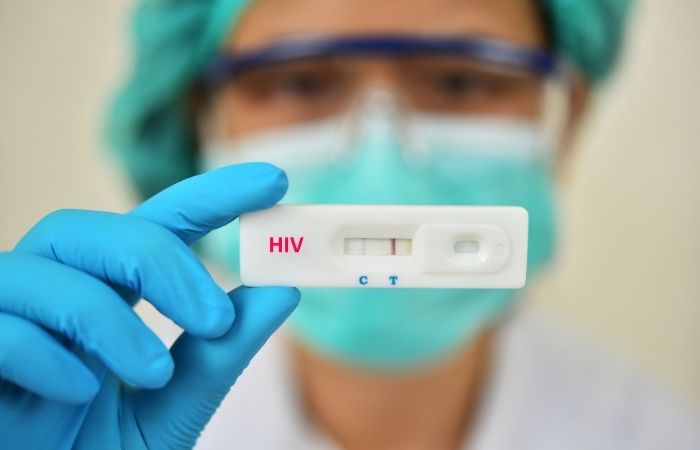
Let’s break it down like this. Most rapid tests work like pregnancy tests. A control line shows the test worked. A second line, no matter how faint, is generally a positive. But the emotional reality? A faint line triggers a spiral. You might think, “Maybe I spilled it. Maybe I waited too long. Maybe it's just a smudge.”
Marcus, 22, took a test after a friend told him about a possible exposure. “The second line was there, but it was so light I convinced myself it didn’t count,” he said. “I even took a photo and posted it on Reddit to ask strangers what they thought.”
He went in for a lab test the next day. It came back positive.
Here’s the thing: while user error can happen, a line is a line. Faint or not, it usually means what the instructions say it does. If you're unsure, don’t delay, get a confirmatory test. It's not weakness. It's wisdom. And the sooner you confirm, the sooner you can get support.
People are aslo reading: First Time Getting an STD Test? Here’s Exactly What to Expect
Why We Retest: It’s Not Just About the Virus
Retesting isn’t just a scientific step. It’s an emotional one. It's the difference between hoping and knowing. Between spiraling and stabilizing. For many people, the first HIV test, especially if done early, feels like a shot in the dark. Retesting transforms that into clarity.
If you tested negative during the window period, or you’ve had ongoing exposures (like multiple partners, new relationships, or shared needles), retesting is not an overreaction. It’s routine care. In fact, the CDC recommends that everyone between 13 and 64 get tested at least once in their lifetime, and more often if you’re at higher risk.
It’s also worth considering whether your last test actually included antigen detection. If you don’t know, or you bought a kit that only checks antibodies, you may have missed that earlier detection window. A follow-up test with a 4th generation assay or NAT fills that gap.
Ultimately, testing is about protecting yourself and your partners. It’s about moving from “what if” to “now I know.” And that shift alone can bring the peace you were trying to find the first time around.
Your Next Step (Especially If You're Still Anxious)
You’re not wrong to feel unsettled. You’re not wrong to test again. You’re not wrong for needing certainty in a world where so much feels uncertain. If you’ve had a possible exposure, took an early test, and still feel uneasy, this is your green light to get clarity.
Take back control of your health. Try an FDA-approved at-home STD test kit that includes HIV and checks for other common infections, all from your own space. Order the combo test kit here and follow up if you’re still unsure. Peace of mind shouldn’t feel like a gamble.
FAQs
- 1. Can you test negative for HIV and still have it?
- Unfortunately, yes. Especially if you test too soon. Imagine trying to read a book before the ink dries, that’s what early HIV testing can be like. If the virus hasn’t had time to leave a detectable mark, the test won’t catch it. That’s why timing (and test type) really matters.
- 2. What’s the actual difference between antibody and antigen tests?
- Think of antibodies as your body’s “missing persons posters”, they show up when your immune system notices something’s off. Antigens, on the other hand, are parts of the virus itself. Antigen tests can catch an HIV infection sooner because they’re not waiting on your body’s response, they’re looking for the intruder directly.
- 3. How soon after sex can HIV be detected?
- If we’re talking really soon, like a few days, the answer is: not reliably. A lab test called a 4th generation test might start picking things up around two weeks in. But the sweet spot for confident results is closer to 28 days post-exposure. Earlier than that? It's kind of like flipping a coin with high stakes.
- 4. Is it worth using an at-home HIV test?
- Absolutely, if you’re past the window period. They’re discreet, convenient, and surprisingly accurate when timed right. But most at-home kits only test for antibodies, so if you’re testing less than three weeks after a risky encounter, you’re better off following up with something lab-based.
- 5. I saw a super faint second line on my test. Am I losing it?
- Nope, you’re not crazy, and you’re definitely not alone. A faint line still counts. Think of it like a pregnancy test: if it’s there, even barely, it usually means something. Don’t spiral. Just take that result seriously and get a follow-up test to confirm.
- 6. How accurate is a test two weeks after exposure?
- It depends. A 4th gen lab test? Pretty decent. An antibody-only test? Not so much, it might miss a new infection. If you’re at the two-week mark and you’re using anything other than a lab combo test, plan to retest later no matter what it says.
- 7. Do early HIV symptoms mean I’m positive even if I tested negative?
- Not always, but you shouldn’t ignore them either. Fever, night sweats, rash, and swollen lymph nodes can be signs of seroconversion (your body reacting to the virus). If those show up and your test is negative, it could mean you tested too early. Go again, preferably with a 4th gen or RNA test.
- 8. How often should I be testing if I have multiple partners?
- Every 3 months is a good baseline if you're sexually active with more than one person, especially if there's no consistent condom use. Some folks test more often, and that’s valid too. Testing regularly isn’t just responsible, it’s empowering. It means you're in charge of your health, not just reacting to it.
- 9. What if I can't tell which kind of test I took?
- You’re not the only one. Test names can be confusing, and most packaging doesn’t spell it out clearly. If you got it from a pharmacy or clinic, check the brand online or call and ask. If it was an at-home test and doesn’t say “4th gen” or “combo,” assume it’s antibody-only and follow up accordingly.
- 10. Where can I get a reliable HIV test without leaving home?
- Right here: STD Rapid Test Kits. They offer FDA-approved, discreet test kits for HIV and other STDs, delivered in plain packaging with clear instructions. No awkward clinic waiting rooms. No judgment. Just answers.
You Deserve Answers, Not Assumptions
Testing for HIV is brave. Retesting is wise. And understanding what your result really means, that’s what brings clarity. If your first test was too early, it’s okay to still feel uncertain. That doesn’t mean you’re overreacting. It means you care enough to get it right.
Whether your last encounter was planned or spontaneous, whether you’re doing this alone or with a partner, your peace of mind matters. Don't wait and wonder, get the clarity you deserve. This at-home combo test kit checks for the most common STDs discreetly and quickly.
How We Sourced This Article: We combined current guidance from leading medical organizations with peer-reviewed research and lived-experience reporting to make this guide practical, compassionate, and accurate.
- WHO – HIV/AIDS Fact Sheet
- Getting Tested for HIV — CDC
- Performance of a Fourth‑Generation HIV Screening Assay for Early and Established Infections
- Fourth‑Generation HIV Rapid Tests: Enhanced Sensitivity and Shortened Diagnostic Window
- HIV Testing — NCBI Bookshelf (NIH)
- HIV Testing Overview — HIV.gov
- HIV Antibody and Antigen Testing — Australian HIV Management Guidelines
- How Accurate Are Fourth‑Generation Combination Tests? — Aidsmap