New Soap Reaction or STD? How to Tell the Difference
Quick Answer: A new soap reaction usually causes itching, redness, or burning shortly after using a product and often improves within a few days. It’s much more sensitive and much more prone to moisture.
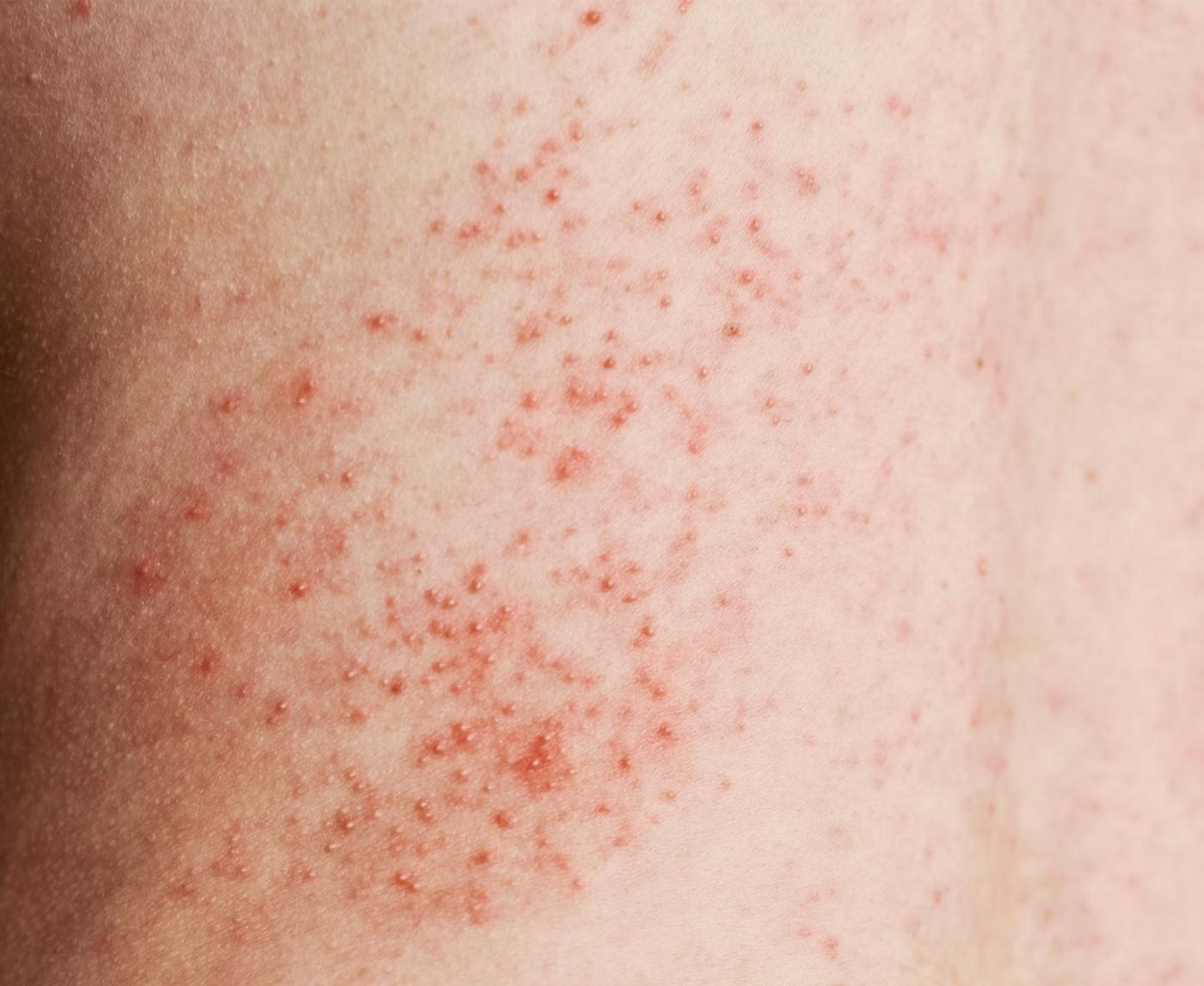
Quick Answer: A new soap reaction usually causes itching, redness, or burning shortly after using a product and often improves within a few days. STD symptoms typically appear days or weeks after exposure and may include sores, unusual discharge, or persistent irritation that doesn’t fade.
Why the Genital Area Reacts So Easily to New Soaps
The skin around the genital area is not like the skin on the arms or the legs. It’s much more sensitive and much more prone to moisture. This makes it extremely sensitive to chemicals that might be perfectly safe on other parts of the body.
The soaps and other personal hygiene products that are commonly used today are designed to be effective at removing oils and giving users that “clean” feeling. This works well on most people, but not so well on the genital area. The reaction to these soaps and other products causes what’s known as contact dermatitis.
The typical scenario will be that someone buys a new soap, uses it during a shower, and then gets irritated later that night. The fact that it’s around the genital area causes people to immediately think of sexual health issues. The truth of the matter is that the skin is simply reacting to something new.
This irritation can happen to anyone. It does not mean that the product being used is bad for you; it simply means that it does not agree with the chemistry of your skin.
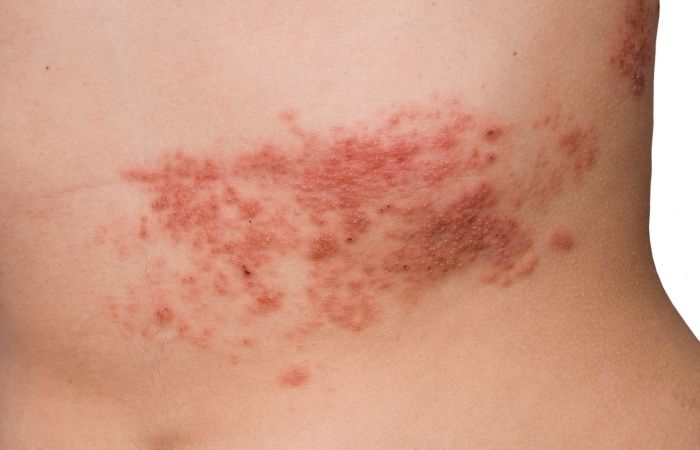
What a Soap Reaction Usually Looks and Feels Like
Soap reactions generally occur fast. In many cases, irritation occurs within a day or hours after using a new soap. Since the irritation is caused by exposure to something on the skin, irritation will generally occur on exactly the same spot where the soap came into contact with the skin.
It is often described as a burning or itching feeling on the skin that seemingly comes from nowhere. It might look red, slightly swollen, or irritated, especially in areas where the soap might not have been rinsed off properly. In most cases, irritation might even worsen after taking another shower since this means exposure to the irritant once again.
However, the good news is that most soap reactions will resolve on their own once the irritant is eliminated. If one stops using the product and uses a gentle soap instead, their symptoms will most definitely resolve within a few days.
| Symptom | What It Usually Means |
|---|---|
| Redness or irritation | Skin reacting to fragrance or chemicals in soap |
| Burning sensation | Natural skin barrier temporarily disrupted |
| Itching | Mild inflammatory response to a product |
| Dry or flaky skin | Soap stripping natural protective oils |
| Symptoms improve after stopping product | Strong indicator of contact irritation |
How STD Symptoms Usually Develop
Sexually transmitted diseases have a completely different incubation period. In other words, most STDs do not manifest immediately after exposure, as it takes some time for the disease to replicate in the body before it manifests.
For instance, chlamydia and gonorrhea take about one to two weeks to manifest, and in some cases, they do not manifest at all. Herpes, which is also considered an STD, manifests after a few days of exposure, and in this case, the manifestation is painful blisters as opposed to simple redness.
The second difference is that, unlike irritation from soap, which resolves as soon as the soap is stopped, STDs persist or worsen with time.
| Feature | Soap Reaction | Possible STD |
|---|---|---|
| Timing | Hours to 1 day after product use | Days to weeks after exposure |
| Location | Where soap touched the skin | Specific infection sites |
| Typical appearance | Redness or irritation | Sores, blisters, discharge |
| Duration | Improves within a few days | Often persists or worsens |
| Triggered by products | Yes | No |
When Symptoms Start After Sex, Why the Confusion Happens
A major reason for this confusion occurring frequently is the timing. If, for instance, an individual has sex with someone new and showers using a different soap than they are used to, the next night, they begin to feel irritated.
From a psychological point of view, the mind associates the irritation with the sex, not the soap, which is actually the more logical explanation, as the irritation started after the sex.
From a biological point of view, it is not likely for an infection to appear this quickly, and the irritation occurring the next night after the sex is more likely due to the soap.
Although this does not mean that testing for STDs is not important, if an individual has possibly been exposed and is feeling irritated, it can actually help alleviate this confusion, which many individuals are doing using STD Test Kits.
What must be remembered, however, is that the symptoms themselves are not necessarily indicative of what is actually occurring.
Symptoms That Are More Likely to Be an STD
Although irritation due to the use of soap is widespread, there are some symptoms that immediately catch the eye of the doctor, especially because they are more likely to be associated with infections. This is where the importance of detail comes in.
For example, a patient may notice that they have some irritation, which may begin as minor redness but progresses to fluid-filled blisters in the course of two days. Immediately, herpes may come to mind, especially because herpes has a higher tendency to manifest itself in the form of small groups of painful blisters, not just minor irritation.
Another instance that may raise some eyebrows in a clinical setting is the presence of unusual discharge. As mentioned earlier, irritation due to the use of soap does not have a tendency to cause discharge in the penis or vagina. If, however, a patient may notice unusual discharge, such as yellow, green, and cloudy, especially if they have been experiencing burning during urination, they may suspect gonorrhea and chlamydia.
A patient once described it in the most accurate way possible as they sat in the clinic waiting to be attended to. They said, “The itching wasn’t scary. But the blisters definitely were.” This may be the point at which the patient realizes that something may be wrong, other than just minor irritation.
| Symptom | Possible STD Association |
|---|---|
| Painful blisters or sores | Herpes |
| Unusual genital discharge | Chlamydia or Gonorrhea |
| Painful urination with discharge | Gonorrhea, Chlamydia |
| Painless sore that later heals | Syphilis |
| Persistent symptoms for weeks | Possible infection requiring testing |
Contact Dermatitis: The Medical Name for Soap Reactions
When dermatologists mention soap and product reactions, they usually mention it in relation to contact dermatitis. It is a technical term, but it is easy to understand. It refers to the inflammation of the skin due to exposure to irritating substances.
When it comes to genital skin, even slight changes in chemicals can already cause irritation. This includes fragrance oils, antibacterial agents, and strong cleansers.
Another reason for this is the pH level of genital skin. The chemicals in cleansers can alter it, causing irritation and discomfort. The natural pH level of vaginal skin is slightly acidic, and cleansers can alter it.
A dermatologist once told a patient: “Your skin isn’t broken, it’s just irritated and asking you to stop using whatever you used yesterday.”
However, it is good to know that contact dermatitis can always be treated and can go away quickly by stopping the product that caused it and using a different cleanser that is not harsh.
How Long Soap Reactions Usually Last
One of the most reassuring differences between soap irritation symptoms and STD symptoms is the speed with which symptoms will clear up. In many cases, symptoms from contact irritation will begin to improve within 24 to 72 hours after exposure to the irritant is eliminated.
For instance, if someone discovers that they first noticed symptoms on the same day they started using a new body wash, they might discontinue use and find that their symptoms improve within a few days. This is a strong indicator that they are simply irritated.
STD symptoms will not improve in this manner. They will continue, and some will even get progressively worse. For example, if someone is infected with chlamydia or gonorrhea, their symptoms will continue unless they receive some form of treatment. They will not get better on their own.
There is always a possibility for misdiagnosis, however. Some STD symptoms will get better and then come back. This is why testing is recommended. If someone wants quick answers without going in for a clinic visit, they might want to consider something like the 6‑in‑1 At‑Home STD Test Kit.
Simple Ways to Tell If Soap Might Be the Cause
Doctors often ask a few basic questions if someone comes in concerned about some form of genital irritation. These questions will often help determine if the problem is more in line with being a skin sensitivity or possibly even a form of infection.
One question is often about the time frame. Were symptoms experienced within a few hours of using a new soap, body wash, laundry detergent, or possibly another product? If this is the case, then it is most likely irritation.
Another question is often about whether or not this is happening elsewhere on the body. If the soap being used is causing some form of mild irritation on another part of the body, such as on the chest or thighs, then this is most likely due to irritation.
A third question is often about whether or not this heals on its own once the product is no longer being used. If this is the case, then this is behaving as irritated skin is expected to behave.
A good analogy for understanding this is to equate irritation with a protest. A protest will cease if the cause of the protest is eliminated.
In some situations, even if irritation is probable, testing is still a good idea. Sexual health is something that most people do not want to leave to chance. This is particularly true if there has been a recent new partner or if a condom has failed.
There are many types of infections that can exist without symptoms. This means that theoretically, a person could have irritation and another type of infection simultaneously. However, this is unlikely but possible.
This is why sexual health professionals often advise testing if someone is concerned after sex. Testing is not done if something is suspected to be wrong. It is done to confirm and reassure.
If your mind is stuck in that “what if” cycle, testing will break this cycle for you. Testing for STDs using STD Test Kits allows many people to get answers without waiting weeks for a clinic visit.
Clarity is a powerful tool. Once a person knows exactly what is going on, their anxiety will cease immediately.
Why the Internet Diagnoses Everything as an STD
If you’ve ever Googled something like “genital rash after shower,” you’ve probably noticed that within a few minutes, the search results start talking about herpes, syphilis, and other diseases that sound like they’re designed to scare the living daylights out of you when you’re already stressed enough.
The reason Google search results tend to focus on worst-case scenarios is that those are the things that get attention. The worst problem with this is that there are a number of common skin issues, including soap irritation, friction rash, yeast infections, and allergic reactions, that look surprisingly similar at the beginning.
As one sexual health expert candidly described it, “Half the time when someone thinks they have an STD, it turns out to be irritated skin.” This doesn’t mean that STDs don’t exist and are not important, but it does mean that symptoms are not necessarily indicative of what’s really going on.
Skin is a very reactive tissue. It responds to heat, moisture, chemical irritants, and friction all the time. When it happens to the sensitive areas of the body, of course, it’s going to be alarming, simply because of the association with sexual health.
What Doctors Look At When Evaluating Genital Irritation
If someone enters a medical facility concerned about their genital area, the first thing that should be done is not necessarily a test. What should be done is talk to the patient. Doctors need to know what happened before the symptoms started, as this will likely reveal the cause of the problem.
The first thing that doctors do to diagnose their patients is ask them about their recent activities. Have they used a new soap? Have they recently shaved? Has friction been involved in sex? Have they used a new laundry soap or lubricant?
These things are necessary to know, as irritation has certain patterns. For instance, if the irritation started the same day they used a new soap, they might have contracted contact dermatitis. If it started after unprotected sex, it might be an infection.
Doctors also need to know what the irritation looks like. Irritation from soap will usually be widespread redness or dryness in an area. Infections like herpes will have clusters of blisters, while syphilis will have one painful blister called a chancre.
FAQs
- 1. Can a new soap really cause genital itching?
- Yes, it can. This is because the genital area is one of the most sensitive areas of the body. It can respond to fragrances, preservatives, or strong cleansing agents in soap. This response to the soap or body wash is known as contact dermatitis.
- 2. How quickly does a soap reaction show up?
- A soap reaction can show up within hours or within a day after using a new soap. This is because it is a reaction to direct contact with your skin. It will show up much quicker than STD symptoms.
- 3. Can soap irritation look just like herpes?
- Yes, it can. This makes people worry. However, herpes will show up in groups of painful blisters filled with fluid.
- 4. Do STD symptoms show up right after sex?
- No, most STDs do not show symptoms right after sex. It will take some time, sometimes weeks, for STD symptoms to show up. This is because the STD will take some time to multiply.
- 5. How long does soap irritation last?
- The symptoms of mild soap irritation will begin to go away within a few days after stopping the use of the soap.
- 6. Can irritation occur with expensive soaps labeled as “natural”?
- Yes. Natural soaps, essential oils, and perfumes can cause irritation to your sensitive skin. The expensive price tag does not guarantee that irritation will not occur to your sensitive skin.
- 7. Is itching by itself a symptom of an STD?
- Yes. Itching by itself is more commonly associated with irritation, yeast infections, and other problems. Most STDs will present other symptoms as well, such as STD sores, discharge, and painful urination.
- 8. Should I get tested even if I think I am only suffering from irritation?
- Yes. If there was some kind of sexual contact recently and symptoms are present, it might be wise to get tested. There are many people who want to get tested just to know for certain that everything is fine.
- 9. Can soap cause vaginal pH to become imbalanced?
- Yes. Harsh soaps on your vaginal areas can cause your pH balance to get unbalanced. This is another reason why doctors recommend using mild soaps on your genital areas.
- 10. What’s the fastest way to know for sure whether I am suffering from an STD?
- The fastest way to know for sure whether you are suffering from an STD is to get tested. Getting symptoms will just give you clues about your condition. Getting tested will give you answers.
Why Testing Can End the Guessing Game
However, even with all the clues in the world, there is one thing that symptoms just can’t do: offer any kind of certainty. Occasionally, skin problems and infections will even share symptoms, making any kind of guessing impossible.
This is where testing comes in. Testing will eliminate any uncertainty and replace it with real information. Many infections today are even easily treatable, but testing will even make this process easier.
For those people who might have some anxiety about going to a clinic or even discussing their sex life in person, home testing is becoming more and more popular. With services such as at home combo STD tests, people are able to get tested for many common infections.
But the real value in testing is not even about being aware of your situation; it is about being able to eliminate any stress or anxiety that comes from being uncertain. And sometimes, your symptoms might even just be a reaction to soap.
Our article was written based on the current recommendations from the most well-known public health and medical organizations, and then rewritten in simple language based on the situations that people actually encounter, like treatment, reinfection from a partner, no-symptom infection, and the uncomfortable question of whether it “came back.” In the back of our minds, our research pool consisted of more diverse public health recommendations, clinical recommendations, and medical references, but the following are the ones that are most pertinent and useful to our readers who want to verify our claims for themselves.