Perimenopause or STD? Symptoms That Can Look Surprisingly Similar
Quick Answer: Both perimenopause and STDs can cause burning, irritation, painful sex, urinary discomfort, and changes in discharge or smell. When Midlife Symptoms Start Acting Suspicious This is why this question exists.
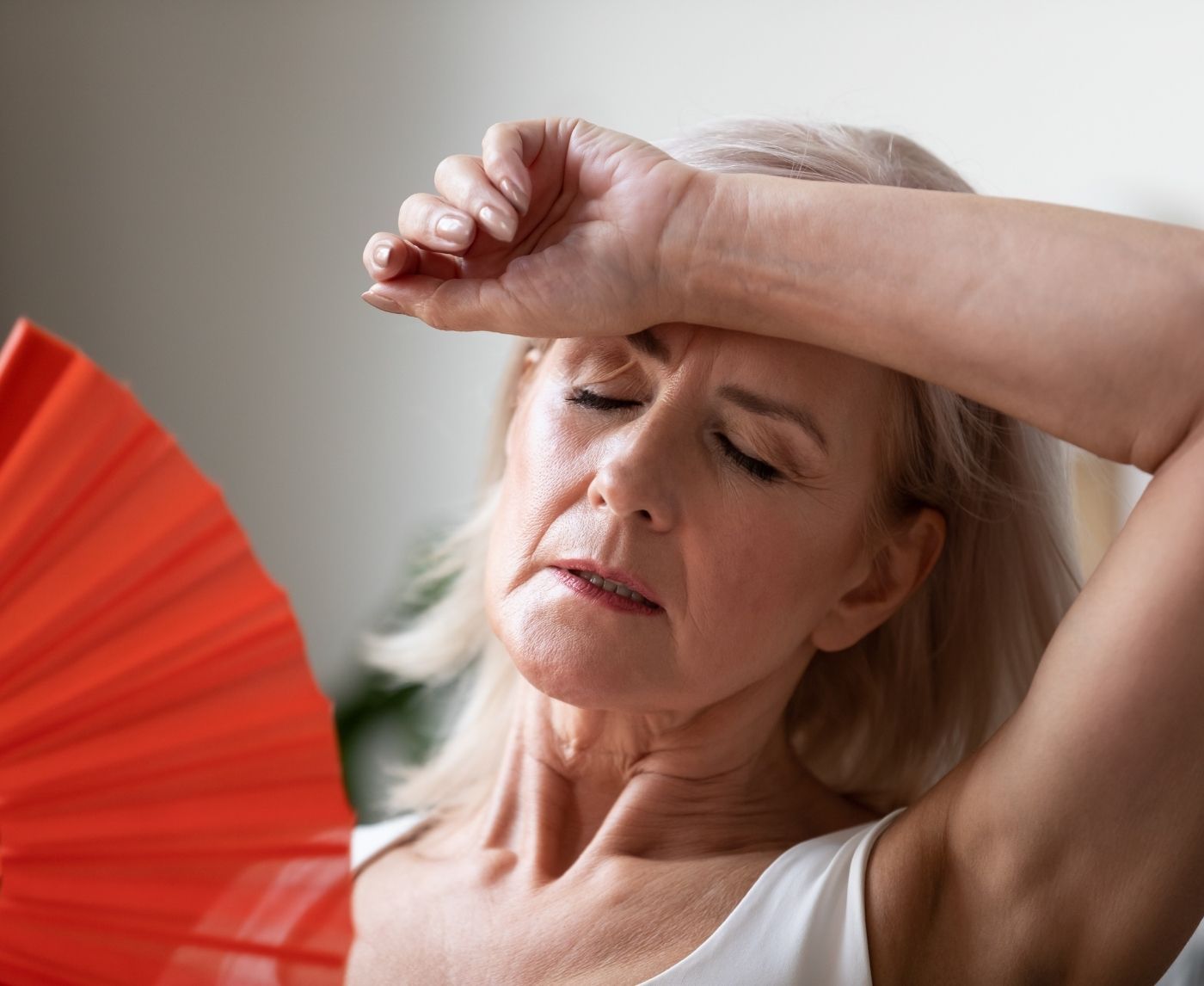
Quick Answer: Both perimenopause and STDs can cause burning, irritation, painful sex, urinary discomfort, and changes in discharge or smell. Hormones can look like an infection, but only testing can tell if you have an STD.
When Midlife Symptoms Start Acting Suspicious
This is why this question exists. During perimenopause, hormones start to zigzag instead of going in a predictable pattern. The tissues in the vagina can get thinner and drier. According to the American College of Obstetricians and Gynecologists, vaginal dryness can start in the years leading up to menopause. It can cause irritation, burning sensations, and painful sex. This is why people wonder if they have somehow gotten an infection instead.
Let’s add real-life sex to the mix. You’re in your early forties and experience some stinging sensations during sex. You feel dry. The next morning, you notice some spotting. Yes, this can happen as your hormones start to fluctuate. The tissues in your vagina get thinner and more sensitive. It can happen as your estrogen levels decrease. It can also happen at the same time that symptoms for an infection start to show.
The only problem is that your body does not give you a sign that says what’s going on. A lot of people end up at this article because they’re embarrassed for asking such a question. Let’s get real for a moment. There’s nothing dramatic or shameful about needing clarification in your life. You’re over 40. You’re still having sex. Your hormones still affect your body. You still get tested.
If your brain is going in a million different directions and wondering what’s going on and thinking what if, going to a place like STD Test Kits can be a good idea while your brain figures out whether this is all very hormonal or a mix of both.

The Overlap Is Real, and That’s Why Google Feels So Useless
The internet loves a good dramatic diagnosis, but biology is not that simple. The CDC states that chlamydia in women can cause abnormal vaginal discharge and a burning sensation when peeing, whereas gonorrhea can cause burning when urinating, increased discharge, or bleeding between periods.
These are not unusual or exotic symptoms. These are very common, very nonspecific changes that also happen during hormone-related vaginal and urinary irritation.
Perimenopause also sets up what is now termed genitourinary syndrome of menopause, or GSM, which is an umbrella term that includes dryness, burning, irritation, painful sex, urinary urgency, dysuria, and recurrent urinary discomfort. Vaginal atrophy, which is a part of this syndrome, causes itching, burning, pain during sex, and even urinary problems, which means that a person can be “infected” without having an STD.
This is where people get confused. One woman may say, “I was positive that it was an STD, but it burned every time I peed after sex.” Another may say, “I was positive that it was menopause until the discharge changed, and I realized that I need to get tested.” They are both right, but they are also both wrong.
They are both right in that these are very common feelings that women have, but they are also both wrong in that these feelings are not based in reality but are instead based on very real but nonspecific changes that also happen during hormone-related vaginal and urinary irritation. This is why guessing based on nonspecific changes is a lousy way to diagnose something.
Symptoms That Blur the Line the Most
However, some symptoms warrant special consideration since they are located squarely in the middle of the Venn diagram. The presence of burning, itching, irritation, pain during intercourse, urinary stinging, or changes in discharge can be caused by vaginal infections, STDs, or hormone changes in tissues. ACOG and Cleveland Clinic both list menopause-associated changes to the vulvovaginal tissues that include dryness, itching, irritation, burning, bladder symptoms, or pain with intercourse.
| Symptom | Can happen in perimenopause? | Can happen with an STD or vaginal infection? | Why it confuses people |
|---|---|---|---|
| Burning with urination | Yes | Yes | Low-estrogen tissue can feel irritated, but so can chlamydia, gonorrhea, BV, or trichomoniasis. |
| Vaginal itching or irritation | Yes | Yes | Dry, thinner tissue can itch, but yeast, BV, herpes irritation, and trich can also do this. |
| Pain during sex | Yes | Yes | Dryness and tissue fragility overlap with inflammation from infection. |
| Changes in discharge | Sometimes | Yes | Hormonal shifts can change vaginal environment, but infectious discharge patterns often need testing to sort out. |
| Odor changes | Sometimes | Yes | pH shifts in midlife can change odor, but BV and trichomoniasis are classic odor-related causes too. |
| Spotting after sex | Yes | Yes | Fragile tissue can bleed more easily, but cervicitis and some infections can also cause bleeding. |
One of the trickiest ones is probably the smell. The CDC states that with bacterial vaginosis, a strong fish smell, itching, burning, and discharge are possible, while on its own page about trichomoniasis, the CDC states that women may experience itching, burning, uncomfortable urination, and a discharge with a fish smell.
But as women go through these pH changes in their middle years, their vaginal areas may look, feel, and smell different, making smell not a very good detective.
The one that may drive people absolutely bonkers emotionally is painful sex. This is what ACOG states about it: “Vaginal dryness and painful sex are common problems in women going through perimenopause and menopause as a result of hormonal changes.”
So what may be thought of as a “symptom of infection” may in fact be a dry, inflamed, or irritated vaginal tissue from low estrogen levels, and yes, it may start even if sex was previously enjoyable.
What Symptoms Lean More Hormonal, and Which Ones Push Testing Higher on the List
There are patterns, even if there is not a magic one-question test. Symptoms that are more hormone-related tend to develop gradually. A person may notice that sex is drier than it used to be, then that perhaps their tissue is more sensitive when shaving or after sex, and that burning when they go to the bathroom is occurring even when their urine cultures are negative. A PubMed search on genitourinary syndrome of menopause states that "dryness, burning, irritation, dyspareunia, urgency, dysuria, and recurrent urinary tract symptoms are part of this syndrome, which are gradual in onset."
Those that bump infection/STD testing up higher on the list of possibilities tend to be related to a recent sexual encounter, a partner's admission of something, abnormal discharges, sores, or bleeding that is not explained by friction alone. They can also present without other symptoms, which is part of the problem. The CDC says that "Many women infected with gonorrhea do not have signs or symptoms of infection." Cervicitis is also "often asymptomatic or present with vaginal discharge or bleeding." The smartest approach is not "Which one do I hope this is?" but "What needs to be eliminated?" Testing is a good idea if the symptoms are recent, persistent, or related to a recent sexual situation. It ends the guessing game quickly. A discreet multi-test option, such as the 7-in-1 Complete At-Home STD Test Kit, is a good option for a person who wants answers without making this into a waiting room performance.
Why Hormones Suddenly Change the Vaginal Environment
The onset of perimenopause is not an overnight switch. It is more akin to a slow progression where estrogen levels ebb and flow over the course of a number of years. During this time, the vaginal tissue gradually becomes thinner, less elastic, and less lubricated. This alone can cause burning, irritation, and discomfort during sex that can feel eerily similar to an infection.
Estrogen levels are important to the vaginal microbiome. When estrogen levels fluctuate, so can the microbiome. The vaginal tissue becomes slightly less acidic. This can make a person more prone to irritation and minor infections. This is one of the reasons why a person may notice a change in the smell or discharge during the perimenopause.
There are a lot of readers out there who have experienced this moment. They have all described it almost exactly the same. One woman said the following to me during a clinic visit: “Everything was fine until suddenly it wasn’t. I noticed dryness after sex. Then I noticed a burning when I pee. I immediately assumed I got an STD.” She got tested. She didn’t have an STD. But the truth is her symptoms were caused by a combination of tissue change due to hormone levels and a mild infection. The experience of the symptoms may have been real, but the cause of the symptoms wasn’t what she expected.
When Sexual Activity and Hormones Collide
When you have sex in your 40s or 50s, it can be a lot different from when you had sex in your 20s or 30s. The difference is not necessarily that you don’t want to have sex as much as it is that your body is changing. Your estrogen levels are lower now, so you don’t have as much natural lubrication. Your vaginal tissues are also thinner now, making them more prone to irritation. This means that what was comfortable for you before is now uncomfortable, leaving you with irritation or soreness in the area.
One of the times when people seek answers late at night is when they are searching for “burning after sex STD or menopause.” The symptom is only half the battle. Friction, dryness, hormonal changes, imbalances of bacteria, or even an STD can all produce the same kind of symptoms. The body is reacting to inflammation. The question is what is causing that inflammation.
A sexual health professional once likened it to saying, “The body only has a limited number of ways to complain.” The symptoms of hormonal changes or an STD can be similar. That is why you can’t guess what is going on based on the symptoms. The only way to know for sure is to have yourself tested.
How Testing Removes the Guesswork
One of the most frustrating things about sexual health issues is that they often do not come with a warning label. For instance, a person may wake up feeling irritated and think that it is probably a hormonal issue, only to discover that it was a sexually transmitted disease all along. Another individual may be concerned that they have an STD and then discover that it was actually a perimenopause issue due to vaginal dryness.
Therefore, testing is often a recommended course of action if these issues present themselves unexpectedly. According to the CDC, many STDs can occur without any kind of symptoms, especially for women. This means that it is not always possible to determine if a sexually transmitted disease is present based on how something feels.
If it is inconvenient or uncomfortable for a person to get tested for a sexually transmitted disease, then home testing is a much easier option for many people. This is especially true for those that prefer a discreet option for testing, which is now available for those that utilize STD Test Kits. It is not about jumping to conclusions; it is about eliminating any doubt so that a person can move forward with a clear understanding.
| Situation | Why testing may help |
|---|---|
| New symptoms after a new sexual partner | Testing can rule out common infections that may appear within days or weeks of exposure. |
| Burning or pain with urination that persists | Urinary discomfort may be hormonal, but infections can cause the same sensation. |
| Unusual discharge or odor that appears suddenly | Changes in vaginal discharge are often linked to infection and deserve evaluation. |
| Bleeding after sex | This can occur with fragile tissue during perimenopause but may also be associated with cervical infections. |
| Symptoms that do not improve after several days | Persistent irritation should be evaluated rather than ignored. |
Testing is not an admission of bad behavior. It is, in fact, a means of seeking clarity. Some people may realize that their symptoms are, in fact, hormonal or related to common vaginal infections such as a bacterial imbalance or dryness. Others may realize that they have an infection, which can be treated promptly. In either case, the guessing game is over.
For those who are more private, a product like the 8‑in‑1 Complete At-Home STD Test Kit provides a means of testing for a number of common infections with a single kit. This, in turn, provides a means of making a difficult situation a simple decision.

Midlife Sexual Health Is More Normal Than People Realize
One of the not-so-talked-about truths about sexual health is that many people are still active in their sexuality well into their mid-life years or even beyond. This means that hormonal changes and sexual health are not mutually exclusive topics. The sad fact is that many people feel like they are the only ones dealing with these topics because of the cultural silence about sexuality beyond the age of 40.
The fact is that millions of people experience perimenopause every year. Many of those people are also active in their sexuality. Hormones can affect how the body reacts to sexuality. This does not mean that anything is “wrong” with a person’s sexuality or their overall health.
The fact is that STDs do not go away as people age. The data regarding STDs clearly shows that they are an ongoing threat to people of all adult ages. This is why many physicians recommend that people be tested for STDs when symptoms first appear or when a person has a new partner. Sexual health is not something that only occurs in your twenties. Sexual health is an ongoing part of a person’s overall well-being.
Why Guessing From Symptoms Alone Almost Never Works
If there is one thing that sexual health professionals warn people about repeatedly, it is that “symptoms are clues, not diagnoses.” This is because two people may experience the same burning or unusual discharge from the vagina, but the cause may be entirely different. One woman may be suffering from hormonal changes that cause vaginal dryness, while another woman may be suffering from an infection that can be treated with medicine.
The reasons for these different causes of the same or similar symptoms are based on the simple biology of the human body. The vagina has a number of ways to react to irritation. When the environment is irritated due to a variety of reasons, the body may react with a little inflammation. This inflammation may manifest itself as itching, burning, irritation, or discharge.
This is the reason that experienced sexual health professionals rarely diagnose a woman based on her symptoms. A woman may be convinced that she has an STD, whereas the sexual health professional may diagnose her with something else. Similarly, a woman may be convinced that she has hormonal changes in her body, whereas the sexual health professional may diagnose her with an infection that needs to be treated. The sexual health professional will use a test to determine the cause of the woman’s symptoms.
The Emotional Side of STD Anxiety in Midlife
There are a lot of people who secretly harbor a secondary fear when they experience these signs: embarrassment. The idea of going to a doctor to discuss the possibility of an STD in your forties or fifties is a little uncomfortable. Especially when it has been a while since you last had to deal with sexual health in that way.
However, sexual health experts deal with this situation on a regular basis. People change partners due to various reasons like relationships ending in divorce. People start dating again after a long time. People experience new partners due to various reasons. Hormonal changes cause a variety of new signs that people experience. This is nothing new. This is the most common situation that sexual health experts deal with.
One woman said it best: “I felt ridiculous even asking about testing at my age.” The doctor simply laughed and said to her: “Bodies don’t stop being bodies at 40.” This little bit of honesty is liberating. Sexual health is not something that has to do with age. It is simply a matter of self-care.
When Hormones and Infections Can Actually Overlap
The other reason for the confusion is that sometimes hormonal changes can actually increase the risk of an infection slightly. For example, estrogen levels can affect the vaginal tissues. Lower estrogen levels can actually affect the protective role of the tissues.
For example, vaginal dryness is one of the common changes that can occur during perimenopause. This can lead to tiny tears during intercourse. The tears can be painful, but they can also lead to an increased risk of irritation or even an infection. The point is not that you are at a higher risk of getting an STD or anything like that. The point is that you are actually increasing the risk of confusion.
The above situation can be even more confusing. The point is that you are actually experiencing both dryness caused by hormonal changes and an infection at the same time. Without any test results, it is almost impossible to distinguish between the two.
How Doctors Usually Sort Out the Difference
When a person presents a complaint to a medical provider about vaginal issues, the point is not to make guesses but rather to determine the reason. In most cases, a doctor will talk to a patient about their symptoms, their history of sex, any recent changes in their partners, and whether or not hormonal changes are taking place. This helps determine which explanation is most probable for the reason behind the vaginal issues.
The next step in diagnosis is usually testing. This could be a urine test, a vaginal swab, or a blood test, depending on the type of symptoms that are being experienced. In most cases, these tests quickly determine the reason for the vaginal issues that a person is experiencing.
If tests do not indicate that a person has any kind of infection, then the next course of action for a doctor is usually to determine if hormonal issues are the reason for vaginal problems. In most cases, a person is surprised by how quickly their issues are alleviated once the reason for them has been clearly identified.
Before You Spiral, Here’s the Calm Next Step
If you are reading this article because you are experiencing something that just doesn't seem right, take a deep breath. Vaginal issues are very common during perimenopause, and most of them have very simple explanations. While burning, itchy, and uncomfortable feelings are not automatically signs of an STD, they also should not be ignored if you are experiencing them.
The quickest way to clear up any confusion is, of course, through testing. This way, you will be able to deal with whatever is happening, whether it is an infection or hormonal issues, right away. Either way, you are no longer speculating but are instead working with facts.
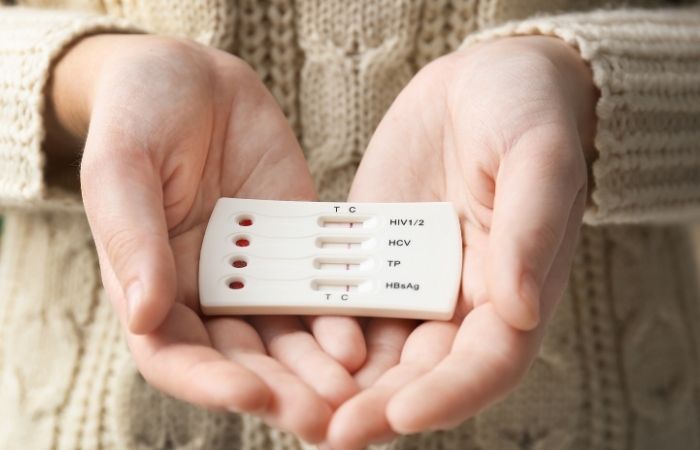
If you are someone who needs answers right away, a discreet solution is the 7-in-1 Complete At-Home STD Test Kit, which can be used to test for common STDs at home. Once you are no longer confused, you are no longer stressed about your symptoms.
FAQs
- 1. Can perimenopause cause STD-like symptoms?
- Yes. The hormonal shifts that occur during perimenopause may result in vaginal dryness, irritation, burning, or painful intercourse. In these instances, testing for STDs is often the best course of action for diagnosis.
- 2. Does vaginal itching always mean that a woman has an STD?
- No. There are a number of reasons why a woman may be experiencing vaginal itching. It may be caused by hormonal shifts, yeast infections, bacterial imbalances, skin irritations, or even allergies. In some cases, vaginal itching may be a symptom of an STD; however, it is not the only explanation for this symptom.
- 3. Why does sex suddenly become painful during perimenopause?
- During perimenopause, hormone levels decrease, resulting in less natural lubrication. This decrease in hormones also causes vaginal tissue to become thinner and more sensitive. This thinning tissue may become irritated during intercourse, even if sex has always been comfortable in the past.
- 4. Can perimenopause affect vaginal odor?
- Yes. The hormonal shifts that occur during perimenopause may affect vaginal pH levels, which may affect vaginal odor. In some instances, however, unusual or strong vaginal odor may be a symptom of a bacterial or yeast infection. In these instances, testing for STDs is often a good course of action for diagnosis.
- 5. Are STD symptoms different for women over 40?
- No. In most instances, STD symptoms present in a similar manner regardless of age. The difference is that during perimenopause, a number of other symptoms may be experienced that mimic the symptoms of STDs.
- 6. Should I get tested if symptoms occur after having sex?
- Yes. This will help ensure that any infection is eliminated while you consider other possible causes for your symptoms.
- 7. Can hormonal dryness cause burning during urination?
- Yes. When vaginal and urinary tract tissues become irritated from dryness, burning during urination may occur. This burning is similar to that which occurs if you have an infection.
- 8. Is it normal for perimenopause individuals to worry about STDs?
- Yes. It is normal for individuals experiencing unusual body symptoms to be concerned. The fact that both STDs and hormonal imbalances present similar symptoms means that it is normal for individuals experiencing perimenopause to be concerned about STDs.
- 9. Can hormone therapy help relieve vaginal symptoms?
- Yes. In some instances, doctors may prescribe hormone therapy for vaginal dryness. This has shown great promise for relieving symptoms that occur due to hormonal imbalances.
- 10. What is the quickest method for determining if the symptoms are caused by STDs?
- The quickest method for doing so is by testing. This will help determine if the symptoms are a result of STDs or something else. Tests can detect STDs even if the symptoms are unclear or minor.
Sources
1. Centers for Disease Control and Prevention – Sexually Transmitted Diseases Overview
2. Cleveland Clinic – Vaginal Atrophy and Menopause
3. American College of Obstetricians and Gynecologists – When Sex Is Painful
4. CDC – Chlamydia Information
5. CDC – Gonorrhea Information
6. PubMed – Genitourinary Syndrome of Menopause Review
Menopause, Women’s Health, and Work – CDC
Perimenopause – Symptoms and Causes – Mayo Clinic
Menopause – Symptoms and Causes – Mayo Clinic
Menopause Symptoms and Relief – U.S. Office on Women’s Health
Menopause – World Health Organization Fact Sheet
Perimenopause – Johns Hopkins Medicine