Should Both Partners Get Tested Before Going Condom-Free?
Quick Answer: Both partners should get tested before going condom-free, and testing should happen after the appropriate STD window period to avoid false negatives. This Isn’t About Trust. It’s About Timing. It’s not.

Quick Answer: Both partners should get tested before going condom-free, and testing should happen after the appropriate STD window period to avoid false negatives. A recent negative test only protects you if it was taken at the right time.
This Isn’t About Trust. It’s About Timing.
One of the biggest misconceptions couples have is that STD testing before unprotected sex is about proving loyalty. It’s not. It’s about biology. You can trust your partner completely and still run into a window period issue.
The window period is the time between exposure and when a test can reliably detect infection. During that gap, someone can test negative and still be infected. According to guidance from the Centers for Disease Control and Prevention, different infections show up on tests at different times, which is why “we both tested last week” doesn’t automatically mean it’s safe to stop using condoms.
I once spoke with a couple, we’ll call them Maya and Jordan. They had both tested negative two weeks into dating. They felt responsible. Grown. Careful. But Jordan’s last hookup had been only six days before that test. Three weeks later, Maya developed symptoms of chlamydia. It wasn’t betrayal. It was timing.
This is why the question isn’t just “should we both get tested?” The real question is “when did we last have potential exposure, and are we past the accurate testing window?”
What Should Couples Actually Test For?
When couples decide to stop using condoms, they often ask if they need a “full STD panel.” The answer depends on sexual history, type of sex, and risk tolerance. But there are core infections that matter in almost every new exclusive relationship conversation.
The most common bacterial infections, chlamydia and gonorrhea, are frequently asymptomatic, meaning neither partner may notice anything unusual. Syphilis can present subtly or not at all in early stages. Testing for HIV is an important part of any full pre-condom-free screening. Screening for hepatitis B, hepatitis C, and trichomoniasis may also be pertinent based on exposure history.
Below is a practical overview of common tests couples consider before going condom-free.
| Infection | Common Test Type | Sample Needed | Often Symptomless? | Why It Matters Before Going Condom-Free |
|---|---|---|---|---|
| Chlamydia | NAAT/PCR | Urine or swab | Yes | Very common and easy to get through sex in the vagina or anus |
| Gonorrhea | NAAT/PCR | Urine or swab | Yes | Can affect genitals, throat, or rectum without symptoms |
| Syphilis | Blood antibody test | Blood sample | Often | Early infection may go unnoticed but can progress |
| HIV | Antigen/antibody or NAAT | Blood or oral fluid | Yes | Critical for long-term health and partner protection |
| Trichomoniasis | NAAT or rapid antigen | Swab or urine | Frequently | Common in some populations, especially in women |
Table 1. Core infections are often tested for before couples stop using condoms. The need for testing may change based on a person's history of exposure and anatomy.
For many couples, an at-home combination kit provides a practical way to screen together without scheduling clinic visits. Options available through STD Rapid Test Kits allow partners to test discreetly and simultaneously, which can make the conversation feel collaborative rather than accusatory.
How Long Should You Wait Before Stopping Condoms?
This is where things get nuanced. If both partners have not had any sexual contact with others for months, and both test negative after appropriate window periods, the risk profile looks different than if one partner had a new exposure two weeks ago.
Window periods vary by infection. Testing too early is one of the main reasons couples experience false reassurance. A negative STD test taken outside the reliable detection window may simply mean it’s too soon.
| Infection | Earliest Detection | Most Reliable Testing Window |
|---|---|---|
| Chlamydia | ~7 days post exposure | 14 days or later |
| Gonorrhea | ~7 days post exposure | 14 days or later |
| Syphilis | 3 weeks | 6 weeks or later |
| HIV | 10–14 days (NAAT) | 4–6 weeks for Ag/Ab tests |
Table 2. Approximate window periods based on CDC and clinical laboratory guidance. Individual timelines may vary.
Imagine two people who decide to test “just to be safe” a week after their last outside partner. They both test negative. They celebrate. They stop using condoms. Three weeks later, one develops discharge. That’s not a failure of trust. It’s a failure of timing.
If you’re wondering how long to wait before stopping condoms, the safest approach is this: both partners test after their last potential exposure and only move forward once they’re beyond the most reliable detection window. If either partner has had sex with someone else within the past two weeks, waiting may significantly improve accuracy.
And if anxiety is creeping in while you wait, remember that you can retest. Modern at-home kits allow couples to test more than once without awkward clinic logistics. Peace of mind is not overkill. It’s responsible.
Can You Trust a Negative STD Test?
“We both tested negative, so we’re good… right?” That sentence gets whispered in bedrooms and sent over text threads every day. And most of the time, yes, negative tests are reassuring. But the reliability of that reassurance depends entirely on timing and test type.
A negative STD test does not mean “never infected.” It means “no infection detected at the time of testing.” That distinction sounds technical, but it matters deeply when couples are deciding to go condom-free.
Evan and Lina had both taken at-home tests before planning a weekend away together. They waited anxiously for the results, opened them side by side, and saw two clean negatives. “See?” Evan said, smiling. “We’re fine.” But Lina later realized her last sexual contact before him had been only nine days earlier. She started Googling phrases like “false negative STD test” and “how long after sex should you get tested.”
Her anxiety wasn’t paranoia. It was biology. Many bacterial infections like chlamydia and gonorrhea may not show up reliably until around 14 days after exposure. Testing earlier can miss early infection. That's why window periods aren't just facts for school; they can mean the difference between feeling safe and being too sure of yourself too soon.
According to guidance from the Mayo Clinic, testing timing should reflect recent exposure history, not just relationship status. Exclusivity doesn’t erase past exposures. It just stops new ones.
Rapid Tests vs Lab Tests: What Couples Should Understand
When couples search for “how accurate are at home STD tests,” they’re usually worried about one thing: missing something important. The truth is more nuanced than a simple yes-or-no answer.
Modern nucleic acid amplification tests (NAAT), commonly used for chlamydia and gonorrhea, are highly sensitive and are considered the gold standard in many clinical settings. Rapid at-home tests, depending on the infection, offer convenience and privacy with strong accuracy, but like all tests, they are still subject to timing.
The difference isn’t just about technology. It’s about context. A lab-based NAAT taken too early can still miss infection. A rapid test taken at the correct time can provide reliable reassurance.
| Testing Method | Speed of Results | Privacy Level | Accuracy (When Timed Correctly) | Best For |
|---|---|---|---|---|
| At-Home Rapid Test | Minutes | Very High | Moderate to High | Couples wanting immediate, discreet screening |
| Mail-In Lab Kit | 1–3 days after lab receipt | High | High | Comprehensive panels with lab processing |
| Clinic-Based Testing | Varies | Moderate | Very High | Symptoms, complex exposure, or confirmatory testing |
Table 3. Comparison of testing formats couples consider before discontinuing condom use.
If both partners are asymptomatic and testing after appropriate window periods, an at-home combo kit can be a practical and effective option. Many couples choose to order from a comprehensive at-home combo test kit so they can screen together privately. The shared act of testing can actually strengthen communication rather than undermine it.
But if either partner has symptoms, unusual discharge, sores, pelvic pain, burning urination, clinic-based testing may be more appropriate. Symptoms change the calculus. They shorten the “wait and see” window.
The Conversation Most Couples Avoid
The medical side is only half the equation. The other half is the talk itself.
It’s easy to Google “how to ask partner to get STD tested.” It’s harder to look someone you care about in the eye and say, “I want us both to be tested before we stop using condoms.”
Many people worry that bringing up STD testing implies distrust. But responsible sexual health isn’t an accusation. It’s a shared standard. When framed correctly, it sounds less like suspicion and more like collaboration.
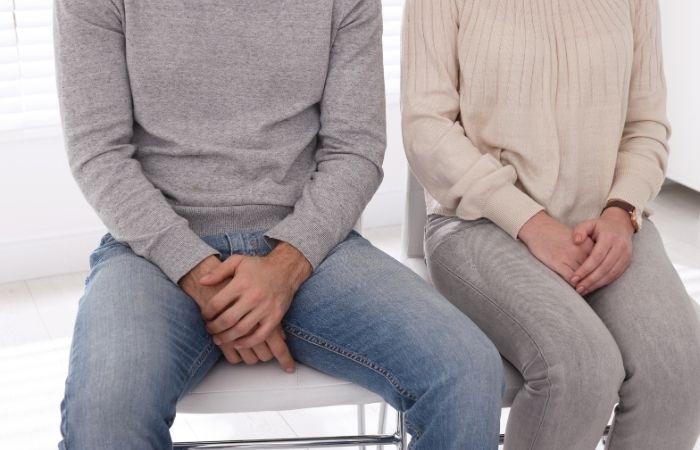
Picture this: two people sitting on opposite sides of a bed, knees touching. One says, “I really like where this is going. I just want us to both test and be totally clear before we stop using condoms.” The other pauses. Then nods. The relief in the room is palpable. Not because of fear, but because clarity replaces uncertainty.
Testing before going condom-free is not about morality. It’s about informed consent. Both partners deserve full information about risk before changing protection methods.
What If You’re Already Exclusive?
Another common search phrase is “can you get an STD in a monogamous relationship.” The answer depends on timing and past exposures. If both partners have tested after their last external contact and remained exclusive since, risk drops dramatically. If testing occurred too early, or if exclusivity timelines overlap, risk may still exist.
Monogamy reduces new exposures. It does not retroactively erase previous ones.
Alana and Chris assumed that once they agreed to be exclusive, condoms were optional. Neither had tested since before meeting each other. Months later, Alana developed pelvic discomfort and learned she had a lingering, previously undetected infection. It wasn’t cheating. It was delayed testing.
Exclusive relationship STD testing should happen after the last possible exposure, not just after defining the relationship. That distinction feels subtle. But medically, it’s significant.
So… Should Both Partners Get Tested?
If the goal is reducing preventable infection risk before going condom-free, then yes, both partners should be tested. Ideally, testing should occur after the appropriate window periods, and ideally, both partners should understand what infections were included in the screening.
Stopping condom use changes your risk profile. Pregnancy prevention may be handled separately. But STD prevention depends on information. And information depends on testing.
If you’re sitting there wondering whether you’re overthinking it, you’re not. You’re doing exactly what responsible adults do when intimacy deepens: you’re asking questions.
And if access or scheduling feels like a barrier, remember that discreet, home-based testing exists for exactly this stage of relationships. You can explore options privately at STD Rapid Test Kits, where couples often choose to test together before making that next step.
If You Tested Recently, Do You Need to Retest?
This is where couples start negotiating with themselves. “I tested three months ago.” “I haven’t had many partners.” “It was just oral.” The mind looks for shortcuts. The body does not care about shortcuts.
The real question is not how recently you tested. It’s whether you tested after your most recent potential exposure and whether enough time had passed for accurate detection. If you tested before your last sexual partner, that result doesn’t apply to your current risk. If you tested too soon afterward, the result may have been premature.
Noah thought he was covered because he had done a full STD panel earlier that year. But his last sexual encounter before meeting Tessa happened two weeks after that panel. When Tessa suggested they both test before going condom-free, he felt briefly defensive. “I already tested.” After sitting with it, he realized the timeline didn’t add up. They retested together. The relief was different this time, grounded, not assumed.
Retesting makes sense if either partner has had sexual contact since their last screening, if testing was performed inside a window period, or if new symptoms appear. In some cases, clinicians recommend repeat testing three months after treatment for certain infections to rule out reinfection. That’s not paranoia. It’s standard practice.
What Happens If One Partner Tests Positive?
This is the part people fear the most. Not the swab. Not the fingerstick. The result.
A positive test before going condom-free can feel like the floor dropping out. But medically, it is information. And information allows action. Most bacterial infections such as chlamydia and gonorrhea are treatable with antibiotics. Syphilis is highly treatable when caught early. For HIV, modern treatment allows people to live long, healthy lives and, when viral load is suppressed, not transmit the virus sexually.
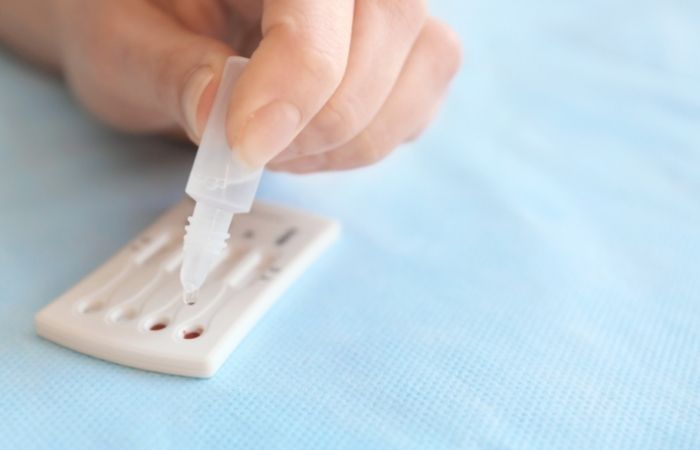
Imagine a couple sitting at a kitchen table staring at a test strip. One partner’s result shows positive. Silence stretches. Then someone says, “Okay. What do we do?” That shift, from panic to plan, is everything.
The plan usually looks like confirmatory testing if recommended, appropriate medical treatment, abstaining from condom-free sex until cleared, and open communication. The World Health Organization emphasizes that early detection and treatment significantly reduce complications and transmission risk. Catching an infection before going condom-free is not a relationship failure. It’s prevention working exactly as intended.
And if you are reading this thinking, “I don’t know if I could handle that conversation,” remember that testing together means facing results together. That shared accountability often strengthens rather than weakens intimacy.
Condom-Free Doesn’t Mean Risk-Free
Even after both partners test negative beyond window periods, going condom-free changes dynamics. If either partner has other sexual partners in the future, risk resets. If exclusivity changes, testing conversations restart. Sexual health is ongoing, not a one-time clearance badge.
Some couples decide to test annually. Others test whenever there is a change in partnership status. The decision depends on lifestyle and risk tolerance. What matters is that condom-free sex is an informed choice, not an accidental one.
There are also subtleties when it comes to infections like herpes and HPV, which aren't always part of routine screenings and can be spread even when there are no visible symptoms. That doesn’t mean condoms are useless. Condoms reduce risk significantly, though not completely, especially for infections spread by skin-to-skin contact. Understanding those limits allows couples to decide what level of risk they’re comfortable with.
The Quiet Emotional Layer No One Talks About
There’s something vulnerable about saying, “Let’s both get tested.” It means admitting you’ve had a past. It means acknowledging risk without shame. It means choosing transparency over fantasy.
One woman once told me, “I thought asking him to test would make him think I didn’t trust him. Instead, he said thank you.” That thank you carried weight. It meant he saw testing not as suspicion but as care.
Going condom-free often symbolizes emotional progression. But medically, it should symbolize clarity. Testing turns uncertainty into knowledge. Knowledge reduces preventable harm. That is not unromantic. That is mature intimacy.
If you are at that crossroads, staring at the unopened condom wrapper on the nightstand and wondering whether it’s time to stop, pause long enough to ask one grounded question: Have we both tested at the right time?
If the answer is yes, and you are beyond window periods, and you both understand what was tested, then you are making an informed decision. If the answer is unclear, testing is still available. Private. Discreet. On your terms.
For couples who prefer not to schedule clinic appointments, comprehensive at-home options are accessible through a multi-infection combo test kit, allowing partners to screen simultaneously before taking that next step.
FAQs
1. Okay, but seriously, do we both have to get tested? If you’re about to stop using condoms, then yes. Not because you distrust each other. Not because someone did something wrong. But because you both deserve the same level of information. Going condom-free is a shared decision, which means shared responsibility. If only one person tests, you’re still guessing.
2. We tested negative last month. Isn’t that enough?
Maybe. The real question is: when was your last possible exposure? If you tested before your most recent partner, or too soon afterward, that negative result may not reflect your current status. A test only speaks for the timeline it covers. Think of it like a snapshot, not a lifetime warranty.
3. How long do we actually have to wait before stopping condoms?
It depends on what you’re testing for. For infections like chlamydia and gonorrhea, two weeks after exposure is generally a reliable point. For HIV, certain tests are most dependable after about four to six weeks. If you’re inside those windows, waiting a little longer can mean the difference between confidence and crossed fingers.
4. What if one of us feels awkward bringing this up?
That’s normal. Almost everyone does. Try framing it as care instead of caution. Something like, “I really like where this is going, and I want us to feel totally safe.” When testing is positioned as something you do together, it stops feeling like suspicion and starts feeling like partnership.
5. Do we need a massive, expensive full STD panel?
Not necessarily “massive,” but comprehensive enough to cover the common infections that spread through the type of sex you’re having. Most couples screen for chlamydia, gonorrhea, syphilis, and HIV at minimum. If either of you has specific risk factors, additional testing may make sense. It’s less about size of the panel and more about relevance.
6. Can you really get an STD in a monogamous relationship?
Yes, if the infection was there before the relationship became monogamous or if someone tested during a window period. Monogamy prevents new exposure. It doesn’t retroactively clear past ones. That’s why timing matters more than labels.
7. Are at-home STD tests actually reliable?
When used correctly and taken at the right time, many are very reliable for common infections. The key is proper sample collection and respecting window periods. If symptoms are severe or confusing, in-person evaluation is wise. But for screening before going condom-free, at-home testing can absolutely be part of a responsible plan.
8. What if one of us tests positive?
First, breathe. Most common bacterial STDs are treatable. A positive result before stopping condoms means the system worked, you caught it before exposing each other further. The next steps usually involve confirmation if needed, treatment, and waiting until cleared before going condom-free. It’s not the end of the relationship. It’s a moment of medical logistics.
9. Is it overkill to test twice just to be sure?
Not if it helps you sleep at night. If you tested early and want confirmation after the full window period, retesting is reasonable. Peace of mind has value. Responsible doesn’t mean paranoid.
10. Does stopping condom use mean we’re totally risk-free?
No protection strategy is perfect. Even after negative results, some infections like herpes or HPV may not always be part of routine screening and can transmit without obvious symptoms. What testing does is dramatically reduce preventable risk. What it doesn’t do is create a magical zero-risk universe. That’s the honest truth.
You Deserve Clarity Before You Drop the Condom
Going condom-free should feel intentional, not uncertain. It should be a decision made with full information, not crossed fingers. If both partners have tested after appropriate window periods and understand what infections were screened, you are choosing intimacy with clarity.
If there is any doubt about timing, exposure, or test coverage, pause. Test. Confirm. Responsible intimacy is not unromantic. It is protective.
Don’t wait and wonder. Get the clarity you both deserve. Before continuing, couples can confidently and privately test themselves with this at-home combo test kit.
How We Sourced This Article: This guide is based on the most up-to-date advice from top medical experts, peer-reviewed research on the accuracy of STD tests and window periods, and reports from people who have actually been in relationships.