STD or Endometriosis Why the Symptoms Get Confused
Quick Answer: STD symptoms like pelvic pain, spotting, and painful sex can mimic endometriosis. Endo can also mask or delay STI diagnosis. at 2AM, this guide is for you.
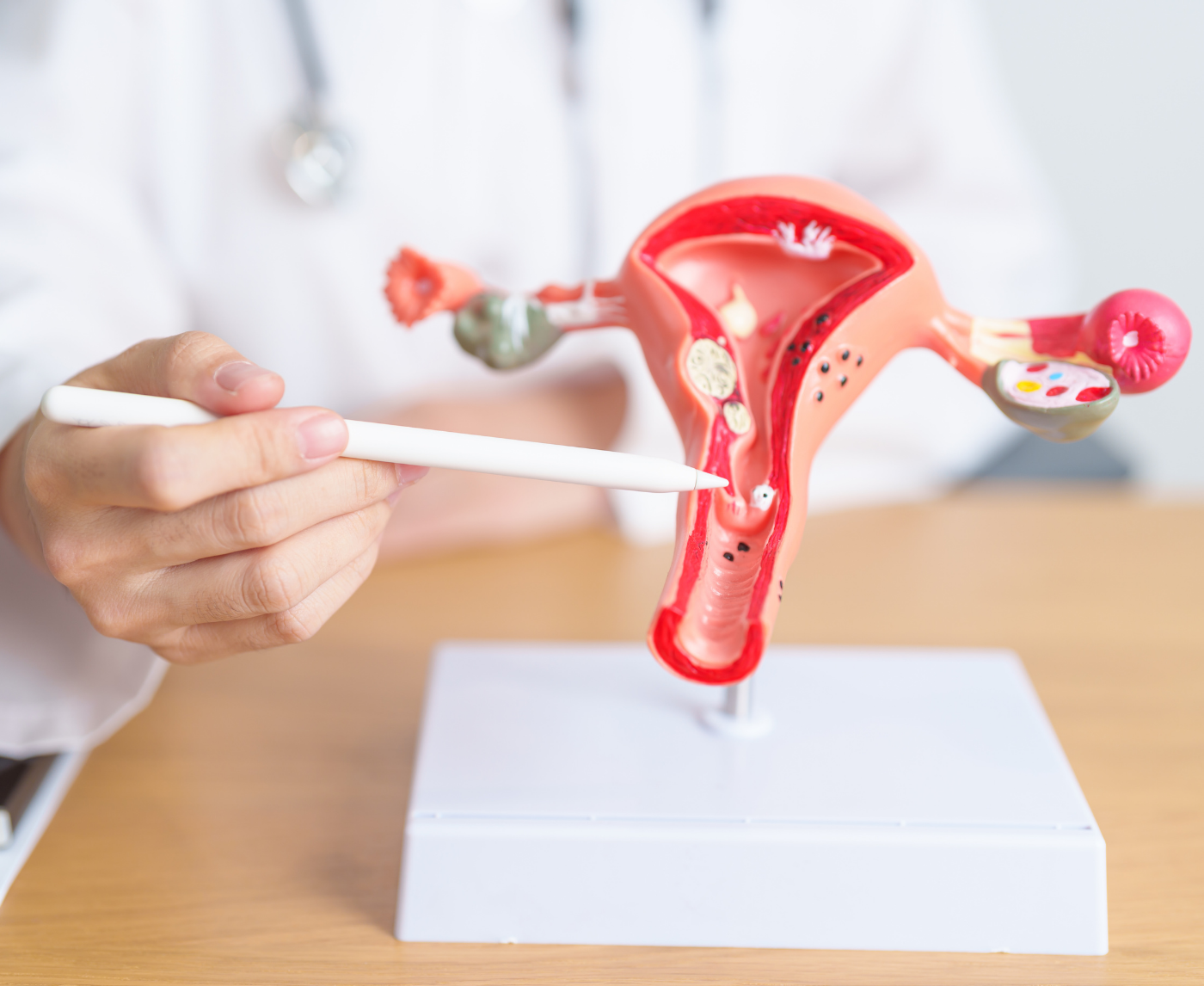
Quick Answer: STD symptoms like pelvic pain, spotting, and painful sex can mimic endometriosis. Endo can also mask or delay STI diagnosis. At-home testing helps clarify what’s going on, especially when symptoms persist after a “normal” exam.
Who This Article Is For (And Why It Matters)
If you’ve ever googled “chlamydia or endometriosis?” at 2AM, this guide is for you. It’s for the person whose pain is dismissed as “just hormones” or “probably stress.” It’s for those who’ve been tested, treated, or misdiagnosed, and are still stuck in a cycle of confusion. Whether you’re managing a known endo diagnosis, suspect an untreated STD, or living with symptoms no one can explain, you deserve answers, not assumptions.
This article breaks down what symptoms overlap, why misdiagnosis happens, and how you can advocate for yourself with testing, retesting, and the right questions. Because when pain becomes normal, it’s easy to miss something dangerous, or treatable. And when sex hurts, or your body’s signaling something off, it’s not “dramatic” to want clarity.
Why Do STDs and Endometriosis Look So Similar?
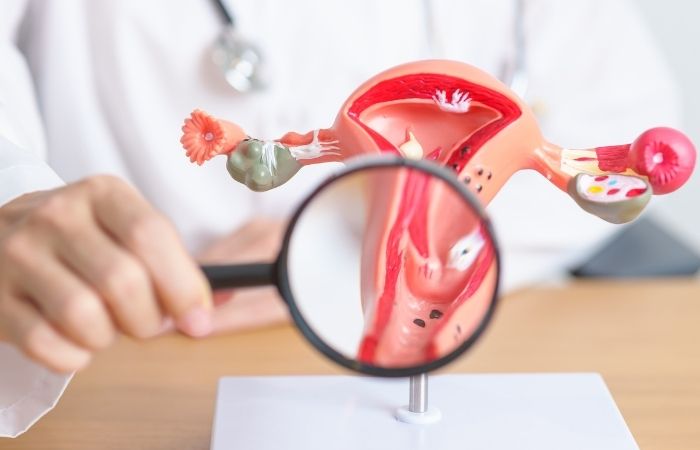
Because both affect the reproductive system, both can trigger inflammation, and both are notoriously underdiagnosed. Let’s break it down:
Endometriosis is a condition where tissue similar to the uterine lining grows outside the uterus. It causes chronic pelvic pain, painful periods, pain during sex, and sometimes infertility. It can also cause bloating, nausea, and fatigue, especially during menstruation.
STDs like chlamydia, gonorrhea, and trichomoniasis often present with pelvic pain, painful intercourse, spotting, and discharge. But here’s the kicker: many people with these infections have zero symptoms at first, or symptoms that flare only during hormonal shifts (like periods or pregnancy).
That overlap, especially in people assigned female at birth, creates a perfect storm of confusion, especially when providers don’t test for both or take complaints seriously.
What Doctors Often Miss (And Why It Happens)
The average delay in diagnosing endometriosis is seven to ten years. Meanwhile, the CDC estimates that 1 in 20 sexually active women aged 14–24 has chlamydia, many without knowing. When pelvic pain is brushed off as “normal female pain,” STDs can worsen undetected. And when a basic STD test comes back negative, endometriosis may still go uninvestigated.
This is especially common among patients who are:
- Young (and assumed to be “exaggerating” pain)
- Black, brown, or Indigenous (who face medical bias in pain assessment)
- Queer or trans (and overlooked in standard gyn care)
- Living with trauma (which can blur reporting of pain, bleeding, or symptoms)
One Reddit user wrote: “They told me I had a ‘sensitive cervix’ for three years. It was chlamydia. And I also had stage 2 endo.”
Another user shared: “I kept testing negative. Turns out it was endo, but the first doctor only checked for yeast and BV.”
Doctors aren’t always trained to see the full picture, especially in underfunded or rushed clinics. And even with good care, both conditions can be sneaky. That’s where testing, retesting, and tracking symptoms matter most.
Shared Symptoms: STD vs Endometriosis
This table breaks down some of the most commonly confused symptoms and where they overlap. Use it to start conversations with your provider, or decide if it’s time to test again.
| Symptom | Possible with STD | Possible with Endometriosis | Notes |
|---|---|---|---|
| Pelvic pain | Yes | Yes | Endo is often cyclical; STDs may flare during/after sex |
| Pain during sex | Yes | Yes | Common in both; location of pain can hint at cause |
| Spotting between periods | Yes | Yes | Trichomoniasis and chlamydia can cause this, as can endo |
| Unusual discharge | Yes | Sometimes | Thick or foul discharge leans STD; endo may alter cycle mucus |
| Fatigue or nausea | Sometimes | Yes | More common in chronic endo flares |
| Fever or chills | Yes (if PID) | No | Sign of possible infection, get tested immediately |
Figure 1. Symptom confusion chart showing how STDs and endometriosis overlap.
“I Was Treated for Endo, But It Was an STD the Whole Time”
Carla, 29, spent two years rotating through specialists for severe pelvic cramps, spotting, and pain during penetration. She’d been diagnosed with “suspected endo” at 26 after a rushed transvaginal ultrasound. No one ever ordered a full STI panel. She wasn’t in a monogamous relationship, but her doctors never asked. She lived in a city where gyn appointments were hard to book, and the bleeding got worse after each cycle.
“I thought it was endo flaring again. Then a new partner tested positive for chlamydia. I tested. I was positive too. I don’t know how long I’d had it. I cried for hours, not just out of fear, but anger. I could have treated this a year ago.”
Her follow-up testing showed pelvic inflammatory disease (PID), a complication of untreated STDs that can mimic or worsen endometriosis. She later confirmed endo, too, but the years of confusion cost her both time and fertility options.
Stories like Carla’s are far from rare. In fact, some researchers now believe that a significant percentage of people diagnosed with endo also have a history of missed or untreated STIs that may have contributed to scarring or inflammation.
When to Get Tested (Even If You Think It’s Endo)
If you’re experiencing pelvic pain, bleeding, or painful sex, and you’re sexually active, it’s smart to rule out STDs as part of your diagnostic journey. Even if you’ve been diagnosed with endometriosis. Even if you’ve tested before.
Here’s how testing decisions break down based on exposure and timing:
- If it’s been less than 5 days since unprotected sex: Testing now may miss early infections. But if you have fever, chills, or severe pain, get checked immediately to rule out PID.
- Between 7–14 days post-exposure: This is when chlamydia, gonorrhea, and trichomoniasis can start showing up on accurate tests like NAATs or rapid antigen kits.
- After 14 days: This is the optimal window for most STD tests. If you’re still in pain or unsure, now’s the time.
If you already have an endo diagnosis, don’t assume new symptoms are just flares. Sexually transmitted infections can trigger new inflammation or worsen existing pelvic conditions.
At-Home vs In-Clinic: Which STD Test Works Best When Symptoms Are Confusing?
Choosing where and how to test depends on what you're feeling, how recent your exposure was, and how much access you have to in-person care. Here's how they compare when you’re trying to rule out an STD alongside (or instead of) endometriosis.
| Test Type | Best For | How Fast | Accuracy | Privacy |
|---|---|---|---|---|
| At-Home Rapid Tests | Quick reassurance, testing between flares | 10–20 minutes | Moderate–High | Very high |
| Mail-In Lab Kits | Confirmatory testing, broad panels | 2–3 days | High | High |
| Clinic NAAT or PCR | Persistent symptoms, pain with fever | 1–5 days | Very high | Moderate |
Figure 2. Comparing STD testing methods when symptoms are shared with endometriosis.
Remember: No matter which test you choose, timing matters. Testing too early can give you a false negative, even if you’re actively infected. And having endometriosis doesn’t “protect” you from getting an STD. They can absolutely occur together.
Can Endometriosis and an STD Happen at the Same Time?
Yes. And it’s more common than people think.
Endometriosis and STDs are not mutually exclusive. You can have one, the other, or both. And when both exist, symptoms often intensify. That’s especially true for infections like chlamydia or gonorrhea, which can lead to PID (pelvic inflammatory disease), a complication that causes long-term scarring and fertility issues, just like endo.
Some researchers believe that having endometriosis may make the pelvic area more vulnerable to infection due to chronic inflammation. On the flip side, untreated STDs may create the kind of scarring and inflammation that worsens endo or mimics it entirely.
The takeaway? If symptoms shift, intensify, or appear after a new partner or sexual encounter, it’s worth re-testing, even if you’ve “already tested.” The earlier you catch it, the more options you have.

What If You Test Negative, But the Pain Doesn’t Stop?
This is one of the most common, and most emotionally draining, realities for people navigating STD testing and pelvic pain. You test negative. You follow every instruction. But the pain is still there. You’re still bleeding after sex. Or bloated beyond comfort. Or can’t shake the feeling that something’s not right.
This doesn’t mean you imagined it. It means something’s still happening, and that might include:
- A false negative: Some STDs are harder to detect early, especially if tested too soon or with user error during a home test.
- Endometriosis or adenomyosis: These chronic conditions can cause pelvic pain that mimics infection and aren’t visible on basic STD tests.
- A co-infection: You may have ruled out one infection but not another (e.g., trichomoniasis often goes undiagnosed).
- Other causes: BV, yeast infections, cysts, or hormonal imbalances can also create confusing symptoms.
If you’ve tested but still feel off, try a second test after 10–14 days, especially if new symptoms emerge. Consider asking your doctor about both STD screening and further gynecological evaluation. You shouldn’t have to choose one or the other.
Red Flags That Deserve Immediate Testing or Follow-Up
Not all pelvic symptoms mean an STD, or endo, but some signs should always prompt urgent testing or evaluation:
- Fever or chills with pelvic pain (possible PID)
- Green, yellow, or foul-smelling discharge
- Sudden new bleeding after sex
- Severe abdominal tenderness
- Vomiting or fainting with cramps
These could signal advanced infection, ruptured cysts, or ectopic pregnancy, and all require medical evaluation right away. Even if you’ve been told “it’s just endo,” your body knows when something new is happening.
Testing again doesn’t mean you were wrong before, it means you’re paying attention now.
FAQs
- 1. Can endometriosis really get confused with an STD?
- 100%, yes. Both can cause pelvic pain, painful sex, spotting, and weird discharge. If your provider only checks for one and not the other, it’s easy to walk away misdiagnosed, or untreated. We’ve heard from readers who were told they had BV when it was actually endo, and others who were “definitely endo” but ended up positive for chlamydia.
- 2. How do I know if it’s an STD or just my endo flaring?
- You can’t always tell by feel. That’s the frustrating part. If symptoms change, like sudden spotting after sex, a new smell, or burning you didn’t have before, it’s smart to test. Endo tends to follow a cyclical pattern. STDs can show up after a new partner or lapse in protection. But there’s overlap. That’s why testing clears the fog.
- 3. I got a negative STD test, but the pain is still here. Now what?
- First: trust your gut. A negative result doesn’t mean “nothing’s wrong.” It just means you probably don’t have the infections tested at that moment. Retest in two weeks if exposure was recent. If it’s still negative, ask about endo, adenomyosis, or even a pelvic ultrasound. Your pain is real, even if the test says “no.”
- 4. Is it possible to have both endo and an STD?
- Totally. And lots of people do. One doesn’t cancel out the other. You could have endo for years and still catch trichomoniasis after a single night with a new partner. Or you could have had a silent STD like gonorrhea for months while treating what you thought was endo pain. Bodies are complex, and sexual health doesn’t come with one label.
- 5. Do STD tests also detect endometriosis?
- Nope. Different worlds, different tools. STD tests look for bacteria or viruses. Endometriosis is about rogue uterine-like tissue that grows where it shouldn’t. You need pelvic imaging, hormone tracking, sometimes even laparoscopic surgery to diagnose it. It’s medical detective work, and you deserve a team that takes it seriously.
- 6. Which STD is most likely to be mistaken for endo?
- Chlamydia is the top contender. It’s often silent, but when it does show up, it can cause dull cramping, painful sex, spotting, everything that screams “endometriosis.” Trichomoniasis is another sneaky one. Add in pelvic inflammatory disease (PID), and now you’ve got scarring and pain that can feel almost identical to chronic endo flares.
- 7. Can an STD make my endo worse?
- Yes. Think of it like adding fuel to an already sensitive fire. Infections cause inflammation. Endometriosis already lives in that space. If you’re managing endo and get an untreated STD, it can flare symptoms, spread infection deeper, or trigger complications like PID. That’s why regular testing, especially with new partners, is protective, not paranoid.
- 8. My doctor didn’t test me for anything. Should I be worried?
- If you’ve got pain, discharge, or bleeding and no one offered to run STD tests or ask about your sex life, it’s okay to feel frustrated. You’re not overreacting. Sometimes you have to be the one to say: “Hey, can we rule out STDs just in case?” Or skip the awkward conversation entirely and test at home. You deserve thorough care, not assumptions.
- 9. How long should I wait before I retest?
- If your last test was super soon after exposure, like under 7 days, retest after 2 weeks. That gives time for bacterial infections like gonorrhea or chlamydia to show up properly. And if symptoms are still hanging around after a negative, retesting is a smart next move. A lot of people catch things on round two.
- 10. Can I use an at-home STD test if I’ve already been diagnosed with endometriosis?
- Absolutely. Having endo doesn’t change your ability to test. In fact, many folks with chronic pelvic conditions prefer at-home kits, they’re private, painless, and avoid the drama of in-clinic assumptions. If you’re worried a new symptom might be an STD, a test gives you a straight answer without waiting weeks for an appointment.
When to Retest (and When to Push for More Answers)
If your symptoms started after a specific exposure, retest 14–21 days later, especially if your first test was at-home and done very early. If symptoms began with no sexual trigger, but STD tests are negative, push for an endometriosis workup, not just an ultrasound, but also pain history and hormonal pattern tracking.
Here’s a common cycle that many readers report:
“I got tested at day 6 after sex. It was negative. The bleeding got worse. I tested again at day 16. Positive for trich. Now I know why sex had started hurting again.”
Waiting to retest doesn’t mean ignoring symptoms. It means testing when the window allows accuracy. Use that time to track patterns: when pain happens, what triggers it, what helps. Bring those notes to your next provider visit, or use them to decide what to test for next.
How We Sourced This Article: We combined current guidance from leading medical organizations with peer-reviewed research and lived-experience reporting to make this guide practical, compassionate, and accurate. In total, around fifteen references informed the writing; below, we’ve highlighted some of the most relevant and reader-friendly sources.