STI Awareness Week 2026 Is April 13–18. Here's What "Talk. Test. Treat." Actually Means for You
STI Awareness Week 2026 runs from April 13 to 18, and the CDC's theme this year is three words: Talk. Test. Treat. It sounds simple.

STI Awareness Week 2026 runs from April 13 to 18, and the CDC's theme this year is three words: Talk. Test. Treat. It sounds simple. In practice, most sexually active people in the United States are skipping at least one of those three steps, usually the second one. This article breaks down what each step actually means in real life, what you should be testing for right now, exactly when to test for each infection, and what your results mean when they come back.
Sexually transmitted infections remain at epidemic levels in the United States. More than 2.2 million cases of chlamydia, gonorrhea, and syphilis were reported in 2024 alone, and the CDC estimates that roughly 1 in 5 Americans has an STI at any given time. The majority have no idea. Most STIs produce no symptoms in their early stages, which means the only way to know your status is to test for it. STI Awareness Week exists precisely because awareness without action changes nothing.

Why the CDC Chose This Theme Right Now
Talk. Test. Treat. is not a new concept, but its urgency in 2026 is sharper than it has been in years. The STI epidemic in the United States reached its peak around 2022 and has since shown early signs of slowing, with combined cases of chlamydia, gonorrhea, and syphilis declining 9% in 2024 compared to the year before. That is genuinely good news. It is also partial news. Congenital syphilis, the infection passed from pregnant people to their babies, rose for the 12th consecutive year in 2024, reaching nearly 4,000 cases. A condition that is entirely preventable with a timely test is still harming nearly 4,000 newborns a year in the most medically advanced country in the world.
The CDC attributes the progress that has been made to a specific set of factors: increased awareness of STIs, expanded use of at-home self-tests, better point-of-care testing, and the growing adoption of new post-exposure prevention strategies. In other words, the things that are actually bending the curve are exactly the things STI Awareness Week is designed to encourage. Testing more. Testing faster. Testing at home when a clinic feels like too much friction. The theme is not arbitrary. It is a direct call to action based on what the data says is working.
There is also a new threat in the mix. In February 2026, Minnesota declared the nation's largest known outbreak of TMVII, the world's only sexually transmitted fungal infection. Cases have since been confirmed in Seattle, New York, San Francisco, and other major US cities. Standard at-home STI panels do not test for TMVII, which requires clinical evaluation. But the outbreak is a reminder that the STI landscape is not static. New infections emerge. Old infections resurge in populations that stopped paying attention. The case for routine testing has never been stronger or more current.
Talk: The Step That Happens Before Everything Else
Talking about STIs is the part of the framework that feels most optional and is actually foundational. It covers three distinct conversations, each with a different level of difficulty and a different payoff.
The first conversation is with a healthcare provider. If you are sexually active and you have never been asked about your STI testing history at a routine appointment, you have not been asked. Research shows that providers routinely skip sexual health conversations, particularly with patients who don't present with symptoms. Raising it yourself is not awkward. It is the fastest way to get the testing that your provider should have already been offering. Ask directly: what STIs should I be tested for based on my sexual history, and when did I last get a full panel?
The second conversation is with sexual partners. Knowing your own status matters. Knowing your partner's status matters too. This conversation does not have to be a clinical interrogation. It can be as simple as: "I got tested recently, here's where I stand, have you tested lately?" Normalizing that exchange is one of the most effective individual-level interventions in STI prevention. People who talk openly about testing with partners test more, and people who test more catch infections before they cause long-term damage or spread to others.
The third conversation is internal. A significant number of people avoid testing because they are afraid of what a positive result might mean. That fear is understandable, and it is also the exact reason infections spread. Every common STI that is currently epidemic in the United States is either curable or highly manageable with modern treatment. A positive result for chlamydia, gonorrhea, or syphilis is a curable bacterial infection. A positive result for HIV means a diagnosis that, caught early and treated consistently, allows people to live full lives with an undetectable viral load. The story that a positive result tells is not that your life is over. It is that you found something in time to act on it.
Test: What to Actually Test For and When
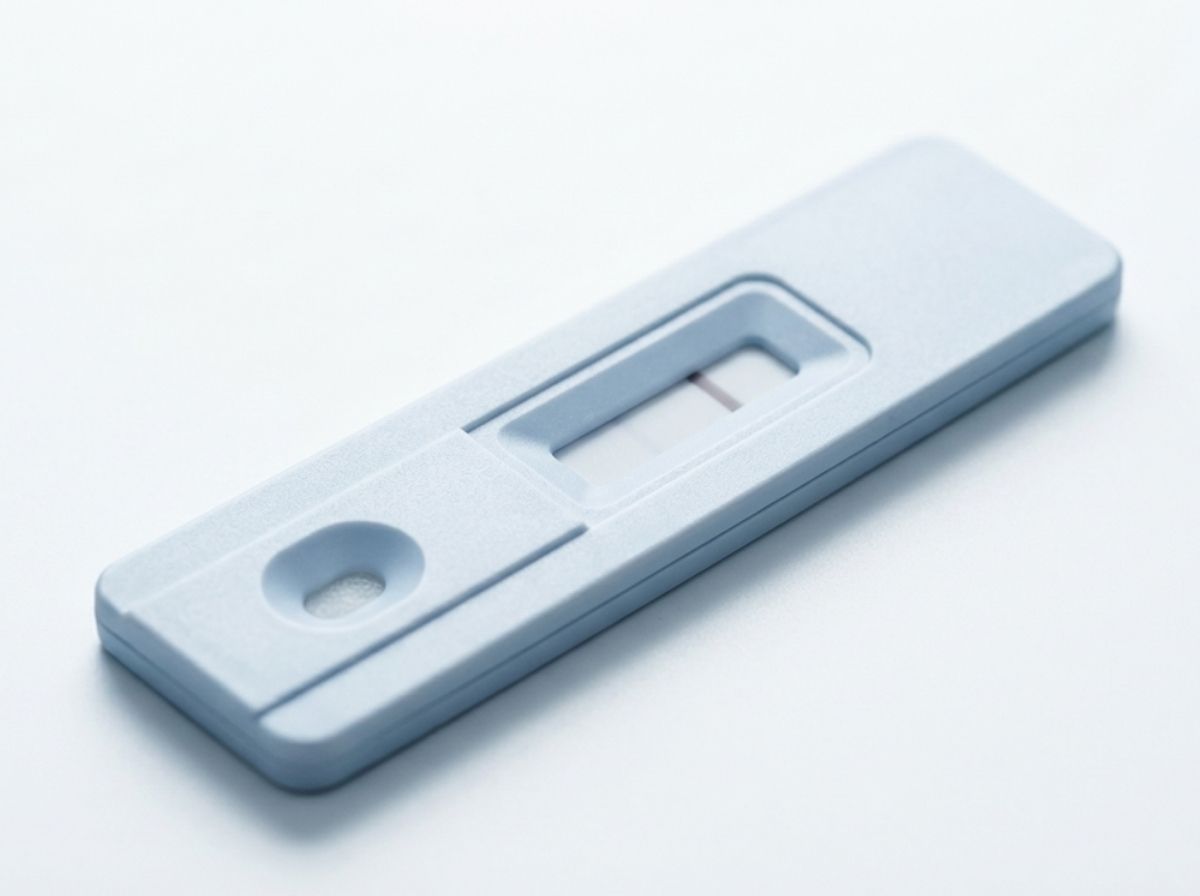
This is the step most people skip, and the reason is almost never a lack of intention. It is friction. Making an appointment, waiting for a slot, sitting in a waiting room, having a conversation with a provider, waiting days for results. At-home rapid testing has eliminated most of that friction, which is part of why testing rates have increased and why the CDC specifically credits at-home self-tests as a factor in the current progress against STIs.
The what and when of testing is not one-size-fits-all. Each infection has a specific window period determined by the biology of how your immune system responds to that particular pathogen. Testing too early produces a false negative, not because the infection isn't there but because your body hasn't yet produced enough of the detectable marker for the test to find. Here is the exact timing for each major infection.
For syphilis, test from 6 weeks after potential exposure. Syphilis tests detect antibodies your immune system produces in response to Treponema pallidum, and those antibodies need time to reach detectable levels. A negative result at 6 weeks is meaningful. If you have ongoing concerns about a specific exposure, a follow-up test at 12 weeks provides additional certainty. A positive result means the infection is present and curable with prompt treatment. For HIV, test at 6 weeks after potential exposure for a first indicator result and retest at 12 weeks for certainty. A confirmed negative at 12 weeks means you did not contract HIV from that exposure. A positive result means the virus is present and you should connect with a healthcare provider immediately to begin treatment.
For chlamydia, test from 14 days after exposure. Chlamydia is the most commonly reported STI in the United States, and the majority of cases produce no symptoms at all. A negative at 14 days or later means no infection from that exposure was detected. A positive means a bacterial infection is present that is straightforwardly treatable. For gonorrhea, test 3 weeks after exposure. Gonorrhea has increasingly shown antibiotic resistance patterns in recent years, which makes catching it early more important than ever. For herpes HSV-1 and HSV-2, test from 6 weeks after exposure. Herpes tests detect antibodies and require the same window as syphilis. A negative at 6 weeks is reliable. A positive indicates current or past infection, and a healthcare provider can help you understand what that means for your specific situation.
For hepatitis B, test from 6 weeks after exposure. A negative at 6 weeks is reliable given hepatitis B's shorter incubation period. A positive means active infection and requires medical follow-up. For hepatitis C, test from 8 to 11 weeks after exposure. The virus takes longer to produce detectable antibody levels, and testing before 8 weeks carries a real risk of a false negative. A negative after 11 weeks is conclusive. A positive means the infection is present and, in the majority of cases today is curable with a course of direct-acting antiviral treatment.
| Infection | Test From | Negative Result | Positive Result |
|---|---|---|---|
| Syphilis | 6 weeks after exposure | No infection detected; retest at 12 weeks if ongoing concern | Curable bacterial infection present; connect with a provider |
| HIV | 6 weeks (first indicator); retest at 12 weeks for certainty | Negative at 12 weeks = did not contract HIV from that exposure | Virus present; connect with a healthcare provider immediately |
| Chlamydia | 14 days after exposure | No chlamydia detected; retest if new exposure occurs | Bacterial infection present; treatable |
| Gonorrhea | 3 weeks after exposure | No gonorrhea detected from that exposure | Infection present; requires prompt treatment |
| Herpes HSV-1 & HSV-2 | 6 weeks after exposure | No herpes antibodies detected from that exposure | Antibodies detected; indicates current or past infection |
| Hepatitis B | 6 weeks after exposure | No infection detected; reliable at this window | Active infection; requires medical follow-up |
| Hepatitis C | 8 to 11 weeks after exposure | Conclusive after 11 weeks | Infection present; curable in most cases today |
If you time your test at the 6-week mark after a potential exposure, you cover syphilis, HIV (first indicator), herpes, and hepatitis B in a single session. Add a second test for hepatitis C at 8 to 11 weeks, and chlamydia and gonorrhea as early as 14 days and 3 weeks, respectively, and you have a complete picture. The 7-in-1 Complete At-Home STD Test Kit from STD Test Kits covers HIV, syphilis, HSV-2, chlamydia, gonorrhea, hepatitis B, and hepatitis C in a single 20-minute session at home. For women who want the most comprehensive panel, the Women's 10-in-1 At-Home STD Test Kit adds HPV and trichomoniasis. Peace of mind is one test away.
Who Should Be Testing and How Often
The CDC's general recommendation is that all sexually active adults get tested for STIs at least once a year. For people with multiple partners, new partners, or recent unprotected sexual contact, more frequent testing makes sense. For people who are pregnant, syphilis testing is recommended at the first prenatal visit, again in the third trimester, and at delivery for those in high-prevalence areas. The congenital syphilis data make clear that pregnancy is not a reason to feel low-risk. It is a reason to test.
Young people between 15 and 24 years old account for nearly half of all reported cases of chlamydia, gonorrhea, and syphilis in the United States every year. That age group is disproportionately affected, not because young people are reckless but because they are often not getting tested routinely, not being offered testing by providers, and not having the conversations that catch infections before they spread. If you are in that age group, the recommendation is not different from anyone else's. It is just more urgent in practice.
People who have never tested for STIs are a specific and important group. Nearly 1 in 5 Americans has an STI right now, and a significant proportion of that group has never been tested for anything. Not because they're not sexually active, but because testing has felt like something that happens to other people. STI Awareness Week exists to interrupt that assumption. If you have never had a comprehensive STI panel, this week is a direct, timely reason to change that.
Treat: What Happens After a Positive Result
Treatment is the step that follows testing, and for the most common STIs, it is far more straightforward than people fear. The anxiety around a positive result is real and understandable. The medical reality in 2026 is that most STIs diagnosed promptly are either curable outright or highly manageable with modern treatment.
Chlamydia, gonorrhea, and syphilis are all bacterial infections. Bacterial infections are cured with antibiotics. A positive result for any of these three infections is the beginning of a short, defined treatment process, not a life sentence. The critical word is "promptly." Chlamydia left untreated for months can cause pelvic inflammatory disease in women and epididymitis in men, both of which can affect fertility. Syphilis left untreated progresses through stages that eventually cause irreversible damage to the heart, brain, and nervous system. The window between "caught it and treated it" and "ignored it until it became serious" is why testing matters as much as treatment.
Hepatitis C is now curable in the overwhelming majority of cases through a short course of direct-acting antiviral medication. This was not true ten years ago. It is true now, which means people who contracted hepatitis C years ago and assumed they were beyond treatment have better options today than they may realize. Hepatitis B has no cure but is highly controllable with ongoing treatment, and vaccination before exposure prevents it entirely. HIV is not curable but is highly manageable. People living with HIV who take antiretroviral therapy consistently can reach an undetectable viral load, meaning they cannot sexually transmit the virus to a partner. Catching HIV early and beginning treatment promptly is what makes that outcome possible. A positive result found late is harder to manage than one found in the testing window.
| Infection | Curable? | What Happens If Untreated | Why Early Treatment Matters |
|---|---|---|---|
| Chlamydia | Yes | Pelvic inflammatory disease, epididymitis, fertility damage | Damage is silent and cumulative; no symptoms until complications appear |
| Gonorrhea | Yes | Pelvic inflammatory disease, spread to joints and blood, antibiotic resistance worsens outcomes | Increasing resistance makes early treatment more effective than delayed treatment |
| Syphilis | Yes | Heart damage, brain damage, blindness, paralysis, death | Early stages are painless and self-resolving; late stage damage is irreversible |
| HIV | No, but highly manageable | Progressive immune system damage leading to AIDS-defining illnesses | Early treatment reaches undetectable status, protecting health and preventing transmission |
| Hepatitis C | Yes, in most cases | Chronic liver disease, cirrhosis, liver cancer | Curable with short treatment course; liver damage from delay is not reversible |
| Herpes HSV-2 | No, but manageable | Recurrent outbreaks; increases HIV transmission risk | Ongoing management reduces outbreak frequency and transmission risk |
Making It Easier: At-Home Testing in 2026
You're scrolling through your phone on a Tuesday night, thinking about a sexual encounter from a few weeks ago. The idea of calling a clinic, scheduling an appointment, taking time off work, sitting in a waiting room, and then waiting three days for results is enough friction to make most people decide they'll do it later. Later has a way of never coming.
At-home rapid testing exists specifically to close that gap. You order a kit, it arrives discreetly, you complete the test at home using a simple finger-prick blood sample, and you have results in about 20 minutes. No appointment. No waiting room. No conversation with anyone you weren't ready to have it with. The CDC explicitly credited the expansion of at-home self-testing as a factor driving the current decline in STI rates. That is not coincidence. It is the direct result of removing friction from a process that people otherwise delay.
For anyone who wants to take STI Awareness Week seriously this year, the action is straightforward. If you have had any sexual contact with a new or untested partner in the past year and haven't tested recently, order a kit. The 7-in-1 Complete At-Home STD Test Kit covers the full range of the most common bacterial and viral STIs in one session. If you are a woman who wants the most complete picture, the Women's 10-in-1 At-Home STD Test Kit adds HPV and trichomoniasis to the panel. If you want to start with a single targeted test, the HIV 1&2 At-Home Rapid Test Kit delivers a 99.7% accurate result in 20 minutes. Take control of your sexual health today.
FAQs
- 1. What is STI Awareness Week 2026?
- STI Awareness Week 2026 runs from April 13 to 18 and is an annual public health campaign organized by the CDC. The 2026 theme is Talk. Test. Treat. It is designed to encourage sexually active people to have open conversations about sexual health, get tested for STIs, and seek treatment when needed. The campaign runs during the week because it precedes National STD Awareness Month, which runs through the rest of April.
- 2. How common are STIs in the United States right now?
- Very common. The CDC estimates roughly 1 in 5 Americans currently has an STI. More than 2.2 million cases of chlamydia, gonorrhea, and syphilis alone were reported in 2024, and those numbers represent only the infections that were diagnosed and reported. A significant portion of cases go undetected because most STIs produce no symptoms in their early stages.
- 3. I have no symptoms. Do I still need to test?
- Yes. The absence of symptoms is not a reliable indicator of STI status. Chlamydia produces no symptoms in the majority of cases. Early syphilis presents as a painless sore that resolves on its own. HIV can remain asymptomatic for years while silently damaging the immune system. The only way to know your status is to test for it at the correct window after potential exposure.
- 4. When is the right time to test after unprotected sex?
- It depends on the infection. For chlamydia, test from 14 days after exposure. For gonorrhea, test from 3 weeks. For syphilis, herpes, and hepatitis B, test from 6 weeks. For HIV, test at 6 weeks for a first indicator result and retest at 12 weeks for certainty. For hepatitis C, test from 8 to 11 weeks. Testing before these windows risks a false negative because your immune system hasn't yet produced enough detectable markers.
- 5. What is the most common STI in the US?
- Chlamydia is the most commonly reported STI in the United States, with more than 1.6 million cases reported in 2023 alone. It produces no symptoms in most cases, which means the majority of people who have it don't know. Untreated chlamydia can cause pelvic inflammatory disease and fertility damage over time, making routine testing especially important.
- 6. Can I test for all STIs at home?
- You can test for the most common and medically significant STIs at home using rapid test kits. At-home panels cover HIV, syphilis, chlamydia, gonorrhea, herpes, hepatitis B, and hepatitis C. HPV and trichomoniasis are also available in women's panels. TMVII, the sexually transmitted fungal infection currently spreading in US cities, requires in-person clinical evaluation and cannot be diagnosed with a standard at-home test.
- 7. What should I do if my STI test comes back positive?
- Connect with a healthcare provider promptly. Most common STIs are either curable or highly manageable with modern treatment. Chlamydia, gonorrhea, and syphilis are all curable with appropriate treatment. HIV, caught early and treated consistently, can be managed to an undetectable viral load. Hepatitis C is now curable in the majority of cases. A positive result is not a crisis. It is information that allows you to act.
- 8. How often should I get tested for STIs?
- The CDC recommends at least once a year for all sexually active adults. For people with multiple partners, new partners, or recent unprotected contact, more frequent testing is appropriate. Pregnant people should test for syphilis at their first prenatal visit, again in the third trimester, and at delivery if they are in a high-prevalence area.
- 9. What does Talk. Test. Treat. mean in practice?
- Talk means having open conversations about sexual health with partners and healthcare providers. Test means getting a comprehensive STI panel at the correct window periods after any potential exposure. Treat means seeking prompt medical care if a test comes back positive, completing the full course of treatment, and notifying partners who may have been exposed. All three steps are necessary. Skipping any one of them breaks the chain.
- 10. Is STI testing covered by insurance?
- Many insurance plans cover STI testing, particularly for infections like HIV and chlamydia where routine screening is recommended by the CDC. Coverage varies by plan and by which infections are included. At-home rapid test kits offer an alternative for people without coverage or for whom the clinic route creates too much friction. Results are accurate and available in about 20 minutes.
This Week Is the Reason. Your Status Is the Answer.
STI Awareness Week exists because awareness without action is just noise. The three steps the CDC is asking for this April are not complicated. Talk to your partners and your provider. Test at the right window for the right infections. Treat promptly if something comes back positive. The STI epidemic in the United States is showing early signs of turning around, and the data points directly at testing and treatment as the reason. More people testing means more infections caught early. More infections caught early means fewer complications, fewer transmissions, and fewer of the 4,000 preventable cases of congenital syphilis a year that represent the most urgent failure in the current picture.
If you are ready to test, the 7-in-1 Complete At-Home STD Test Kit covers HIV, syphilis, HSV-2, chlamydia, gonorrhea, hepatitis B, and hepatitis C in a single session. For the most comprehensive panel available for women, the Women's 10-in-1 At-Home STD Test Kit adds HPV and trichomoniasis. And if you want to start with a single test, the HIV 1&2 At-Home Rapid Test Kit delivers a 99.7% accurate result in 20 minutes. Browse the full range at STD Test Kits.
Our article was constructed based on current advice from the most prominent public health and medical organizations, and then molded into simple language based on the situations that people actually experience, such as treatment, reinfection by a partner, no-symptom exposure, and the uncomfortable question of whether it "came back." In the background, our pool of research included more diverse public health advice, clinical advice, and medical references, but the following are the most pertinent and useful for readers who want to verify our claims for themselves.
- CDC NCHHSTP - 2026 STI Awareness Week
- CDC - Latest National Data on STIs and Syphilis in Newborns, September 2025
- CIDRAP - CDC Data Show Declines in STIs, Rise in Newborn Syphilis, September 2025
- CDC - HIV Fast Facts: United States
- CDC - About Congenital Syphilis
- CDC - Sexually Transmitted Infections Surveillance 2024 (Provisional)