Strong Vaginal Odor: Could It Be an Infection or Something Else?
Quick Answer: Strong vaginal odor is most commonly caused by bacterial vaginosis, a change in vaginal bacteria that produces a fishy smell. When a woman is ovulating, it may have a slightly sweeter or muskier odor.

Quick Answer: Strong vaginal odor is most commonly caused by bacterial vaginosis, a change in vaginal bacteria that produces a fishy smell. Yeast infections, sweat, menstrual blood, or certain STDs can also contribute, but many odor changes are harmless and temporary.
Why Vaginas Have a Natural Scent in the First Place
Here’s something a lot of people don’t hear often enough: vaginas are not supposed to smell like perfume. The natural scent of a healthy vagina is unique to that individual, and it can vary a bit from day to day due to hormone levels, sweat, and beneficial bacteria activity.
The natural scent of a healthy vagina is not always the same from month to month. When a woman is ovulating, it may have a slightly sweeter or muskier odor. When a woman is menstruating, it may have a metallic odor due to blood iron. After physical activity, it may have a stronger odor simply because of sweat and skin bacteria.
The point is, a change in scent is not automatically a sign of infection. The real question is whether there is a change in scent accompanied by other symptoms.

When Vaginal Odor Actually Signals an Infection
Most vaginal odor concerns fall into a few predictable categories. Some are caused by shifts in bacterial balance. Others come from fungal overgrowth. And in some cases, odor appears alongside sexually transmitted infections.
The key difference usually lies in how the smell behaves and what other symptoms show up at the same time.
| Condition | Typical Odor Description | Other Common Symptoms | Testing Needed? |
|---|---|---|---|
| Bacterial Vaginosis | Strong fishy smell, especially after sex | Thin gray discharge, mild irritation | Yes |
| Yeast Infection | Usually mild or bread-like smell | Thick white discharge, itching | Sometimes |
| Trichomoniasis | Strong unpleasant odor | Yellow-green discharge, irritation | Yes |
| Normal cycle changes | Musky, metallic, or mild scent | No irritation or unusual discharge | No |
Table 1. Common causes of vaginal odor and how they typically present.
Notice something interesting in that table: the infection most strongly associated with odor is bacterial vaginosis. In fact, BV is responsible for the majority of “fishy smell” complaints that bring people to clinics.
But even BV isn’t an STD in the traditional sense. It’s usually a shift in vaginal bacteria that can be influenced by sex, new partners, antibiotics, or even hormonal changes.
The Infection Behind Most “Fishy Smell” Searches
Let’s discuss one condition that always crops up in conversations whenever a person realizes that there is a pungent odor emanating from their vagina. The condition is known as bacterial vaginosis.
The usual scenario is that a person finishes their workout, goes to take a shower, and realizes that there is a pungent odor emanating from their vagina. This happens to both men and women. The pungent odor also occurs after a woman has sex with her partner because of a change in pH levels caused by semen entering her vagina.
“I thought it meant I wasn’t clean enough,” a patient told me. “I thought I was washing myself too much, so I started washing even more, but the smell would always come back.”
The irony is that washing oneself too much is not a good idea because it makes a woman’s condition of bacterial vaginosis much worse. This is because washing oneself too much upsets the balance of good bacteria in a woman’s vagina, which in turn makes the bad bacteria in a woman’s vagina multiply, causing a pungent odor to occur.
The medical term for bacterial vaginosis is a compound called trimethylamine, which is responsible for a pungent odor that is commonly known as a fishy smell. This pungent odor occurs after a woman has sex with her partner because of a change in pH levels in her vagina, which is caused by semen entering her vagina.
The condition is very common, and studies have shown that almost one in every three women is a victim of bacterial vaginosis at some point in their lives.
Where STDs Fit Into the Vaginal Odor Conversation
This is where the internet often gets things wrong.
Many people assume that strong vaginal odor automatically means an STD. In reality, most sexually transmitted infections do not produce a strong smell on their own.
Chlamydia and gonorrhea, for example, often cause little to no odor. Their most common symptoms are discharge changes, pelvic discomfort, or burning during urination.
However, certain infections can contribute to odor when they trigger inflammation or disrupt the vaginal environment.
| STD | Does It Cause Odor? | Typical Symptoms |
|---|---|---|
| Chlamydia | Rarely | Discharge, pelvic pain, burning urination |
| Gonorrhea | Occasionally mild odor | Thick discharge, pelvic discomfort |
| Trichomoniasis | Often strong odor | Yellow-green discharge, itching |
| Herpes | No odor | Painful sores |
Table 2. Relationship between common STDs and vaginal odor.
This is why testing can sometimes be useful if odor appears alongside new sexual exposure or other symptoms. It removes the guesswork and gives clear answers.
If someone wants to check discreetly at home, many people now use STD Test Kits to screen for common infections without visiting a clinic.
Testing isn’t about blame or suspicion. It’s simply the fastest way to understand what your body is trying to tell you.
Why Vaginal Odor Can Suddenly Change Overnight
One of the most unsettling experiences people describe is a sudden vaginal odor that seems to appear overnight. Everything felt normal the day before, and then the next morning there’s a noticeable scent that wasn’t there previously.
This kind of change usually has a biological explanation. The vaginal environment is incredibly dynamic. Hormones shift, bacteria multiply, and fluids change composition throughout the menstrual cycle. Because of this, scent can change faster than most people expect.
A common example happens after a new sexual encounter. Semen is alkaline, which temporarily raises vaginal pH. When that happens, odor-producing bacteria can become more active for a short time. Someone may notice a stronger smell the next morning even though nothing dangerous is happening.
“I woke up the next day and immediately thought something was wrong,” one patient once explained. “But two days later it was gone.”
Temporary shifts like this are extremely common. If the odor disappears within a day or two and there are no other symptoms, the body has likely corrected its bacterial balance on its own.
Why Vaginal Odor Often Appears After Sex
If there is one moment when vaginal odor becomes more noticeable, it’s after sex. This doesn’t necessarily mean infection, it’s usually chemistry.
The vagina normally maintains an acidic environment. Semen, on the other hand, is alkaline. When semen mixes with vaginal fluids, the pH temporarily rises. This shift can make natural bacteria release compounds that smell stronger than usual.
This is why many people specifically search for phrases like “fishy smell after sex.” That scent often becomes most noticeable after intercourse or oral sex, even if the underlying condition existed beforehand.
In cases of bacterial vaginosis, this pH shift intensifies the production of trimethylamine, the compound responsible for the characteristic fishy odor. That’s why many clinicians use what’s called the “whiff test” during diagnosis.
But even without BV, scent changes after sex can happen simply because sweat, friction, natural lubrication, and bodily fluids mix together. The vagina is a biological environment, not a sterile one.
Other Everyday Causes of Vaginal Odor
However, not all changes in the smell of the vagina are related to infection. In fact, many changes are related to normal factors that most people do not immediately think of.
One such factor is exercise. The area around the groin has sweat glands, just like the area under the armpits. During exercise, the sweat and the natural secretions of the vagina combine with the bacteria on the skin, which makes the area smell stronger.
Menstrual blood can also cause changes in the smell of the vagina, albeit temporarily. This happens because the iron in the blood has a metallic smell, and when the metallic smell combines with the natural bacteria in the vagina, the smell of the vagina might be stronger than usual.
Occasionally, diet can also be the culprit for changes in the smell of the vagina. Strong-smelling foods such as garlic, onions, asparagus, and spices can sometimes change the smell of the vagina.
| Common Non-Infection Causes | Why Odor Changes | How Long It Usually Lasts |
|---|---|---|
| Exercise and sweat | Sweat glands and skin bacteria mix with vaginal secretions | Until showering or cooling down |
| Menstruation | Blood contains iron, producing a metallic scent | During the period |
| Sexual activity | Semen temporarily raises vaginal pH | 1–2 days |
| Diet changes | Metabolic byproducts influence body scent | Usually temporary |
Table 3. Everyday lifestyle factors that can change vaginal scent.
Understanding these everyday factors helps prevent unnecessary panic. A temporary change in odor is not automatically a medical problem.
The Hygiene Myth That Actually Makes Odor Worse
Here’s one of the biggest misconceptions about vaginal odor:
One of the biggest misconceptions about vaginal odor is that it can be eliminated with more thorough cleaning.
This is perhaps one of the biggest misconceptions about vaginal odor. The fact is, more thorough cleaning and using scented cleansers and soaps only make it worse.
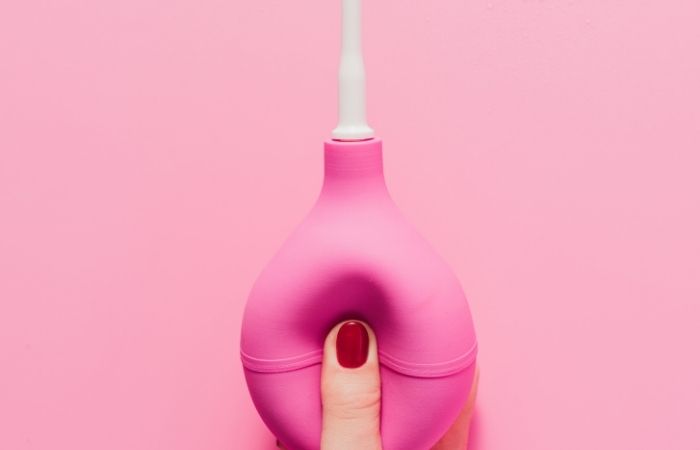
This is because douching and using scented cleansers and soaps can destroy healthy bacteria in the vagina. The healthy bacteria are responsible for maintaining acidity in the vagina. Once this is compromised, it is much easier for odor-causing bacteria to multiply.
Vaginas are self-cleaning organs. All they really need is gentle cleaning of the outside with soap and water.
“People often think they need to sanitize their vagina,” a gynecologist once told one of her patients. “But healthy vaginas are those which are least disturbed.”
Ironically, the more you try to get rid of natural odor using strong cleansers and soaps, the more you are likely to end up disturbing it.
When Odor Is a Signal to Consider Testing
There are times when testing makes sense, even though most changes in smell are not harmful. If you have a persistent smell that lasts for several days, especially if you also have unusual discharge, irritation, or pelvic pain, it could mean you have an infection.
Being sexually active can also change things. If you have new partners, have sex without protection, or have symptoms that come with an odor, you may need to get tested for infections like chlamydia, gonorrhea, or trichomoniasis.
Some people would rather go to a clinic for an evaluation, while others would rather use discreet at-home screening options. A combo STD home test kit can check for a number of common infections at once, which is great for people who want privacy.
It's not about thinking the worst when you test. It's about getting rid of doubt and getting clear information. When symptoms show up, the next best thing to do is usually to get more information.
How Doctors Tell the Difference Between BV, Yeast, and STDs
When someone walks into a clinic worried about strong vaginal odor, clinicians usually start with a simple question: what else is happening besides the smell?
Odor alone doesn’t tell the full story. Doctors look at patterns, the type of discharge, whether itching is present, whether symptoms appeared after sex, and how long the change has lasted. These clues often point toward the most likely cause even before testing begins.
A typical clinical visit may involve a short conversation about symptoms, a vaginal swab to examine bacteria under a microscope, and occasionally a lab test to rule out infections like trichomoniasis, chlamydia, or gonorrhea. The goal isn’t to judge behavior; it’s simply to identify which microbes are present.
“Most of the time we already have a good idea what’s going on just from the description,” one clinician explained. “The tests just confirm it.”
The patterns below illustrate how these conditions usually differ.
| Symptom Pattern | Most Likely Cause | Why It Happens |
|---|---|---|
| Fishy odor that becomes stronger after sex | Bacterial vaginosis | Shift in vaginal bacteria producing odor compounds |
| Thick white discharge with itching but little odor | Yeast infection | Overgrowth of Candida fungus |
| Strong odor with yellow-green discharge and irritation | Trichomoniasis | Sexually transmitted parasite infection |
| Mild scent change without irritation | Normal microbiome shift | Hormones, sweat, or semen altering pH |
Table 4. Symptom patterns clinicians often use to narrow down causes of vaginal odor.
This type of comparison is important because internet searches tend to lump all vaginal odor into the same category. In reality, the underlying causes can be very different.
What the Timeline of Odor Changes Can Reveal
Doctors also want to know how long the smell lasts. This can help doctors figure out if the change in the body is only temporary or if it is already an infection.
For instance, if the smell is caused by changes in the body from sex, exercise, or menstruation, it usually goes away within a day or two as the vaginal pH levels return to normal. This is because the body's good bacteria can help bring things back into balance.
But if it is caused by bacterial vaginosis, it usually lasts longer. The smell can last for days or weeks until it is treated. The same goes for trichomoniasis, especially if there are already signs of it.
| Duration of Odor | Most Likely Explanation | Recommended Action |
|---|---|---|
| Less than 48 hours | Temporary pH shift from sex, sweat, or menstrual blood | Observe for changes |
| 3–5 days | Possible bacterial imbalance developing | Monitor symptoms |
| More than one week | Possible infection such as BV or trichomoniasis | Consider testing |
| Odor with pain, irritation, or unusual discharge | Higher likelihood of infection | Testing recommended |
Table 5. Symptom timelines that can help distinguish temporary odor changes from infections.
Why the Vaginal Microbiome Is So Sensitive
The vagina is inhabited by a complex microbial community. Just as any other environment is affected by alterations in its environment, so is this one. Antibiotics, hormonal imbalances, new sex partners, stress, and even sanitary products may all play a role.
As lactobacillus bacteria decrease, other pathogens have an opportunity to thrive. Some of these pathogens may produce compounds with more potent odors. It is interesting to note that when researchers have studied the microbiome of women, no two individuals have had exactly the same bacterial colonies. While what may be normal to one may be slightly different to another.
It is also important to note that when healthcare providers speak of symptoms and patterns, it is not just the odor that is considered. While a new odor may be a symptom of an infection, it is considered with other symptoms such as discharge or irritation.
The Emotional Side of Odor Anxiety
One thing that doesn’t appear in medical textbooks but shows up constantly in real life is the emotional stress associated with vaginal odor.
Many people worry that odor means they’re unclean or that their partners will notice. Some become self-conscious during intimacy or avoid sex altogether until they figure out what’s happening.
“I kept thinking my partner would notice it,” someone once admitted during a clinic visit. “I was more embarrassed than anything.”
The reality is that scent variations are incredibly common. Sexual health clinicians hear about these concerns every single day. For them, it’s just another routine part of helping people understand their bodies.
The most important step is separating myths from biology. Vaginal odor is not a moral issue or a hygiene failure. It’s simply a signal that the vaginal environment has changed, sometimes temporarily, sometimes because of infection.
Once the cause is identified, most cases can be treated or resolved relatively quickly.
If Vaginal Odor Is Caused by Infection, What Happens Next?
After a healthcare provider has determined the cause of persistent vaginal odor, treatment is often not complex. It is dependent on the type of infection, but it is often easily treated with medication.
In cases of bacterial vaginosis, antibiotics such as metronidazole or clindamycin may be given to patients. These drugs work to reestablish balance by reducing bacterial growth. Within a few days of taking medication, symptoms of infection often improve.
For yeast infections, treatment is quite different from other cases of vaginal odor. Yeast infections are caused by fungus growth. Antifungal drugs may be given to patients to get rid of excess fungus growth. While many patients may be able to identify a yeast infection by itchiness rather than smell, treatment is still quite similar to other cases of vaginal odor: restoring balance to normal.
In cases of sexually transmitted diseases such as trichomoniasis, medication is given to patients to treat infection. Since this is a sexually transmitted infection, partners may be given medication to prevent reinfection.
Ultimately, it is important to note that all of these infections related to vaginal odor are easily treated. Once a proper diagnosis is made, treatment is often rapid.
Signs It’s Time to Seek Medical Advice
Most odor changes tend to resolve on their own. Nevertheless, there are some patterns which imply that it is important to have professional evaluation and testing.
When there is an odor lasting over one week, it is usually a symptom of a bacterial imbalance or infection, which should be treated.
When there are symptoms accompanying new exposure to sex, it is important to have professional testing. This is because it can provide clarity and peace of mind.
Some individuals prefer to have professional testing, while others prefer to have it at home. Having a discreet at-home combo STD test is an essential tool which can provide clarity and peace of mind without leaving home.
Testing is not about suspecting anything is wrong; it is more about understanding your own body and eliminating guesswork.
FAQs
- 1. Why does my vagina smell stronger than it usually does?
- A sudden change in vaginal odor is usually caused by short-term changes in the pH level of the vagina that happen during sex, sweating, or menstruation. These kinds of changes usually go away on their own in two to three days. If you smell something bad down there for a long time or if you have strange vaginal discharge or irritation, you might have a vaginal infection, like bacterial vaginosis.
- 2. Is a fishy smell always a sign of bacterial vaginosis?
- A fishy smell is usually a sign of bacterial vaginosis, but it doesn't always mean that you have it. A fishy smell can happen when the pH of the vagina changes after sex. A fishy smell that lasts for a long time could mean that there is a vaginal infection.
- 3. Is it possible for a yeast infection to smell bad?
- A yeast infection usually makes the vagina itch and discharge a thick, white substance. It doesn't usually smell bad. If there is a strong smell, it could be a vaginal infection instead of a yeast infection. It can be hard to tell which infection is present, though, so testing is usually needed in these cases.
- 4. Do STDs usually make the vagina smell bad?
- Most STDs don't smell bad. Infections like chlamydia and gonorrhea don't smell very much or at all. Trichomoniasis is one of the few STDs that smells bad. It usually causes irritation and vaginal discharge, and it has a strong, unpleasant smell.
- 5. What makes vaginal odor stronger after sex?
- Semen can change the pH of the vagina for a short time, which makes the bacteria that make it smell worse. This makes the smell stronger for a while.
- 6. Is it normal for the smell to change while I'm on my period?
- Yes, the smell will change during your period because the blood has iron in it, which smells like metal. The smell will be a little stronger during your period because the discharge and the bacteria that cause the smell will mix.
- 7. Do scented wash, douching, and other scented products help get rid of the smell?
- In the long run, using these products will make the smell worse because they change the balance of the bacteria that live in the vagina. You only need to wash the outside parts with soap and water.
- 8. When should I think about getting tested for infections?
- You should think about getting tested if the smell has been there for more than a week, if it comes with discharge and irritation, or if it happens after sex. This will help you relax and let you know if the smell needs medical attention.
- 9. Can what I eat change the smell?
- Yes, the smell will change because some foods, like garlic, onions, and spices, can change the smell of your sweat. This will only last for a short time and can be fixed with water and good hygiene.
- 10. Does the smell mean that you aren't clean?
- No, the smell has nothing to do with how clean or dirty you are. The smell has to do with how the hormones and bacteria in the body are balanced.
You Deserve Clarity, Not Guesswork
Vaginal odor is one of the most common reasons for which people begin to search for answers about their health. In some cases, the reason for the odor is completely benign and may be related to hormonal, sweat, and pH level fluctuations after sex. In other cases, the odor may be related to imbalances such as bacterial vaginosis or infection.
What is important to understand is that the odor is only a symptom. It is your body’s way of telling you that something has changed in the vagina. Once the reason for the odor is determined, the rest is usually simple.
If you are unsure about something and are stuck on the “what if” cycle, testing is available for quick answers. Many people start with STD Test Kits, which are available for private testing at home.
Knowledge is power, and clarity is the best way to reduce anxiety. In the area of sexual health, knowledge is always empowering.
This article combines guidance from leading public health organizations, peer-reviewed research on the vaginal microbiome, and clinical experience in sexual health care. Approximately fifteen medical and lifestyle sources informed the writing process, while the six most relevant references are listed below for readers who want to explore the research further.