How to Read a Syphilis Test Result (RPR, VDRL, and Treponemal Tests Explained)
Quick Answer: A syphilis diagnosis usually involves two blood tests. Doctors interpret these tests together to determine whether an infection is current, past, or unlikely.
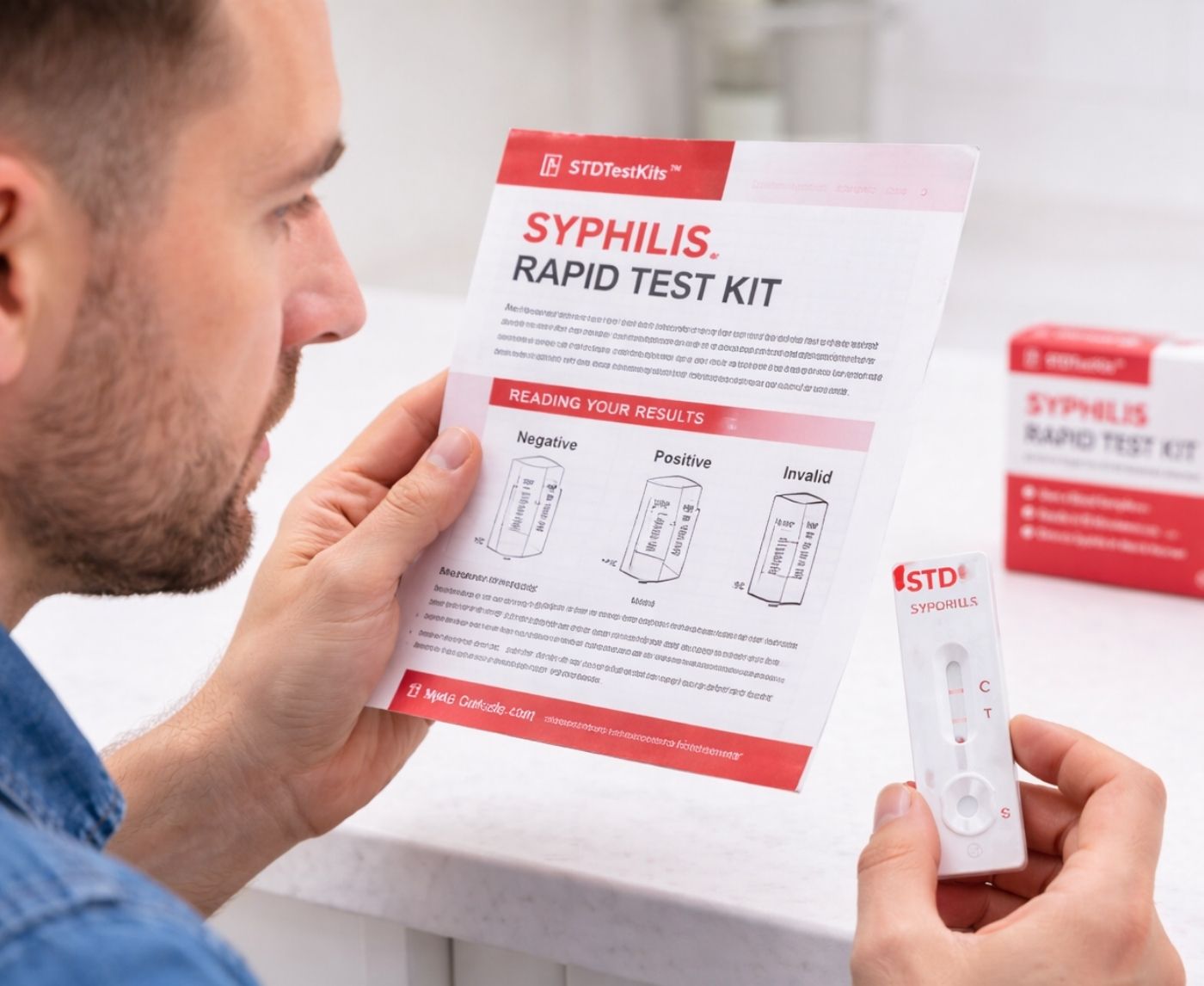
Quick Answer: A syphilis diagnosis usually involves two blood tests. Screening tests like RPR or VDRL detect signs of infection activity, while treponemal tests confirm whether the body has antibodies to the bacteria that causes syphilis. Doctors interpret these tests together to determine whether an infection is current, past, or unlikely.
The Moment People Realize Lab Reports Speak a Different Language
A normal situation will look something like this: someone goes to their medical lab results online and they have a test that says either RPR or VDRL. Then they have a result that says something like ‘reactive’ or ‘non-reactive.’ Sometimes they have a number that says something like 1:4 or 1:32. But if they have two results that include something like ‘treponemal antibody,’ things can get even more complicated.
The thing about syphilis is that doctors don’t test for it using just one test. This is because the bacteria that causes syphilis, the Treponema pallidum bacterium, causes a complex immune response. This means that there are blood tests that look at the body’s response to the infection and blood tests that look at the body’s response to the bacterium.
This is why most doctors will order two different tests. This is called the two-step test. It is like the difference between a fire alarm and someone who checks the fire. It is one test to check if there is a fire and one test to check if there is a fire.
This means that there is far less chance of misdiagnosis. It is also why it takes a little bit of knowledge to understand the results of the test.
If you’re reading this because you’re waiting for test results or trying to understand the results of the test, don’t worry. You’re not alone. This is according to the Centers for Disease Control and Prevention. This is because the rates of syphilis have increased in the last few years. This means that the test is now far more common than it used to be.
This means that there are far more people looking at their lab results and wondering what they’re looking at.
The Two Types of Syphilis Tests Doctors Use
Most people don’t realize that syphilis testing uses two different categories of blood tests. Each type answers a slightly different question about what might be happening inside the body.
One group of tests looks for signs that the immune system is reacting to infection activity. The other group looks for antibodies that specifically recognize the syphilis bacteria.
The table below shows how these tests differ.
| Test Type | Examples | What the Test Detects | How Doctors Use It |
|---|---|---|---|
| Non-treponemal tests | RPR, VDRL | Antibodies produced during active infection | Initial screening and monitoring treatment |
| Treponemal tests | FTA-ABS, TP-PA, EIA | Antibodies that specifically recognize the syphilis bacteria | Confirm whether exposure to syphilis occurred |
Both of these are blood tests, and both are very common in clinical screening situations. However, these two tests also differ in their behavior after infection, and it is here that we find some interesting aspects of interpreting these results.
Non-Treponemal tests, such as RPR or VDRL, generally show us how active the infection is. These results tend to go down after treatment.
Therefore, these tests are used for not just detecting syphilis but also for tracking how well we are doing after treatment.
Now, let’s look at Treponemal tests.
As we know, these are different from Non-Treponemal tests, and their results show us that once we have developed antibodies to the syphilis bacterium, these antibodies tend to be detectable for long periods of time, in some cases for life.
Therefore, it is here that we find some of the common confusions associated with interpreting these results.
While it is true that if we have a positive result for a Treponemal test, it does not mean we are currently suffering from syphilis.
What it means is that we may have had it at some point in the past and were successfully treated for it.
Understanding RPR and VDRL Results (Reactive vs Non-Reactive)
The two most commonly used screening tests for syphilis are the Rapid Plasma Reagin test and the Venereal Disease Research Laboratory test. Despite the intimidating names, these two tests work the same way.
These two tests check for the presence of antibodies that the immune system produces in response to the damage caused by the syphilis bacteria.
When people read the word "reactive" on a lab test result, the first thing that pops into their mind is the worst-case scenario. However, the truth is that "reactive" does not necessarily mean the person has syphilis. It simply means the test results showed the presence of antibodies that may be indicative of infection.
However, doctors interpret the results of the test in a larger context.
If the test results for the RPR or VDRL test show that they are non-reactive, it simply means there is no evidence of infection at the time of the test. However, the timing of the test is very important because if the test is taken too soon after infection, the body may not have yet produced the antibodies.
If the results of the test show that they are reactive, it simply means the test results showed the presence of antibodies that may be indicative of infection activity. In this case, a second test is performed to determine if the person was exposed to the syphilis bacteria.
There is one other piece of information that is often provided next to the RPR test results. This is the titer level.
This is the level at which the antibodies are reacting.
| RPR Titer | What It Suggests | How Doctors Use the Information |
|---|---|---|
| Non-reactive | No detectable antibody activity | Infection unlikely unless exposure was very recent |
| 1:1 – 1:4 | Low antibody level | Possible early infection, past infection, or false positive |
| 1:8 – 1:32 | Moderate antibody level | Often consistent with active infection |
| 1:64 or higher | High antibody level | Suggests active untreated infection |
These numbers are not diagnoses by themselves. Instead, they help doctors understand how the infection might be behaving and whether treatment is working over time.
For example, after successful treatment, doctors usually expect the RPR titer to decrease gradually. A drop from 1:32 to 1:8, for instance, is often considered evidence that therapy worked.
This is why patients sometimes have repeat RPR tests after treatment—the goal is to watch those numbers fall.
How Treponemal Tests Confirm the Diagnosis
If the results of the RPR or VDRL screening test come back positive, the next step is typically to perform a treponemal antibody test. This is because this test detects antibodies to Treponema pallidum, the bacterium that causes syphilis.
To illustrate this, think of the screening test as raising suspicion, and the treponemal antibody test is asking whether or not the person has ever met the syphilis bacterium.
The tests that are typically used include FTA-ABS, TP-PA, and enzyme immunoassay tests. Although the names are different, the idea is the same: to confirm whether or not the person has ever been exposed.
If both tests come back positive, this is typically what doctors believe to be the case, and additional information is used to help them understand whether or not the person needs to be treated.
If the results come back positive for the screening test, but negative for the treponemal antibody test, this is what doctors are looking for: a false positive.
False positives can be caused by a variety of reasons, such as pregnancy, autoimmune diseases, viral diseases, and even age.
This is another reason why the system is in place: so that false positives do not lead to false diagnoses.
Knowing this also helps understand why the results may look so complicated in the lab report. It’s not that the system is confusing; it’s just that the system is designed to ensure accuracy.
If someone wants to find out their status before visiting a clinic, there are also home tests that can be purchased to give them an idea before visiting the clinic. Many people use the STD Rapid Test Kits to find out their status before visiting the clinic.
Testing is just giving information, and it is what we do with the information that is important.
When Test Results Don’t Line Up (And Why That Happens)
At times, a syphilis test result might show something that appears to be contradictory at first glance. A positive result in a screening test, accompanied by a negative result in a confirmatory test, might occur, as might a positive result in a treponemal antibody test even after a long time following treatment. These are not as complicated as they might appear, but they are part of a biological pattern.
The human immune system retains a "memory" of infections, meaning that if a person has previously been infected with syphilis, even if they received treatment, the antibodies they produce to fight the disease might still be active even after a long time. This might mean that a treponemal test result still shows a positive result even though the disease is no longer active.
Doctors are able to make sense of this because they are aware of what the results mean, even though they might appear contradictory at first glance. A positive result in an RPR test accompanied by a positive result in a treponemal test indicates a case of infection, which then needs to be evaluated and possibly treated. A non-reactive result in an RPR test accompanied by a positive result in a treponemal test indicates a case of a previously treated infection.
However, at times, a test result might show a low reactive result in an RPR or VDRL test, while a treponemal test result might show a negative result, which might mean a false positive result.
A false positive result might occur but not so rarely, as some immune system conditions, pregnancy, some viral infections, and even some vaccinations might trigger a false positive result in a screening test, as they might trigger the production of antibodies, which might appear in a non-treponemal test result.
Why Timing Matters in Syphilis Testing
Another piece of the puzzle is timing. The human body does not produce detectable antibodies right after infection. Even in cases where a person may have been exposed to the syphilis bacteria, it may take weeks for blood tests to detect it.
The window period is the delay in detecting infection in the human body after it has been exposed to bacteria or any infection. It is also considered to be one of the most common reasons why people are presented with conflicting results after their bodies have been exposed to infection.
Let us take, for example, a person who had sexual intercourse last week and then goes to be tested for syphilis infection immediately after. Even if the person is infected, it may take some weeks for their body to produce detectable antibodies to react to the infection in their bloodstream, thus showing non-reactive results although technically infected.
| Time After Exposure | Likelihood of Detectable Antibodies | Testing Guidance |
|---|---|---|
| 1–2 weeks | Usually too early | Testing may miss infection |
| 3–6 weeks | Antibodies begin appearing | Screening tests may become reactive |
| 6–12 weeks | High detection reliability | Most infections detectable |
| 3 months+ | Very high reliability | Follow-up testing confirms status |
It is because of this reason that some medical professionals advise that the test be repeated if the individual has recently been exposed. A negative test result early on can be quite reassuring, and the certainty is increased when the test is repeated a few weeks later.
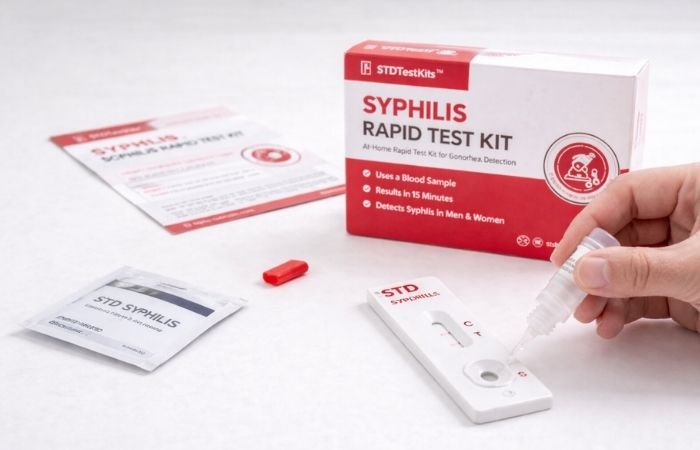
Some individuals choose to first take a rapid test at home and then decide whether they want to take the test at the clinic. For example, an individual can take a discreet rapid test kit to determine the outcome of syphilis infection, which is particularly helpful when the individual is stuck in the ‘what if’ loop waiting for the test results.
Testing does not determine the character of the individual or the decisions they make about sex.
What Doctors Look For When Interpreting Results
When a doctor or clinician is presented with a lab report showing results for a syphilis test, he or she does not simply look at one line on the report and think, "Ah, this patient has syphilis." Instead, he or she thinks about the patient’s symptoms, his or her sexual history, his or her past test results, and the results of blood tests.
For example, take a person who presents with a painless sore, one of the hallmark early symptoms of syphilis. If his or her blood tests come back positive for syphilis, with the RPR test reactive and the treponemal test positive, then the patient’s condition is quite straightforward.
However, things are not always so easy.
For instance, the patient may be perfectly healthy, and his or her blood test may come back positive for syphilis as part of routine STD screening. In this case, doctors use a variety of tests and records to figure out whether or not the patient is newly infected, whether he or she has had this infection for a long time, or whether or not this is simply a false positive.
The important thing to note is that, in any case, the results of the syphilis test are not viewed in a vacuum.
When it is time to treat the patient, this is also relatively easy to do, since antibiotics are very effective in treating syphilis, especially in the early stages.
The patient’s blood is then retested to monitor the decreasing levels of RPR titers. Seeing this happen is how doctors know their patient is getting better.
In other words, the confusing numbers on the patient’s lab report are actually serving a very important function.

What Happens After a Positive Syphilis Test
It’s natural that the brain will automatically go into worst-case scenario mode when it sees the word “positive” or “reactive” on the test results. However, the truth is that the majority of medical professionals consider the results of a syphilis test to be the beginning of the medical process.
The first course of action is to determine what the test results actually mean. This is the case when the results of the syphilis test and the RPR test are both positive. The next step is to determine if the syphilis infection is recent, recently treated, or possibly old.
To determine this, there are many factors that must be taken into account. The symptoms, medical history, and the RPR test results, particularly the level of the test, can be the most telling factors about the level of the infection.
If the person has not received treatment in the past and has moderate to high-level RPR test results, they will be treated right away. On the other hand, if the person has low-level RPR test results and the treponemal test is still positive, they could be showing signs of syphilis that has already been treated in the past.
It is essential to keep in mind that when the test results turn out to be positive, it is not uncommon, especially in sexual health clinics. Physicians and public health professionals treat syphilis infections on a regular basis, and the treatment is extremely effective.
For people with recently acquired syphilis, the treatment is simply a single injection of penicillin, and the treatment is very reliable, even when the syphilis has progressed to the later stages.
When the treatment is complete, the next course of action is to perform follow-up tests.
Why Doctors Repeat RPR Tests After Treatment
One of the most confusing concepts when it comes to syphilis tests is the concept that the test can remain positive even after treatment has been successful.
This is especially true when it comes to the treponemal antibody test, which can remain positive indefinitely.
Doctors instead rely on the RPR test when it comes to monitoring the body’s recovery.
Instead of waiting for the test results to turn negative, they instead wait to see the numbers go down. A big drop in the numbers means that the body has successfully rid itself of the infection.
| Timeline After Treatment | Typical RPR Trend | Clinical Interpretation |
|---|---|---|
| Initial diagnosis | Moderate or high titer (e.g., 1:16 or higher) | Active infection confirmed |
| 3–6 months | Titer drops significantly | Response to treatment |
| 6–12 months | Continued decline | Infection resolving |
| Long-term | Very low or stable titer | Past infection with immune memory |
This process of follow-up testing can take a few months, but it helps to make sure the infection is gone.
People are surprised to learn one of the more accurate ways of determining successful treatment is monitoring titers with their doctors. It’s not necessarily about whether it’s positive or negative; it’s about how those numbers are changing.
Because of the importance of early detection, some people like to take matters into their own hands and get tested as quickly as possible if they suspect they might have been infected. Using a discreet STD Rapid Test Kit can provide a way to get tested before seeing a doctor for more care and treatment.
The important thing to remember is that testing is a roadmap for where you are and what you need to do next.
Common Situations That Cause Confusion With Syphilis Results
Even with all these advancements in medical technology, there are a few situations that often confuse a patient when they attempt to interpret their test results.
The first situation is when a patient who was previously treated for a syphilis infection in the past undergoes routine testing for STIs and discovers that they test positive for treponemal antibodies again.
The patient might be concerned because they thought they were no longer infected with this disease.
The reality is that this test is merely picking up antibodies from a past infection and does not necessarily mean they still have this disease.
Another situation arises when a patient discovers that they test positive for RPR but discover that this test was not confirmed by a test for treponemal antibodies.
In these cases, a doctor might want to run a test again because this test might be triggered by something else in their body.
In some cases, certain medical conditions can cause a patient to test positive for a false result in both RPR or VDRL blood tests.
These cases are exactly where having a confirmatory test helps so that a patient is not subjected to unnecessary medication while at the same time ensuring that a patient who actually has this disease is identified.
The final case is when a patient panics when they discover that they test negative for this disease when they went for a test shortly after a risky encounter.
The main problem in this case is timing because if a patient’s immune system has not yet produced enough antibodies for this test, it will come back negative even when they can still acquire this disease in the near future.
Testing is not about catching someone doing something wrong. Testing is about clearing up confusion about what is actually happening in a patient’s body.
What Your Syphilis Test Result Actually Means for Your Health
After all the medical terminology and lab numbers, the real question most people have is simple: What does this mean for me?
The answer depends on the combination of tests. A non-reactive screening test usually means there is no detectable infection at the time of testing. A reactive screening test followed by a positive treponemal antibody test usually means the body has encountered syphilis at some point, either recently or in the past.
What matters most is whether the infection is active. That’s where symptoms, timing, and RPR titers help doctors interpret the result.
Someone with a new infection may have symptoms such as a painless sore, rash, or swollen lymph nodes. Others may have no symptoms at all, which is why routine testing is so important. In fact, many people discover syphilis during standard STI screening rather than because they noticed symptoms.
The encouraging reality is that syphilis is highly treatable, especially when detected early. Modern antibiotic therapy has made what was once a serious infection relatively manageable when diagnosed promptly.
Understanding test results is simply the first step toward making informed decisions about treatment and follow-up care.
FAQs
- 1. What does "reactive" mean on a syphilis test?
- A reactive test indicates that antibodies associated with a possible syphilis infection were detected by the test. However, this test does not confirm a syphilis infection on its own. A doctor would perform a second test for confirmation to determine whether or not these antibodies are associated with a syphilis infection.
- 2. What does "non-reactive" mean on an RPR test?
- A non-reactive test indicates that no antibodies associated with a syphilis infection were detected by the test at the time it was taken. In this case, it is assumed that no infection is present in the body. However, if the infection is recent, a doctor would recommend a repeat test after a certain period of time passes.
- 3. Can a syphilis test stay positive forever?
- A syphilis test can stay positive for a long time even after a patient has undergone treatment for a syphilis infection. A treponemal test for syphilis can stay positive for a long time because antibodies associated with a syphilis infection remain in a patient’s body for a long time. However, this does not mean that a patient still has a syphilis infection.
- 4. What do RPR titers such as 1:4 or 1:32 mean?
- The RPR test measures the amount or concentration of antibodies detected by a patient’s test results. A higher number indicates a more active infection, while a lower number shows a patient’s body is recovering from a syphilis infection.
- 5. Can a syphilis test be falsely positive?
- Yes, but it's not very common. When you take tests like the RPR test or the VDRL test, autoimmune diseases, pregnancy, infections, and even the normal process of getting older can all cause a false-positive result.
- 6. How soon can syphilis be detected after being infected?
- Blood tests can detect syphilis three to six weeks after the infection has occurred. However, it is not recommended to test too early because it could show false-negative results.
- 7. Do medical professionals perform two tests when they suspect someone has syphilis?
- Yes, they do. Medical professionals perform the RPR test and the VDRL test first to determine if someone has syphilis. The treponemal test is then performed to confirm whether the body has developed antibodies to the syphilis bacterium.
- 8. Do I need to perform the test again after I have received treatment?
- Yes, it is recommended that you perform the test again after you have received treatment to confirm that the treatment has worked.
- 9. Can you test yourself at home?
- Yes, you can test yourself at home using rapid screening tests that can be used to test your blood.
- 10. Can I trust the privacy aspect of the test?
- 100%. No flashy branding, no awkward trips to the pharmacy, and no medical bills that scream “STD TEST” in all capital letters.
You Deserve Clarity, Not Confusion
While it may seem daunting at first to interpret your syphilis results, it is actually quite logical when you grasp the idea of how the entire testing procedure works.
If your mind is stuck in a loop thinking, “What does it all mean?” then getting a test is the best way to stop wondering and start knowing. If you are looking for something private and quick, then the Syphilis Rapid Test Kit may be just what you need to know before making any further decisions with your medical professional.
Sexual health testing is not about making judgments; it is about making sense of your own body and keeping yourself and your partners safe.
How We Sourced This Article: This guide brings together advice from big public health groups and research that has been peer-reviewed on how to test for syphilis and read the results. The CDC, WHO, and other major medical organizations gave clinical advice on how to read screening tests like RPR and VDRL in addition to treponemal confirmatory tests. We looked at more peer-reviewed studies to make sure that our explanations of how antibodies are made, how to measure them, and how to monitor treatment are in line with current infectious disease practice.