Syphilis Rash vs Heat Rash: How to Tell the Difference
Quick Answer: Syphilis rash usually appears as non-itchy red or brown spots, often on the palms and soles, and doesn’t fade quickly. Heat rash tends to itch, burn, and improve within a few days once skin cools and dries.
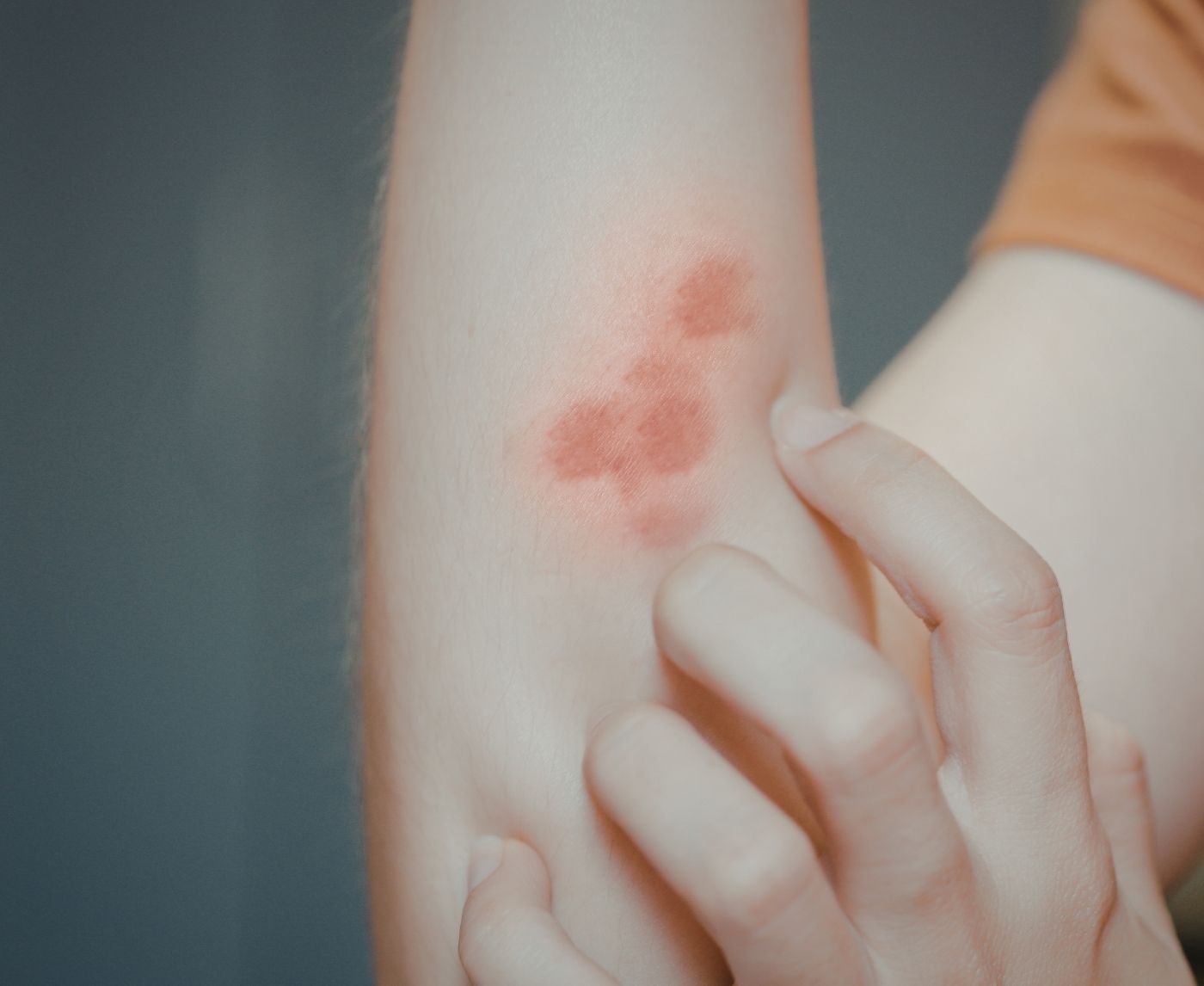
Quick Answer: Syphilis rash usually appears as non-itchy red or brown spots, often on the palms and soles, and doesn’t fade quickly. Heat rash tends to itch, burn, and improve within a few days once skin cools and dries.
This Is Where Most People Get It Wrong
Heat rash is common. It shows up after sweating, tight clothing, friction, humid weather, gym sessions, long hikes, or anxiety sweats under a hoodie. It’s uncomfortable but usually harmless. It often stings or prickles, and it tends to improve once your skin cools down and air can circulate again.
Syphilis, specifically secondary syphilis, plays a different game. The rash isn’t caused by blocked sweat glands. It’s caused by the bacterium Treponema pallidum spreading through your bloodstream. That means it’s systemic. It isn’t just skin-deep irritation. It’s your immune system reacting to infection.
And here’s the part that unnerves people: a syphilis rash often doesn’t itch. It can feel almost neutral. Just there. That calm presentation is what makes people dismiss it.
According to the CDC’s syphilis overview, secondary syphilis frequently causes a rash that can involve the palms of the hands and soles of the feet. Heat rash almost never does that.
What a Syphilis Rash Actually Looks Like
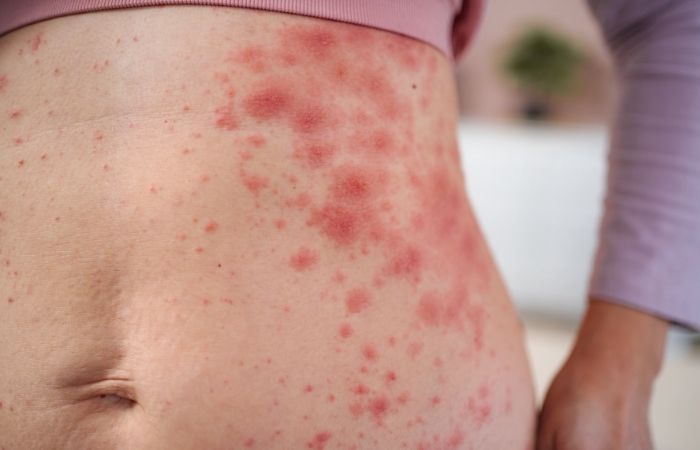
When people search “what does syphilis rash look like,” they’re often expecting something dramatic. Blisters. Open sores. Something obviously dangerous. But secondary syphilis rarely announces itself that loudly.
Instead, it often appears as flat red, pink, or brownish spots. On lighter skin tones, it may look salmon-colored. On darker skin, it can appear purple-brown or hyperpigmented. It’s frequently symmetrical and widespread rather than clustered in one sweaty fold.
One of the most distinctive signs is involvement of the palms and soles. If you’re seeing red spots on your palms that are not itchy, that’s a detail clinicians take seriously.
| Feature | Syphilis Rash | Heat Rash |
|---|---|---|
| Itchiness | Often not itchy | Usually itchy or prickly |
| Location | Torso, arms, legs, palms, soles | Neck, chest, groin, skin folds |
| Texture | Flat or slightly raised spots | Tiny bumps or blisters |
| Duration | Can last weeks without treatment | Improves in days with cooling |
| Systemic Symptoms | May include fever, swollen lymph nodes, fatigue | Typically none |
The NHS guidance on syphilis notes that secondary-stage symptoms can include flu-like feelings, swollen glands, and patchy hair loss alongside the rash. Heat rash does not cause swollen lymph nodes or fatigue. If your body feels “off” in addition to the skin changes, that’s a clue.
How Heat Rash Behaves (And Why It’s Less Dramatic)
Heat rash, also called miliaria, happens when sweat ducts get blocked. According to the Mayo Clinic, it typically presents as small red bumps or tiny fluid-filled blisters. It can sting. It can itch. It tends to show up in places where sweat gets trapped: under breasts, in the groin, on the neck, under tight waistbands.
It usually improves once you cool down, shower, dry off, and wear loose clothing. Within a few days, it often fades. That timeline matters. If a rash disappears quickly when the environment changes, it behaves like irritation, not infection.
A syphilis rash doesn’t care if you change your shirt or turn on the fan. It’s not about sweat. It’s about bacteria circulating in your body.
The Timeline Tells a Story Your Skin Can’t
Heat rash often appears within hours of heavy sweating or heat exposure. You go to a festival. You run in humid weather. You wear synthetic workout gear all day. The rash shows up soon after.
Secondary syphilis rash, on the other hand, usually appears weeks after the initial infection. The first stage of syphilis often includes a painless sore called a chancre, which may go unnoticed, especially if it’s internal. According to the World Health Organization, secondary symptoms can develop several weeks after that initial sore.
That delay creates confusion. You might see a rash and not connect it to a sexual encounter from a month or two ago. But infections follow biological timelines, not emotional ones.
If you’re unsure and your brain won’t let it go, this is where testing becomes grounding. A discreet at-home syphilis rapid test kit can give you clarity in minutes. Peace of mind is not dramatic. It’s responsible.
When the Rash Doesn’t Itch, People Panic More
It seems backward, but a painless rash can feel more threatening than an itchy one. Pain or itching at least feels like something you can scratch, soothe, or cool. A rash that just sits there, calm, flat, persistent, can feel eerie.
“I kept waiting for it to start itching,” one patient, Arjun, once said. “When it didn’t, I thought that made it worse.” He had assumed heat rash should feel uncomfortable. When it didn’t, he started searching for “painless rash STD.”
That search led him to secondary syphilis information. He tested. It was positive. Treatment was straightforward antibiotics. The emotional spiral was worse than the injection.
Most cases of syphilis are treatable, especially when caught early. The CDC emphasizes that penicillin remains highly effective for early stages. The real risk isn’t the rash. It’s ignoring it.
Location, Location, Location
If you are trying to differentiate sweat rash or STD rash, examine where it shows up. Heat rash favors friction and trapped moisture. Secondary syphilis spreads more democratically across the body.
Palms and soles are the detail clinicians lean into. Red spots on palms that are not itchy deserve attention. So do rashes that appear on both sides of the body in a symmetrical way.
Another subtle sign: mucous patches inside the mouth or genital area can accompany secondary syphilis. Heat rash does not create lesions inside the mouth.
If you’re noticing rash plus swollen lymph nodes, mild fever, sore throat, or unexplained fatigue, that constellation of symptoms is not typical of heat rash. It suggests your immune system is responding to something bigger.
When a Syphilis Rash Fades (But the Infection Doesn’t)
This is the part that confuses people the most. A secondary syphilis rash can disappear on its own, even without treatment. That disappearance does not mean the infection is gone. It means the disease is shifting stages.
Syphilis moves in phases. Primary. Secondary. Latent. Sometimes tertiary years later. When the rash fades, the bacteria are still in the body unless antibiotics have cleared them. According to the CDC treatment guidelines, untreated syphilis can progress silently.
Heat rash, by contrast, resolves because the trigger resolves. Sweat ducts unblock. Skin cools. Inflammation settles. The disappearance of heat rash is recovery. The disappearance of a syphilis rash can be false reassurance.
“It went away after two weeks,” Leila said during a telehealth consult. “I thought that meant I was fine.” Her blood test told a different story. Early treatment worked. The delay only added anxiety.
How Long Does a Syphilis Rash Last?
If you’re searching “how long does syphilis rash last,” the honest answer is: it varies. Secondary symptoms often last several weeks and may recur in waves if untreated. They can be faint. They can intensify. They can look different over time.
Heat rash usually peaks quickly and fades within days once cooling measures are taken. It does not linger for weeks without environmental triggers. That duration difference is often one of the clearest distinctions.
Persistent rash beyond a week, especially without heavy heat exposure, deserves medical attention. Even if it turns out not to be syphilis, you deserve clarity instead of speculation.
How It Appears on Different Skin Tones
Medical photos often skew toward lighter skin, and that leaves gaps. On darker skin tones, a syphilis rash may appear brown, copper-colored, or slightly hyperpigmented rather than bright red. It may be easier to feel than see at first.
Heat rash on darker skin can look like small raised bumps with surrounding darker irritation. The itchiness and prickling sensation often guide the diagnosis more than the color.
If you’re comparing images online and thinking, “That doesn’t look exactly like mine,” remember that skin tone changes how inflammation presents. Pattern and timing matter more than exact shade.
Systemic Clues That Point Away From Heat
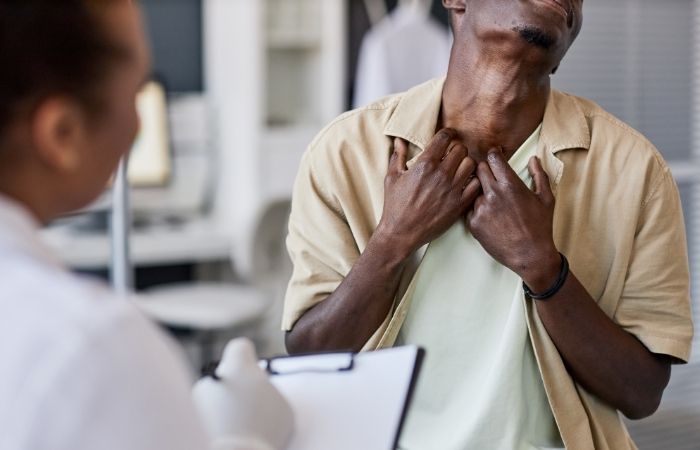
Heat rash stays local. It affects skin where sweat accumulates. It does not usually cause swollen lymph nodes, sore throat, fever, patchy hair loss, or muscle aches.
Secondary syphilis can. The World Health Organization notes that systemic symptoms often accompany the rash. That broader body involvement is a signal.
If your rash arrived alongside fatigue or glands that feel enlarged under your jaw, armpits, or groin, that combination shifts the probability away from simple sweat irritation.
| Symptom | More Common in Syphilis | Common in Heat Rash |
|---|---|---|
| Swollen lymph nodes | Yes | No |
| Low-grade fever | Possible | No |
| Sore throat | Possible | No |
| Prickling itch | Uncommon | Yes |
| Palms and soles involvement | Common | Rare |
When to Test for Syphilis After a Suspicious Rash
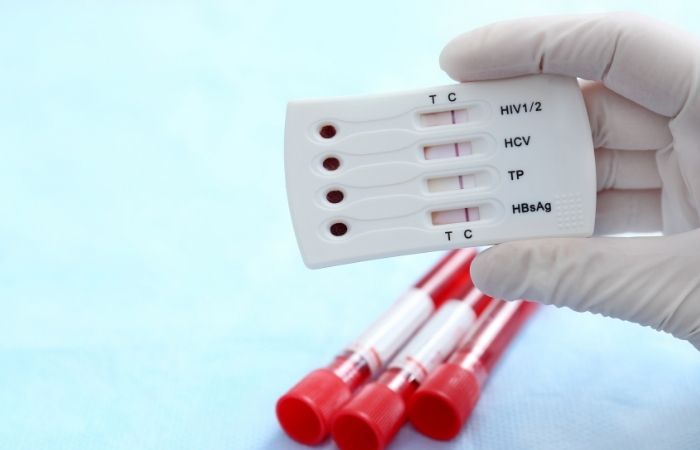
If you’re here because you noticed a rash after sex, timing matters. Blood tests for syphilis detect antibodies. According to public health guidance, these antibodies typically become detectable about three to six weeks after exposure.
If your rash appears within that window, testing immediately may still detect infection, but sometimes a repeat test is recommended for full accuracy. If it has been more than six weeks since possible exposure, blood testing is generally reliable.
You do not need to wait until a rash worsens. You do not need visible symptoms at all. Testing is appropriate after any unprotected sexual encounter, new partner, or exposure concern.
If going to a clinic feels overwhelming, you can order a discreet test directly from STD Test Kits and test privately at home. Your results are yours. Your decisions are yours.
What Heat Rash Actually Needs
If it truly is heat rash, your body will respond to simple measures. Cooling the skin, avoiding tight synthetic fabrics, showering after sweating, and keeping folds dry are often enough. Symptoms improve as the environment changes.
If nothing changes after those adjustments, pause. That pause is not panic. It’s awareness. Skin that does not respond to cooling deserves a second look.
You’re not dramatic for double-checking. You’re being responsible with your health.
If the Test Is Positive, Here’s What Actually Happens
Take a breath. A positive syphilis result feels heavy in the moment, but medically, early-stage syphilis is highly treatable. Most people diagnosed in the primary or secondary stage receive a single intramuscular injection of penicillin. That’s it. No months-long hospital stays. No dramatic procedures.
The emotional part often weighs more than the medical part. “I felt embarrassed before I felt sick,” Mateo admitted after his diagnosis. “But the nurse treated it like a routine infection. That changed everything.”
According to the CDC’s treatment guidelines, penicillin remains the recommended therapy for most stages of syphilis. When treated early, complications are rare. When ignored, the bacteria can eventually affect the heart, brain, and nerves years later.
The rash itself will fade after treatment. But the real victory is stopping progression before long-term damage begins.
Telling a Partner Without Shame or Drama
This is the part people rehearse in their heads. The message. The tone. The fear that someone will blame them. The truth is simpler than the anxiety suggests.
Syphilis spreads through direct contact with a syphilis sore during vaginal, anal, or oral sex. Many people do not know they have it. It is not a sign of being reckless. It is a sign of being sexually active in a world where infections exist.
You can keep it straightforward. “I tested positive for syphilis. It’s treatable, but you should get tested too.” That’s enough. No need to apologize for something biology made possible.
If direct conversation feels unsafe, many public health departments offer anonymous partner notification services. Treatment protects both of you. Silence does not.
What If the Test Is Negative but the Rash Is Still There?
A negative result can bring relief, but if your rash persists, it’s worth a follow-up. Very early testing can sometimes miss infection before antibodies fully develop. In those cases, a repeat blood test in a few weeks increases certainty.
There are also other causes of non-itchy rashes: viral infections, medication reactions, autoimmune conditions. A negative syphilis test narrows the field. It doesn’t end the investigation if symptoms continue.
If you tested before the three-to-six-week window after exposure, consider retesting at the appropriate time. Precision matters. Timing is not about paranoia. It’s about accuracy.
Why Early Action Changes Everything
Syphilis has a long history because untreated infections can persist quietly. But modern medicine has changed the story. Early detection means simple treatment. Delayed detection means more monitoring, more follow-up, and potentially more complications.
The World Health Organization emphasizes that untreated syphilis can lead to serious outcomes, including neurological and cardiovascular complications years later. That sounds frightening, but the key word is untreated.
The difference between heat rash and syphilis rash is not just visual. It’s consequential. Heat rash resolves with airflow and time. Syphilis requires antibiotics. Recognizing that difference early protects your long-term health.
How to Ground Yourself When Anxiety Spikes
It’s common to spiral while waiting for results. You Google images. You compare your skin under different lighting. You zoom in. You convince yourself it’s worse. Or you convince yourself it’s nothing.
Instead, anchor yourself in facts. Secondary syphilis rash often appears weeks after exposure. It often involves palms and soles. It may come with swollen glands or mild flu-like symptoms. Heat rash typically itches and improves quickly with cooling.
Facts cut through fear. Testing cuts through uncertainty.
If you’re ready to move from guessing to knowing, a discreet Syphilis Test Kit can provide results privately at home. You deserve clarity without judgment.
The Bottom Line on Syphilis Rash vs Heat Rash
Heat rash is reactive. It responds to environment. It itches, prickles, and improves within days. It stays where sweat gets trapped.
Secondary syphilis rash is systemic. It often does not itch. It may appear on palms and soles. It can last weeks and come with swollen lymph nodes or fatigue. It requires antibiotics, not air conditioning.
If you’re unsure, you’re not overthinking. You’re listening to your body. The right move is not panic. It’s testing, treatment if needed, and forward momentum.
In the final section, we’ll answer the most common questions people ask about syphilis rash, heat rash, testing windows, reinfection, and long-term outlook.
FAQs
- 1. Okay, real talk , can a syphilis rash actually look like heat rash?
- Yes. That’s why people spiral. A flat red rash across your chest after a sweaty weekend can look harmless. Secondary syphilis doesn’t always scream for attention. The difference usually shows up in the details: it doesn’t itch much (if at all), it lingers, and it may pop up in unexpected places like your palms or soles. If it’s hanging around and not behaving like irritated skin, that’s your cue to test instead of guess.
- 2. If it doesn’t itch, is that worse?
- Not worse , just different. Heat rash usually prickles or burns because sweat ducts are blocked. A syphilis rash often feels strangely neutral. That calm, non-itchy vibe is exactly what makes people dismiss it. One patient once told me, “I kept waiting for it to feel uncomfortable so I could relax.” Skin doesn’t follow emotional logic. Biology doesn’t perform on cue.
- 3. What if it showed up on my palms? I don’t even sweat there.
- That’s the detail doctors pay attention to. Heat rash rarely affects palms or soles because those areas don’t trap sweat the same way your chest or groin does. A rash on your palms that isn’t itchy and doesn’t fade quickly deserves a blood test. Not panic. Just information.
- 4. The rash disappeared. Am I safe?
- I wish it worked like that. Secondary syphilis can fade without treatment. The bacteria can still be in your body even when your skin looks clear again. Disappearance of symptoms is not the same thing as cure. The only thing that confirms clearance is proper treatment.
- 5. I tested negative, but I’m still anxious. Now what?
- Check the timing. If you tested very early , less than three weeks after possible exposure , antibodies might not have built up yet. Retesting at the right window gives you stronger reassurance. If timing was solid and the result was negative, it may be time to explore other causes like viral rashes or dermatologic conditions. Anxiety loves ambiguity. Good timing reduces it.
- 6. Does syphilis rash look different on darker skin?
- It can. On deeper skin tones, the rash may look brown, coppery, or slightly darker than surrounding skin instead of bright red. Texture and spread often matter more than color. If something feels new, symmetrical, and persistent, trust that observation even if online images don’t match perfectly.
- 7. Can I just wait and see for a few more weeks?
- You can. But ask yourself why. If the rash behaves like heat rash , improves quickly with cooling , waiting makes sense. If it’s lingering, spreading, or paired with swollen glands or fatigue, waiting doesn’t buy you clarity. Testing does. Early syphilis treatment is simple and highly effective. Delayed treatment adds stress you don’t need.
- 8. Is this something to feel ashamed about?
- No. Full stop. Syphilis is a bacterial infection transmitted through sexual contact. It is not a moral verdict. It is not a personality flaw. It is a treatable medical condition. Shame delays testing. Testing protects you and the people you care about.
- 9. What’s the most practical next step if I’m still unsure?
- Choose certainty over scrolling. If you’re within the appropriate testing window, use a discreet at-home test or schedule a lab draw. Give yourself a clear answer. Once you have facts, everything gets quieter in your head.
- 10. Bottom line , when should I stop Googling and actually test?
- If the rash lasts more than a few days, involves palms or soles, appears weeks after sexual exposure, or comes with swollen lymph nodes or fatigue, it’s time. Not because you should be scared. Because you deserve clarity. Guesswork keeps you up at night. Data lets you sleep.
You Deserve Certainty, Not Guesswork
If it’s heat rash, your body will settle once it cools and dries. If it’s syphilis, antibiotics can cure it quickly and prevent long-term complications. The danger isn’t in asking the question. The danger is ignoring it.
You do not need to diagnose yourself perfectly. You only need to take the next right step. If uncertainty is keeping you up at night, start with accurate testing. Visit STD Test Kits to explore discreet options, or order a private Syphilis Test Kit today. Your results, your privacy, your control.
How We Sourced This Article: This guide blends current guidance from the CDC, World Health Organization, NHS, and Mayo Clinic with peer-reviewed infectious disease literature on secondary syphilis presentation. We also incorporated anonymized patient experiences to reflect how symptoms are perceived outside clinical settings. While approximately fifteen references informed the research process, we selected six of the most authoritative and accessible sources below for reader verification. Every external link opens in a new tab for transparency and fact-checking.