Tested Positive for Trichomoniasis: What to Do Next
The Moment You See the Result For many people, a trichomoniasis diagnosis doesn’t happen during a dramatic doctor’s visit. My brain went straight to worst-case scenarios.” This reaction is incredibly common.

Quick Answer: If you tested positive for trichomoniasis, the next step is treatment with prescription antibiotics, usually metronidazole or tinidazole, followed by partner treatment and retesting in about three months to prevent reinfection.
The Moment You See the Result
For many people, a trichomoniasis diagnosis doesn’t happen during a dramatic doctor’s visit. It happens , in a patient portal notification, an email about Pap smear results, or a follow-up call from a clinic. One reader described it this way:
“I logged into my test results expecting everything to be normal, and suddenly there was this word I had never heard before. My brain went straight to worst-case scenarios.”
This reaction is incredibly common. STDs carry a lot of social baggage, and the internet tends to amplify the scariest possibilities. But here’s the calm reality: Trichomoniasis is one of the most treatable sexually transmitted infections in modern medicine.
Most people who test positive simply need antibiotics and a short period of avoiding sexual contact while treatment works. Within days, the infection is usually cleared. The real challenge isn’t treatment, it’s understanding what the diagnosis means and making sure reinfection doesn’t happen.
What Is Trichomoniasis, Exactly?
Trichomoniasis is a sexually transmitted infection caused by a microscopic parasite called Trichomonas vaginalis. Unlike bacterial STDs such as chlamydia or gonorrhea, this infection is caused by a single-celled organism that spreads through sexual contact.
In people with vaginas, the parasite typically infects the vagina and cervix. In people with penises, it usually infects the urethra. One reason the infection spreads so easily is that many people have no symptoms at all. The World Health Organization estimates that the majority of infections go undiagnosed simply because people feel completely normal.
That means someone can unknowingly pass the infection to a partner, who then develops symptoms weeks later. This is why trichomoniasis diagnoses often surprise people in long-term relationships.
The key takeaway is that a positive test doesn’t tell you when the infection started or who had it first. What it does tell you is that treatment now will clear the infection and protect your health going forward.
Why a Pap Smear Might Reveal “Strawberry Cervix”
At times, the process of diagnosing the infection begins with the mention of a peculiar phrase in the gynecology report: "strawberry cervix." Although the term sounds unusual, it is based on the visual pattern that doctors sometimes observe during the course of the medical exam.
When the infection irritates the tissue of the cervix, small red dots form on the surface of the cervix. This results in the "strawberry cervix" pattern when the tissue is examined.
It is noteworthy that the Pap smear is not used to diagnose the infection. This test is used to check for cervical cancer and changes caused by the human papillomavirus. However, during the course of the test or while examining the cells of the cervix, doctors sometimes notice signs that point to the infection.
In that case, the infection is confirmed through additional tests, including the nucleic acid amplification test. This test detects the genetic material of the parasite. According to the Mayo Clinic, these tests are very accurate and have become the "gold standard" for diagnosing Trichomoniasis.
How Common This Infection Really Is
One of the most surprising things about trichomoniasis is how common it is compared with other STDs. Public health data consistently shows that it’s one of the most widespread sexually transmitted infections worldwide.
| Infection | Estimated U.S. Cases | Typical Symptoms | Often Asymptomatic? |
|---|---|---|---|
| Trichomoniasis | ~3.7 million | Discharge, irritation, odor | Yes |
| Chlamydia | ~1.6 million reported annually | Discharge, burning urination | Often |
| Gonorrhea | ~700,000 estimated annually | Discharge, pelvic pain | Sometimes |
Because symptoms are frequently mild or nonexistent, many people only discover the infection during routine testing. In fact, it’s common for someone to learn about it during a routine Pap smear they scheduled for an entirely different reason.
This is also why public health experts encourage regular testing, especially if you have new partners or unexplained vaginal symptoms.
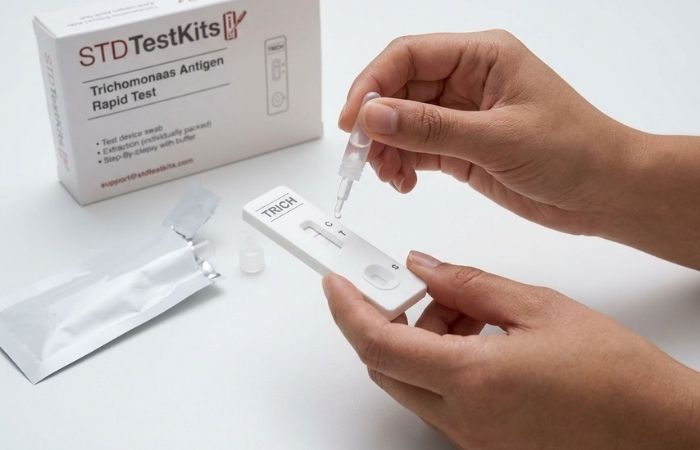
If you want to check for multiple infections discreetly at home, you can explore testing options at STD Rapid Test Kits, where several kits screen for the most common STDs using private, at-home testing methods.
The First 24 Hours After a Positive Test
The first day after seeing a positive result can feel emotionally chaotic. People often cycle through confusion, embarrassment, and a long list of practical questions: Do I need medication right away? Do I need to tell my partner? Could this cause long-term damage?
Here’s the reassuring truth: most trichomoniasis cases are straightforward to treat once they’re diagnosed.
| Step | Why It Matters | Typical Timing |
|---|---|---|
| Confirm the result | Ensures diagnosis was based on accurate testing | Immediately |
| Begin treatment | Antibiotics clear the infection quickly | Within days |
| Avoid sexual activity | Prevents reinfection during treatment | About 7 days |
| Notify partners | Allows partners to receive treatment | As soon as possible |
Most doctors prescribe one of two medications: metronidazole or tinidazole. These antibiotics are highly effective against the parasite responsible for the infection. In many cases, a single dose is enough to clear it.
The biggest challenge isn’t the medication, it’s making sure partners are treated too. Without that step, reinfection can happen surprisingly quickly.
How Trichomoniasis Treatment Actually Works
The first question most people ask after a diagnosis is simple: how do you get rid of it? Fortunately, Trichomoniasis is one of the most treatable sexually transmitted infections doctors see. In most cases, treatment involves a prescription antibiotic that targets the parasite responsible for the infection.
Most clinicians prescribe either metronidazole or tinidazole. These medications work by damaging the parasite’s DNA so it can’t survive in the body. According to treatment guidance from the CDC STD Treatment Guidelines, these drugs are highly effective when taken correctly.
Many patients receive a single high dose taken all at once, while others receive a short course of pills taken twice daily for several days. Your provider chooses the approach based on symptoms, medical history, and pregnancy status.
“I thought I was going to need weeks of medication,” one patient said after her diagnosis. “My doctor handed me one dose and said the infection would likely clear within days.”
For most people, symptoms begin improving within a few days after treatment. The parasite is usually eliminated quickly once the medication starts working.
Important Treatment Rules Most People Don’t Hear About
While treatment is straightforward, there are a few rules doctors emphasize to make sure the infection doesn’t come right back. These details matter more than most people realize.
One key rule involves alcohol. Metronidazole and tinidazole can interact with alcohol in ways that cause nausea, flushing, and severe stomach discomfort. Because of this, many doctors recommend avoiding alcohol during treatment and for at least 24–72 hours afterward.
Another important rule is sexual abstinence during treatment. Even if symptoms disappear quickly, the parasite may still be clearing from the body. Most healthcare providers recommend avoiding sexual activity for about a week after medication.
The final rule is partner treatment. Reinfection is extremely common if only one person receives medication while the other partner remains untreated. Treating both partners at the same time dramatically reduces the chance of the infection returning.
Symptoms: Why Some People Feel Nothing at All
One of the most puzzling things about Trichomoniasis is the way in which it affects each person differently. Some may experience symptoms, while others may not notice anything at all.
If symptoms are present in individuals with vaginas, they may include vaginal discomfort, unusual vaginal discharge, or discomfort while urinating or making love. The discharge may be greenish-yellow in color and may also be stronger in odor than usual.
In individuals with penises, symptoms are much less likely to be noticed. Some may experience slight discomfort or discharge from the urethra, while others may not notice any symptoms at all. This is part of the reason that this disease is so easily transmitted from one person to another.
The Centers for Disease Control estimate that 70% of those infected do not notice any symptoms at all. This is part of the reason that this disease is so easily transmitted.
Because the symptoms are so subtle, the only way to know for sure whether or not this disease is present is to be tested.
Could the Infection Have Been There for Months?
This is perhaps one of the questions that carry the greatest emotional weight. If a person tests positive for having Trichomoniasis, they naturally want to know when the infection was acquired.
The truth is, it is extremely difficult to know the timeline. It can be in the body for months and sometimes longer before any symptoms are felt.
This means that the results do not necessarily mean the person acquired the infection recently. It is entirely possible the person acquired the infection before they were in the current relationship, or the partner acquired it before they knew they were infected.
Experts in public health stress the fact that STD infections are not really useful in determining blame.

Talking to a Partner About the Diagnosis
For many people, the hardest part of an STD diagnosis isn’t the medication. It’s the conversation that follows.
Telling a partner about Trichomoniasis can feel uncomfortable, especially if the infection appeared during routine testing rather than obvious symptoms. But open communication protects both people’s health.
Many clinicians recommend approaching the conversation with straightforward honesty rather than suspicion or blame. Something as simple as explaining that a routine test detected the infection and that both partners should be treated is often enough.
“I was nervous to bring it up,” another patient shared. “But when I explained that the infection is common and easily treated, the conversation was much easier than I expected.”
In some regions, healthcare providers can also prescribe medication for partners without requiring them to attend a clinic visit. This practice, called expedited partner therapy, helps stop infections from circulating between partners.
Why Reinfection Happens So Often
Even after successful treatment, Trichomoniasis can return if partners are not treated simultaneously. Reinfection is one of the most common reasons people see the infection appear again after it seemed to clear.
Research cited by the National Library of Medicine shows that reinfection rates can be significant when partners are not treated together. The parasite simply moves back and forth between partners during sexual contact.
This is why doctors emphasize a coordinated approach: both partners receive medication, both avoid sex for the recommended treatment window, and both confirm symptoms are gone before resuming sexual activity.
If you’re unsure about your status or want discreet screening options in the future, many people choose to keep a private test available at home. At-home screening options available through STD Test Kits allow individuals to check for multiple infections privately without visiting a clinic.
When Should You Retest After Treatment?
Once treatment is finished, most people assume the infection is gone for good. In many cases, that’s true. But doctors still recommend follow-up testing for a simple reason: reinfection happens more often than people expect.
The parasite that causes Trichomoniasis is very responsive to medication, but if a partner was not treated or sexual contact resumed too soon, the infection can return. Because symptoms are often mild or nonexistent, someone might not realize they’ve been reinfected.
For that reason, many clinicians recommend retesting about three months after treatment. The CDC treatment guidelines specifically advise follow-up testing within this window to ensure the infection has not returned.
| Situation | Recommended Action | Typical Timing |
|---|---|---|
| Completed antibiotic treatment | Retest to confirm no reinfection | About 3 months |
| Symptoms return after treatment | Contact healthcare provider and retest | Immediately |
| Partner was untreated | Both partners should test and treat | As soon as possible |
| New sexual partner after treatment | Routine screening recommended | Based on exposure risk |
Retesting doesn’t mean doctors expect treatment to fail. Instead, it’s a safety net that ensures the infection hasn’t returned through reinfection.
Can Trichomoniasis Cause Long-Term Health Problems?
Most cases of Trichomoniasis go away quickly after being treated, but in some instances, untreated infections can cause complications in the future, making it important to seek medical attention even if the infection is minor.
Trichomoniasis can cause discomfort in the genital area, and in women, this can increase the risk of getting other STDs.
According to several studies mentioned by the World Health Organization, untreated trichomoniasis can increase the risk of getting other STDs, such as HIV, because the parasite, although invisible, causes inflammation in the body, making it easier for other diseases to infect the body.
In women, untreated trichomoniasis can cause premature birth, making it important to be tested for the infection, especially when undergoing routine tests for women.
The good news is that most complications can be avoided by treating the infection in time, after which the body’s tissues return to normal once the antibiotics have eliminated the infection-causing parasite.
Preventing Trichomoniasis in the Future
After the treatment, many people begin to think more intentionally about sexual health. Although it is uncomfortable to receive a diagnosis, it is an opportunity to develop behaviors that will prevent future infections.
One of the first steps is regular testing, especially for those with new partners or unexplained symptoms. In many cases, sexually transmitted diseases have few or no early signs of infection, and regular screening is the only way to catch these diseases early.
Barrier protection methods, such as condoms, are effective in reducing the risk of disease transmission when using protection consistently. Although there is nothing in the world of disease prevention that is 100% effective, these tools are incredibly effective in reducing the risk of transmitting parasites and bacteria.
Another factor is communication with partners. While it is uncomfortable to discuss sexual health with a partner, it is an essential step in protecting all parties involved.
For those who prefer to keep things private and convenient, home tests are now widely available. STD Test Kits provide many different types of screenings for sexual health, allowing those interested in knowing their status to do so without having to make an appointment with a clinic.
Why This Diagnosis Is More Common Than You Think
One of the biggest emotional hurdles after testing positive for an STD is the stigma attached to the diagnosis. Many people worry that it says something negative about their behavior or their relationship.
But infections like Trichomoniasis spread easily because they often produce few noticeable symptoms. Someone can carry the parasite without realizing it, then unknowingly transmit it to a partner weeks or months later.
Sexual health professionals see this pattern constantly. A person tests positive during a routine exam, feels shocked or embarrassed, then discovers that treatment is quick and the infection clears easily.
In other words, this diagnosis is far more common, and far less dramatic, than the internet sometimes suggests.
“I assumed something must have gone terribly wrong,” one patient recalled after receiving her diagnosis. “But my doctor explained that this infection shows up all the time during routine screenings.”
Understanding how common and treatable the infection is often helps people move past the initial anxiety and focus on practical next steps.
FAQs
- 1. Can a Pap smear detect trichomoniasis?
- At times, yes. A Pap smear is used to detect cervical cancer or HPV infection, but at times, your doctor may detect trichomoniasis infection when checking for cervical cancer or HPV infection. If your doctor suspects something unusual, like inflammation or the “strawberry cervix,” your doctor may recommend another test to confirm your infection.
- 2. What does “strawberry cervix” actually mean?
- “Strawberry cervix” is actually a term used to refer to red spots on your cervix caused by infection with Trichomoniasis. The irritation of your cervix by the infection results in red spots, which resemble the seeds of a strawberry fruit. It is not dangerous but may be a sign of infection and may need to be checked.
- 3. Can trichomoniasis go away on its own?
- No, it does not go away on its own. Since it is caused by a parasite, it may need to be treated with antibiotics to cure it.
- 4. How long after treatment can I have sex again?
- You should wait for at least seven days after your treatment to have sex again.
- 5. Do both partners need treatment for trichomoniasis?
- Yes, both partners need treatment, even if only one of you has symptoms, because even if you don’t have symptoms, you are still infected, and both of you need to be treated at the same time so the infection doesn’t go back and forth between you.
- 6. Can men have trichomoniasis without symptoms?
- Absolutely! Many men infected with Trichomoniasis do not experience any symptoms at all, so it’s important to get both partners tested after a diagnosis.
- 7. How soon will symptoms improve after treatment?
- Many people start feeling better within a few days of taking antibiotics, so discharge, irritation, and odor tend to clear up as the parasite dies off.
- 8. Can you get trichomoniasis again?
- Yes, you can get infected again if your partner was not treated at the same time as you, so make sure you both get tested after a diagnosis.
- 9. Should I retest after treatment?
- Most health organizations recommend retesting three months after treatment, not because treatment does not work, but because you can get infected again if your partner was not treated at the same time as you.
- 10. Does a fishy smell mean I’m a dirty, disgusting person?
- No! I think it's worth noting that this question comes up a lot, and I think it's worth saying that a fishy smell does not, in fact, say anything at all about a woman's level of cleanliness or worth.
You’re Not the First Person to See This Result, and You Won’t Be the Last
Witnessing the results of a positive test for Trichomoniasis can spark a chain reaction of worry, confusion, and hours of internet searching. This is completely normal. However, as the shock wears off, the situation is quite simple: the infection is quite common, treatable, and can be controlled through several easy steps.
The first steps to break the infection's life cycle and allow your body to heal completely include taking the medication, treating your partner with medication, and scheduling a follow-up test if necessary.
If your mind is racing with "what if" scenarios about the infection's symptoms or the possibility of other infections, the test can provide immediate answers. Discreet test solutions exist through the at-home combination STD test kit.
How We Sourced This Article: This guide was developed using current clinical guidance from major health authorities, peer-reviewed research on trichomoniasis diagnosis and treatment, and reporting from sexual health educators. Around fifteen research sources informed the content, with the most reader-relevant references listed below. Every external source was selected for reliability and checked to ensure it leads to a reputable medical organization.