Anal Itch, Burn, or Bleed? How to Tell If It’s an STD or Something Else
Quick Answer: Anal itching, burning, or bleeding can be caused by hemorrhoids, fissures, skin irritation, or yeast, but certain STDs like gonorrhea, chlamydia, herpes, and syphilis can also infect the rectum.
Quick Answer: Anal itching, burning, or bleeding can be caused by hemorrhoids, fissures, skin irritation, or yeast, but certain STDs like gonorrhea, chlamydia, herpes, and syphilis can also infect the rectum. Symptoms alone can’t confirm the cause, testing is the only way to know.
First: Most Anal Symptoms Are Not STDs
Let’s lower the temperature in the room. The most common cause of anal itching or bleeding is not a sexually transmitted infection. It’s hemorrhoids. Or a small tear called an anal fissure. Or irritated skin from friction, sweat, or over-wiping.
Hemorrhoids are swollen veins inside or around the anus. They can itch, burn, ache, and bleed, especially after straining or sitting too long. According to the Mayo Clinic, they’re extremely common and often unrelated to sexual activity at all.
An anal fissure is a tiny tear in the lining of the anus. It can happen after constipation, rough wiping, or penetrative sex. It causes sharp pain during bowel movements and bright red blood on toilet paper. The pain can feel intense, but it’s mechanical, not infectious.
Then there’s dermatitis. The skin around the anus is delicate. Friction, scented soaps, new lube, sweat, tight clothing, or shaving can all trigger itching and burning. This kind of irritation tends to feel surface-level rather than deep or internal.
Aisha, 29, told me, “I was convinced I had an STD. I kept checking with my phone flashlight. It turned out to be a fissure from constipation. I felt embarrassed, but also relieved.”
Embarrassment fades. Untreated infections don’t. That’s why the key question isn’t “Does this feel scary?” It’s “Does this pattern fit something infectious?”

When It Could Be an STD
Rectal STDs are real. They’re also underdiagnosed because many people don’t realize infections like gonorrhea and chlamydia can live in the rectum, even without penile penetration.
The CDC STD Treatment Guidelines confirm that rectal infections can occur from anal sex, shared toys, or even exposure through fingers. Many people have no symptoms at all. Others experience subtle ones that are easy to dismiss.
Rectal gonorrhea or chlamydia may cause:
| Symptom | What It Feels Like | How It Differs From Hemorrhoids |
|---|---|---|
| Rectal discharge | Mucus or pus-like fluid from the anus | Hemorrhoids rarely cause mucus discharge |
| Deep internal soreness | A dull ache or pressure inside | Hemorrhoids usually feel external or surface-level |
| Pain during bowel movements | Burning or raw internal sensation | Fissures cause sharp tearing pain, not deep ache |
| Bleeding with mucus | Blood mixed with discharge | Hemorrhoid bleeding is typically bright red and clean |
Then there’s herpes. Anal herpes can look like small blisters, open sores, or cracks in the skin. It often burns before it’s visible. According to the World Health Organization, herpes outbreaks may start with tingling or itching before lesions appear.
Daniel, 34, described it this way: “It felt like a paper cut at first. Then it turned into clusters. That’s when I knew it wasn’t just irritation.”
Syphilis can also cause a painless sore near or inside the anus during its first stage. The CDC notes that these sores may go unnoticed because they’re not always painful.
HPV may show up as anal warts, small, flesh-colored bumps that don’t typically bleed unless irritated. And though less common, HIV exposure can coincide with flu-like symptoms weeks after high-risk contact, though rectal itching alone is not a primary HIV symptom.
The point is this: STDs tend to create patterns. Discharge. Sores. Systemic symptoms. Deep inflammation. Not just surface irritation.
Bleeding After Anal Sex: Panic or Physics?
Bleeding is the symptom that triggers the most fear. Bright red streaks look dramatic. But blood color matters. Fresh red blood on toilet paper often points to a fissure or hemorrhoid. Darker blood mixed with mucus or persistent bleeding deserves medical evaluation.
Friction is powerful. Even consensual, well-lubricated anal sex can cause small tears, especially if muscles weren’t relaxed or the tissue wasn’t prepared. That doesn’t automatically mean infection.
But bleeding combined with rectal discharge, fever, swollen lymph nodes, or visible sores shifts the conversation. That’s when testing becomes essential.
Rafael, 26, shared, “I assumed it was just from rough sex. But when the discharge started two days later, I knew something wasn’t right.” He tested positive for rectal gonorrhea. He had no penile symptoms at all.
This is why symptom location matters. You can have a rectal STD without any genital signs. If anal exposure happened, even once, rectal testing is the only way to rule it out.
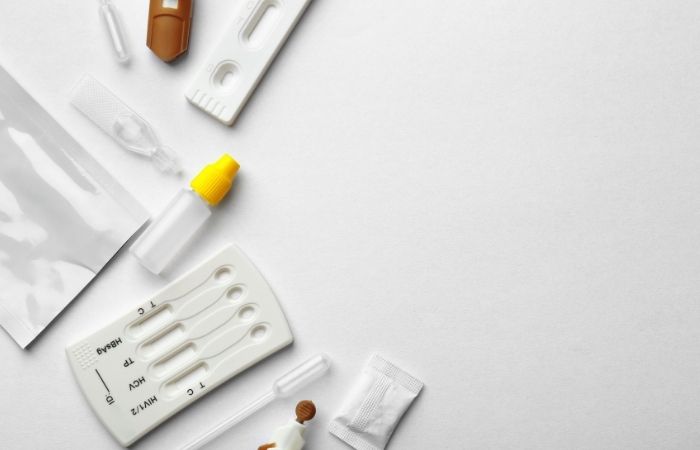
If you’re unsure and anxiety is running the show, discreet at-home testing is an option. You can explore confidential testing kits directly through STD Test Kits. For broader coverage, a combo STD home test kit can screen for multiple common infections at once.
Testing isn’t an admission of guilt. It’s information. And information calms spirals.
Timing Changes Everything
One of the most common searches after anal sex is “how long after anal sex to test.” That question usually comes with a tight chest and a racing mind. Maybe the condom slipped. Maybe there was no condom. Maybe you’re not even sure if there was enough contact to count.
Here’s the calm, grounded truth: testing too early can give you false reassurance. Most rectal bacterial STDs have a window period, the time between exposure and when a test can reliably detect infection.
According to CDC guidance, rectal gonorrhea may become detectable within 2–7 days, but accuracy improves closer to 7–14 days. Rectal chlamydia often shows up reliably after about 14 days. Herpes lesions can appear within 2–12 days, while blood antibody testing may take weeks to turn positive.
This is why a negative test at day three doesn’t mean you’re clear. It means it might be too soon.
| Infection | Earliest Detection Window | Most Reliable Testing Window |
|---|---|---|
| Gonorrhea | 2–5 days | 7–14 days |
| Chlamydia | 5–7 days | 14+ days |
| Herpes | 2–12 days (if sores appear) | Swab during active outbreak |
| Syphilis | 3 weeks | 6 weeks+ |
If it’s been less than a week, you can test, but plan for a retest at the two-week mark for bacterial infections. If it’s already been two weeks or more, testing now gives you meaningful clarity.
Isabella, 27, tested five days after exposure because the anxiety was overwhelming. Her result was negative. At fourteen days, she retested. That result was positive for rectal chlamydia. The first test wasn’t wrong, it was early.
Window periods aren’t about punishment. They’re about biology.
What Makes Symptoms More Concerning
There are certain combinations of symptoms that shift this from “probably irritation” to “please test.”
If you have rectal discharge that is cloudy, yellow, or green. If bleeding is mixed with mucus. If there is fever, swollen lymph nodes in the groin, or visible sores. If pain is deep and persistent rather than surface-level. These patterns deserve evaluation.
Another red flag is pain that doesn’t improve within a few days of rest and gentle care. Mechanical irritation usually improves when friction stops. Infections tend to persist or worsen.
And here’s a detail many people miss: you can have a rectal STD even if you used condoms for vaginal sex. Exposure during anal contact, oral-anal contact, or shared toys can transmit infection.
If you’ve been searching “rectal gonorrhea symptoms” or “rectal chlamydia symptoms,” it’s usually because something feels off internally, not just itchy on the surface. Trust that intuition enough to test.
If You’re Avoiding Testing Because of Shame
Let’s talk about the emotional layer.
Anal symptoms carry stigma. Some people worry that seeking testing will out their sexual practices. Others feel guilt, especially if the exposure happened outside a committed relationship. That emotional weight can delay care.
Farah, 33, told me, “I kept telling myself it was just hemorrhoids because I didn’t want to face what it could be.” When she finally tested, it was rectal gonorrhea. A short course of antibiotics cleared it completely.
Most rectal bacterial STDs are treatable with antibiotics. Herpes is manageable with antiviral medication. Syphilis is curable when caught early. The danger isn’t testing. The danger is untreated infection.
If clinic visits feel overwhelming, discreet at-home testing can remove that barrier. A comprehensive option like the combo STD home test kit screens for multiple infections at once, reducing guesswork. You can explore private testing options through STD Test Kits without sitting in a waiting room.
Testing is not a confession. It’s maintenance. It’s responsible. It’s adult.
What To Do Right Now
If symptoms are mild, surface-level, and improving with rest, gentle hygiene, and avoiding friction, you can monitor for a few days. If symptoms persist beyond a week, worsen, or include discharge or sores, testing is appropriate.
If bleeding is heavy, black, or accompanied by severe pain or fever, seek urgent medical care. That may indicate something beyond typical STDs or hemorrhoids.
And if anxiety is the loudest symptom in the room? Testing is still reasonable. Peace of mind is a valid medical outcome.
The goal isn’t to assume the worst. It’s to replace uncertainty with information.
FAQs
1. Be honest, does anal itching usually mean an STD?
Most of the time? No. Anal itching is far more likely to be sweat, friction, hemorrhoids, or irritated skin than a rectal STD. But here’s the nuance: itching plus discharge, deep internal pain, or sores changes the equation. Itch alone is usually skin. Itch with other red flags deserves a test.
2. What does rectal chlamydia or gonorrhea actually feel like?
It’s rarely dramatic. People describe a dull internal soreness, a sense of pressure, or mucus they can’t explain. Sometimes there’s light bleeding mixed with discharge. And sometimes, nothing at all. That’s the tricky part. Silence doesn’t equal safety.
3. If I only see bright red blood on toilet paper, should I panic?
Bright red streaks after a bowel movement usually point toward hemorrhoids or a fissure. Think mechanics, not microbes. Now, if bleeding is persistent, mixed with mucus, or paired with fever or swelling, that’s different. That’s when you stop guessing and start testing.
4. How would I know if it’s herpes back there?
Herpes tends to announce itself. There’s often a burning or tingling sensation before anything appears. Then small blisters or shallow sores show up, sometimes in clusters. It’s not subtle when it’s active. If you see visible lesions, that’s the moment to get swabbed, not weeks later.
5. Can I really have a rectal STD without any genital symptoms?
Yes. And this surprises a lot of people. You can test negative on a urine test and still have a rectal infection if that’s where the exposure happened. Bodies are specific. Exposure site matters. If anal contact happened, rectal testing matters too.
6. What if it started right after sex, does that mean it’s definitely an STD?
Not necessarily. Friction can cause burning or micro-tears within hours. Bacterial STDs usually take several days to cause noticeable symptoms. So if you felt soreness immediately, that leans mechanical. If new discharge or deep pain shows up days later, that leans infectious.
7. I’m embarrassed to ask for rectal testing. Is that normal?
Completely. But here’s the truth: clinicians are not shocked by anatomy. Rectal STDs are common, especially among people who have receptive anal sex. If asking in person feels overwhelming, discreet at-home testing is a valid first step. Privacy isn’t avoidance, it’s access.
8. If a test comes back positive, what then?
You breathe. Most rectal bacterial STDs clear with antibiotics. Herpes is manageable. Syphilis is curable when treated early. The scariest moment is usually the waiting, not the treatment. And once you know, you can act.
9. What if everything feels off but tests are negative?
Then we widen the lens. Fissures. Inflammation. Skin conditions. Even digestive issues can cause rectal discomfort. A negative STD panel doesn’t mean you imagined it, it just means the cause lives somewhere else. And that’s solvable too.
10. So when should I stop Googling and just test?
If you’re rereading symptom lists at midnight. If the anxiety won’t settle. If there was anal exposure and your body feels different in a way you can’t shake. Testing replaces spirals with information. And information is power.
You Deserve Clarity, Not Catastrophizing
Anal itching, burning, or bleeding can feel terrifying because the mind fills in worst-case scenarios. But most of the time, the cause is mechanical or inflammatory, not sexually transmitted. And when it is an STD, most are treatable, manageable, and far less dramatic than your anxiety predicts.
The fastest way to quiet the spiral is information. If there’s been anal exposure and symptoms aren’t clearly improving, consider testing. A discreet option like the combo STD home test kit can screen for multiple common infections from home. Or explore additional confidential options directly through STD Test Kits. Your results are yours. Your privacy is yours. Your health decisions are yours.
Testing isn’t shame. It’s maintenance. It’s care, for you and for anyone you share your body with.
How We Sourced This Article: This guide combines current clinical guidelines from major public health organizations with peer-reviewed research on rectal sexually transmitted infections and lived-experience reporting to reflect how symptoms actually present in real life. We reviewed CDC treatment guidelines, WHO fact sheets, and reputable medical references to ensure diagnostic timelines, symptom descriptions, and testing recommendations are accurate. While around fifteen total references informed the writing, we’ve highlighted six clear and authoritative sources below. Every external link was checked to ensure it leads to a reputable medical destination and opens in a new tab for verification.