Can You Get an STD from a Spa Massage? The Real Risk Breakdown
Here's the short answer: a regular spa massage, the kind with a licensed therapist, clean sheets, and appropriate draping, does not create the biological conditions required to transmit sexually transmitted infections.
Here's the short answer: a regular spa massage, the kind with a licensed therapist, clean sheets, and appropriate draping, does not create the biological conditions required to transmit sexually transmitted infections. The transmission routes for virtually every STI involve specific bodily fluids, mucous membrane contact, or direct genital skin-to-skin contact. None of those conditions is present in a professional spa setting. What follows is the full breakdown, infection by infection, so you understand the science behind that conclusion rather than just taking it on faith.
How STDs Actually Spread, and Why a Massage Doesn't Fit the Picture
Sexually transmitted infections earn that name for a reason. The transmission routes for almost all of them require very specific conditions: direct contact with mucous membranes, exchange of bodily fluids like blood, semen, or vaginal secretions, or, in some cases prolonged skin-to-skin contact with an active lesion in a specific region of the body. These aren't loose guidelines; they're biological requirements. Without them, the pathogen either can't enter the body, or it dies on contact with dry skin and air before it gets the chance.
| Infection | Primary Transmission Route | Present in Spa Massage? |
|---|---|---|
| Chlamydia | Genital fluid contact, mucous membrane exposure | No |
| Gonorrhea | Genital, rectal, or throat fluid contact | No |
| Syphilis | Direct contact with infectious sore/chancre | No |
| HIV | Blood, semen, vaginal fluid, breast milk into bloodstream | No |
| Herpes HSV-1 | Oral contact, saliva, direct contact with active sore | No |
| Herpes HSV-2 | Genital skin-to-skin contact with active lesion | No |
| Hepatitis B | Blood, semen, vaginal fluid | No |
| Hepatitis C | Blood-to-blood contact | No |
| HPV | Genital skin-to-skin or mucous membrane contact | No |
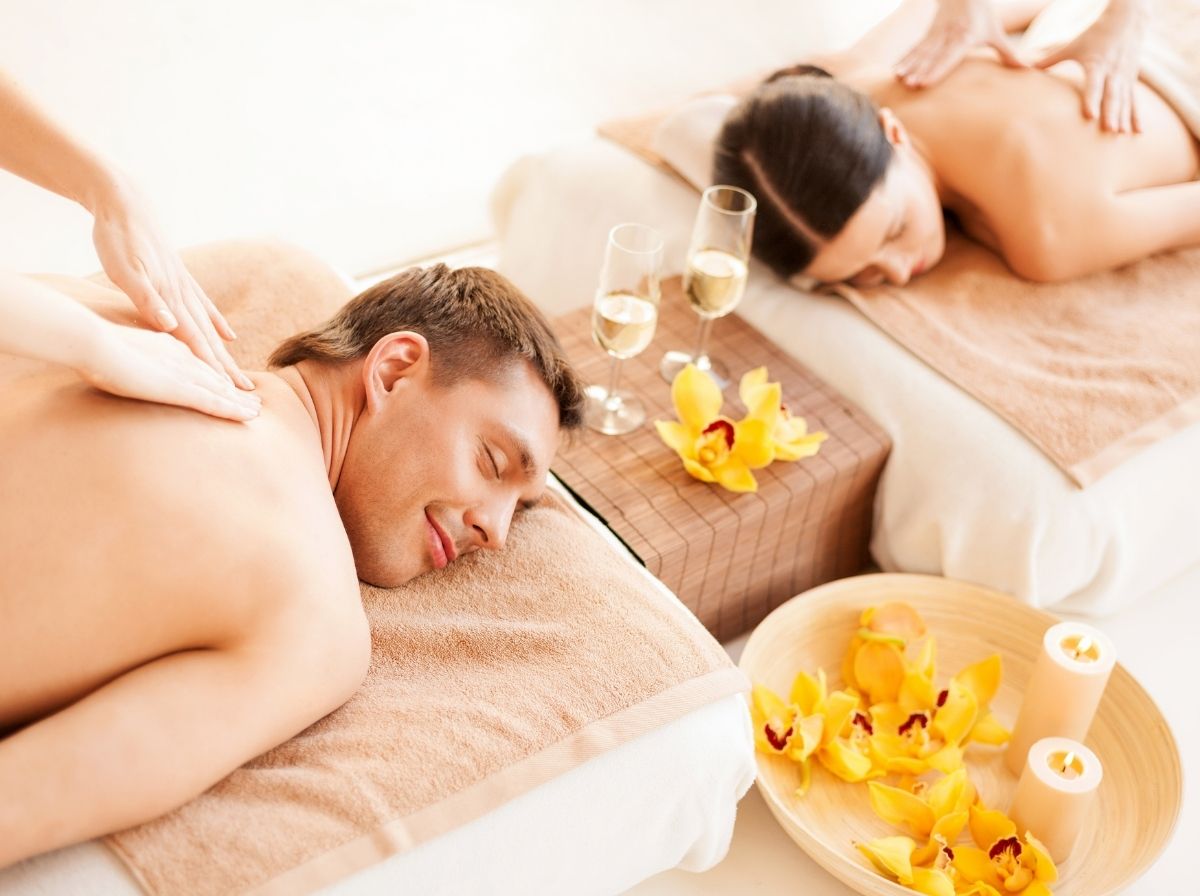
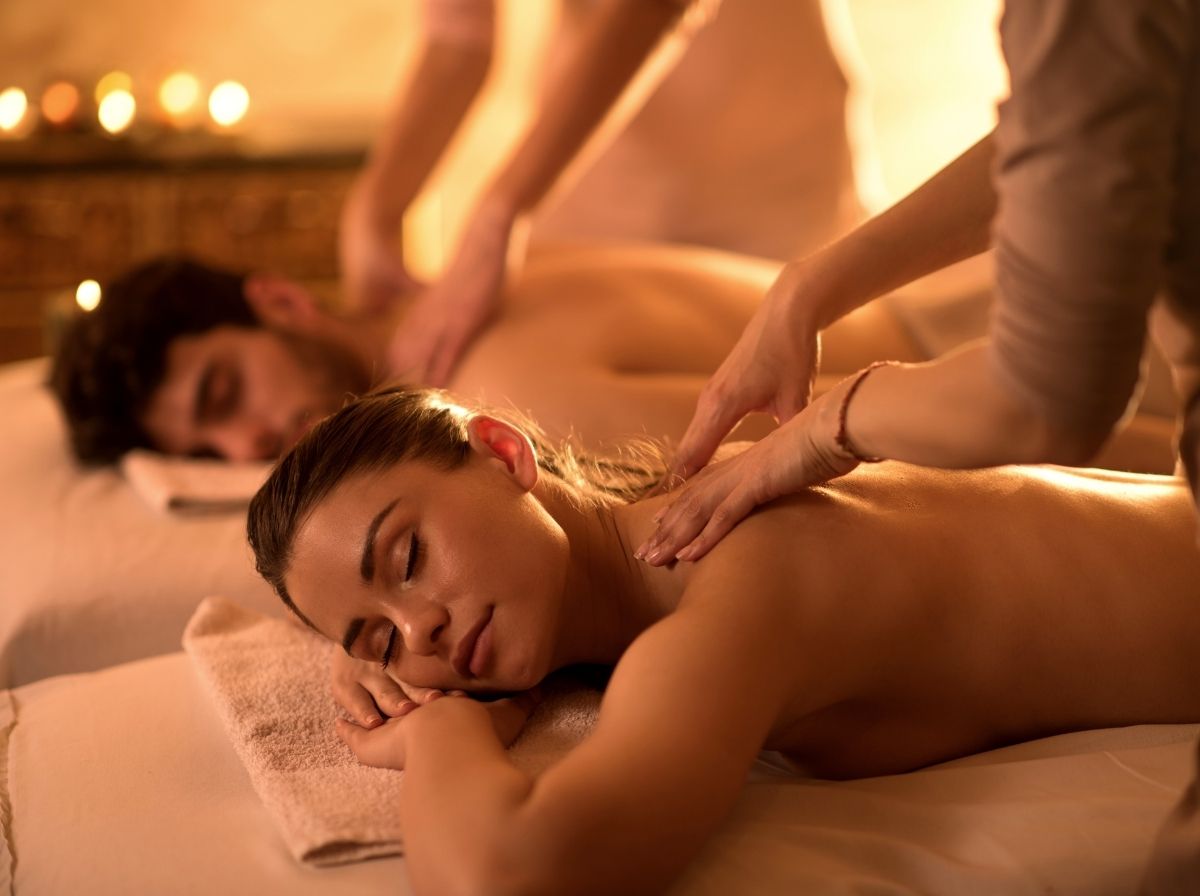
A professional massage involves hands-on skin, back, shoulders, legs, feet, and neck. The therapist is clothed in a uniform. You are draped with a sheet or towel. There are no bodily fluids exchanged. There is no mucous membrane contact. There is no contact with genital tissue on either side. From a transmission biology standpoint, that eliminates the vast majority of STIs before you even get to the specifics. According to the CDC's 2024 STI Surveillance data, over 2.2 million cases of chlamydia, gonorrhea, and syphilis were reported in the United States, making STI awareness genuinely important. But awareness means understanding actual transmission routes, not treating every physical interaction as a risk event.
HIV and Hepatitis: Definitely Not a Massage Risk
If your concern is HIV, the answer is straightforward: a professional spa massage carries zero risk. HIV requires direct access to the bloodstream through specific fluids, blood, semen, vaginal secretions, or breast milk. Intact skin is an effective and well-documented barrier to HIV transmission. Unless a massage involves an open bleeding wound on both the therapist and client simultaneously, with direct blood-to-blood contact, there is no pathway. That scenario doesn't happen in a licensed spa, and it wouldn't happen accidentally.
Hepatitis C follows the same logic. It is a blood-borne virus, and real-world transmission means things like sharing needles, unsterilized tattooing or piercing equipment, something we cover in detail in our article on STD risk from tattoos and piercings, or occupational needle-stick injuries in healthcare settings. A bottle of massage oil and a set of hands on your back is not in the same universe as those routes. Hepatitis C cannot survive meaningfully on dry skin or through standard touch.
Hepatitis B has a slightly broader transmission profile; it can also spread through semen and vaginal fluid, but it still requires those specific fluids to enter through mucous membranes or broken skin. Clean sheets, fresh towels, and a licensed therapist performing standard massage techniques create no opportunity for this. Professional spas that follow basic hygiene protocols are not a Hepatitis B risk environment, and the research on massage therapy and STI transmission is consistent on this point.
Chlamydia and Gonorrhea: These Can't Travel Through Hands or Sheets
Chlamydia and gonorrhea are the two most commonly reported STIs in the United States, and they are also among the most misunderstood when it comes to exactly how they spread. Both are bacterial infections that require contact with specific mucous membranes to establish an infection; for chlamydia, that means genital, rectal, or throat tissue; for gonorrhea, the same applies. The bacteria infect the urethra, rectum, cervix, throat, and eyes, but only through direct contact with infected secretions.
What this means in practice: these bacteria cannot establish an infection through skin contact alone. They are not transmitted by touch, by sharing a massage table, by massage oil, by a shared towel, or by a therapist's hands on your back or shoulders. The biology simply doesn't allow it. Chlamydia and gonorrhea need a very specific environment, warm, moist mucous membrane tissue, to survive long enough to cause infection. Dry skin surfaces and ambient air are hostile environments for these bacteria; they die quickly outside the body.
If you felt something unusual after a massage, a skin twinge, some irritation, that discomfort is almost certainly related to massage pressure, the oil used, or unrelated skin sensitivity. It is not a chlamydia or gonorrhea symptom from a spa visit. If symptoms like unusual discharge or burning when urinating appear and persist, something worth testing for, but the cause will not be your last appointment at the day spa. Men wondering whether urinary symptoms after any kind of physical contact could signal an STI will find our breakdown of UTI vs. STD symptoms in men useful for parsing what's actually going on.
Syphilis and the Massage Table, Where the Nuance Lives
Syphilis deserves its own section because it's one of the infections where a surface-level reading of "skin contact" might trigger concern. According to the CDC, syphilis spreads through direct contact with a syphilitic chancre, an open, infectious sore typically found on or around the genitals, anus, rectum, lips, or mouth. The bacterium responsible, Treponema pallidum, is extraordinarily fragile outside the body. It cannot survive on dry surfaces, in air, on massage oil, or on linen. It requires a living, moist environment to remain viable.
For syphilis to transmit during a massage, an implausible chain of conditions would all need to be true at once: the therapist would need an active, infectious chancre in the primary or secondary stage of syphilis; that chancre would need to make direct contact with your mucous membranes or broken skin; and the relevant body regions for syphilis sores, genitals, anus, rectum, lips, would need to be involved. In a professional spa, none of these conditions apply. A clothed therapist working on your back and legs with clean hands is not in contact with those body regions. You can read more about what syphilis sores actually look like, and how they differ from other lesions, in our article comparing syphilis vs. herpes symptoms.
The short version: syphilis from a standard spa massage is not a realistic transmission scenario. This remains true even acknowledging that syphilis is a genuine public health concern; primary and secondary syphilis cases declined 22% in 2024 according to the CDC, which is real progress, but the infection still spreads almost exclusively through sexual contact with an active sore.
What About Herpes and HPV? These Are the Ones People Worry About Most
Herpes and HPV generate the most anxiety in the "can I get an STD from a massage" conversation because both are known to involve skin-to-skin contact rather than requiring fluid exchange. That's true. And both deserve precise answers rather than dismissive ones.
Starting with HPV: it is the most common STI in the United States, and it does spread through skin-to-skin contact, but specifically genital skin-to-skin contact, or contact with the mucous membranes of the genitals, anus, or throat. HPV is not a virus that transmits from a therapist's hands to your back or from a massage table surface. The relevant contact type is intimate genital contact, the kind that does not happen in a professional spa. A licensed therapist massaging your shoulders and calves is not in contact with the tissue types through which HPV establishes infection. No documented cases of HPV transmission through professional massage exist, because the biology doesn't support the route.
Herpes requires more unpacking because it comes in two types with different transmission profiles. HSV-1, associated with oral herpes and cold sores, spreads primarily through oral contact, kissing, sharing lip balm, and contact with an active cold sore. A massage therapist who carries HSV-1 (which, per CDC data, is extremely common globally) is not a transmission risk during a back massage. There is no oral contact in a standard professional session.
HSV-2, the type associated with genital herpes, spreads through genital skin-to-skin contact. The key biological fact is that HSV-2 sheds from the site of infection, which is genital tissue. Asymptomatic shedding, the phenomenon where the virus is transmissible even without visible sores, still occurs at the site of infection, not at random points on the body. A therapist's hands on your upper back are nowhere near the genital tissue where HSV-2 is active and shedding. The virus doesn't travel through the bloodstream to the hands and wait to infect you from there. That's not how HSV-2 biology works. For a full explanation of how herpes testing works and why the method matters, our article on swab vs. blood herpes testing covers the specifics clearly.
In a professional spa context, with appropriate draping and a clothed therapist working on non-genital body regions, herpes transmission, HSV-1 or HSV-2, is not a realistic outcome.
The At-Home Testing Section: When Does Peace-of-Mind Testing Make Sense?
The honest medical answer: if your only potential exposure was a standard professional spa massage with no sexual contact and no exchange of bodily fluids, you don't have a clinical reason to test. The transmission pathways for STIs were not present in that setting.
That said, testing purely for peace of mind is always valid on its own terms. If the anxiety is louder than the logic, a negative result from a comprehensive panel will quiet it in a way that reading articles, including this one, cannot. And if there are other recent exposures you're factoring in alongside the massage, testing makes straightforward sense regardless of what happened at the spa.
When timing matters: testing too soon after any potential exposure gives the body's biology time to catch up. Testing before the detection window can produce a false negative that doesn't actually clear you. Here are the exact windows to follow:
| Infection | Test From |
|---|---|
| Chlamydia | 14 days after exposure |
| Gonorrhea | 3 weeks after exposure |
| Syphilis | 6 weeks after exposure |
| HIV | 6 weeks (first indicator); retest at 12 weeks for certainty |
| Herpes HSV-1 & HSV-2 | 6 weeks after exposure |
| Hepatitis B | 6 weeks after exposure |
| Hepatitis C | 8–11 weeks after exposure |
The STD Test Kits at-home rapid test range lets you test privately, without a clinic visit or waiting room, with results in minutes. If comprehensive reassurance is what you're after, the 8-in-1 Complete At-Home STD Test Kit (99%+ accuracy) covers HSV-1, HSV-2, Chlamydia, Gonorrhea, Syphilis, HIV, Hepatitis B, and Hepatitis C in a single session, which gives you a complete baseline rather than guessing which infection to test for individually.
What Can Actually Cause a Rash or Irritation After a Massage?
A lot of people land on the STD worry after a massage because something happened to their skin, a red patch, some itching, a small bump that wasn't there before. The instinct to connect those two things is human, but it's almost always misdirected. Skin reactions after massage have a set of very common, very non-infectious explanations.
Massage oils and lotions are among the most frequent culprits. Many contain fragrance compounds, essential oils, or plant-derived extracts that trigger contact dermatitis in people with sensitive skin or undiagnosed topical allergies. Contact dermatitis works by causing an immune response in the skin at the point of contact, the result is redness, itching, and sometimes small raised bumps that appear hours after exposure, not immediately. This timing is why people link it to the massage rather than the product used. The reaction looks alarming if you're already primed for anxiety, but it has nothing to do with infection.
Deep tissue pressure causes its own set of visible effects. Petechiae, tiny burst capillaries that appear as small red or purple dots on the skin, are a common outcome of strong massage pressure, especially on fair skin. They're harmless, unrelated to infection, and resolve within days. Similarly, cupping therapy leaves distinctive circular bruise-like marks that are entirely normal but visually striking. Hot stone massage can leave temporary redness at contact points. None of these are STD symptoms; they're predictable physiological responses to mechanical pressure and heat.
If a skin reaction persists beyond three to four days, spreads progressively, is accompanied by fever, or comes with other symptoms like unusual discharge or painful urination, those details warrant a doctor visit or a test. But attributing that reaction to your spa appointment as an STD concern is almost always a dead end, especially if the massage involved no sexual contact whatsoever.
FAQs
- 1. Is it possible to get chlamydia from a massage table?
- No. To spread chlamydia, you have to come into direct contact with infected secretions from the genitals, rectum, or throat. The bacteria can't live on sheets, massage tables, or skin. Under any realistic scenario, a standard professional massage does not create a way for chlamydia to spread.
- 2. Is it possible to get herpes from the hands of a massage therapist?
- Not in a spa that is open to the public. HSV-2 (genital herpes) comes from genital tissue and spreads from there. A therapist's hands on your back or shoulders are not near that tissue. Oral herpes (HSV-1) spreads through contact with the mouth, which doesn't happen during a regular massage. The way herpes works means that the virus can't move from a therapist's infected genitals to their hands and then to your body through casual massage.
- 3. Can HIV be spread by using massage oil or towels that are shared?
- No. HIV needs certain fluids, like blood, semen, vaginal fluid, or breast milk, to get into the bloodstream through broken skin or mucous membranes. There is no way for the virus to spread through oil, towels, or skin-to-skin contact on unbroken skin. This is well known in the literature on how HIV spreads, and it hasn't changed.
- 4. What about HPV? Doesn't it spread when you touch your skin?
- HPV can spread when the skin of the genitals touches the skin of another person or when the mucous membranes of the genitals touch the skin of another person. HPV doesn't spread through skin-to-skin contact like a massage therapist's hands on your back or legs. The kind of contact that counts is intimate genital contact, which doesn't happen in a professional spa.
- 5. Do I need to get tested after a regular massage at the spa?
- From a medical point of view, getting a regular professional massage does not mean you need to get tested for STDs. But if you're feeling anxious about the question or if you're thinking about other recent exposures along with the massage, a test gives you a clear answer that articles that reassure you can't.
- 6. Is it possible to get gonorrhea from a massage?
- No, you can't get gonorrhea from touching infected mucous membranes directly, like the throat, rectum, or genitals. This pathway does not exist when the skin is intact and the massage contact is normal. Outside of certain moist tissue environments, the bacteria die quickly.
- 7. Is it possible to get syphilis through massage?
- Not through a regular professional massage. Syphilis needs direct contact with an active sore that is infectious. The bacterium is too weak to live on dry surfaces, oil, or linen. For transmission to happen, a sore must touch your mucous membranes or broken skin, which doesn't happen in a licensed spa session.
- 8. If it's not an STD, what could cause a rash or bumps after a massage?
- The most common reasons are contact dermatitis from massage oils or lotions (an immune reaction to fragrance or plant extracts), petechiae from deep tissue pressure (tiny burst capillaries that look like red dots), friction from sheets or draping material, or temporary redness from heat application. These are normal physiological responses that don't involve an infection. If a reaction lasts more than a few days or gets much worse, see a doctor.
- 9. Does it matter if the person giving the massage was wearing clothes?
- In a professional spa, therapists always wear uniforms, and clients are covered up. This is something that is done all the time, not just sometimes. When proper draping is used, there is no genital contact on either side. This is what lowers the risk of HPV, herpes, and syphilis transmission.
- 10. How soon can I get tested after being around someone who might have it?
- The time between tests depends on the infection. Wait 14 days for chlamydia. Three weeks for gonorrhea. For herpes and syphilis, six weeks. For HIV, it takes six weeks to get a first result and twelve weeks to be sure. Hepatitis C takes 8 to 11 weeks. If you test before these windows, you could get a false negative that doesn't show your true status.
Get Tested If You Want Certainty, At-Home Kits Make It Simple
Understanding the biology is one thing. Quieting the anxiety spiral is another. If this article hasn't fully convinced the part of your brain still running worst-case scenarios, the most efficient move is a test. A negative result from a comprehensive panel is the clearest possible answer, and it takes minutes, not a clinic visit.