Can You Get an STD From Oral Sex? Yes, Here’s Which Ones
Quick Answer: Yes, you can get STDs like gonorrhea, chlamydia, syphilis, herpes, and even HIV from oral sex, especially if it’s unprotected. Many have no symptoms at first. Testing is key. And you can pass it to them.

Quick Answer: Yes, you can get STDs like gonorrhea, chlamydia, syphilis, herpes, and even HIV from oral sex, especially if it’s unprotected. Many have no symptoms at first. Testing is key.
Why Oral Sex Feels "Safer", And Why That’s Misleading
Most people don’t consider oral sex “real” sex. There’s no penetration, no risk of pregnancy, and way less discussion about protection. Add pop culture’s obsession with “just a blowjob” and the lack of sex-ed that includes oral transmission, and you’ve got a perfect storm of underestimation.
Here’s the truth: STDs spread through fluids, skin-to-skin contact, and mucosal membranes. Your mouth, lips, and throat have exactly the kind of tissues STDs love to infect. If your partner has an active infection, even without symptoms, they can pass it to you through oral sex. And you can pass it to them.
One common scenario: someone has undiagnosed gonorrhea in their throat. They give oral sex to a partner. That partner ends up with urethral gonorrhea a few days later, while the giver still has zero symptoms, and no idea they’re the source.
Which STDs Can Spread Through Oral Sex?
Let’s get specific. Different STDs have different transmission rates through oral sex. Some spread more easily than others. Some are more likely to show up in the throat, others in the genitals, depending on who’s giving and who’s receiving. Here’s how it breaks down:
| STD | Spread by Giving Oral | Spread by Receiving Oral | Likely Site of Infection |
|---|---|---|---|
| Chlamydia | Yes | Yes | Throat or genitals |
| Gonorrhea | Yes | Yes | Throat, urethra, rectum |
| Herpes (HSV-1/2) | Yes | Yes | Lips, mouth, genitals |
| Syphilis | Yes | Yes | Mouth, throat, genitals |
| HIV | Rare, but possible | Rare, but possible | Bloodstream via open sores |
| HPV | Yes | Yes | Mouth, throat, genitals |
| Trichomoniasis | Less common | Less common | Genitals mostly, oral rare |
Figure 1. Summary of STD transmission risk via oral sex, depending on role and infection site.
What surprises most people is how often STDs set up camp in the throat, with zero symptoms. You might be carrying a throat infection and not even know it, especially with gonorrhea, chlamydia, or syphilis. This makes routine testing crucial, because you won’t always “feel it.”
“I Didn’t Feel Anything”: Why Symptoms Aren’t a Guarantee
Let’s talk about that illusion of “I’m fine because I feel fine.” It’s a trap.
Most oral STDs are asymptomatic, especially in the early stages. If you do have symptoms, they can easily be mistaken for something else: strep, allergies, a rough night out. Here’s what some people notice, and why it’s often overlooked:
One reader, Leo, shared that they felt a sharp pain when swallowing about a week after giving oral sex at a party. They chalked it up to dehydration and too much yelling. Three weeks later, a routine screening flagged them with gonorrhea, in their throat. Their partner had no idea either.
Another reader, Sahana, developed what she thought was a cold sore after going down on someone new. It was actually HSV-1, which causes oral herpes, but it was misdiagnosed as a canker sore twice before a full panel test caught it.
That’s the risk: oral STD symptoms don’t always look “serious.” Or they don’t look like anything at all.
How Long Should You Wait Before Testing?
Timing matters, a lot. Every STD has a “window period,” which is the time between exposure and when a test can accurately detect the infection. If you test too soon, you might get a false negative, even if you were infected.
The ideal window varies by STD and by test type. Here’s a breakdown to guide your testing schedule:
| STD | Recommended Testing Window After Oral Exposure | Retest Suggestion |
|---|---|---|
| Gonorrhea | 7–14 days | If early negative, retest at 14 days |
| Chlamydia | 7–14 days | Retest at 3 months if high risk |
| Syphilis | 3–6 weeks | Retest at 12 weeks if negative |
| Herpes (HSV) | 4–6 weeks (blood test) | May require clinical exam if active sore |
| HIV | 2–6 weeks (Ag/Ab), 10–33 days (NAAT) | Retest at 3 months for confirmation |
Figure 2. Suggested testing windows after oral sex exposure based on standard detection timelines.
If it’s been less than a week, and you’re not experiencing symptoms, waiting a few more days will improve accuracy. But if you are symptomatic, or your partner disclosed an STD diagnosis, don't wait. Get tested now, then retest at the optimal window.
And if the anxiety is gnawing at you? That alone is reason enough to test. Peace of mind is part of self-care, too.
Where to Get Tested, And What to Ask For
Many standard STD tests don’t automatically include throat swabs. That means if you suspect you might have been exposed via oral sex, you need to ask for pharyngeal testing, specifically for gonorrhea and chlamydia. Most clinics and at-home services default to urine or genital swabs unless otherwise specified.
Imagine this: Casey ordered a mail-in STD test kit after a weekend hookup. They followed all the instructions but didn’t realize the test only checked genital samples. Three weeks later, they were still dealing with a sore throat. Only when they went to a walk-in clinic and requested a throat swab did the nurse say, “Yeah, gonorrhea loves hiding in the throat.” The first test had missed it completely.
If you’re using an at-home test, double-check whether the provider includes oral sample options. Some do; others don’t. And if you’re testing in-person, be clear: “I need throat swabs for gonorrhea and chlamydia, and blood testing for syphilis and HIV.” You’re not being extra. You’re being thorough.
STD Rapid Test Kits offers discreet at-home options that test for the most common infections, and you can select kits that align with your exposure risk. The Combo STD Test Kit is a good place to start if you’re unsure what you may have been exposed to.
“But We Used Protection”, Here’s Why That’s Not a Guarantee
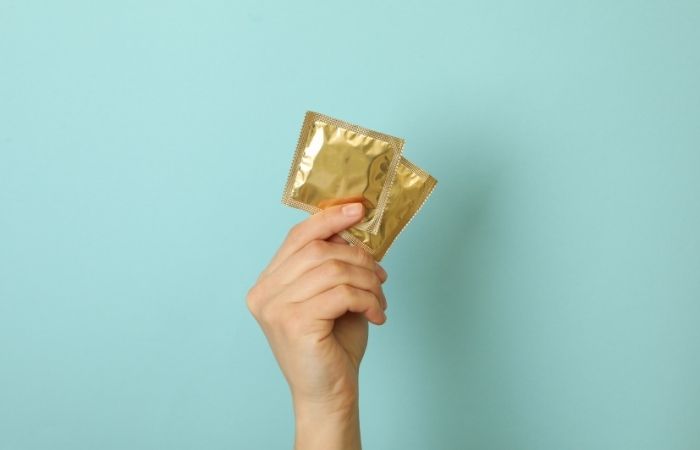
Using condoms or dental dams for oral sex does reduce risk, but only partially. Here’s why:
STDs like herpes and syphilis can spread through skin-to-skin contact, even if there’s no fluid exchange. If a lesion or sore is on the lip, shaft, or scrotum, and the barrier doesn’t cover it, you’re still vulnerable. Dental dams are rarely used consistently (if at all), and even condoms can miss areas where infections live.
There’s also the issue of oral ulcers or cuts in the mouth, even micro-tears from flossing or brushing. These tiny entry points can allow pathogens to enter the bloodstream, especially with bloodborne infections like HIV. It’s rare through oral sex, but not impossible, especially if ejaculation happens in the mouth.
That’s not to scare you. It’s just about adjusting expectations. Barriers help, but they’re not absolute. And if you’ve ever skipped them (which, let’s be honest, most people have), testing becomes even more important.
What Happens If You Test Positive?
First: breathe. A positive test result is not a judgment on your character, your choices, or your worth. STDs are infections, not moral failures. Most are treatable. Many are manageable. All are common.
Let’s say your test comes back positive for gonorrhea in the throat. The treatment is usually a short course of antibiotics, no different than strep. You may need a follow-up test to confirm it cleared. You’ll also be encouraged to notify any partners who may have been exposed. That part can feel hard, but many clinics offer anonymous partner notification tools if you're not ready for a direct convo.
If it’s something like herpes, a provider will help you understand whether it’s type 1 or 2, oral or genital, and what it means for your health. Suppressive therapy is an option, and disclosure conversations get easier with support. Herpes carries way more stigma than it should, especially when up to 80% of adults carry HSV-1 already.
You are not dirty. You are not reckless. You are human. And you're taking responsibility, which makes you the opposite of irresponsible.
If you need a discreet way to retest, confirm clearance, or check a partner, you can always order another rapid test from home without needing to explain anything to anyone.
The Emotional Side of “Just Oral” Regret
There’s a unique kind of shame that crops up after unprotected oral sex. It often goes like this: “It was just oral… why didn’t I stop it?” Or, “I didn’t think you could catch anything that way… am I stupid?” The answer to both? You’re not stupid. You were operating with partial information, like most people.
Here’s what no one says out loud: Oral sex is often the thing people do when they’re trying to stay “safe” without full-on intercourse. It’s also what many teens, queer folks, and people exploring new dynamics use as an in-between step. And yes, it can still transmit infections. That doesn’t mean you failed. It means the system failed you by not talking about this sooner.
If you’re spiraling in guilt, hit pause. Reframe this as a medical situation, not a moral one. You got new information. You took action. You’re learning how to stay safer next time. That’s growth, not failure.
Can You Prevent Oral STDs Without Killing the Mood?
This is the part where prevention advice usually gets clinical and boring. But let’s keep it real: you’re not pulling out a dental dam mid-hookup unless it’s already part of your sexual vocabulary. So here’s what might actually work:
Talk before the moment. A quick “Hey, I got tested last month, what about you?” can make a huge difference. Keep flavored condoms on hand if you like receiving. If you’re giving, try to keep things external, don’t go deep or swallow unless you really trust your partner’s status. And normalize checking your throat or genitals in the mirror every so often. Catching a sore or bump early can help stop a chain of transmission before it starts.
Also: testing regularly is prevention. It creates awareness, trust, and safety between partners. It’s not just about “catching” something. It’s about creating a culture of care, starting with yourself.
If you’re overdue or unsure, a combo STD test can give you answers fast. It’s discreet, fast, and doesn’t require an awkward convo with a pharmacist or front-desk nurse.
When Doctors Miss It, And How to Advocate for Yourself
Here’s a reality that’s hard to swallow, sometimes, the first person you tell doesn’t believe you. A sore throat gets brushed off as allergies. A strange ulcer is labeled a canker sore. A mild fever? Probably just a bug going around. And sure, sometimes it is. But when you’ve had unprotected oral sex recently and something feels off, it’s okay to push for more answers.
Let’s talk about Malik, who showed up to urgent care five days after a hookup. He had no genital symptoms, just a persistent scratchy throat and swollen lymph nodes. The provider told him it was probably viral and sent him home. He asked about STD testing. The nurse said, “You only need that if there was penetration.” Malik went home, but the anxiety didn’t. He booked an at-home test that included a throat swab. It came back positive for gonorrhea.
Stories like Malik’s happen all the time. Not because providers don’t care, but because oral STD infections aren’t always top of mind in rushed appointments. That’s why being informed matters. You’re not being dramatic by asking for a throat swab. You’re not overthinking by testing twice. You’re protecting yourself, and future partners.
If a provider shrugs it off, you can say something like: “I recently had unprotected oral sex, and I’d feel better ruling out throat STDs. Can we add a pharyngeal swab to my panel?” It’s simple, direct, and completely reasonable.
And if you don’t want to deal with the possibility of being brushed off at all? You’ve got options. A combo STD test kit lets you skip the awkwardness and take control on your own terms. No judgment. No scripts. Just answers.
FAQs
- 1. Can I really catch something just from giving oral?
- Yep, mouths aren’t magic shields. If your partner has an active STD like gonorrhea, chlamydia, or syphilis, and you go down on them without protection, there’s a real risk. Even if everything looks clean on the outside. Some STDs don’t leave clues, and that’s what makes them sneaky.
- 2. What if I have a sore throat, how do I know if it’s from an STD?
- Honestly, you might not. A throat infection from gonorrhea or chlamydia can feel just like strep or a cold: scratchy, swollen glands, maybe white patches. Or you might feel nothing at all. If you had unprotected oral recently and now you’re second-guessing that “just allergies” feeling, get tested. No shame in being thorough.
- 3. Is it true HIV can spread from oral sex?
- It’s rare, but not impossible. The risk goes up if there are cuts or sores in your mouth, or if there’s ejaculation involved. It’s not the top concern after oral, but if it’s keeping you up at night, an early HIV test (especially a NAAT test) can help clear your head fast.
- 4. How soon can I test after giving or getting oral?
- The sweet spot for most bacterial STDs like gonorrhea and chlamydia is around 7 to 14 days. Viral ones like herpes and HIV have longer windows, usually a few weeks. If you test early and it’s negative but you’re still worried, retest after the full window. Think of it like double-checking, not overreacting.
- 5. Do I need to ask for a throat swab specifically?
- You do. Most STD panels, especially at clinics or with at-home kits, default to genital or urine testing. If you think your exposure was oral, ask for a pharyngeal swab. It’s quick, it doesn’t hurt, and it could catch something a urine test might miss entirely.
- 6. I used a condom, am I still at risk?
- You lowered the risk, and that’s great. But some STDs, like herpes or syphilis, can spread through skin-to-skin contact outside the area a condom covers. So if your partner had a sore on their lip or groin, the risk doesn’t totally disappear. It’s a layer of protection, not a force field.
- 7. What if I tested positive, do I have to tell my partner?
- You don’t have to do anything you’re not ready for, but telling them is the ethical move. It gives them a chance to protect their health, too. If you’re panicking about that conversation, know this: clinics can help you notify anonymously, and you can script it in a way that’s kind but clear. You’re not the bad guy. You’re just someone who cares enough to be honest.
- 8. Will insurance cover throat testing?
- Sometimes, but not always. Some providers consider oral STD testing “specialty” even though it absolutely shouldn’t be. If cost is a blocker, free clinics or sliding-scale options exist, and at-home test kits often include pricing up front, no surprises.
- 9. Do cold sores count as an STD?
- If they’re caused by HSV-1, then yes, it’s the same virus behind oral herpes. It can absolutely be passed to the genitals during oral sex. Tons of people have it and don’t even know, so don’t let the label scare you. It’s common, manageable, and more about communication than panic.
- 10. Is it worth testing even if I feel fine?
- One hundred percent. Most oral STDs come with no red flags. Feeling “fine” isn’t a free pass, it just means you could unknowingly pass something on. Testing isn’t just about you. It’s about every partner, now and future, who deserves to know you’ve got their health in mind too.
You Deserve Answers, Not Assumptions
STDs don’t care about your good intentions, your relationship status, or whether you “just gave head.” They move silently, often without symptoms, and they rely on our silence to keep spreading. But the good news is that you can break that cycle, right now, by getting tested.
This isn't about being afraid. It's all about being clear. You can keep yourself safe, take care of your partners, and move forward with confidence. Testing helps you see things more clearly when you're not sure about a one-night stand or a long-term partner whose past you don't know.
If you’re ready to stop wondering, this discreet combo test covers the most common STDs, including those that can show up in the throat. You deserve answers that don’t come with side-eyes or waiting rooms.
How We Sourced This Article: We combined current guidance from leading medical organizations with peer-reviewed research and lived-experience reporting to make this guide practical, compassionate, and accurate.
- CDC – Sexually Transmitted Diseases (STD)
- NHS – Understanding STIs and Transmission
- About STI Risk and Oral Sex – CDC
- About Genital Herpes – CDC
- About Sexually Transmitted Infections (STIs) – CDC
- Sexually Transmitted Infections (STIs) – WHO
- Chlamydia: Causes, Symptoms, Treatment & Prevention – Cleveland Clinic
- Sexually Transmitted Infections (STIs) Overview – Cleveland Clinic
- How to Prevent STIs – CDC
- Sexually Transmitted Infections – StatPearls (NCBI Bookshelf)