Can You Get Chlamydia Again Without Cheating
Quick Answer: Yes, it's possible to test positive for chlamydia again without any new sexual exposure. Reasons include reactivation of untreated infection, false negatives after initial treatment, or delayed symptoms.

Quick Answer: Yes, it's possible to test positive for chlamydia again without any new sexual exposure. Reasons include reactivation of untreated infection, false negatives after initial treatment, or delayed symptoms. Reinfection is common, but cheating isn’t always the cause.
The Emotional Fallout of a Repeat STD
No one expects to get the same STD twice, especially not without some kind of “trigger event.” But chlamydia doesn’t always play by those rules. And when a second test comes back positive, the immediate reaction is often betrayal. The accusations fly. The relationship fractures. And somewhere in the chaos, medical clarity gets lost.
Repeat infections bring up more than just physical questions. They open old wounds: Did they lie? Did I mess up? Can I trust them? Should I even trust my own body?
Here’s the complicated reality: not every repeat infection means your partner was unfaithful. And not every positive result is a sign that your treatment failed either. You need context, and you need science, to make sense of what just happened.

How Chlamydia Actually Works (And Why It Comes Back)
Chlamydia trachomatis is a bacterial infection passed through sexual contact. It’s extremely common, especially among people under 30, and it’s often asymptomatic. That’s what makes it so tricky: many don’t even know they’re infected, and many never feel “cured” because they didn’t feel sick in the first place.
Once treated properly, chlamydia is typically eliminated. But there are exceptions. And those exceptions are where things get confusing.
| Possible Explanation | Can Happen Without Cheating? | Notes |
|---|---|---|
| Reinfection from a partner who wasn’t treated | Yes | Most common cause of “returning” chlamydia |
| False negative after initial treatment | Yes | Early tests may miss low bacterial levels |
| Reactivation from an untreated reservoir | Yes | Rare but possible with deep tissue infections |
| Partner cheated and exposed you again | Yes | Also common, but not always the answer |
| Treatment failure (antibiotic resistance) | Extremely rare | Only documented in a few isolated cases |
Figure 1. Why you might test positive for chlamydia again. As you can see, cheating is just one of several explanations.
The Timeline That Can Save You a Heartbreak
Let’s say you were treated for chlamydia with a standard 7-day course of doxycycline. Your doctor said to avoid sex during that week, and you did. So why is it showing up again now, weeks or months later?
Here’s what most people don’t get told: if your partner wasn’t treated at the same time as you, they could have silently reinfected you. Up to 20% of chlamydia cases are due to reinfection from untreated partners. That’s why “partner treatment” is not just a suggestion, it’s part of the cure.
But even if both of you were treated, if either of you had sex too soon afterward, before the meds cleared everything, you might have created a feedback loop. That’s why many clinics advise waiting 7 full days after finishing treatment, and longer if there’s a possibility your partner didn’t complete their antibiotics or was reinfected by someone else.
Here’s another twist: sometimes the bacteria hides in places that antibiotics don’t reach as easily, like the fallopian tubes, prostate, or lymphatic tissue. That’s called a “persistent infection,” and it can linger quietly before flaring up again.
No New Partner, Still Positive
Chris, 24, got diagnosed with chlamydia in February and followed all the instructions: doxycycline, no sex for two weeks, even went back for a retest. It came back negative. Fast forward to July, new symptoms, new test, and it’s positive again. But here’s the thing: Chris hadn’t had a single new partner. They’d been in a monogamous relationship the whole time.
The clinic nurse explained the two possibilities: either their partner hadn’t been fully treated, or Chris’s original infection had lingered in tissues and flared up again. Both options were possible. Both were nobody’s “fault.” But both required another round of treatment, and a serious talk at home.
This story isn’t rare. And if it sounds familiar? You’re not alone.
So What’s the Difference: Reinfection vs Reactivation?
These two terms get thrown around like they mean the same thing, but they don’t. And understanding the difference might be the key to figuring out what’s really going on in your body, or your relationship.
Reinfection means you were cured, but then got infected again. This could happen if:
- Your partner didn’t get treated (or didn’t finish their meds)
- You got back together too soon after treatment
- You started sleeping with someone new who was infected
- Your partner got infected from someone else (yes, that’s where trust issues flare)
Reactivation is a lot murkier. It means the original infection wasn’t fully cleared, even after treatment. This can happen if:
- The bacteria lingered in your body after treatment
- There was an untreated “reservoir” like the prostate or fallopian tubes
- The antibiotics didn’t fully penetrate deep tissues
- You tested too early after treatment, before bacteria fully cleared
It’s rare, but it happens. And when it does, it often blindsides people who’ve had zero new partners.
| Term | Definition | Common Cause | What It Feels Like |
|---|---|---|---|
| Reinfection | New exposure to chlamydia after being cured | Partner wasn’t treated or had another partner | Feels like “they gave it back to me” |
| Reactivation | Original infection wasn’t fully cleared | Incomplete treatment or persistent bacteria | Feels like “it never really went away” |
Figure 2. Understanding the difference between reinfection and reactivation is essential when STD symptoms come back unexpectedly.
The Testing Window: Why Timing Messes Everything Up
STD testing isn’t a lie detector. It’s a snapshot in time. And like any snapshot, the results can change based on when you test.
If you get tested too soon after treatment, there’s a risk of a false negative, meaning the test says you’re clear when the bacteria is still working its way out. That’s why the CDC recommends waiting at least 3–4 weeks after treatment before doing a “test of cure” in most cases.
On the flip side, if you wait too long, you might pick up a new infection, or symptoms may return without warning. And here’s the kicker: some people are asymptomatic the first time, but not the second. Or vice versa. Your immune system reacts differently every round.
That’s why clinics often recommend full-panel retesting about three months after treatment, even if you feel fine and haven’t had new partners. It’s a safeguard. Not a judgment.

When It Feels Like Betrayal, But It Isn’t
Let’s be real: most people don’t calmly analyze STD test results when they arrive. They panic. They overthink. They check their partner’s location history and scroll through Instagram likes looking for clues. And sure, sometimes cheating is the cause. It happens. But it’s not the only possibility.
In long-term relationships, especially those that went through a chlamydia diagnosis once already, trust hangs in a delicate balance. A new positive result can shatter that, even if no one actually stepped out.
Here's where clear communication and mutual retesting come in. Instead of jumping to conclusions, ask: “Can we both get retested together?” It doesn’t erase the fear, but it shifts the focus from blame to resolution. That’s the difference between a fight and a plan.
And if you're the one who tested positive again? You don't owe anyone shame. You owe yourself answers. Your health is not a morality test. It's biology, timing, and, sometimes, bad luck.
Can You Have Symptoms Again Without a New Infection?
Yes, and that’s where it gets even messier.
For some, lingering inflammation can mimic symptoms of an active STD: burning, discharge, pelvic discomfort, testicular pain. But if there’s no live bacteria present, it might just be your body finishing the healing process. This is called post-infectious urethritis or cervicitis, and it can persist for weeks.
That’s why treatment follow-up is so important. Not every symptom means you got reinfected. Sometimes it’s scar tissue, hormone shifts, or irritation from sex, lube, or even stress-related immune changes.
The only way to know for sure? Retest. Ask for both a bacterial swab and a urine NAAT (nucleic acid amplification test). Talk to your provider about your timeline. The more info they have, the better they can tell if what’s happening is a comeback, or an echo.
What Happens If You’re Positive Again?
Let’s say you just got the call, or the email or the app alert. You’re positive for chlamydia… again. First of all, breathe. This doesn’t make you dirty. It doesn’t mean you’re reckless. It means you’re human, and now you get to decide how to respond.
The good news? If caught early, chlamydia is still treatable with a simple round of antibiotics. The first-line option is usually doxycycline (100mg twice daily for 7 days). In some cases, like if you're pregnant or allergic to doxy, your provider may recommend azithromycin instead.
But this time around, your doctor may also ask deeper questions: When was your last sexual contact? Did your partner get treated? Were condoms used consistently? Did you wait the full 7 days post-treatment before sex? These aren’t accusations, they’re diagnostics. Your answers shape your treatment plan.
Retesting and Partner Notification: Yes, Again
If you’ve been diagnosed with chlamydia before, you already know the drill. But if this is your second (or third) time, it’s even more crucial to follow every step completely. That means:
- Taking every single dose of your antibiotics (no skipping!)
- Abstaining from sex during the full treatment period, and 7 days after
- Encouraging your current (and recent) partners to get tested and treated
- Retesting about 3 months later, even if you feel fine
For some, the hardest part is telling a partner. Maybe you’re worried they’ll blame you. Maybe you’re afraid they’ll walk. Or maybe… you think they’re the one who brought it back into the relationship. Here’s the thing: blame doesn’t treat bacteria, medicine does.
Some clinics offer anonymous partner notification services. Others help you draft what to say. You don’t need to have it all figured out, you just need to keep yourself and others safe. That’s not just responsibility. That’s care.
What If You Don’t Want to Go Back to the Clinic?
That’s valid. Many people feel embarrassed, judged, or just plain exhausted after dealing with the same STD twice. You might even wonder if it’s worth the awkward questions and repeat exams.
But here’s the reality: leaving chlamydia untreated can lead to long-term damage. In women, it can progress to pelvic inflammatory disease (PID), scar fallopian tubes, and increase the risk of ectopic pregnancy. In men, it can cause epididymitis and pain during sex or urination. Regardless of gender, it increases the chance of passing other infections, like HIV.
Don’t want to go back in person? There are reliable at-home STD test kits that screen for chlamydia and other common infections. Just make sure you choose a kit that includes return-lab testing, not just a self-read strip. And if it’s positive? Follow up with a provider or pharmacy for antibiotics. Don’t leave it half-finished.
Let’s Talk About the Shame Spiral
STDs bring up a lot. Fear, anger, embarrassment, confusion. But a repeat infection? That can kickstart a whole other level of self-doubt. People start wondering:
“Did I do something wrong?” “Am I stupid for trusting them?” “Why does this keep happening to me?” “Do I deserve better, or is this just who I am now?”
Here’s your reminder: an STD doesn’t define your worth. It doesn’t mean you’re naive. It doesn’t make you unlovable. And it sure as hell doesn’t mean you should accept unhealthy relationships just because you’re scared of getting hurt again.
STD rates are rising across all ages, races, genders, and sexualities. What makes the biggest difference is not whether you ever test positive, it’s whether you take care of yourself after. That’s the real power move.
Talking With a Partner, Without Blowing Things Up
So you tested positive again. You don’t have proof of cheating. You’re not even sure how it happened. But you still have to talk to your partner. That conversation doesn’t have to become a crime scene. It can be a checkpoint. A pause. A moment to ask: what are we doing with our health, and with each other?
You might say: “This came up again, and I want to figure it out together, not just point fingers.”
Or: “I don’t know how it came back, but I know I care enough to want us both to be healthy.”
And if you suspect betrayal? You’re allowed to ask direct questions. You’re allowed to take a break. You’re allowed to demand clarity. But don’t let silence fester just because the words are hard. Your body, and your peace, are too important for that.
FAQs
- 1. Can I really get chlamydia again even if I haven’t slept with anyone new?
- Yes, 100%. It’s one of the most misunderstood truths about STDs. You might’ve been treated, but if your partner wasn’t? Boom, it can bounce right back to you. Think of it like passing the same cold back and forth. No new exposure needed, just an untreated loop.
- 2. Could it be left over from before? Like it never actually went away?
- Absolutely possible. Sometimes chlamydia hides out, especially if treatment wasn’t finished, taken properly, or the infection went deeper (like into the reproductive tract). You might’ve felt fine. You might’ve even tested negative. But if some bacteria stuck around? It can flare back up like a bad memory.
- 3. Isn’t it more likely they cheated?
- Look, maybe. But not necessarily. Repeat chlamydia infections don’t always mean betrayal. Sometimes people forget to take every dose, assume they're “cleared,” or don’t realize they needed a follow-up. Suspicion is valid, but so is medical complexity. Don’t rush to war without data.
- 4. I have symptoms again, does that mean it’s back?
- Not always. Some people experience lingering irritation, even after the infection’s gone. That burning, discomfort, or weird discharge? It might be post-treatment inflammation or your body finishing the cleanup. But if symptoms return after a quiet stretch, definitely get retested. Don’t guess.
- 5. What if I feel fine, should I still test again?
- Yes, especially if you've had sex since treatment. Chlamydia loves being sneaky. A lot of people carry it with zero symptoms. That’s how it spreads, quietly. A retest is about protecting your long-term health, not just treating current symptoms.
- 6. Is there a way to know if it's reinfection or reactivation?
- Not perfectly. You’d need a time machine, a microscope, and access to both your bodies at the cellular level. But here's the gist: if your treatment was recent and you’ve had no new sex partners, it might be a reactivation. If it's been months and you’ve been sexually active? Reinfection is more likely. Either way, you treat it the same, but the relationship questions might differ.
- 7. How do I bring this up with my partner without it turning into a crime scene?
- Start with curiosity, not blame. Say something like, “Hey, I tested positive again, and I want us to figure this out together.” If your partner’s defensive or evasive, that tells you something. If they’re open and proactive? That tells you something, too. Let the convo be a collaboration, not a courtroom.
- 8. Do I really have to tell them again? I’m tired of being the one who brings it up.
- Totally valid. It’s exhausting. But untreated chlamydia can mess with your partner’s health, and you’ll both stay on the carousel if one person’s untreated. Think of it like throwing both of you a life preserver. And hey, if it feels too hard, many clinics will help you tell them anonymously.
- 9. I’m embarrassed to go back to the clinic. Will they judge me?
- No. And if they do? That’s on them, not you. Healthcare providers see repeat infections all the time. They’re not shocked. They’re not judging. They’re just trying to get you better. And if you’d rather skip the waiting room altogether? Use a reliable at-home STD test kit and take back the privacy you deserve.
- 10. Do people go through this more than once?
- All. The. Time. In fact, about 1 in 5 people who get chlamydia will get it again within a year. It’s not a one-time mistake, it’s a common part of sexually active life. What matters is how you handle it, not how many times it happens. You’re not broken. You’re not alone.
Don’t Let Confusion Keep You Sick
It’s easy to spiral when you get a repeat STD result. But don’t let the shock, or the suspicion, distract you from the next step: getting treated again, and getting answers. Whether you were reinfected, reactivated, or simply retested too early, what matters now is that you don’t ignore it.
This isn’t about blame. It’s about healing. For you. For your relationships. For your peace of mind.
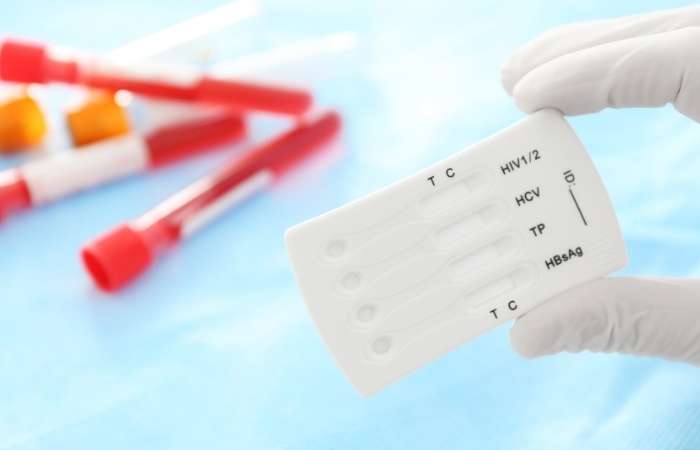
This rapid at-home combo test checks for chlamydia and other STDs discreetly, so you can move forward with clarity, not panic.
How We Sourced This Article: We made sure that our work was accurate, clear, and compassionate by using expert guidelines, real patient experiences, and peer-reviewed medical research. This article was based on information from about fifteen reliable sources. We have highlighted some of the most important and easy-to-read ones below for further reading.
About the Author
Dr. F. David, MD is an infectious disease specialist who has been board-certified and has been diagnosing and treating sexually transmitted infections for more than ten years. His method combines science-based evidence with care that is practical and free of stigma, especially for people who don't get enough care or who are very anxious.
Reviewed by: Jenna K. Rowley, MSN, APRN | Last medically reviewed: December 2025
This article is for informational purposes only and does not substitute medical advice.