Can You Trust a “Not Detected” STD Result?
Quick Answer: “Not Detected” means the test didn’t find evidence of the STD at that moment, but it doesn’t guarantee you’re in the clear. Timing, test type, and what you were tested for all matter. Short answer?

Quick Answer: “Not Detected” means the test didn’t find evidence of the STD at that moment, but it doesn’t guarantee you’re in the clear. Timing, test type, and what you were tested for all matter.
Wait, Is “Not Detected” the Same as Negative?
Short answer? Kind of, but not always.
When a lab or at-home STD test result says “Not Detected,” it means the test didn’t find the DNA, RNA, antigens, or antibodies it was designed to detect. But that doesn’t mean the infection isn’t there. It could just mean it’s too early to show up, or you used the wrong type of test for what you were exposed to.
Some labs do still use the term “Negative,” but more and more testing services, especially at-home kits, use “Not Detected” because it’s technically more accurate. It doesn't imply you're safe forever. It just means the test came up clear… for now. That subtle shift in language can be the difference between peace of mind and a false sense of security.
And that’s where confusion begins. We've seen users email us saying, “My chlamydia test said not detected, but I still have burning, am I just anxious or is the test wrong?”
Here’s the real talk: a “Not Detected” result is only as good as the timing, the test type, and what you’re actually testing for.
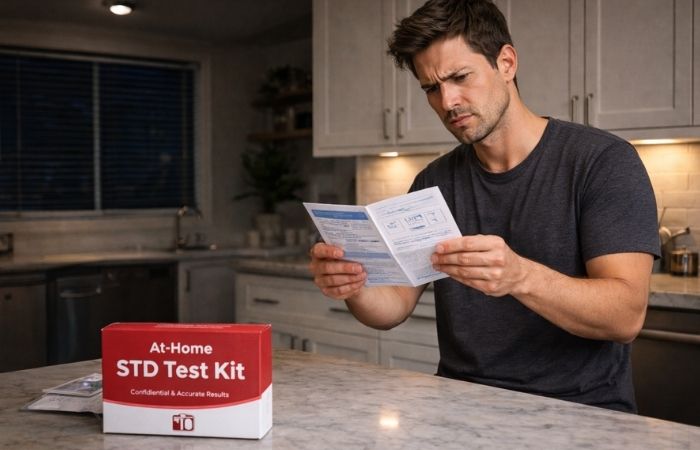
Why You Can Test Too Early (And Why Tests Don't Say That)
Most people test right after the panic hits, whether that’s two days after a broken condom or a hookup that didn’t feel right. But here’s the thing most kits don’t scream on the front of the box: testing too soon can lead to false negatives, even when you're infected.
This is called the window period, the time between exposure and when a test can reliably detect the STD. Some infections show up in a few days. Others take weeks. And during that in-between period, your test might say “Not Detected” when the infection is actually incubating.
Think of it like this: you plant a seed. On day two, there’s no sprout. Doesn’t mean nothing’s growing, it just means it’s too early to see. That’s what early testing does. It looks for something that might not have shown up yet.
Let’s break it down.
| STD | Earliest Detection | Best Time to Test | When to Retest If Negative |
|---|---|---|---|
| Chlamydia | 5 days | 14 days | 3–4 weeks if exposure ongoing |
| Gonorrhea | 5–7 days | 14 days | Repeat in 3 weeks if symptoms persist |
| HIV | 10 days (NAAT) | 28–45 days (Ag/Ab combo) | 3 months if high risk |
| Syphilis | 3 weeks | 6–12 weeks | 12 weeks for final confirmation |
| Herpes | 7 days | 3 weeks+ | If sores appear, test immediately |
Figure 1. Window periods and best retest timelines by STD type.
If you tested right after exposure and saw “Not Detected,” you might have just tested during the quiet phase, before your immune system had a chance to respond or before enough viral material was present to detect.
“Not Detected” But Still Have Symptoms? You’re Not Imagining It
Maya, 27, had a “Not Detected” result for chlamydia after testing five days post-hookup. “I felt relief at first,” she said. “But the itching didn’t stop. I had discharge. Something wasn’t right.” She waited another ten days, tested again, and this time, the result was positive.
This story isn’t rare. Many people walk away from a “Not Detected” result assuming they’re fine. And when symptoms persist, or get worse, they second-guess their bodies instead of the test. But the truth is, early testing, misreads, or choosing a test that doesn't match your symptoms can all play a role.
Here’s what can cause a “Not Detected” result even when something’s going on:
- Wrong test type: You used a chlamydia test, but symptoms were from trichomoniasis or BV
- Testing too early: Infection hasn’t built up enough to trigger detection
- Symptoms from something non-STD: Like a UTI, yeast infection, or skin irritation
Also important: not all STD tests screen for everything. Some kits only cover 1–2 infections. So if you test for gonorrhea but not herpes, you might get a “Not Detected” and still have an undiagnosed outbreak.
“I kept rereading the test result like it would change,” Maya said. “I needed someone to tell me that ‘Not Detected’ wasn’t a guarantee.”
You don’t have to keep second-guessing yourself. Whether it’s a faint symptom or a full-body anxiety spiral, this Combo STD Home Test Kit checks for multiple infections at once and is designed for people in exactly this situation.
Where Mistakes Happen: Faint Lines, Expired Kits, and User Error
At-home rapid STD tests are powerful tools, but like pregnancy tests or COVID swabs, they come with a learning curve. And when you’re panicking, it’s easy to make a misread.
Common mistakes that lead to false reassurance:
| Common Error | How It Affects Results | What to Do |
|---|---|---|
| Testing before window period | False negatives | Wait 10–14 days, then retest |
| Faint line ignored | Misread as “Not Detected” | Consult result guide or photo sheet |
| Expired test kit | Unreliable result | Always check date; use sealed kits only |
| Reading too early/too late | Evaporation lines, missed signals | Follow timing instructions exactly |
Figure 2. Why test results can be misleading, and how to avoid user errors.
One user wrote in: “I saw one faint pink line and assumed it was negative. Turns out I should’ve called that positive. I didn’t retest until my partner got symptoms.” This is why test instructions (and emotional clarity) matter.
If you’re still unsure how to read your result, you’re not alone. Many test kits now include photo guides or apps. When in doubt, test again, or choose a multi-infection kit that simplifies the decision.
Remember: even if your test says “Not Detected,” your story matters. If something feels off, trust your gut, and use a test that respects that instinct.
When to Retest (And What to Say to Partners)
Here’s the uncomfortable truth: one test doesn’t always mean you’re done. In fact, most public health orgs, including CDC guidelines, recommend retesting for many STDs if your first result was early, your exposure was high-risk, or your symptoms are ongoing.
When should you retest?
- If you tested less than 14 days after exposure, retest at the 3- or 4-week mark
- If you tested before symptoms started, and now symptoms have appeared
- If you had a one-night stand or a partner with unknown status
- If your test kit only checked for 1–2 STDs and you need broader coverage
What if you're worried about telling your partner?
Testing doesn’t mean accusing. It means caring. You can say: “I took a test, but I might’ve done it too soon. I’d rather we both be sure.”
Or: “I tested after we hooked up, and it came back ‘not detected,’ but I’ve been reading more about window periods and I’d feel safer if I test again, or if we both did.”
Sex is a shared experience. Testing can be, too.
Need help choosing the right retest option? STD Test Kits offers both combo kits and single tests, so you’re not stuck guessing.
What If “Not Detected” Was a False Sense of Security?
“Not Detected” can feel like a get-out-of-jail-free card. But it’s not a shield. And for some people, that small line on a plastic strip becomes the reason they skip protection, put off a follow-up, or assume a weird tingle is “nothing.”
Jared, 22, tested negative after a hookup. “It said ‘Not Detected,’ and I felt invincible. I started seeing someone new and didn’t think twice about it.” Two weeks later, his new partner developed symptoms. Jared got retested. This time? Positive for gonorrhea.
That’s how window periods work. That’s how life works. And that’s why “Not Detected” should never be the end of the conversation.
This isn’t about fear. It’s about facts. And it’s about giving yourself the space to change course when new information shows up.
If you've relied on a “Not Detected” result and something still feels off, or if your life has changed since then, it's not too late. Testing again is power, not punishment.
Whether you’re solo, in a situationship, or on the tail end of a hookup you’d rather forget, you have options. This combo test checks for multiple infections and comes in discreet packaging, no drama, no judgment.

You Deserve Certainty, Not Just a Label
You are not a lab result. You are not a test window. You are a person trying to make sense of a confusing system, with real emotions and real stakes. Whether your result said “Not Detected” or “Negative,” what matters most is how you feel and what you do next.
Maybe you need to wait a few more days and retest. Maybe you need a different test. Maybe you need someone to say, “Yeah, that’s confusing, and you’re not overreacting.”
Don’t let vague language or quiet results leave you stuck in fear. This at-home combo test kit checks for multiple STDs and gives you a clearer picture, so you can stop guessing and start breathing again.
FAQs
- 1. So does “Not Detected” mean I’m totally in the clear?
- Not quite. It means the test didn’t find the infection at the moment you tested. That’s good, but it’s not an all-access pass. If you tested early, used the wrong kind of test, or missed an infection the kit didn’t check for, there’s still a chance something’s hiding. “Not Detected” is a snapshot, not a guarantee.
- 2. I tested negative but still feel itchy down there. Am I just anxious?
- Maybe. But maybe not. You’d be shocked how many people feel gaslit by their own test result. If something feels off, discharge, irritation, weird smells, listen to your body. It could be an STD the test didn’t cover, like trichomoniasis, or something non-STD like a UTI or yeast infection. Either way, you deserve answers, not second-guessing.
- 3. How long should I wait after sex to take an STD test?
- Ideally? 10 to 14 days minimum. That gives most infections time to show up on a test. But if you’re in full panic mode (been there), testing early is okay, just plan to retest after the window closes. Think of it like baking cookies: check the dough too early and it looks raw, but give it time and the signs become obvious.
- 4. Can I still spread an STD if my test said ‘Not Detected’?
- Yes. That’s the kicker. If you tested early, or used a test that doesn’t catch everything, you could still pass something along. That’s why it’s so important to wait the full window and test for the right infections. “Not Detected” doesn’t equal “Not contagious.”
- 5. I used a rapid test and only got one line. Am I negative?
- Not necessarily. Some rapid tests show faint lines for a positive, and no line at all for a true negative. But if the line is faint, late, or weirdly colored, it’s worth checking the instructions or retesting. We’ve had folks email us with photos saying, “Is this pink? Or gray? Or nothing?” If it’s not clear, don’t guess. Retest.
- 6. Do at-home tests miss certain STDs?
- Some do. Not all kits are created equal. If you bought a one-infection test, it won’t catch herpes or trich or even HIV unless it’s designed to. That’s why combo tests exist, to cast a wider net. Always check what’s included before assuming you’re covered.
- 7. My partner tested ‘Not Detected’ but I tested positive. How?
- Timing, baby. They might’ve tested too early. Or used a kit that didn’t catch what they were carrying. Or (real talk) they might be in that infectious-but-undetectable phase. It doesn’t always mean dishonesty, it just means biology is messy. You’re allowed to be mad and still offer them a second test.
- 8. How often should I be retesting?
- Depends on your sex life. One partner and zero symptoms? Every 6–12 months is solid. Multiple partners, hookup culture, or recent exposure? Test every 3 months, or sooner if anything feels weird. Retesting isn’t overkill. It’s just care.
- 9. Is it overkill to test twice for the same thing?
- Not at all. Especially if the first test was early. Or unclear. Or during a panic fog where you can’t remember if you actually followed the directions. You are never “too cautious” for wanting to double-check your own health.
- 10. What if I don’t know when I was exposed?
- Then work backward from your last sexual encounter, or the one that’s bothering you most. Start with a test now, then do a follow-up in 30–45 days. No judgment if the timeline’s messy. Life is messy. That’s why retesting exists.