Did Houston Really Have 42,000 STD Cases This Spring Break? Here’s the Truth
Quick Answer: No, Houston didn't get 42,000 STDs just from spring break. It's not true that STDs aren't a risk after sex; that's based on wrong information. Where Did the “42,000 STD Cases” Claim Even Come From?

Quick Answer: No, Houston didn't get 42,000 STDs just from spring break. It's not true that STDs aren't a risk after sex; that's based on wrong information. But the risk is still there, and the only way to be sure is to get tested.
Where Did the “42,000 STD Cases” Claim Even Come From?
The number didn’t come out of nowhere, but it definitely didn’t mean what people thought it meant. Viral posts pulled a large figure tied to STD data and framed it as if tens of thousands of people got infected during a single spring break period in Houston. That’s not how STD reporting works.
According to fact-checking reports like Reuters and PolitiFact, the number being shared actually reflected broader testing or statewide data, not a sudden spike tied to one event. In other words, it was taken out of context and repackaged into something much more dramatic.
The Houston Health Department even responded publicly, calling the numbers “grossly overstated” and launching an investigation into how the misinformation spread, as reported by Click2Houston. That alone tells you this wasn’t a real-time outbreak; it was a misunderstanding that spiraled.

Why Viral STD Numbers Get Misinterpreted So Easily
STD statistics are complicated, and honestly, they’re easy to misread if you’re not used to how public health data works. Most official numbers are reported over months or years, not tied to a single weekend or event. But when those numbers get pulled into social media posts, all that context disappears.
Someone might see a large number tied to testing totals, combine multiple infections, or even mix geographic regions. Then it gets reposted with a dramatic caption, and suddenly it feels like a crisis happening right now, in one place, to one group of people.
One public health worker put it bluntly in a forum discussion: “People hear a big number and assume it means something immediate. But infections don’t spike like that overnight; it’s usually a slow, ongoing pattern.” That’s the difference between real epidemiology and internet panic.
But Let’s Be Real, STDs After Spring Break Do Happen
Just because the 42,000 number isn’t real doesn’t mean the risk is fake. Spring break is one of those moments where routines shift, new environments, new partners, and sometimes less planning. And yeah, sometimes protection isn’t used as consistently as it should be.
Picture this: Jordan meets someone on the third night of a trip. It’s spontaneous, fun, and not something either of them planned ahead for. A week later, back home, there’s that quiet moment where the memory comes back, not with regret, but with a question: “Should I get tested?”
That moment is way more common than people admit. According to CDC data, millions of new STD infections happen every year in the U.S., and a large percentage of them come from situations that feel exactly like that: normal, human, and unplanned.
The Part No One Talks About: Most STDs Don’t Show Symptoms
This is where things get a little counterintuitive. A lot of people expect that if something’s wrong, their body will tell them immediately. But with STDs, that’s often not how it works.
Infections like chlamydia and gonorrhea are frequently asymptomatic, meaning you can have them and feel completely fine. No pain, no visible signs, nothing that would trigger concern. That’s part of why they spread so easily, people don’t realize they’re carrying anything.
Someone might go weeks or months without symptoms, only to find out later during routine testing. And that’s not a failure, it’s just how these infections behave. Testing isn’t about reacting to symptoms. It’s about getting clarity when your body stays quiet.
When Should You Actually Get Tested After a Hookup?
This is the part that actually matters more than any viral number. Timing your test correctly can make the difference between accurate results and false reassurance.
Let’s say someone tests three days after a hookup because they’re anxious. Totally understandable, but biologically, that’s often too soon. Most tests need a window period before they can reliably detect an infection.
| STD | Best Time to Test |
|---|---|
| Chlamydia | 7–14 days after exposure |
| Gonorrhea | 7–14 days after exposure |
| Syphilis | 3–6 weeks after exposure |
| HIV | 2–6 weeks (initial), confirm at 6+ weeks |
This is why people sometimes test early, get a negative result, and then feel confused later. It’s not that the test failed; it’s that the timing wasn’t right yet.
If your brain is stuck in that loop of “what if,” getting a properly timed test can give you real answers. And yes, that can be done discreetly from home using options like the STD Test Kits homepage, which walks you through different testing choices without the awkward clinic visit.
Protection Still Matters, Even When the Internet Overreacts
One of the weird side effects of viral misinformation is that it can either cause panic or, ironically, make people tune out completely. Neither is helpful. The reality sits somewhere in the middle.
Using protection, like condoms, consistently and correctly, still reduces the risk of many STDs significantly. It’s not about eliminating risk entirely (because nothing does that perfectly), but about lowering it in a way that’s realistic and sustainable.
A friend once put it perfectly: “It’s not about being perfect every time, it’s about being smart most of the time.” That mindset tends to lead to better long-term outcomes than either fear or denial.
What to Do If You’re Feeling Uncertain Right Now
If you saw that viral post and it triggered something, curiosity, anxiety, or just a lingering question, you’re not alone. That reaction is exactly why those posts spread so quickly. But instead of staying in that uncertainty, you can actually do something about it.
Start by thinking about your timeline. When was your last potential exposure? Are you within a testing window, or should you wait a bit longer for accuracy? That simple shift, from panic to planning, changes everything.
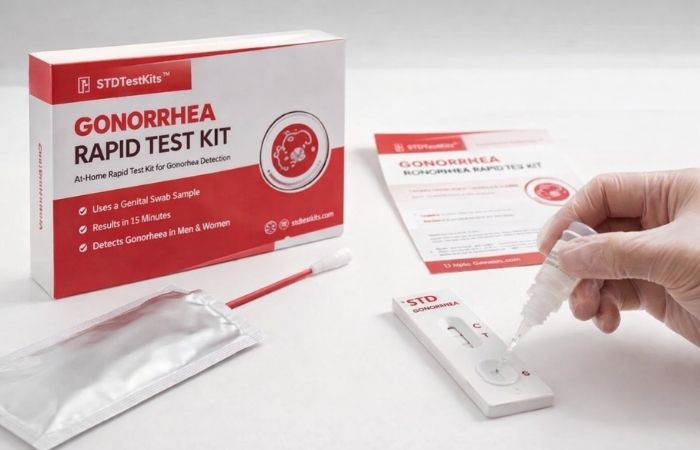
And if you’re ready for clarity, you don’t have to overcomplicate it. A discreet option like an at-home combo STD test kit can check for multiple infections at once, giving you answers without the waiting room stress. Sometimes the fastest way out of the mental spiral is just knowing.
So What’s the Real Risk After Spring Break?
Once you strip away the viral headlines, the real story is actually a lot less dramatic, and a lot more useful. STDs don’t explode overnight into tens of thousands of cases in one city. What actually happens is quieter, slower, and honestly, more personal than that.
Think about it this way: most infections come down to individual moments. A new partner. A missed condom. A situation where testing just didn’t happen yet. Public health data reflects thousands of those individual moments over time, not one chaotic weekend where everything suddenly spikes.
That’s why experts focus less on big, scary numbers and more on behavior patterns. It’s not about “spring break equals outbreak.” It’s about understanding your own risk and taking action based on your actual situation, not a viral statistic.
What Your Risk Actually Depends On
Risk isn’t random; it’s tied to specific factors that are way more important than any headline. Two people can have completely different levels of risk from similar situations depending on what actually happened.
Take Alex and Renee. Both had hookups during a trip. Alex used protection consistently and had a partner who recently tested. Renee didn’t use protection and isn’t sure about their partner’s status. Same setting, completely different risk profiles.
Understanding your own situation matters more than comparing yourself to a viral number. Here’s a clearer way to think about it:
| Factor | Why It Matters |
|---|---|
| Protection use | Consistent condom use significantly reduces transmission risk |
| Number of partners | More partners increase exposure probability |
| Partner testing status | Knowing a partner’s status lowers uncertainty |
| Type of sexual activity | Some STDs spread more easily through certain types of contact |
None of this is about judgment; it’s just how transmission works. And once you understand that, you can make decisions that actually reduce risk instead of just reacting to fear-based content online.
“I Feel Fine”, Why That Doesn’t Always Mean You’re in the Clear
This is one of the biggest disconnects people have with STDs. Feeling normal doesn’t necessarily mean everything is fine. In fact, a lot of infections are completely silent at first.
There’s a moment a lot of people experience: a week or two after a hookup, nothing feels off, so they assume they’re good. Life moves on. But biologically, some infections are still developing quietly in the background.
A healthcare provider once explained it like this: “Symptoms are unreliable. Testing is what gives you the answer.” That’s not meant to scare you; it’s meant to simplify things. You don’t have to guess based on how you feel. You can just check.
Testing Isn’t About Panic, It’s About Clarity
There’s this idea floating around that when you get tested, something’s wrong. The truth is, getting tested is part of being a sexual active individual. It’s like brushing your teeth when you eat something messy for lunch. It’s not something you do when something’s wrong; you do it as part of taking care of yourself.
Let’s look at two different scenarios. One is when you choose not to get tested because you feel fine and you don’t want to bother. Another is when you get tested and feel fine and go on your merry way. It’s the same situation; the only difference is your state of mind.
If you’re not sure whether you have something or not, getting tested will clear up any doubts you might have. No wondering, no guessing, no looking up symptoms of something you might not even have.
If you need something convenient, something like the at-home combo STD test kit is perfect for getting this done without having to go through any awkwardness at a clinic or something similar.
Let’s Talk About the Bigger Picture (Without the Hype)
The viral Houston claim got attention because it felt extreme. But the real public health message is actually much simpler: STDs are common, manageable, and often preventable with basic awareness.
Millions of cases are reported every year in the U.S., but they don’t come from one dramatic event. They come from everyday situations, relationships, casual encounters, and long-term partners who didn’t realize they had something.
That’s why the focus isn’t on avoiding sex altogether or fearing every encounter. It’s about being informed, using protection when you can, and testing when it makes sense. That’s the balance that actually works in real life.
FAQs
- 1. Was Houston really experiencing 42,000 STD cases during spring break?
- No, the number is false and not accurate because the number is taken out of context and misrepresented on the internet.
- 2. Why is the number going viral if it is not accurate?
- Big and scary numbers always go viral, especially when the numbers are related to something people are afraid of, such as STDs.
- 3. Should I get tested for STDs after having a spring break hookup?
- Yes, you should get tested for STDs if you feel you are at risk of having STDs or if you are not sure of your partner’s STD status.
- 4. When should I get tested for STDs after having unprotected sex?
- It is always best to get tested for STDs 1-2 weeks after having unprotected sex because most STDs have a window period before you can get a positive test result for STDs.
- 5. Can I have an STD without having any symptoms?
- Yes, many of these diseases are asymptomatic, which means you won’t know anything is wrong. This is why it is important to get tested even if you don’t feel anything out of the ordinary.
- 6. Are STDs more common after events like spring break?
- While it is possible that the chances of getting an STD could be higher after spring break, it doesn’t mean that people are getting these diseases overnight.
- 7. What is the easiest way to get tested for STDs privately?
- You could use at-home test kits that let you know whether or not you have any of these diseases, allowing you to get tested for more than one kind of disease at a time.
- 8. Do condoms fully protect against STDs?
- While condoms are a great way to prevent getting an STD, they are not a guarantee against these diseases. However, they are still a great way to protect yourself from these diseases.
- 9. What happens if an STD goes untreated?
- While many of these diseases are harmless if you don’t have a partner, they could cause problems for women in the future if they are left untreated.
- 10. How do I stop worrying after seeing viral STD posts?
- While it is easy to get caught up in the idea that a large number of people are getting these diseases, it is important to realize that getting tested for these diseases will let you know for sure whether or not you have any of these diseases.
You Don’t Need Viral Numbers, You Need Real Answers
The internet is really good at turning health topics into extremes. Either everything is fine, or everything is a crisis. The truth is almost always somewhere in between, and that’s where real decision-making happens.
You don’t need to rely on viral posts to understand your health. If there’s even a small question in your mind, the most effective move is simple: get tested and get clarity. This at-home combo test kit makes that step easy, private, and fast.
Because at the end of the day, peace of mind doesn’t come from headlines, it comes from knowing.
Our article was constructed based on current advice from the most prominent public health and medical organizations, and then molded into simple language based on the situations that people actually experience, such as treatment, reinfection by a partner, no-symptom exposure, and the uncomfortable question of whether it “came back.” In the background, our pool of research included more diverse public health advice, clinical advice, and medical references, but the following are the most pertinent and useful for readers who want to verify our claims for themselves.
- Reuters – Online posts reporting 40,000 positive STD tests in Houston are misleading
- Click2Houston – Houston Health Department responds to viral STD data
- PolitiFact – Viral STD numbers reflect broader data
- StatPearls – HIV Testing (NIH Bookshelf)
- Mayo Clinic – Sexually transmitted diseases (STDs)
- WHO – Sexually transmitted infections (STIs)