Do Guys Even Get Tested for STDs? Here's Why It Matters
Quick Answer: Many men avoid STD testing due to stigma, shame, or the myth that they’ll “know” if they’re infected. Why Are Men So Hesitant to Get Tested? That includes going to the doctor. That delay can be deadly.

Quick Answer: Many men avoid STD testing due to stigma, shame, or the myth that they’ll “know” if they’re infected. But most STDs in men are symptomless, and untreated infections can cause long-term harm to both the person and their partners.
Why Are Men So Hesitant to Get Tested?
Toxic masculinity isn’t just a buzzword, it’s a very real public health problem. From a young age, boys are taught to “man up,” to power through pain, and to avoid anything that could make them seem vulnerable. That includes going to the doctor. Especially when it involves anything as intimate, and stigmatized, as STDs.
According to a 2019 study published in Sexually Transmitted Diseases, men are significantly less likely than women to seek routine STD screening, even when they’re sexually active with multiple partners. And when they do go, it's usually because symptoms become unbearable, not as a preventive step.
That delay can be deadly. Not because STDs are untreatable (most are manageable or curable), but because they’re often completely silent in men. No pain. No discharge. No red flags. Just long-term internal damage, and a higher risk of passing infections to partners without realizing it.

“But I’d Know If I Had Something”, Would You?
Here’s a reality check: not all STDs come with symptoms. In fact, some of the most common ones, like chlamydia and gonorrhea, are asymptomatic in men up to 50% of the time. And when symptoms do appear, they’re often dismissed as minor irritation or “just a UTI.”
Consider this:
| STD | Common Symptoms in Men | Can Be Asymptomatic? |
|---|---|---|
| Chlamydia | Burning during urination, discharge, testicular pain | Yes, often |
| Gonorrhea | White/yellow discharge, burning, swollen testicles | Yes, especially early on |
| Syphilis | Single painless sore, rash, fatigue | Yes, in early or latent stages |
| Herpes (HSV) | Blisters, tingling, itching, flu-like symptoms | Yes, many never have visible sores |
| HIV | Fever, fatigue, sore throat, rash (often ignored) | Yes, for years |
Table 1. Common STDs in men and their symptoms, or lack thereof. Many infections can go unnoticed for weeks, months, or even years.
Thinking you’d “know” if something was wrong is a myth rooted in outdated health narratives, and it’s one of the biggest reasons men delay testing. But by the time symptoms are obvious, complications like infertility, pelvic inflammation, or nerve damage may already be happening.
Masculinity Myths That Cost Men Their Health
Let’s name them:
- “Only gay guys get tested.”
- “Real men don’t worry about this stuff.”
- “If I use a condom, I’m fine.”
- “I’m clean. She’d tell me if something was wrong.”
These beliefs aren’t just incorrect, they’re dangerous. They create a culture where testing becomes something shameful, instead of smart. They also reinforce the idea that men’s health is someone else’s responsibility, usually their partner’s.
In reality, condoms don’t protect against all STDs (like herpes or HPV), and not everyone knows they’re infected. Especially when symptoms are invisible. According to the CDC, over 20 million new STDs are contracted in the U.S. each year, and nearly half occur in people under 25. A big portion of those? Cisgender heterosexual men who didn't think testing applied to them.
This isn’t about fear. It’s about reality. And responsibility.
“I Thought It Was Jock Itch. It Was Herpes.”
Lucas, 29, had been sexually active with three partners in the past year. He prided himself on being cautious, used condoms, asked about STI status, and kept things casual. When a patch of redness showed up on his inner thigh, he brushed it off as jock itch or chafing.
“It didn’t hurt. It just looked irritated. I kept using anti-fungal cream. It wasn’t until the second time, when it came with a fever, that I even considered something like herpes.”
By the time Lucas got tested, his symptoms had worsened. Turns out, he’d had herpes for at least six months, possibly longer. But because the initial symptoms were mild and he’d bought into the myth that herpes is always painful and obvious, he waited too long.
“Honestly, I didn’t want to be ‘that guy’ who went into a clinic for something dumb. Now I wish I’d gone sooner. I could’ve started treatment earlier and not panicked the way I did.”
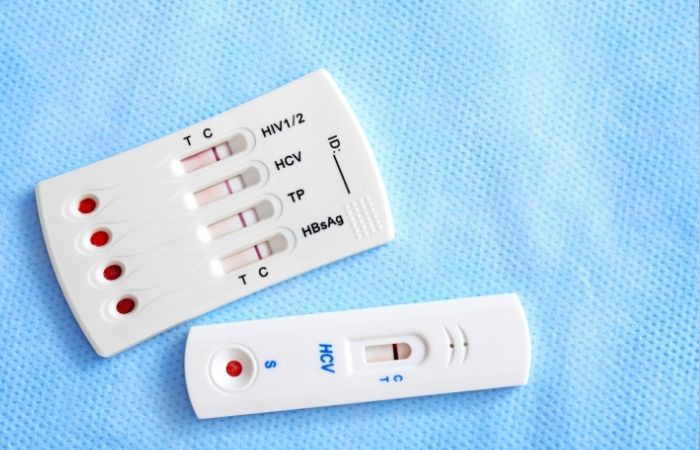
This at-home combo STD test kit checks for the most common infections discreetly, and it’s a solid option for anyone putting off testing out of fear or pride.
How Men Spread STDs Without Knowing
One of the most under-discussed realities of STD transmission is how easily men, especially men with no symptoms, can unknowingly infect others. It’s not malicious. It’s not reckless. It’s just silence, mistaken for safety.
Take trichomoniasis, for example. While women often develop irritation or discharge, men rarely show symptoms. According to the CDC, men often carry trich for months without noticing. During that time, each new partner faces the risk of exposure, even if the guy swears he’s “clean.”
It’s not just trich. Chlamydia, herpes, HPV, HIV
That doesn’t make you a bad person. It just makes you human. But being human doesn’t mean staying in the dark. It means making informed choices, starting with a simple test.
What Happens When You Don’t Get Tested
Let’s talk consequences, but without the moralizing.
Untreated STDs can lead to:
| Condition | Untreated Consequences |
|---|---|
| Chlamydia / Gonorrhea | Infertility, epididymitis (testicular inflammation), chronic pelvic pain |
| Syphilis | Neurological damage, heart issues, organ failure in late stages |
| HIV | Compromised immune system, higher risk of infections, eventual AIDS |
| HPV | Genital warts, higher risk of certain cancers (e.g., penile, anal, throat) |
| Herpes | Recurrent outbreaks, transmission risk to partners (especially during childbirth) |
Table 2. What happens when men avoid testing and treatment. These aren't scare tactics, they're preventable realities.
And then there’s the emotional weight: shame, anxiety, fractured relationships. Many men report feeling embarrassed or “less of a man” after a diagnosis, not because of the infection itself, but because of how society frames male sexuality and health.
This is where the damage of toxic masculinity becomes deadly. It doesn’t just delay care, it isolates. It convinces men to carry silent infections, avoid hard conversations, and pretend that vulnerability is weakness. In reality, nothing is more powerful than taking control of your health.
“Testing Is for Women”: How the Health System Fuels the Problem
Let’s be honest: our medical system hasn’t done a great job of centering male sexual health unless it’s tied to performance (erectile dysfunction), fertility, or prostate screenings. Routine STD testing for men is rarely emphasized unless they ask for it, and even then, many doctors fail to offer a full panel unless symptoms are present.
This leads to a system where women are expected to carry the testing burden. After all, they go for Pap smears. They’re told to get tested after each new partner. And because of this default, men internalize the idea that “it’s not for them.”
But anyone who has sex in their lives, especially new or multiple partners, deserves care. The idea of testing is not based upon gender issues. It is based upon responsibility, clarity, and health.
STD Test Kits provides home test kits specifically for men who want the truth without wait times, judgment, or embarrassment. This is a discreet, fast, and convenient solution designed specifically for just such an occasion.
At-Home vs Clinic Testing: What Works for Men?
If the idea of walking into a clinic feels overwhelming, or humiliating, you’re not alone. According to research published in the Journal of Men's Health, men are far more likely to avoid STD clinics due to fear of being judged, lack of time, and discomfort discussing sex.
That’s why at-home test kits are game-changers. Here’s how they compare:
| Testing Method | Privacy | Speed | Drawbacks | Best For |
|---|---|---|---|---|
| Clinic Visit | Low–Medium | Results in 1–5 days | Embarrassment, time off work, stigma | In-person care or treatment needed |
| Mail-In Lab Kit | High | 1–3 days after sample arrival | Shipping delays, no instant results | People wanting accuracy + privacy |
| At-Home Rapid Test | Very High | 10–20 minutes | May require confirmatory testing | Peace of mind or urgent answers |
Table 3. Testing options compared. The “best” choice depends on your needs, but the worst choice is doing nothing at all.
Whether you want fast answers or full lab reports, you’ve got options. This combo STD kit offers coverage for chlamydia, gonorrhea, syphilis, and HIV, four of the most common and concerning STDs among sexually active men.
If your head keeps spinning, peace of mind is one test away. You deserve to know.
After the Test: When Results Shake Your Sense of Self
For a lot of men, the real impact of an STD diagnosis isn’t physical, it’s emotional. It’s the gut-drop feeling in the car after reading a positive result. The shame that bubbles up, even if you did nothing wrong. The loop of questions: Who did I get it from? What does this mean about me? Will anyone ever want me again?
These aren’t irrational fears. They’re reflections of how men have been conditioned to tie their worth to control, invincibility, and sexual dominance. And when that narrative gets disrupted, by an illness, by a need for care, it can feel like an identity crisis.
But here’s the truth: having an STD doesn’t make you weak, dirty, irresponsible, or broken. It makes you a person. A person navigating sex, relationships, and health in a world that doesn’t always make room for honest conversations.
Getting tested, and dealing with your results, whatever they are, isn’t a failure of masculinity. It’s a redefinition of it. It’s proof that you take responsibility, that you care about your partners, and that you’re willing to show up when it matters most.
How to Tell a Partner You’re Getting Tested (or Got a Positive Result)
We get it. This is the conversation no one wants to have. But honesty doesn’t have to mean humiliation, and you don’t have to say it perfectly to do it right.
Here are a few low-shame, high-compassion script starters you can use:
If you’re getting tested:
“Hey, just a heads-up, I’m doing a quick STD test. I feel fine, but I like to check in between partners.”
“I'm taking care of my health and doing a routine screen. Figured it was time.”
If you tested positive:
“I just got results from an STD test, and one came back positive. I want you to be safe and informed, so I’m sharing it with you.”
“I’m still figuring out next steps, but I care about you and thought you deserved to know.”
These aren’t about blame. They’re about accountability, consent, and care. If you need help navigating it, some at-home test providers even offer partner notification tools or scripts, no face-to-face confrontation required.
Redefining Strength: Testing as Masculine Power
Let’s flip the script.
What if strength wasn’t about hiding pain or dodging clinics, but about facing the uncomfortable stuff head-on? What if taking care of your health made you more of a man, not less?
The strongest thing you can do isn’t pretending you’re invincible, it’s protecting your body, your partners, and your peace of mind. It’s owning your sexual health, even when it’s awkward or scary. It’s saying, “Yeah, I got tested. And I’d do it again.”
That’s real masculinity. That’s leadership. That’s love.
Take back control of your health. Order a discreet test kit today, no clinic, no waiting room, no judgment.
FAQs
- 1. Do I really need to get tested if I feel fine?
- Yes, and that’s the whole trap, most guys do feel fine. But infections like chlamydia, gonorrhea, and even HIV can simmer silently for months without a single symptom. You don’t have to feel sick to be carrying something, and passing it on. Testing is how you stay one step ahead.
- 2. Why do so many men wait until things get bad?
- Because we’re taught to. Rub some dirt on it. Walk it off. And when it comes to sexual health, that “tough it out” mentality can backfire fast. By the time pain or discharge shows up, it’s already been there for a while. Catching it early is the real power move.
- 3. What if I’m scared of what I’ll find out?
- Totally normal. But here’s the twist: testing doesn’t give you the STD, it just shows you what’s already there. And most of the time, what you find out is either treatable, manageable, or nothing at all. The fear comes from the unknown. The relief comes right after the test.
- 4. Do condoms really protect me from everything?
- They help a lot, but they are not foolproof. Condoms can protect against most STDs that are fluid-borne. However, some STDs like HPV, herpes, and syphilis can be passed through skin contact. You can consider condoms as armor and not as an invisibility cloak.
- 5. Is it less manly to use an at-home test kit?
- Honestly? No. It’s more manly. You’re taking charge, doing it on your terms, and skipping the awkward waiting room. The guy who orders a test kit because he wants to stay healthy and protect his partners? That’s confidence, not cowardice.
- 6. How often should guys get tested, really?
- If you’re sexually active with more than one partner, or even if you’re in a new relationship, you should test every few months. Once a year is the bare minimum. Testing isn’t something you only do when something’s wrong, it’s routine upkeep, like changing the oil in your car.
- 7. Can I do this without telling anyone?
- Absolutely. At-home kits ship discreetly, don’t require talking to anyone, and give you full control over your results. No appointments, no side-eyes, no weird questions. You don’t owe anyone your health data unless you choose to share it.
- 8. What if I test positive, am I screwed?
- Not even close. Most STDs are either curable (like chlamydia and gonorrhea) or totally manageable with treatment (like herpes or HIV). A diagnosis isn’t a life sentence. It’s a starting point, and with the right info, you can live your life, have sex, and protect your partners.
- 9. Isn’t getting tested something only women or gay men do?
- Nope. That’s a tired myth that puts everyone at risk. Straight, gay, bi, nonbinary, if you’re having sex, testing applies to you. STDs don’t care how you identify. The virus doesn’t check your playlist or your pronouns. Testing is for everyone with skin in the game. Literally.
- 10. How do I bring this up with my partner without it getting weird?
- Try this: “Hey, I’m thinking of getting tested, just routine stuff. Want to do it together?” Framing it as shared care, not suspicion, makes it easier for everyone. If you already tested positive, lead with care, not fear. Honesty + empathy = grown-up sex.
You Deserve Answers, Not Assumptions
Being a man shouldn’t mean being in the dark about your health. And getting tested shouldn’t feel like a confession. It should feel like clarity. Like care. Like stepping into responsibility instead of hiding from it.
You don’t have to wait until something burns, itches, or bleeds to take action. In fact, the smartest move is to test before symptoms appear, because by the time they do, the infection may have already spread.
Don’t wait and wonder, get the clarity you deserve. This at-home combo test kit checks for the most common STDs discreetly and quickly.
How We Sourced This Article: We combined current guidance from leading medical organizations with peer-reviewed research and lived-experience reporting to make this guide practical, compassionate, and accurate. In total, around fifteen references informed the writing; below, we’ve highlighted some of the most relevant and reader-friendly sources.