Grindr Hookups and a Rise in Syphilis: What You Should Know
Quick Answer: Syphilis cases are rising globally, especially among men who have sex with men (MSM) and app users like those on Grindr. It just got quieter, until now. According to the CDC, syphilis cases in the U.S.
Quick Answer: Syphilis cases are rising globally, especially among men who have sex with men (MSM) and app users like those on Grindr. Testing every 3–6 months is recommended if you're sexually active with multiple or anonymous partners, and at-home options make it easier than ever to stay on top of your health.
Why Syphilis Is Back, And What That Has to Do with Grindr
Syphilis never really went away. It just got quieter, until now. According to the CDC, syphilis cases in the U.S. jumped over 74% between 2017 and 2021, with even sharper increases among gay, bisexual, and other men who have sex with men. And Grindr? It’s one of the most popular apps among MSM for casual, location-based hookups, and it’s been at the center of multiple public health discussions linking app use with STI surges.
Let’s be clear: Grindr didn’t invent risky sex. But it changed the speed, frequency, and anonymity of how sexual networks form. With GPS-based matching and the ability to filter partners by preferences, Grindr streamlines sexual access in a way public health researchers have described as “hyper-networking.” More partners in shorter spans of time means more potential exposure points for infections like syphilis, especially when symptoms are subtle or invisible.
One study in the Journal of Medical Internet Research found that MSM who used dating apps were more likely to report recent STI diagnoses, including syphilis, than those who didn’t. Another analysis from Brazil linked syphilis outbreaks in urban centers directly with Grindr and Hornet usage density.
But blaming apps oversimplifies a complex picture. Grindr is a tool. How people use it, and how systems fail to support safe, stigma-free care, is where the real issue lies.
The Silent Stages: Why Syphilis Is So Easy to Miss
Let’s talk about why syphilis slips past even smart, observant people. First, it often shows up in ways that don’t scream “STD.” In fact, many people don’t realize they have it until it’s already progressed.
Here’s how it typically unfolds:
| Stage | Symptoms | Timeframe |
|---|---|---|
| Primary Syphilis | Painless sore (chancre) on genitals, anus, lips, or mouth | 10–90 days after exposure |
| Secondary Syphilis | Skin rash (palms/soles), fever, sore throat, fatigue, hair loss | Weeks to months later |
| Latent Syphilis | No symptoms, but bacteria remain in body | Months to years |
| Tertiary Syphilis | Damage to brain, nerves, heart (rare now with treatment) | Years after initial infection |
Figure 1. Syphilis progression timeline, why it hides in plain sight
Many Grindr users report being surprised by a diagnosis because they never noticed a sore, or thought it was a pimple, razor burn, or hemorrhoid. That’s why testing is critical. You can’t wait for pain to tell you something’s wrong.
“I Didn’t Feel a Thing”: One Night, One Missed Clue
Jalen, 29, swiped into a Grindr meet-up after a long work week. “He was chill, clean-looking, smelled amazing,” Jalen recalls. They used protection for penetration but not for oral. “I never saw a sore. He didn’t say anything, and neither did I.”
Three weeks later, a reddish bump appeared at the base of Jalen’s shaft. “Didn’t hurt. I shaved a few days before, so I figured I nicked myself,” he says. But a week after that, he woke up with a fever and dry rash on his palms. “That’s when I knew it wasn’t nothing.”
Jalen tested positive for syphilis and started antibiotics the same day. His doctor told him that symptoms like his are common but easy to dismiss, especially when they don’t itch, burn, or cause pain. “Now I tell my friends: If something feels off, don’t wait. Just test.”
The Role of Anonymous or Casual Hookups
You’re not alone if you’ve ever hooked up without exchanging last names. Grindr is built for that, fast, frictionless connections. But that anonymity can become a barrier if you test positive and need to notify past partners.
Syphilis is most contagious in its early stages, exactly when people are least likely to know they’re infected. That means even one unprotected encounter can lead to transmission, especially if sores are hidden in the mouth or rectum, where they're less noticeable.
Apps like Grindr can make it harder to trace exposures, but they’ve also experimented with health-forward features. Some regions have pushed for in-app reminders about testing, anonymous partner notification systems, and even profile badges for recent STI screening (though adoption varies by area).
Still, the onus is on you to take charge of your health, and your partners’ safety, by getting tested regularly and using tools like contact tracing support if you test positive.
How Often Should You Test?
Syphilis testing isn’t just for people with symptoms. It’s part of a smart sexual health strategy, especially if you meet partners through Grindr or similar apps.
Here’s a simple guide based on risk level:
| Risk Category | Testing Frequency | Notes |
|---|---|---|
| 1–2 partners, known status, condom use | Every 6–12 months | Routine screening during check-ups |
| Multiple partners, app-based, inconsistent protection | Every 3–6 months | More frequent due to exposure variability |
| New symptoms or a known partner exposure | Immediately | Follow up with retest if negative too soon after encounter |
Figure 2. Testing timelines based on real-world sexual behavior
If you’re unsure where you fall, default to every 3–6 months. It’s not about paranoia, it’s about power. Knowing your status gives you choices.
What Syphilis Tests Are Available, And Which One’s Right for You?
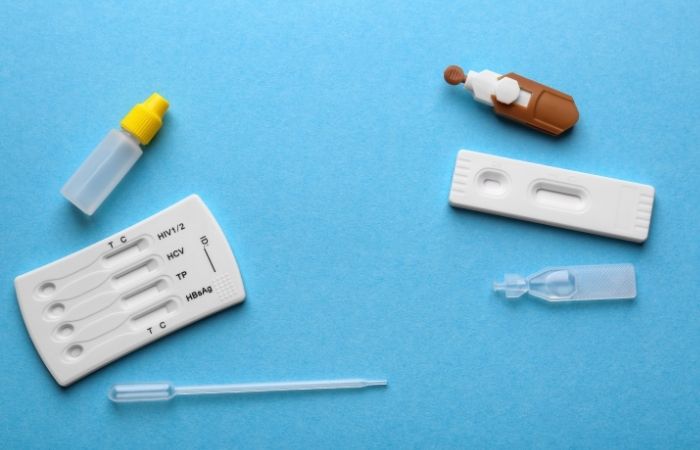
Testing for syphilis is easier than ever, especially with at-home options. Most tests check your blood for antibodies, meaning your body’s immune response to the infection, not the bacteria itself. Here’s how to make sense of your options.
In clinics, syphilis is usually diagnosed using a two-test system: one screening test (like RPR or EIA) and one confirmatory test (like TPPA or FTA-ABS). These are highly accurate and used by health departments worldwide. The good news? Many mail-in and rapid test kits now follow similar principles.
Here’s a quick breakdown:
| Test Type | Where | Accuracy | Best When |
|---|---|---|---|
| Rapid Finger-Prick Test | At-home or some clinics | Moderate–High (if enough time passed) | You want fast, private answers |
| Lab-based Blood Test | Clinic or mail-in kit | Very high | You need diagnosis + treatment follow-up |
| Combo STD Panel | At-home or clinic | High for each included infection | You want to screen for multiple STDs |
Figure 3. Comparing test options, speed vs accuracy vs privacy
If you’re sexually active on Grindr or other apps, the best test is the one you’ll actually use, soon and regularly. Many choose at-home kits like the Combo STD Home Test Kit for privacy and convenience.
If You Test Positive: What Happens Next?
Testing positive for syphilis might hit like a gut punch, especially if you’re asymptomatic or were just doing a “routine check.” But let’s breathe this out together: syphilis is curable. Most people recover fully with a single round of antibiotics.
Here’s what typically happens:
You’ll be prescribed an intramuscular injection of penicillin, often one dose if caught early. Some clinics offer alternative antibiotics if you’re allergic. Symptoms often disappear within a few days, but you’re still contagious for a short time, so sex should be paused until treatment is complete and your provider gives the all-clear.
What surprises many is that syphilis antibodies stay in your blood for life. That means future tests might stay “reactive”, but with lower titers, indicating past treatment. Your provider will help interpret what’s old, what’s new, and whether follow-up is needed.
And yes, you’ll need to tell recent partners. Not because you’re a villain, because they deserve a chance to take care of themselves too. Keep reading for how to handle that with dignity and minimal awkwardness.
“How the Hell Do I Tell Them?”, Partner Notification Without the Spiral
Let’s be real, telling a Grindr hookup from three weeks ago that you tested positive for syphilis might feel like the last thing you want to do. Maybe you don’t remember his name. Maybe you only swapped a few pics and a hotel room.
But here’s the thing: one message can prevent someone else from facing long-term complications. It doesn’t have to be dramatic, and it doesn’t have to reveal your identity if you’re not comfortable.
Try this script:
“Hey, just a heads-up. I tested positive for syphilis and wanted to let you know in case you want to get checked. No judgment. Just looking out.”
You can also use anonymous partner notification services offered by some public health departments or online tools like TellYourPartner.org. These platforms send a message for you, no name attached.
Testing your partners isn’t about blame. It’s about community care. And if someone comes to you with that info? Thank them. That’s courage.
If you're not sure what to say or need support, some clinics offer counseling. Grindr has also worked with organizations like Building Healthy Online Communities (BHOC) to include sexual health links in the app’s health sections. Check your local settings.
What If You’re on PrEP, Do You Still Need to Worry?
Yes. While PrEP (Pre-exposure prophylaxis) protects against HIV, it does not prevent syphilis or other bacterial STDs like gonorrhea or chlamydia. In fact, some studies suggest that PrEP users may experience higher rates of syphilis, not because PrEP causes it, but because some users feel more sexually free and may engage in behaviors that increase STI risk (like condomless sex or more frequent partner changes).
That doesn’t mean PrEP is bad, it’s a game-changer. But it also means testing for syphilis and other infections should be part of your ongoing health plan.
Most PrEP protocols already include quarterly STI screening. If you’re not getting tested that often, talk to your provider, or consider using an at-home test to bridge the gap between appointments.
Bottom line: PrEP stops HIV. But it doesn’t replace condoms, testing, or communication.
Risk Isn’t the Whole Story, Resilience Is
The way public health talks about Grindr and syphilis often centers on risk. But if you’ve read this far, you’re not reckless. You’re resourceful. The truth is, app users are often more aware of sexual health than they get credit for, especially those who test regularly, use protection, and share status info honestly.
Apps like Grindr aren’t inherently dangerous. In fact, they’ve helped build community, normalize queerness, and offer space for exploration. The challenge is in recognizing how fast-paced, anonymous connections may shift your personal safety net, and making adjustments that keep your freedom intact while lowering your chances of getting sick.
That’s not about shame. That’s about strategy.
Red Flags That Aren’t Just Razor Burn
Syphilis can play the long game, or it can come out swinging. Knowing what to look for might not just help you; it could help a partner who’s brushing something off.
Here are real-world signs that deserve a second look, especially after recent Grindr hookups:
Mouth ulcers or cracks at the corners of your lips: Not all syphilis sores are genital. If you’ve had oral sex (giving or receiving), a chancre could show up in your mouth and be mistaken for a canker sore or cracked lip.
Single, firm bump that doesn’t hurt: Painless = dangerous. Syphilitic chancres are usually solitary, hard-edged, and disappear on their own, but you’re still infectious while it’s healing.
Rash that starts on palms or soles: That’s not eczema. A red, flat or slightly raised rash on these areas is a classic sign of secondary syphilis, especially if it shows up after flu-like symptoms.
Sudden hair loss or patchy beard thinning: Some people experience alopecia areata as a secondary symptom. Most wouldn’t link it to an STD, but it’s real, and it’s documented.
If you notice any of the above, test immediately, regardless of whether a partner “looked clean” or said they were tested. Many people carry syphilis without realizing it. That includes people who genuinely think they’re negative because they’ve never had symptoms, or their last test was too early.
And if you're feeling fine? That’s still not a pass. Remember: latent syphilis has no symptoms, but it keeps spreading under the radar.
Can You Test Too Soon? How to Avoid False Negatives
Yes, you absolutely can test too soon. And when it comes to syphilis, timing matters just as much as the test itself.
After exposure, your body needs time to produce detectable antibodies. If you test in the first 7–14 days, you might get a false negative, meaning you’re infected, but the test hasn’t caught up yet.
Here’s a timing map to help guide you:
| Days Since Exposure | What’s Happening in the Body | Test Accuracy |
|---|---|---|
| 0–7 days | Bacteria may be present, but no antibodies yet | Low, wait unless symptoms appear |
| 8–21 days | Primary symptoms might start; antibodies build | Moderate, retest recommended |
| 22–35 days | Antibodies likely detectable | High, ideal testing window |
| 36+ days | Secondary symptoms may appear or resolve | Very high, suitable for confirmation |
Figure 4. Syphilis antibody development and optimal test timing
If you tested negative right after a risky hookup, don’t exhale yet. Retest 3–5 weeks later to be sure. Some people think testing is like waving a magic wand, if it’s negative, they’re in the clear. But with syphilis (and many STDs), it’s more like a Polaroid: you need time to develop.
False Relief, And a Second Wake-Up Call
Daniel, 34, tested negative for syphilis after a three-way that involved some condomless oral and rimming. “I felt fine. But I was paranoid, so I tested the next day.” That result was negative, and he went on with his life, until six weeks later, a weird blotchy rash showed up on his chest.
“I freaked out. Went to urgent care. Turns out it was secondary syphilis,” Daniel says. His first test had been too early. “If I hadn’t had that rash, I probably wouldn’t have tested again.”
Now, Daniel sets calendar reminders to test quarterly and waits at least 3 weeks post-hookup for better accuracy. “I’m still on Grindr. Still having fun. But now I know better, and I test smarter.”
Prevention Without Killing the Vibe
You deserve pleasure without panic. But that doesn’t mean tossing strategy out the window. Here’s how to lower your syphilis risk without dousing the mood:
Use condoms or dental dams, even for oral. Syphilis is highly transmissible through skin contact, not just fluids. That includes lips, genitals, and anus, especially during oral, which many skip protection for.
Keep communication simple and stigma-free. Try: “When did you last get tested?” or “I usually test every few months, you?” You’ll be surprised how many people appreciate the conversation.
Ask about sores or rashes, and check yourself. You don’t need to play detective, but a quick look can tell you more than assumptions. Trust your gut. If something looks or feels off, pause.
Get tested regularly, not just reactively. Think of it like changing your oil, regular maintenance prevents major breakdowns.
Keep your test kits stocked. Whether it’s post-festival, pre-thruple, or just a check-in before your next Grindr scroll, having a home test on hand removes barriers and excuses.
FAQs
- 1. Can you really get syphilis from oral sex?
- Yes, and it’s more common than most people think. Oral sex feels lower risk because there’s no penetration, but syphilis doesn’t care. It spreads through skin-to-skin contact, and if your partner has a sore inside their mouth or on their genitals, transmission can happen fast, especially if you’ve got even tiny cuts or gum irritation. You won’t always see the sore. You won’t always feel it either. That’s the trap.
- 2. Wait... isn’t syphilis, like, an old disease?
- It is, and it’s having a major comeback. Think: vintage infection, modern reboot. Syphilis used to be a 19th-century killer. Now, it's climbing year after year, especially among men who have sex with men and folks using hookup apps. Blame shame, test access, and the fact that symptoms are sneaky. But don’t write it off. This thing still messes with your nervous system if ignored.
- 3. How soon after a Grindr hookup should I test?
- Ideally, give it 3 weeks. That’s when your body usually builds up enough antibodies for a test to catch an infection. If you test too soon (like the next morning out of panic), a false negative is possible. If you’re symptom-free but still unsure, retest at 6 weeks. That’s the sweet spot for accuracy. And if you notice a sore, rash, or flu-like funk before then? Don’t wait, test immediately.
- 4. What does a syphilis sore look like?
- Think small, round, and painless, usually on your junk, butt, lips, or mouth. It might look like a pimple, ingrown hair, or tiny ulcer. Some people don’t even see it because of where it hides (especially rectally or orally). That’s why it spreads so easily: it shows up quiet, doesn’t hurt, then vanishes like it never happened. But you’re still contagious.
- 5. I tested positive. Do I have to tell everyone I slept with?
- Not everyone, just recent partners from the past 90 days, ideally. It’s not about blame; it’s about harm reduction. You don’t have to make it awkward. Keep it simple: “Hey, I tested positive for syphilis. Wanted to let you know so you can get checked too.” If the thought of that makes your stomach turn, try TellYourPartner.org, they’ll do it anonymously, no name or drama attached.
- 6. Does PrEP protect me from syphilis too?
- Nope. PrEP is amazing, it protects against HIV, full stop. But it doesn’t stop bacterial STDs like syphilis, gonorrhea, or chlamydia. In fact, some folks on PrEP might test positive for those more often simply because they’re testing more regularly (which is a good thing!). Still, you’ll want to keep condoms and testing in the mix.
- 7. I tested negative. Can I stop worrying?
- Depends. How long ago was the exposure? If it’s been less than 3 weeks, you might want to test again later just to be sure. False negatives can happen early. If it’s been over a month and you’re symptom-free? That negative is solid. But keep testing every 3–6 months if you’re regularly active, it’s way less stressful than guessing every time something feels weird.
- 8. What’s the treatment like? Is it bad?
- It’s literally a shot in the butt. That’s it. A single injection of penicillin (or two, depending on the stage). It might sting for a sec, but the infection clears fast. You might feel a little off the next day (like mild flu symptoms), but you’re on the road to recovery. Most people feel way more relief than pain.
- 9. Do I have to stop using Grindr if I test positive?
- Not at all, but you do need to pause sex until you’re treated and cleared. After that, go forth with awareness. Add regular testing to your rotation, use protection when you can, and don’t be afraid to bring up status early. It doesn’t kill the vibe, it shows respect. You can still have a hot, fun, active Grindr life and stay on top of your sexual health.
- 10. Why is syphilis even a big deal? Isn’t it easy to treat?
- It is easy to treat, but only if you catch it. If left alone, syphilis can eventually attack your brain, nerves, and heart. That’s rare, but not mythical. Plus, untreated syphilis can increase HIV risk and cause pregnancy complications. So yeah, it matters. The scary part isn’t the shot, it’s the stuff people ignore because they’re too embarrassed to test.
You Deserve Answers, Not Assumptions
Syphilis isn’t new. Neither is shame. But the tools we have to protect ourselves, and the communities we create on apps like Grindr, are evolving. You don’t have to choose between sex and safety. You just need a plan, a timeline, and the confidence to take action before something small becomes something serious.
Your status doesn’t define you, your choices do. And you don’t need a lab coat to take control. You can order a discreet Combo STD Test Kit, test at home, and get results in minutes. No clinic. No waiting room. No judgment.
Whether you're swiping right, hosting, or just exploring, your sexual health is worth protecting, not hiding.
How We Sourced This Article: We combined current guidance from leading medical organizations with peer-reviewed research and lived-experience reporting to make this guide practical, compassionate, and accurate. In total, around fifteen references informed the writing; below, we’ve highlighted some of the most relevant and reader-friendly sources.