Her Pap Came Back Abnormal. What You Need to Know as a Man
Quick Answer: HPV in men often has no symptoms, but it can still be passed to partners. A woman’s abnormal Pap smear may result from a strain of HPV silently carried by her male partner. This isn’t rare. It’s routine.

Quick Answer: HPV in men often has no symptoms, but it can still be passed to partners. A woman’s abnormal Pap smear may result from a strain of HPV silently carried by her male partner.
Why This Hits Harder Than You’d Think
It’s not just about a lab result, it’s about the emotional fallout that comes with it. When a woman gets an abnormal Pap, there’s often fear: cancer, infertility, the weight of something unseen. But for her male partner, there’s usually confusion, even denial. After all, if you feel fine, how could you be part of the problem?
This is where a brutal truth comes in: Most men with HPV have no symptoms at all. You can carry the virus for years, even decades, and never know. But during that time, it can transmit during sex, oral, vaginal, or anal, and trigger cervical changes in your partner’s body that show up in Pap results. This isn’t rare. It’s routine. And it’s rarely talked about in male health spaces.
According to the CDC, nearly every sexually active person will get HPV at some point in their life. But unlike women, who are screened regularly via Pap tests and HPV co-testing, men don’t have a reliable way to know they’re infected, unless symptoms appear, which they usually don’t.
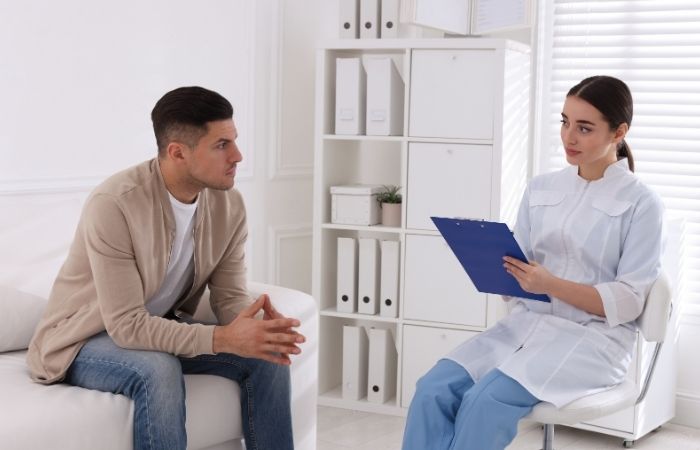
HPV in Men: The Invisible Infection
For men, HPV usually lives quietly. No itching, no pain, no discharge. If anything, you might notice small, soft bumps that could be genital warts, but even those aren’t guaranteed. And warts come from low-risk strains of HPV. The high-risk ones, the ones that cause cervical, throat, anal, and penile cancers, don’t show on the skin at all.
What makes this worse is that most men aren’t tested for HPV. In fact, there’s no routine HPV screening for men in most medical settings, unless you’re part of a specific high-risk group (such as men who have sex with men or those with HIV). This creates a perfect storm of unintentional transmission. You can have it, not know it, and pass it to someone who then gets flagged on a Pap smear months, or even years, later.
One study published in the Journal of Infectious Diseases found that HPV prevalence among men aged 18–59 was over 45%, yet nearly all reported no symptoms. And without symptoms or screening, there’s no trigger to test, treat, or even have the conversation.
“I Thought She Was Blaming Me”
Marcus, 33, had been with his girlfriend for two years when she called him crying. Her OB-GYN had just told her that her Pap smear came back abnormal due to high-risk HPV. Marcus was blindsided.
“I didn’t cheat. I haven’t had symptoms. I honestly thought she was accusing me of something I didn’t do.”
It took a follow-up visit and a compassionate doctor to explain what Marcus had never learned: that HPV can live undetected in men for years, even from relationships before his current one. It wasn’t about blame. It was about biology, and timing.
“That talk changed everything. I realized I probably passed it to her without ever knowing. Now I get why this matters.”
HPV doesn’t have a moral compass. It doesn’t mean someone cheated. It just means the virus was there, quietly working under the surface. Marcus and his girlfriend both got educated, and now they’re navigating the next steps, together.
How HPV Actually Spreads (Even with Condoms)
HPV is a skin-to-skin virus. That means it can pass through contact, not just fluids. While condoms help reduce risk, they don’t offer total protection because HPV can live on areas not covered by a condom: the base of the penis, scrotum, vulva, and perianal skin. Even mutual masturbation or genital-to-genital rubbing can result in transmission.
According to the World Health Organization, consistent condom use reduces the risk of HPV infection, but does not eliminate it. That’s why even people in long-term, monogamous relationships can still “discover” HPV during routine screening years into their partnership.
This explains one of the most common reactions to an abnormal Pap: “How could this happen now?” The answer is often that HPV has been there, dormant and silent, and only just triggered cervical changes detectable by a Pap test. It can also mean that exposure happened long before the current relationship.
If you’re wondering, “Did I cause this?”, you’re not alone. The more important question is: “What do I do now?” And the first step is understanding the risk you carry, even without symptoms.
Why the Timing Feels So Off (But Isn’t)
One of the hardest parts about an abnormal Pap smear tied to HPV is that it often feels disconnected from reality. Maybe you’ve been together for years. Maybe you’ve both tested negative for other STDs. Maybe you use protection. So how could HPV show up now?
The answer lies in the nature of the virus. HPV can remain dormant in the body for years, sometimes decades, before triggering visible or cellular changes. For women, those changes are often caught during routine Pap tests. For men, who don’t get screened, it can go entirely unnoticed.
The National Cancer Institute notes that high-risk strains of HPV can cause cell mutations that lead to cancer, but this process is typically slow. Most HPV infections clear on their own within 1–2 years. However, persistent infections are what lead to abnormal Pap results and cancer risk. And persistent infections don’t always mean recent ones, they can come from years past.
That means if your partner gets a call about her Pap, it doesn’t necessarily mean she, or you, did anything recently. It could be the first visible sign of something that’s been in the background a long time.
Can Men Get Tested for HPV?
This is one of the most common, and frustrating, questions men ask after their partner’s abnormal result. Unfortunately, the answer isn’t straightforward.
Currently, there’s no FDA-approved HPV screening test for men in the general population. Testing exists in certain contexts (like anal Pap smears for men who have sex with men, or urethral swabs in research), but routine HPV testing for men is not standard practice. This creates a massive gap in prevention, awareness, and accountability.
As Planned Parenthood explains, most men are never tested unless they show visible genital warts, which usually come from low-risk HPV types, not the strains tied to cancer. This means high-risk types can live in the body and continue spreading without detection or symptoms.
So no, your doctor likely won’t offer an HPV test unless you fall into a high-risk category. But that doesn’t mean you’re off the hook. What you can do is stay informed, get vaccinated if eligible, and make sure your partners have access to screenings and support.
Yes, Men Can, and Should, Get the HPV Vaccine
If you thought the HPV vaccine was just for teens or just for women, you’re not alone. But that’s outdated thinking, and dangerously incomplete.
The HPV vaccine (commonly known as Gardasil 9) protects against nine strains of the virus, including those most commonly linked to cervical, anal, throat, and penile cancers. While it’s typically given during adolescence, men can get vaccinated up to age 45 in the U.S., especially if they haven’t been fully vaccinated before. The CDC recommends catch-up vaccination for all people through age 26, and some adults up to 45 after discussing risk with their provider.
If your partner has had an abnormal Pap due to HPV, getting vaccinated won’t cure an existing infection, but it can protect you (and future partners) from other strains. It’s a proactive step that says: “I care about our health, not just mine.”
For some men, that choice is also about fertility, cancer prevention, and closing the gap in a system that doesn’t yet test men but holds them accountable in outcomes.

How to Support Your Partner (Without Getting Defensive)
When a partner gets unexpected health news, especially about an STD, emotions run high. It’s easy to shut down, get defensive, or spiral into guilt and confusion. But here’s the truth: this isn’t about blame, it’s about biology, timing, and next steps.
What your partner needs most is clarity, not conflict. That means listening when she talks about her fear. It means asking questions together. It means showing up at follow-up appointments or reading the information she’s overwhelmed by. And yes, it means accepting that you may have been the source, without weaponizing it against yourself or her.
Consider this an invitation to grow, not just as a partner, but as a man who takes sexual health seriously. That includes learning how common HPV in men really is, understanding how it spreads, and taking action to prevent future transmission.
Whether it’s offering emotional support, looking into vaccination, or getting tested for other STDs, your role in this doesn’t end with hearing the words “abnormal Pap.” It starts there.
Why This Matters Even If You Feel Fine
Let’s say it again: HPV rarely causes symptoms in men. You can feel perfectly healthy and still carry the virus. That’s not failure. It’s biology. And the only thing more dangerous than having an STD you don’t know about is assuming you couldn’t possibly have one because you feel okay.
One of the biggest myths we see in male sexual health is that “no symptoms = no problem.” But in the case of HPV, that logic leads to unknowing spread, delayed diagnoses, and silent cancer risks for everyone involved.
It’s not about panic. It’s about prevention. And knowing your status starts with asking the right questions, even when the system doesn’t offer easy answers.
If you’ve never been tested for STDs, or it’s been a while, now’s the time. A discreet at-home kit can screen for other common infections, even if HPV isn’t on the panel. You deserve to know, and so does your partner.
Long-Term Partner or New Relationship, It Still Matters
Whether you’ve just started dating or you’ve been together for years, an abnormal Pap result can feel like a landmine. In a new relationship, it might raise questions of trust. In a long-term one, it might feel like it came out of nowhere.
But HPV doesn’t follow relationship timelines. A woman could have a completely normal Pap test for years and then suddenly show changes linked to an old infection, or a new one. Likewise, a man might carry the virus silently across multiple partners, never showing a single sign.
This isn’t about blaming your past or hers. It’s about understanding how a virus that lives in skin, not blood, not fluids, moves quietly through our lives. You don’t need to know exactly who gave what to whom. You just need to know what to do now.
Start with honesty. Not just with your partner, but with yourself. You might not have caused this, but if you’re part of her sexual health equation, you’re also part of the solution.
What Men Can (and Can’t) Do About HPV
Let’s break it down clearly. Here’s what’s currently possible for men regarding HPV, and where the gaps still exist:
| Action | Can Men Do This? | Details |
|---|---|---|
| Get tested for HPV | No (not routinely) | Only available for certain high-risk groups or specific sites (e.g., anal HPV in MSM) |
| Get vaccinated | Yes (up to age 45) | Protects against 9 HPV types, including high-risk cancer-causing strains |
| Know if you’re contagious | No | Without symptoms or testing, there’s no way to confirm HPV status in men |
| Pass HPV to a partner | Yes | Even with no symptoms or knowledge of infection |
| Prevent spread 100% | No | Condoms reduce but don’t eliminate risk; skin-to-skin contact still transmits HPV |
| Support a partner with an abnormal Pap | Absolutely | Through emotional support, education, testing for other STDs, and vaccine discussion |
Figure 1. Summary of what men can, and cannot, currently do about HPV based on current medical guidance.
HPV in Couples: A Silent Loop
One of the most difficult aspects of HPV in relationships is that couples can unknowingly re-infect each other. If one partner clears the virus but the other still carries it silently, HPV can circle back. This is sometimes called an "HPV ping-pong" effect, and it’s part of why monitoring and prevention are ongoing, not one-time events.
Here’s how the timeline often plays out in heterosexual couples:
| Timeline Stage | What’s Happening in the Male Partner | What’s Happening in the Female Partner |
|---|---|---|
| Initial exposure | HPV acquired through skin contact, typically no symptoms | HPV enters cervical cells, no immediate changes detected |
| Weeks to months later | Still no symptoms, still contagious | Possible HPV detection on Pap, sometimes shows as low-grade changes |
| 6–12 months | Virus may clear or persist | Persistent HPV may cause abnormal Pap results or require colposcopy |
| 1+ years | Still may have no idea virus was ever present | Could lead to high-grade changes or pre-cancer without treatment |
Figure 2. Typical HPV progression timeline in heterosexual couples, demonstrating how silent transmission and delayed detection create confusion.
Call It What It Is: A Wake-Up Call for Men
If your partner’s Pap came back abnormal, that’s your signal, not to feel blamed, but to become informed. This isn’t just about her cervix. It’s about your shared reality.
HPV doesn’t discriminate. It affects straight, gay, bi, cis, and trans folks. It doesn’t care about how healthy you look or how many partners you’ve had. And it’s not going to wait until symptoms show up to do damage.
So use this moment to check in with yourself. When was your last full STD panel? Have you ever had one? Are you vaccinated? Do you understand how to talk about HPV with your partner, your doctor, or your future self?
Testing can’t detect HPV in men, but it can catch other common STDs that travel in the same circles: chlamydia, gonorrhea, syphilis, and more. These can all be passed without symptoms too.
Don’t wait for a Pap smear to force your hand. Take control of your own testing timeline. STD Test Kits offers discreet, FDA-approved home tests that arrive in plain packaging, and put the answers in your hands.
FAQs
- 1. Can I really give someone HPV without knowing it?
- Yes, and that’s the messed-up part. Most men who carry HPV don’t feel a thing. No rash, no bumps, no warning. You could be walking around with it for years, and the first sign might be your partner’s abnormal Pap smear. It’s not intentional, it’s biology, and it happens all the time.
- 2. If she just got an abnormal Pap, does that mean I cheated?
- Nope. HPV doesn’t care about your relationship status. It can stay dormant in the body for years, even a decade or more. That abnormal result doesn’t mean someone cheated, it means the virus finally made itself known. This is a trust convo, not a crime scene.
- 3. Why can't guys just get tested for HPV?
- We wish it were that simple. But there’s no approved routine HPV test for men, nothing like a Pap smear for dudes. Some specialized tests exist (like anal swabs for high-risk groups), but your regular clinic isn’t offering an “HPV check” for men. That’s why prevention matters more than waiting for symptoms.
- 4. So... how the hell does it spread if I wore a condom?
- Because condoms don’t cover everything. HPV lives on skin, think base of the penis, pubic area, around the vulva. You can use a condom and still have skin-to-skin contact that spreads the virus. Protection helps, but it’s not a force field.
- 5. How would I even know if I have HPV?
- Truth bomb: you probably wouldn’t. Unless you have visible genital warts (which come from low-risk strains), or you’re part of a group that gets anal Pap testing, you’re unlikely to find out. That’s why so many guys are “silent carriers”, not because they’re careless, but because no one told them this stuff.
- 6. Should I get the HPV vaccine even if I’m not 20 anymore?
- Hell yes, if you’re eligible. Men can get the HPV vaccine up to age 45. It won’t erase an existing infection, but it can protect you from other high-risk strains that could affect you or your future partners. If you’ve ever had sex, the vaccine’s still worth asking about.
- 7. Can I pass HPV back to her after she clears it?
- Unfortunately, yes. HPV can bounce between partners like a viral ping-pong match. If one clears it and the other hasn’t, reinfection can happen. Condoms, vaccines, and time all help, but this is another reason both partners should be in the loop, not just the one with a cervix.
- 8. How long does HPV stick around in guys?
- It depends on your immune system. Many people clear it naturally within 1 to 2 years. Others carry it longer without knowing. There’s no way to test for clearance in men, which is frustrating, but again, not uncommon.
- 9. Do I still need to get tested if I feel fine?
- Absolutely. Most STDs don’t show symptoms in men, chlamydia and gonorrhea especially. Just because you’re not burning or itching doesn’t mean you’re in the clear. Get a full panel, especially if your partner’s test results are raising red flags. You can do it from home with a combo test kit.
- 10. What do I even say to my partner if this just came up?
- Start with: “I’m here, and I want to understand.” Avoid panic, avoid defensiveness. This isn’t about fault, it’s about moving forward together. HPV is common, manageable, and not a deal-breaker. Your response can make this a bonding moment, not a breaking point.
You’re Part of the Story, So Be Part of the Solution
This isn’t about blame. It’s about biology. If your partner’s Pap came back abnormal, it doesn’t mean you did something wrong, but it does mean there’s more to understand about your role in sexual health.
Even without symptoms, you can make a difference. Support your partner. Get informed. Get tested. Get vaccinated if you can. And most importantly, don’t disappear from the conversation just because your body isn’t showing signs.
Don’t wait and wonder, get the clarity you deserve. This at-home combo test kit checks for the most common STDs discreetly and quickly.
How We Sourced This Article: We combined current guidance from leading medical organizations with peer-reviewed research and lived-experience reporting to make this guide practical, compassionate, and accurate. In total, around fifteen references informed the writing; below, we’ve highlighted some of the most relevant and reader-friendly sources.