How Soon After Sex Can You Test for Chlamydia
You’re usually able to test for chlamydia about 7 days after sex, but the most reliable results happen at 14 days or later. Testing too early, like within the first 1–3 days, can miss the infection completely.

Last updated: March 2026
You’re usually able to test for chlamydia about 7 days after sex, but the most reliable results happen at 14 days or later. Testing too early, like within the first 1–3 days, can miss the infection completely. If you want accuracy, timing matters more than urgency.
You might be here because something feels off, or maybe nothing feels off, and that’s exactly the problem. That quiet uncertainty after sex, the “should I test now or wait?” loop, can get loud fast. Let’s cut through that and get you a clear timeline you can actually use.

The Moment After Sex: Why Testing Right Away Doesn’t Work
There’s a very real moment people don’t talk about enough. You’re lying there, or maybe already home, and your brain starts doing math. “Was that risky? Should I get tested tomorrow?” It feels responsible to act immediately. But with chlamydia, biology doesn’t move that fast.
Here’s the thing: testing isn’t about whether exposure happened. It’s about whether there’s enough bacteria in your body for a test to detect. According to guidance from the CDC, chlamydia needs time to replicate inside your cells before it becomes detectable.
So if you test within the first 24–72 hours, the result can come back negative, even if the infection is actually there. That’s not because the test failed. It’s because the infection hasn’t “shown up” yet in a way the test can measure.
The 7-Day Mark: The Earliest You Can Start Testing
Around the seventh day is the point at which testing becomes relevant. At this point, the bacteria that cause chlamydia have had enough time to reproduce to levels that are detectable by tests. This is the earliest point that testing is possible.
But here’s where people get tripped up. Testing at 7 days can catch many infections, but not all. Some cases are still in that early window where levels are just below detection. So a negative result here is helpful, but not always definitive.
Organizations like the NHS note that testing after one week can work, but they still emphasize follow-up testing if there’s any doubt. In other words, day 7 is a starting point, not the finish line.
If your anxiety is high, and let’s be honest, it often is, this is where at-home testing can actually help you regain some control. You can check early, then confirm later without needing multiple clinic visits. A discreet option like the chlamydia test kit lets you take that first step privately, without sitting in a waiting room replaying everything in your head.
14 Days After Sex: When Results Become Reliable
If you want the most accurate answer, 14 days after exposure is the sweet spot. By this point, chlamydia infections are almost always detectable using standard tests like PCR (NAAT), which is what clinics and most high-quality home kits rely on.
This is the timing most health authorities align on. The WHO and CDC both emphasize that waiting about two weeks significantly reduces the risk of a false negative.
This is also the moment where clarity replaces guessing. If you test at 14 days and it’s negative, you can trust that result in most cases. If it’s positive, you’ve caught it early enough to deal with it quickly and move forward.
That’s the part people don’t expect: chlamydia is extremely common and very treatable. The stress comes from not knowing, not from the infection itself.
Symptoms vs Timing: Why You Can’t Rely on How You Feel
This is where a lot of people get misled. You check your body constantly. No burning, no discharge, no pain. So you assume you’re fine. But with chlamydia, symptoms are unreliable, sometimes completely absent.
According to the Mayo Clinic, up to 70% of people with chlamydia may not notice any symptoms at all. That means you can feel completely normal and still test positive two weeks later.
On the flip side, if you do notice something early, like mild irritation or unusual discharge, it doesn’t automatically confirm anything. Symptoms can overlap with other conditions, including non-STD causes.
So here’s the honest takeaway: your body isn’t a reliable clock for this. Testing timelines are.
What Type of Test Detects Chlamydia (And Why It Matters)
When people talk about an STD test, they usually think of this mythical test that will do it all and do it now. That’s not how it works. Chlamydia is usually tested using a NAAT, which looks for the genetic material of the bacteria.
These tests are very sensitive and will pick up even the smallest amounts of infection, but they still need enough bacteria to do so. That’s why timing still plays a role, even with this technology.
The specimen itself is not complicated. It’s either a urine test or a swab, depending on the circumstances. The at-home test uses the same basic principles as the clinical ones, so it’s not surprising it’s just as effective, provided it’s done at the right time.
If you want to avoid the whole process of going to a clinic and all the associated hassle, then that’s perfectly fine. Testing at home is not about avoiding the issue. Testing at home is about making it easier so you will do it.
The Day-by-Day Timeline Most People Actually Need
This is usually the part people wish they had upfront. Not vague advice, just a clear timeline you can follow without second-guessing every decision.
Right after sex, especially if you’re worried, the instinct is to act immediately. But the timeline for chlamydia detection is predictable. Once you understand it, the anxiety starts to settle because you know exactly what to do next.
| Time After Sex | What’s Happening in Your Body |
|---|---|
| 1–3 days | Too early for detection. Bacteria may be present but not detectable yet. |
| 5–7 days | Some infections are detectable. Early testing is possible, but not fully reliable. |
| 10–14 days | Most infections are detectable. Best balance of timing and accuracy. |
| 14+ days | Peak accuracy. Results are highly reliable in most cases. |
You might notice how this lines up with what we talked about earlier. Day 7 is when testing starts to work. Day 14 is where you can actually trust the result. That gap in between? That’s where most confusion and false reassurance happen.
For clarity, the clinically recommended testing window is:
- Chlamydia: test from 14 days after exposure.
- Testing earlier (around 7 days) can detect some infections, but results are not fully reliable until the 14-day mark.
If you tested on day 2 or 3 and got a negative, it doesn’t mean you’re clear. It just means you tested before the biology had time to show up. That’s the part most people miss.
Why False Negatives Happen (And Why Timing Fixes It)
A negative result feels like relief. But if it’s too early, it can also be misleading. With chlamydia, false negatives are almost always about timing, not test quality.
Here’s the simple version: tests detect what’s measurable. Early in an infection, there may not be enough bacterial DNA for even a sensitive test to pick up. That’s why organizations like the CDC consistently stress waiting at least 7–14 days for reliable detection.
Picture this moment: you test early because you want answers fast. The result is negative. For a day or two, your brain relaxes. Then the doubt creeps back in, “Was that too early?” That cycle is incredibly common.
The fix is straightforward. If you tested before day 7, plan a retest. If you tested around day 7 and still feel unsure, confirm again at day 14. Timing isn’t just a detail; it’s what makes the result meaningful.
The Testing Section: What to Use, When to Use It, and What Results Mean
Now, let’s put this into practice. So, you want to know how to determine the best test to take and when. Well, let’s break this down for you.
Type of Test: The best test for chlamydia is a NAAT, or a PCR-style test. It’s a very accurate test for chlamydia. It’s a test for the genetic material of the bacteria. It’s the most common test used for chlamydia, whether you’re using a home kit or going to a clinic.
Timing for Accuracy: Testing for chlamydia at 7 days is good, but it’s not the most accurate. Testing for chlamydia at 10-14 days is very accurate. Testing for chlamydia at 14+ days is the most accurate.
What Results Mean: A positive result indicates you need to get further treatment. A negative result at 14+ days is very accurate. A negative result prior to 7 days should always be retaken.
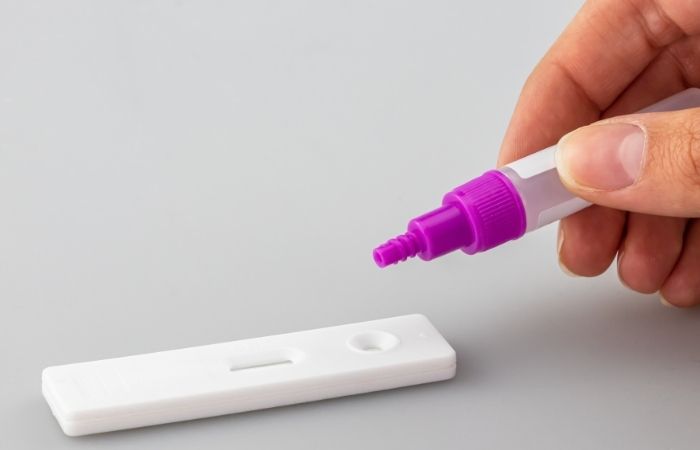
This is where home testing for chlamydia naturally fits into the process. You don’t have to sit around for weeks wondering if you have it. You don’t have to schedule multiple doctor’s appointments. You simply take a test early on for a quick check and then take another test at the optimal time for results.
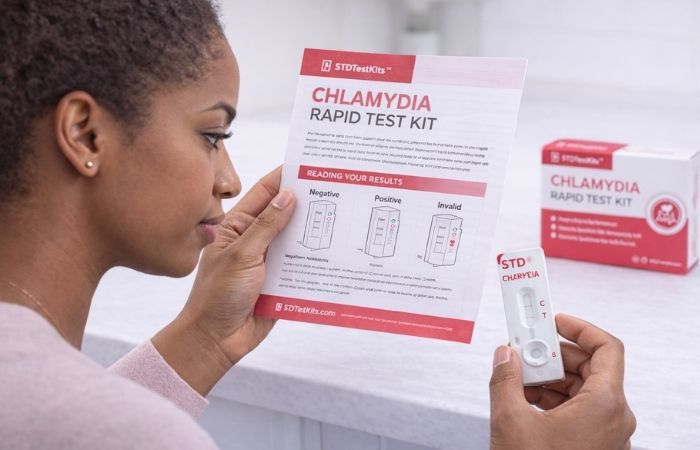
If you’re in that stage of life where you’re thinking, “I just want to know,” then using a reliable home test kit for chlamydia, such as a chlamydia rapid test kit, would be a good way for you to get the answers you need without having to drag this process out.
If you’re interested in learning more about the various types of home STD test kits, including combination test kits, then you should check out STD Test Kits. It’s not about rushing through this process. It’s about getting the answers you need within a timeframe that actually makes sense.
If You Tested Too Early: What to Do Next (Without Spiraling)
Let’s say you already tested. Maybe it was the next day. Maybe it was day 3. The result came back negative, but now you’re questioning it.
This happens all the time. And it doesn’t mean you did anything wrong, it just means you tested during the window where detection isn’t reliable yet.
The next step is simple, even if your brain wants to complicate it. Set a retest date. If your first test was before day 7, test again at day 14. That second result is the one that actually answers the question.
There’s a moment where people get stuck refreshing symptoms, overanalyzing every sensation, replaying the encounter. None of that gives you clarity. A properly timed test does.
If symptoms show up or worsen at any point, burning, unusual discharge, pelvic discomfort, it’s safer to get checked in person rather than waiting it out. But if you feel fine, your timeline still holds. Test, then confirm.
When to Retest (Even If Your First Result Was Negative)
Even with a negative result, there are situations where retesting makes sense. This isn’t about paranoia, it’s about accuracy.
If your first test was before 10 days, retesting at 14 days is the safest move. If you had ongoing exposure (for example, continued sex with the same partner), testing again after your last encounter is important.
According to public health guidance from sources like the CDC and WHO, retesting is a standard part of sexual health, not a sign that something went wrong. It’s simply how you close the loop.
You don’t need to test endlessly. You just need to test at the right time. Once you do that, the uncertainty stops.
What Happens If You Test Positive (And Why It’s Not the Disaster You Think)
Seeing a positive result for chlamydia can feel like your stomach drops for a second. That reaction is normal. But here’s the reality that often gets lost in that moment: this is one of the most common and manageable STDs out there.
According to the CDC, millions of new cases happen every year. Most people who test positive get treated quickly and move on without long-term issues. The key is knowing, not guessing.
The next step after a positive test is straightforward. You confirm the result if needed, then connect with a healthcare provider for treatment. No complicated process. No long-term mystery. Just a clear plan.
There’s often a quiet shift that happens here. The anxiety before testing, the unknown, is usually worse than the actual diagnosis. Once you know, you’re back in control.
How Soon Do Chlamydia Symptoms Show Up (If They Show Up at All)?
This is one of the biggest disconnects people have. They expect symptoms to guide them. But with chlamydia, symptoms are inconsistent and often delayed, or completely absent.
When symptoms do appear, they typically show up between 1 to 3 weeks after exposure. That timing overlaps with the testing window, which is why people sometimes confuse symptoms with confirmation. But symptoms alone don’t tell you anything definitive.
You might notice subtle changes. Mild burning when urinating. Slight discharge. Pelvic discomfort. Or nothing at all. And that last one, no symptoms, is incredibly common. The NHS emphasizes that many infections go unnoticed without testing.
That’s why timing your test matters more than waiting for your body to “tell you something.” In this case, silence doesn’t mean safety.
Can You Have Chlamydia Without Symptoms? Yes, and That’s Why Timing Matters
Here’s the part most people don’t expect. You can feel completely normal and still have chlamydia. No warning signs. No obvious changes. Nothing that pushes you to get checked.
This is exactly why testing guidelines don’t rely on symptoms. Public health organizations like the WHO stress routine testing based on exposure risk, not how you feel.
It’s also why early testing mistakes happen. Someone feels fine, tests at day 3 or 4, gets a negative result, and assumes everything is clear. But the infection simply wasn’t detectable yet.
So the rule stays the same, even if you feel completely normal: Wait at least 7 days to test. Trust results at 14 days. Retest if timing was early.
It’s simple, but it works.
Talking to a Partner After Possible Exposure (Without Making It Worse)
This is usually the part people avoid thinking about. Not the test itself, but the conversation that might come after it.
If you’re waiting to test or you’ve tested positive, you might feel stuck between saying nothing and saying too much. But here’s the reality: this doesn’t need to be dramatic or confrontational.
You don’t need a perfect script. You just need clarity. Something as direct as, “Hey, I’m getting tested for chlamydia because of a recent situation, I think it’s best if you test too,” is enough. No accusations. No assumptions.
Most people respond better than expected when the message is calm and factual. And from a public health standpoint, this is how infections stop spreading, through simple, honest communication.
It might feel uncomfortable for a few minutes. But avoiding the conversation usually stretches that discomfort out much longer.
What Happens If You Wait Too Long to Test?
However, some people are going the other way. Instead of testing too early, they are waiting weeks or months, hoping that their concern will simply go away on its own.
The trouble is, chlamydia does not always go away on its own. In some instances, it can linger, causing problems down the line, such as pelvic inflammatory diseases or reproductive health issues.
According to the Mayo Clinic, “if an STI is not treated, it can cause problems over time, especially if it's not noticed because it doesn't cause symptoms.”
This is not meant to frighten or alarm. It is meant to illustrate that, while testing too early is an issue, waiting too long is another. The solution, or middle ground, is the right time.
The Real Goal: Getting Out of the “What If” Loop
Most people don’t realize this at first, but the hardest part of a potential STD exposure isn’t the test. It’s the waiting and the guessing.
You replay the moment. You check symptoms. You search timelines. You try to calculate risk based on fragments of information. And none of it actually gives you an answer.
Testing does.
When you follow the correct timeline, 7 days minimum, 14 days for reliable results, you remove the uncertainty. You stop relying on guesswork and start working with facts.
If your brain keeps looping back to “what if,” that’s your signal. Not to panic. Just to test at the right time and close the question for good.
People are also reading:
FAQs
- 1. Can I test for Chlamydia the next day after having sex?
- No, it’s not advisable to test for Chlamydia the next day after having sex because it takes more than a day for Chlamydia to build up in your system enough to be detectable on a test. You have to wait at least 7 days or 14 days to test for Chlamydia.
- 2. Is it enough to test for Chlamydia after 7 days?
- Yes, it’s enough time to test for Chlamydia after 7 days because this is when Chlamydia in your system starts to become detectable on a test. However, it’s not entirely accurate because it’s not yet 2 weeks after having sex.
- 3. Can Chlamydia show up on a test in 3 days?
- Yes, it’s in your system in 3 days, but it’s not yet detectable on a test. This is why it’s not accurate to test for Chlamydia in 3 days because it’s not yet detectable on a test. Testing in 3 days will likely give a false-negative result.
- 4. What is the most accurate time to test for Chlamydia?
- The most accurate time to test for Chlamydia is 2 weeks after having sex because this is when Chlamydia in your system is detectable on a test using NAAT (PCR) test.
- 5. If I test negative early on, am I safe?
- Not necessarily. A negative result does not necessarily mean you are not infected, especially if it is prior to 7 to 10 days. It is best to retest in 14 days to be sure, especially if there has been a clear exposure risk.
- 6. Do I need to be experiencing symptoms to be tested for Chlamydia?
- No, and most people don’t experience any symptoms. It is possible to be perfectly fine and still be positive. It is not about how you feel; it is about when you were exposed.
- 7. Can at-home tests detect Chlamydia correctly?
- Yes, they can, especially when done at the right time. At-home tests are just as accurate as going to a clinic. The only thing to be aware of is timing, as this will always affect the accuracy of the results, regardless of whether you go to a clinic or not.
- 8. Do I need to be retested if my results come back negative?
- Yes, especially if you got tested prior to 10 days. It is best to retest in 14 days to be sure. This way, you are outside the window period, and the results will be accurate.
- 9. How long does Chlamydia go unnoticed?
- It can go unnoticed for weeks or months, especially since most people don’t experience any symptoms. This is exactly why it is best to be tested for Chlamydia, especially when exposed.
- 10. What should I do if I’m still concerned about having Chlamydia?
- If you got tested at the right time and got a negative result, you can be assured. However, if you are still experiencing some concerns and are experiencing some symptoms, it is best to be tested in person.
You Don’t Need to Guess, Just Time It Right
This whole situation usually comes down to one thing: timing. Not overthinking symptoms. Not replaying the moment. Just knowing when a test will actually give you a real answer.
If it’s been less than a week, give it a few more days. If you’re at the 7-day mark, you can test, but confirm at 14 days. And if you’ve already passed two weeks, you’re in the clear zone for reliable results.
If your brain keeps looping back to uncertainty, the fastest way out isn’t more Googling, it’s testing at the right time. You can start with a discreet option like this at-home chlamydia test kit, or explore broader options through STD Rapid Test Kits to get clarity without the waiting room stress.
You don’t need to panic. You just need a plan, and now you have one.
Our article was constructed based on current advice from the most prominent public health and medical organizations, and then molded into simple language based on the situations that people actually experience, such as treatment, reinfection by a partner, no-symptom exposure, and the uncomfortable question of whether it “came back.” In the background, our pool of research included more diverse public health advice, clinical advice, and medical references, but the following are the most pertinent and useful for readers who want to verify our claims for themselves.