Is It Safe to Test for Trichomoniasis at Home During Pregnancy? What You Need to Know
You're pregnant, you've noticed something different about your discharge, and your first instinct is to Google it. That instinct is correct, and you're not overreacting.
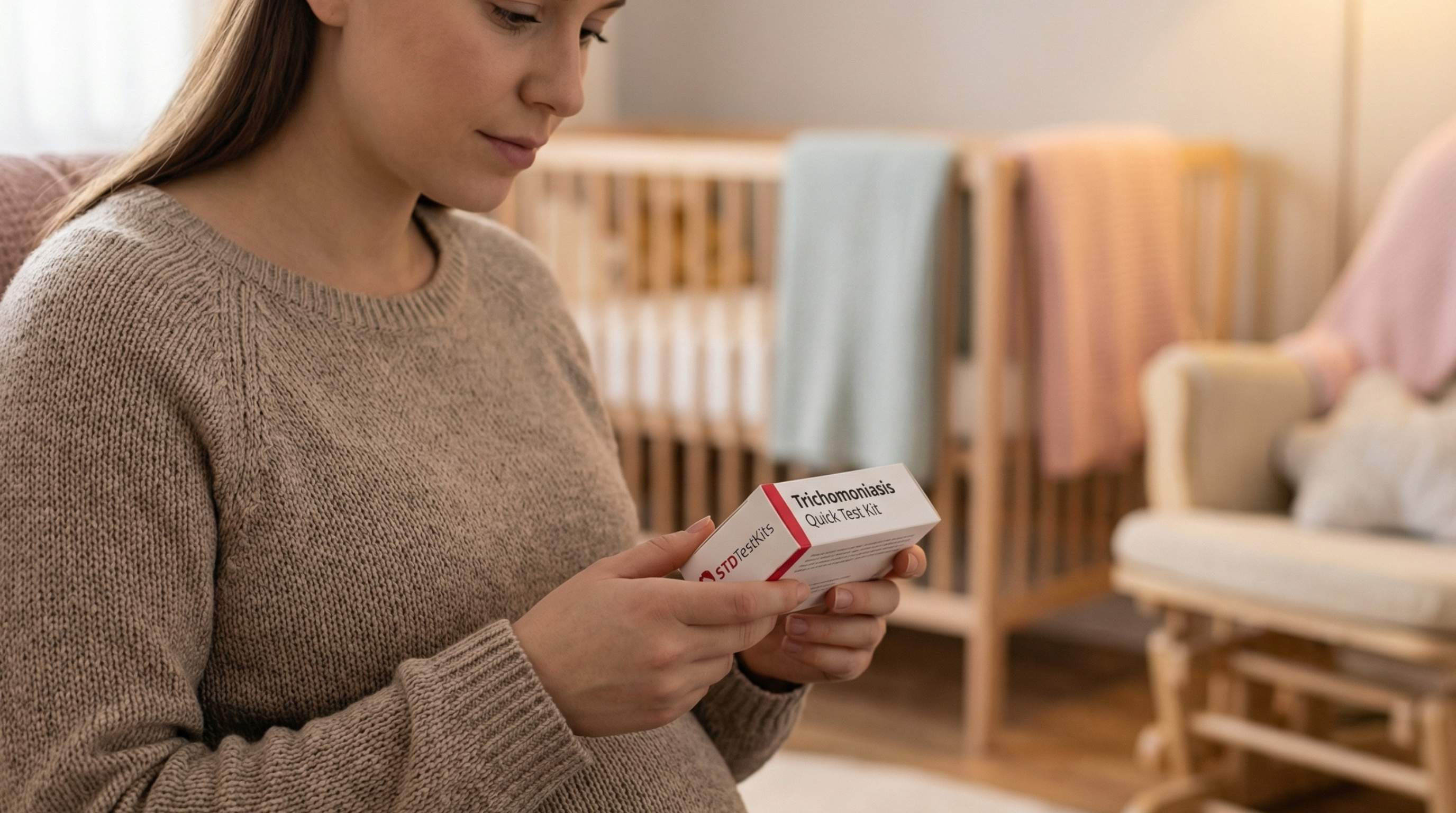
You're pregnant, you've noticed something different about your discharge, and your first instinct is to Google it. That instinct is correct, and you're not overreacting. Trichomoniasis is the most common curable sexually transmitted infection in the United States, affecting more than two million women annually, and the majority of people who have it don't know. During pregnancy, that silent infection carries consequences that go well beyond discomfort. The good news is that testing at home is safe, accurate, and gives you the information you need to act fast.
Yes, you can safely use an at-home trichomoniasis rapid test during pregnancy. The test requires a simple vaginal swab that you collect yourself; it poses no risk to your pregnancy, and results arrive in minutes. What you do with a positive result is what matters most, and that means contacting your OB or midwife promptly so treatment can be arranged.

What Trichomoniasis Actually Does During Pregnancy
Trichomoniasis, caused by the parasite Trichomonas vaginalis, earns its reputation as a "neglected STI" because most people with it feel nothing at all. Around 70% of infections are entirely asymptomatic. During pregnancy, that silence is exactly what makes it dangerous. An infection you can't feel can still be causing harm.
According to CDC STI treatment guidelines, trichomoniasis during pregnancy is associated with a 1.4-times greater likelihood of preterm birth, premature rupture of membranes, and infants who are small for gestational age. A systematic review published in peer-reviewed literature found that these risks are consistent across multiple studies; preterm delivery, low birth weight, and membrane rupture all appear at elevated rates in pregnant women with untreated trichomoniasis. That's not a marginal risk. For a condition that is completely curable, those are outcomes worth preventing.
The mechanism is inflammation. The Trichomonas parasite triggers an immune response in vaginal tissue, and that inflammatory cascade can reach the uterine environment. Inflammatory signaling that disrupts cervical integrity is one of the proposed pathways to preterm labor, which is why researchers and clinicians have increasingly argued that trichomoniasis in pregnancy deserves far more attention than it currently receives. Some researchers have argued it should be a reportable disease specifically to improve screening rates in pregnant women.
There's also the rare but real possibility of vertical transmission, passing the infection to the newborn during delivery. Neonatal trichomoniasis can cause urinary tract infections and vaginal irritation in infants, and in very rare cases has been associated with pulmonary complications. Treatment during pregnancy can reduce this risk. None of this is meant to generate panic, it's meant to make clear that trichomoniasis in pregnancy is a problem with a straightforward solution, and that solution starts with knowing whether you have it.
How to Recognize Trichomoniasis Symptoms During Pregnancy
Here's the challenge with trich during pregnancy: its symptoms overlap almost perfectly with things that commonly happen in normal pregnancy. Increased vaginal discharge is extremely common when pregnant. Odor changes happen. Mild irritation happens. This is exactly why so many cases go undetected, and why at-home testing matters more than symptom-watching.
When trichomoniasis does produce symptoms, the most common are a thin, frothy discharge that may be white, yellow, green, or gray, often with a distinctly fishy or musty odor. Vaginal itching, burning, and redness are common. Painful urination or discomfort during sex can also occur. Some women describe a general sense of pelvic heaviness or irritation that doesn't quite match what they'd expect from normal pregnancy changes.
Picture being 18 weeks pregnant, attributing a new discharge to hormones, and assuming it'll pass. For a lot of women, that's exactly what happens, and trichomoniasis continues silently for weeks or months while the pregnancy progresses. The only way to distinguish trich from the normal vaginal changes of pregnancy is a test. Discharge alone tells you nothing.
| Feature | Normal Pregnancy Discharge | Possible Trichomoniasis |
|---|---|---|
| Color | Clear to white | Yellow, green, gray, or frothy white |
| Odor | Mild or none | Fishy, musty, or strong |
| Texture | Smooth, milky | Thin, frothy, or bubbly |
| Itching or burning | Rare | Common |
| Painful urination | Rare (may be UTI) | Possible |
| No symptoms at all | Normal | ~70% of trich cases |
The symptom overlap with bacterial vaginosis (BV) is also significant. Both trich and BV produce discharge with an odor, and both are common during pregnancy. They require different treatments, which is another reason why testing rather than assuming is the right approach. If you've been told you have recurrent BV but it keeps coming back, it's worth testing specifically for trichomoniasis; the two are frequently confused.
If you want to learn more about trichomoniasis symtomps in pregnancy and how to treat it, make sure to read our guide: Trichomoniasis During Pregnancy: Risks, Symptoms, Testing, and Treatment
Is At-Home Trichomoniasis Testing Safe During Pregnancy?
This is the core question, and the answer is clearly yes. At-home trichomoniasis rapid tests work via a vaginal swab that you insert gently just inside the vaginal opening, similar to a tampon. There is no internal pelvic examination, no instrument insertion, and nothing that carries any risk to the pregnancy. The swab collects a small sample of vaginal secretions, which is then applied to the test device. Results appear within minutes.
The test itself has no pharmacological effect; it detects the presence of the Trichomonas vaginalis antigen in your sample. Nothing enters your bloodstream, nothing affects the uterus or cervix, and there is no mechanism by which the swab collection process could harm a developing baby. If you've used an at-home ovulation test or pregnancy test before, the process is comparably low-stakes.
What matters is what you do with the result. A positive rapid test during pregnancy is a signal to contact your OB, midwife, or healthcare provider the same day, not to wait and see. A positive result means trichomoniasis is very likely present, and treatment is safe and effective during all stages of pregnancy. A negative result is reassuring, but if your symptoms persist or your instinct tells you something is wrong, retesting or following up clinically is always the right call.
The Trichomoniasis At-Home STD Test Kit from STD Test Kits offers 98%+ accuracy and delivers results in minutes from a self-collected vaginal swab. It ships in discreet packaging, requires no clinic visit, and gives you the information you need to take the next step, whether that's a reassuring negative or a positive that sends you straight to your provider.
The Testing Window: When to Test During Pregnancy
Unlike HIV or syphilis, which require weeks to produce detectable antibodies, trichomoniasis is detected by identifying the parasite or its antigens directly, which means there's no lengthy waiting period before you can test. Rapid antigen tests for trichomoniasis are most reliably used from approximately 5 to 28 days after a known exposure, that window reflects the parasite's typical incubation period, after which an active infection is consistently detectable. But that window applies specifically to recent exposures, not to existing infections.
If you don't have a specific recent exposure to track, which is the situation for most pregnant women testing out of general concern, you can test at any point. Trichomoniasis can persist silently for months or years, and the rapid antigen test detects the parasite whether the infection is two weeks old or two years old. You're not racing a clock. If the infection is present, the test will find it. The only reason to wait is if a potential exposure was within the last week, in which case testing at the 7-day mark gives the most reliable result.
| Infection | Test From | Notes |
|---|---|---|
| Trichomoniasis | 5–28 days after exposure | Detects active parasite; test at any time if no known exposure date |
| Chlamydia | 14 days after exposure | Often asymptomatic; screened routinely in pregnancy |
| Gonorrhea | 3 weeks after exposure | Can cause preterm labor if untreated |
| Syphilis | 6 weeks after exposure | Mandatory screen in most US prenatal care |
| HIV | 6 weeks (first indicator); retest at 12 weeks for certainty | Screened at first prenatal visit; retest in third trimester if at risk |
| Hepatitis B | 6 weeks after exposure | Routine prenatal screen; vaccination available for partners |
| Hepatitis C | 8–11 weeks after exposure | CDC recommends universal screening in pregnancy |
One important point on timing within pregnancy: the CDC guidelines note that symptomatic pregnant women should be tested and treated regardless of pregnancy stage. If you have symptoms, discharge, odor, itching, don't wait for a specific trimester window.
Test now. If you're asymptomatic and considering routine screening, any point in pregnancy is appropriate, though the earlier the better, since treating trichomoniasis in the first or second trimester gives more time to reduce inflammation-related risks before delivery.
For more information on this topic, Trichomoniasis During Pregnancy: Risks, Symptoms, Testing, and Treatment
What a Positive Result Means, and What Happens Next
A positive at-home trichomoniasis test during pregnancy is not a crisis, but it does require prompt action. Contact your OB, midwife, or healthcare provider the same day. They'll confirm the result through clinical testing if needed and arrange treatment, which is both safe and effective at every stage of pregnancy.
Treatment for trichomoniasis during pregnancy is antibiotic-based. The safety profile of the medication used is well established in pregnancy, decades of data support its use across all trimesters, and large-scale meta-analyses have not found it to be associated with birth defects. Symptomatic pregnant women are always treated; your provider will counsel you on the specific benefits and timing based on your stage of pregnancy.
One thing worth flagging: reinfection rates for trichomoniasis are high, about 1 in 5 people are reinfected within three months of treatment, usually because a partner was not treated at the same time. During pregnancy, partner treatment is not optional. If your partner isn't treated simultaneously, you will almost certainly test positive again before delivery. The CDC recommends retesting three months after completing treatment to confirm clearance, which, during pregnancy, means scheduling that follow-up test as part of your prenatal care.
One scenario worth knowing about: if symptoms persist or return after treatment, it doesn't always mean reinfection from a partner. Antibiotic resistance in Trichomonas vaginalis is a documented and growing clinical concern. A small percentage of cases don't clear with standard treatment, and a persistent positive result after completing a full course warrants a follow-up conversation with your provider, not a second round of the same approach. Your provider can assess whether a different treatment regimen or a referral to a specialist is appropriate. During pregnancy, flagging a failed treatment response promptly matters because untreated trich continues to carry preterm birth risk regardless of how many times you've already been treated.
A negative result provides real reassurance, but only if your symptoms are absent or mild. If you have significant discharge, odor, or irritation and your rapid test is negative, it's worth following up with your provider. Rapid antigen tests are highly accurate for active infections, but clinical laboratory testing using NAAT (nucleic acid amplification testing) is the gold standard and may detect cases that rapid tests miss in early or very low-level infections. Trust the negative result in most situations, and use your clinical judgment when symptoms persist.
Why Trichomoniasis Gets Missed So Often in Pregnancy
Trichomoniasis has a visibility problem. Unlike chlamydia, gonorrhea, syphilis, HIV, and hepatitis B, all of which are standard components of routine prenatal STI screening in the US, trichomoniasis is not universally screened for during pregnancy. The CDC notes that the benefit of routine screening for asymptomatic pregnant women has not yet been definitively established, which is why many prenatal care protocols don't include it automatically.
That gap has real consequences. An infection affecting more than two million American women annually, carrying documented risks of preterm birth and low birth weight, is routinely missed in prenatal care because it doesn't appear on the standard screening panel. Researchers have explicitly called for trichomoniasis to become a reportable disease, partly to generate the data needed to establish whether universal prenatal screening would reduce adverse outcomes. As of now, the decision to screen is left to individual providers and patients.
This is where at-home testing steps in. If your prenatal provider hasn't mentioned trichomoniasis screening, that's not unusual; it's a gap in the system, not negligence. Taking the initiative to test yourself puts the decision back in your hands. A quick swab at home, a result in minutes, and a clear picture of whether you need to bring it to your provider's attention. That's exactly how accessible testing is supposed to work.
The symptom overlap with normal pregnancy changes and with bacterial vaginosis also contributes to missed diagnoses. A provider who sees fishy-smelling discharge in a pregnant patient may correctly diagnose BV and treat it, without testing for trich. If the trich remains, symptoms may briefly improve or persist in a modified form, and the underlying infection continues. Testing specifically for trichomoniasis, rather than assuming all discharge-related symptoms have the same cause, is the only way to be certain.
Curious about whether or not a baby can get trich during birth? We go in detail about that here.
At-Home Testing as Part of Your Prenatal Routine
Prenatal care involves a lot of waiting, waiting for appointments, waiting for lab results, waiting for callbacks. For something as time-sensitive as an STI during pregnancy, waiting isn't always the right approach. At-home trichomoniasis testing gives you an immediate answer, on your timeline, without needing to schedule an appointment or explain your symptoms over the phone to a nurse who will tell you to come in next week.
If you're in the first trimester and want to establish a baseline before symptoms appear, test now. If you're in the second trimester and noticed a discharge change last week, test today. If you're approaching the third trimester and want reassurance before delivery, test. The kit is the same at every stage, the result is equally valid, and what you do with a positive is the same regardless of when in pregnancy you find it: contact your provider promptly.
For pregnant women who want to cover more than one infection at once, which is reasonable, since trich rarely travels alone, the Women's 10-in-1 At-Home STD Test Kit screens for trichomoniasis alongside HIV, chlamydia, gonorrhea, syphilis, herpes HSV-1 and HSV-2, hepatitis B, hepatitis C, and HPV. It's the most comprehensive option for a pregnant woman who wants a full picture of her sexual health without multiple clinic visits. The Essential 6-in-1 At-Home STD Test Kit is a strong option if you want core coverage including HSV-1, HIV, chlamydia, syphilis, and hepatitis B and C.
Testing at home doesn't replace your prenatal care; it supplements it. Use the results to have a more informed conversation with your provider, to confirm that an infection isn't present, or to flag one that needs treatment before it becomes a bigger problem. That's what proactive health management looks like during pregnancy.
FAQs
- 1. Can trichomoniasis harm my baby during pregnancy?
- Untreated trichomoniasis during pregnancy is linked to preterm birth, low birth weight, and premature rupture of membranes, all of which carry risks for the baby. The good news is that trichomoniasis is completely curable, and treatment during pregnancy is safe at any stage. The key is catching it early enough to treat before delivery.
- 2. Is a vaginal swab test safe to use during pregnancy?
- Yes. The swab for an at-home trichomoniasis test is collected just inside the vaginal opening and requires no internal examination or instrument insertion. It poses no risk to the pregnancy, the baby, or the placenta. It's comparable in invasiveness to inserting a tampon.
- 3. How soon after potential exposure can I test for trichomoniasis during pregnancy?
- Trichomoniasis rapid tests detect the active parasite, so testing is most reliable from about 5 to 28 days after exposure, corresponding to the typical incubation window. If you don't have a specific exposure event and are testing for a current infection, you can test at any point, regardless of timing.
- 4. What should I do if my at-home trichomoniasis test is positive while pregnant?
- Contact your OB, midwife, or healthcare provider the same day. A positive rapid test during pregnancy requires prompt follow-up because trichomoniasis is linked to preterm birth if untreated. Treatment is safe at all stages of pregnancy, and your provider will arrange it alongside testing your partner to prevent reinfection.
- 5. Does my partner need to be treated if I test positive during pregnancy?
- Yes, and this is non-negotiable during pregnancy. Trichomoniasis has a reinfection rate of about 20% within three months when partners aren't treated simultaneously. If your partner isn't treated at the same time as you, you're very likely to be reinfected before you deliver.
- 6. Can trichomoniasis be passed to my baby during delivery?
- Vertical transmission during delivery is rare but documented. Neonatal trichomoniasis can cause urinary tract infections and vaginal irritation in newborns, and in rare cases has been associated with respiratory complications. Treating the infection before delivery significantly reduces this risk.
- 7. Will trichomoniasis show up on my routine prenatal STI panel?
- Not necessarily. Trichomoniasis is not part of universal prenatal screening in the US, unlike syphilis, HIV, and hepatitis B, which are standard. Many pregnant women are never tested for trich during prenatal care. That's a gap in the system, and at-home testing is a practical way to fill it.
- 8. Is it possible to have trichomoniasis with no symptoms during pregnancy?
- Yes, around 70% of trichomoniasis infections are asymptomatic. This is precisely why symptoms alone are not a reliable indicator, and why testing is the only way to know for certain whether the infection is present.
- 9. Can I confuse trichomoniasis symptoms with normal pregnancy discharge?
- Very easily. Normal pregnancy discharge is typically clear to white, odorless or mildly scented, and smooth in texture. Trichomoniasis discharge tends to be frothy, yellow-green, or gray, and has a fishy or strong odor. But because both can appear at the same time, and because trich is often asymptomatic anyway, testing rather than symptom assessment is always more reliable.
- 10. How accurate is an at-home trichomoniasis rapid test during pregnancy?
- Rapid antigen tests for trichomoniasis are highly accurate; the test available at STD Test Kits offers 98%+ accuracy. Clinical NAAT testing is the gold standard and may catch very low-level infections that rapid tests could miss, which is why a positive rapid test should always be followed up clinically, and why persistent symptoms despite a negative rapid test also warrant clinical follow-up.
Test at Home, Then Act, Here's Where to Start
Trichomoniasis during pregnancy is common, frequently silent, and completely fixable, but only if you know it's there. An at-home test takes minutes, carries no risk to your pregnancy, and gives you information your prenatal care may not have provided.
The Trichomoniasis At-Home STD Test Kit delivers 98%+ accuracy from a simple self-collected vaginal swab, with results in minutes. Discreet shipping, no clinic required, and a clear result you can act on the same day. For pregnant women who want comprehensive coverage, because peace of mind during pregnancy means knowing about more than one infection, the Women's 10-in-1 At-Home STD Test Kit screens for trichomoniasis plus nine other infections in a single kit.
Testing during pregnancy isn't alarmism. It's the same logic that drives every blood draw, every ultrasound, every routine check: information protects you and your baby. Visit STD Test Kits and take the next step from a position of knowledge.
Our article was constructed based on current advice from the most prominent public health and medical organizations, and then molded into simple language based on the situations that people actually experience, such as treatment, reinfection by a partner, no-symptom exposure, and the uncomfortable question of whether it "came back." In the background, our pool of research included more diverse public health advice, clinical advice, and medical references, but the following are the most pertinent and useful for readers who want to verify our claims for themselves.