It's Been 1 Day Since Sex. Could My Partner Have Given Me an STD?
You woke up this morning, and the thing you can't shake isn't a symptom. It's a memory. Maybe you had no protection, and the person was a stranger and the math of that is just now landing.

You woke up this morning, and the thing you can't shake isn't a symptom. It's a memory. Maybe your partner had something that looked unusual, a bump, a sore, a discharge you clocked but didn't say anything about in the moment. Maybe they seemed evasive when you asked about their sexual history, or you didn't ask at all because it felt awkward, and now you wish you had. Maybe you had no protection, and the person was a stranger and the math of that is just now landing. Whatever the specific version of your situation, the anxiety is real, and it deserves a real answer, not a generic reassurance that it'll probably be fine.
Here's the short version: you cannot get a reliable STD test result 1 day after sex, biology doesn't move that fast, but that does not mean you're in the clear. What it means is that you have a testing window to plan for, specific infections to test for based on what happened, and a concrete date to put in your calendar right now. This article gives you all of that, plus an honest read on what the signs you may have noticed during sex actually mean, and what your real transmission risk looks like.

Can You Test for STDs 1 Day After Sex?
No, not reliably. Testing 1 day after a potential exposure will not give you a meaningful result for any common STD. This isn't a flaw in the tests; it's biology. For a test to detect an infection, the pathogen needs time to replicate inside your body to a level the test can actually pick up. At 24 hours, that replication hasn't happened yet, even if transmission did occur. A negative result right now is not reassurance; it's a gap in information that could give you false confidence at exactly the wrong moment.
The earliest reliable testing window for any common STD is 14 days, and that's only for chlamydia. Most infections require 3 to 6 weeks or longer before a test result can be trusted. According to the CDC, many STIs produce no symptoms at all, which is exactly why the testing window matters so much more than watching for signs that may never appear. The right move at 24 hours isn't to test, it's to know when to test and commit to that date. Testing too soon is one of the most common mistakes people make after a risky encounter; it's worth understanding what a premature gonorrhea test actually tells you, which is less than most people think.
| Infection | Test From | Notes |
|---|---|---|
| Chlamydia | 14 days after exposure | Most people have no symptoms; testing is the only way to know |
| Gonorrhea | 3 weeks after exposure | Can cause discharge or burning but often silent |
| Syphilis | 6 weeks after exposure | Initial sore may be painless and go unnoticed |
| HIV | 6 weeks (first indicator); retest at 12 weeks for certainty | Seroconversion illness appears 2–4 weeks after exposure in ~60% of people |
| Herpes HSV-1 & HSV-2 | 6 weeks after exposure | Transmission can occur without visible sores |
| Hepatitis B | 6 weeks after exposure | Vaccine-preventable; check your vaccination status |
| Hepatitis C | 8–11 weeks after exposure | Often silent for years; sexual transmission risk is lower but real |
What you can do right now is assess your actual exposure risk. Not every sexual encounter with someone who has an STD results in transmission; the biology of how each infection spreads matters enormously, and so does the type of sex, whether protection was used, and where in their infection cycle your partner may have been. None of that removes the need to test at the right time. But it does mean the 24-hour spiral almost always involves much worse odds than reality.
What Does It Mean If You Notice Something on Your Partner During Sex?
The reason you're reading this article isn't random. Something during that encounter planted a seed, something you saw, felt, smelled, or something that just didn't feel right in a way you couldn't fully articulate in the moment. This section gives you a clear-eyed framework for what visible or sensory signs during sex can and can't tell you about a partner's STD status.
The uncomfortable truth is that most STDs are invisible most of the time. Chlamydia, the most commonly reported STI in the United States, with over a million new cases annually, even in years where rates are declining, produces no symptoms in the majority of people who carry it. Your partner could have a fully active chlamydia infection and look, smell, and feel completely normal. The same is true for gonorrhea in many cases, for herpes between outbreaks, and for HIV throughout most of its chronic phase. Looking for signs is not a reliable screening method. But some signs do carry meaningful weight.
Sores or ulcers on the genitals, mouth, or inner thighs are the most significant thing to have noticed. A painless, crater-like sore on or near the genitals is the classic presentation of early syphilis, and painless means it's easy to miss or dismiss. A cluster of small blisters or raw-looking sores, especially if your partner seemed aware of a sensitive area or flinched from contact there, is consistent with an active herpes outbreak. These two infections look similar enough that even experienced clinicians can't always tell them apart visually, the full breakdown of how syphilis and herpes sores differ is worth reading if you notice something and aren't sure which you're dealing with. Noticing either during sex is a real signal: test at the appropriate window and consider speaking with a healthcare provider about your specific exposure. Rough, cauliflower-textured patches of skin near the genitals can indicate HPV. These won't show up on a standard STD panel, but HPV is extremely common and clears on its own in most cases.
| What You Noticed | Most Likely Explanation | STD Concern Level |
|---|---|---|
| Painless ulcer or crater-like sore | Possible syphilis chancre | High, test at 6 weeks |
| Cluster of small blisters or raw sores | Possible herpes outbreak | High, test at 6 weeks |
| Rough, wart-like skin patches | Possible HPV/genital warts | Moderate, HPV not on standard panels |
| Yellow or green discharge | Possible gonorrhea or chlamydia | High, test at 2–3 weeks |
| Strong unpleasant odor | BV, trichomoniasis, or hygiene | Low-moderate, test if concerned |
| Nothing unusual noticed | No additional information either way | Assess based on protection and circumstances |
Unusual discharge is another signal worth factoring in. Thick, yellow, or green discharge from a partner's penis or vagina during sex can indicate gonorrhea or chlamydia. A strong fishy odor may suggest bacterial vaginosis or trichomoniasis; neither is a serious viral threat, but both signal that something is off. Clear or lightly cloudy discharge during sex is usually normal. Visibly colored, pus-like, or particularly odorous discharge is worth noting as context for your testing decision.
If you didn't notice anything specific, the encounter seemed visually unremarkable, but you're worried because of the circumstances. That's the most common version of this situation, and also the least informative. An unremarkable visual does not mean your partner was clean. It means you don't have additional information beyond the risk factors of the encounter itself: protection used or not, type of sex, and how well you know this person's sexual history.
What Are the Chances of Getting an STD From One Encounter?
STD transmission is probabilistic, not guaranteed. Even unprotected sex with someone who has a confirmed STD does not mean transmission happened. The actual odds depend on the specific infection, the type of sexual activity, whether either partner had other factors that increase transmission, like cuts, sores, or existing inflammation, and where in their infection cycle your partner may have been. Understanding this doesn't eliminate the need to test, but it does mean that spending the next several weeks in full panic mode is rarely proportionate to the actual risk.
Gonorrhea and chlamydia are among the most efficiently transmitted bacterial STIs. A single unprotected vaginal or anal sex act with an infected partner carries meaningful per-encounter risk. Research published in Sexually Transmitted Diseases estimates that gonorrhea transmits at roughly 20–30% per act from male to female genitally, with higher rates in the reverse direction. Chlamydia transmits at somewhat lower per-act rates, but is so prevalent, the CDC's 2024 provisional data recorded over 1.5 million reported cases in the US alone, that exposure is common. Both are curable with treatment. Knowing you have them is the entire battle.
Herpes (HSV-1 and HSV-2) transmits through skin-to-skin contact and can occur even without visible sores, through a process called asymptomatic viral shedding. Per-act transmission rates without a condom are considerably lower than most people fear. If your partner had a visible outbreak during sex, however, the risk is meaningfully higher. HIV transmission risk from a single act of unprotected vaginal sex is estimated at under 0.1% per act for the receptive partner, real but low per encounter. Anal sex carries substantially higher per-act transmission risk across multiple infections.
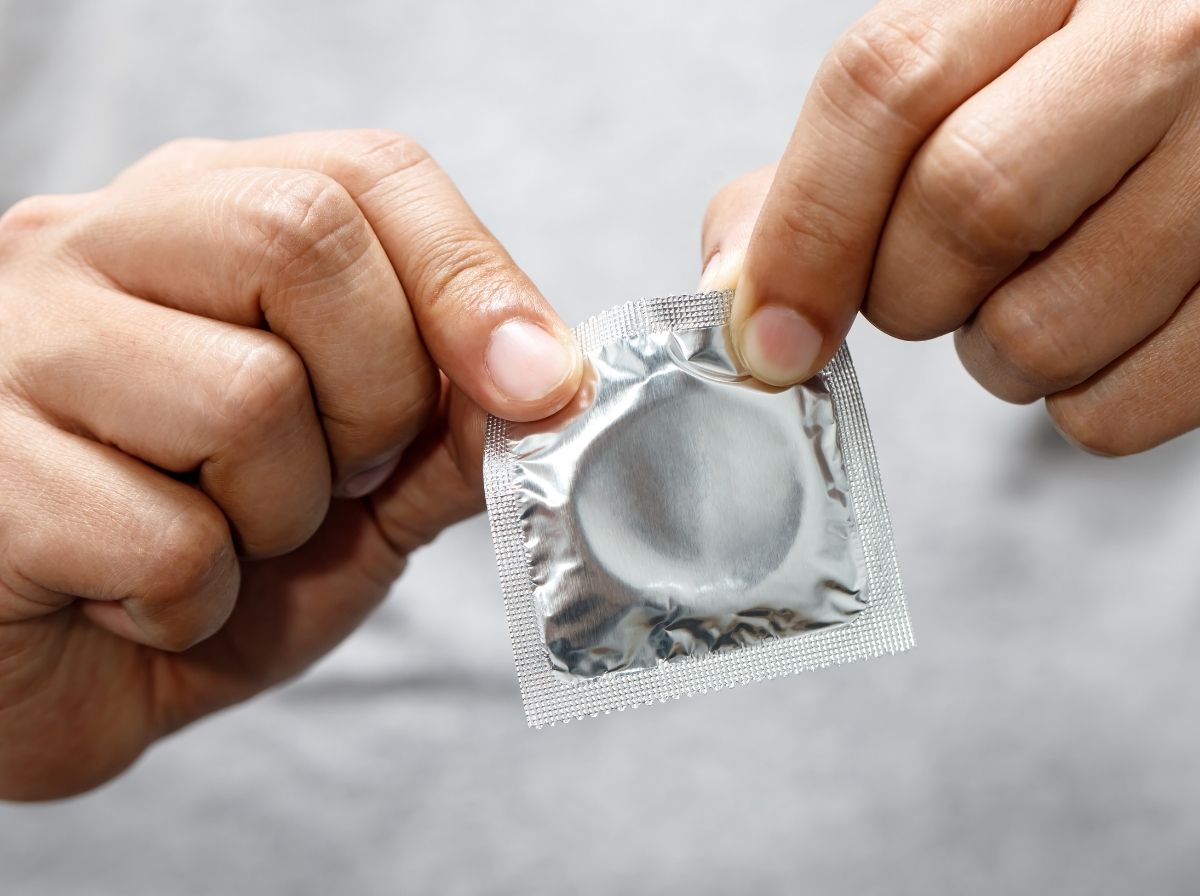
Condom use reduces transmission risk significantly for all of the above, though not to zero, especially for skin-contact infections like herpes and syphilis, where transmission can occur in areas a condom doesn't cover. This is a point that genuinely surprises people: condom use and zero STD risk are not the same thing, and understanding where the gaps are helps you make a more accurate assessment of your situation. If a condom was used correctly and didn't break or slip, your risk is considerably lower across the board. If it broke, slipped, or wasn't used, treat the encounter as unprotected for testing purposes.
Why Are You Really Worried, and Does That Change What You Do?
Here's something that almost never gets said plainly: a significant portion of the people lying awake the morning after a sexual encounter aren't worried because of something they saw. They're worried because of something they felt, emotionally. The encounter was with someone they don't know well. There was alcohol involved. They made a decision in the moment that their sober morning self is reviewing with fresh eyes. Or it was someone they've been seeing casually whose full sexual history is unknown to them. The anxiety isn't purely medical; it's a mix of genuine health concern and the emotional weight of a situation that felt riskier than they'd planned for.
This distinction matters because it changes how you manage the next few weeks. If your concern is medical, you saw something, protection failed, or you have a specific reason to believe your partner may have had an active STD, that's information you use to calibrate your testing urgency and speak to a provider if needed. If your concern is partly circumstantial, the person is a stranger, the situation felt uncomfortable in retrospect, you're second-guessing yourself, the most useful thing you can do is put a testing date in your calendar, commit to it, and try to stop the symptom-search spiral in the meantime. No amount of Googling symptoms you don't have will give you useful information at the 24-hour mark.
This isn't about minimizing your concern. It's about directing it somewhere useful. The uncertainty window between an encounter and a reliable test result is genuinely uncomfortable, and there's no shortcut through it. But making a concrete plan, knowing exactly which infections to test for, on what date, with which test, converts that free-floating anxiety into something actionable. That's the only version of this that actually works.
At-Home STD Testing After a Risky Encounter: When and What to Test
The fastest way out of the uncertainty spiral is a test result you can actually trust. The keyword is trust, which means testing at the right time, for the right infections, with a test accurate enough to mean something. Testing too early produces unreliable results. Testing at the correct window with a high-accuracy rapid test gives you a definitive answer you can act on.
What you test for should reflect what happened. A brief encounter with no protection and an unknown partner warrants a broad panel, at minimum, chlamydia, gonorrhea, syphilis, and HIV. If the encounter involved anal sex, hepatitis B and C should be on the list. If you noticed anything resembling sores or blisters on your partner, add herpes (HSV-2, or both HSV-1 and HSV-2 if oral contact was involved). If you're unsure, the safest approach is a comprehensive multi-infection panel that covers everything at once and removes the guesswork entirely.
Here is your testing calendar for today. For chlamydia, test from 14 days after exposure; it's the most reported STI in the US and produces no symptoms in roughly 70% of women and 50% of men who carry it. For gonorrhea, wait until 3 weeks after exposure. For syphilis, test from 6 weeks after exposure; the initial sore is painless and often missed, meaning your partner may not have known they had it. For HIV, test at 6 weeks for a first indicator result and retest at 12 weeks for full certainty. For herpes HSV-1 and HSV-2, test from 6 weeks after exposure. For hepatitis B, test from 6 weeks after exposure. For hepatitis C, test from 8–11 weeks after exposure.
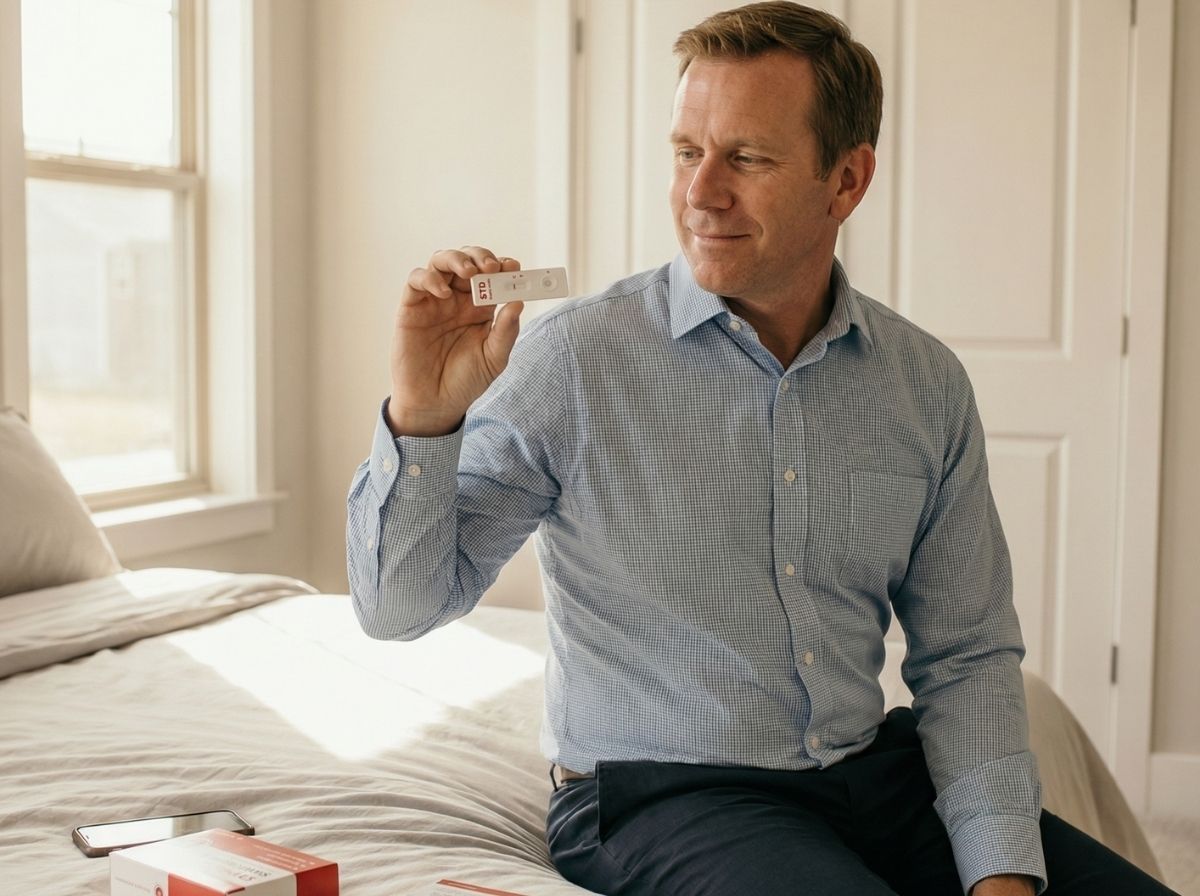
For most people in this situation, the 7-in-1 Complete At-Home STD Test Kit covers the full profile of what matters after an unprotected or uncertain encounter: HSV-2, chlamydia, gonorrhea, syphilis, HIV, hepatitis B, and hepatitis C, all in a single discreet package, with results in minutes. If oral sex was involved or HSV-1 is also a concern, the 8-in-1 Complete At-Home STD Test Kit adds oral herpes to the panel. Testing is the fastest way to stop the guessing game, and knowing is always better than wondering.
What Happens If You Test Positive
Most people going through the post-hookup anxiety spiral don't fully let themselves think through this scenario because it feels too frightening to sit with. But running through it in advance is actually one of the most useful things you can do, because for the vast majority of STDs, the answer is not catastrophic.
A positive result for chlamydia or gonorrhea means you have a bacterial infection that is curable with a course of treatment. These are among the most common STDs in the country precisely because they spread easily and produce no symptoms, but effective treatment exists and works quickly. A positive syphilis result is also fully treatable, particularly when caught in the early stages, which is exactly when testing at the right window tends to catch it. The urgency is to know and treat, not to catastrophise about consequences that only apply to untreated, long-standing infections.
A positive herpes result is more complicated emotionally than medically. Herpes is a lifelong viral infection that cannot be cured, but it is highly manageable. The majority of people with herpes have infrequent or no outbreaks, the infection does not affect general health, and it does not end a person's sexual life. A positive HIV result means starting a conversation with a healthcare provider about antiretroviral therapy, which has transformed HIV from a fatal illness into a manageable chronic condition. People on effective treatment today live normal lifespans and can have fully normal sexual lives with appropriate precautions.
None of this is meant to wave away the emotional weight of a positive result. It's meant to give you a realistic frame so that the fear of what might happen doesn't keep you from testing in the first place. Not knowing is never safer than knowing. Untreated STDs cause far more damage than treated ones, and treatment starts with a result. If you do test positive with an at-home kit, there's a clear set of next steps to follow, and what to do immediately after a positive at-home STD test is worth reading before that moment arrives.
Can Your Partner Have an STD Without Knowing It?
Yes, and this is one of the most important things to understand about how STDs actually spread. The vast majority of people who pass on an infection don't know they have one. This isn't about dishonesty or recklessness. It's biology. Chlamydia causes no symptoms in most people who carry it. Herpes can be transmitted during periods of asymptomatic viral shedding when no sores are present, and the carrier experiences nothing unusual. HIV can circulate for a decade or more with no outward signs. Gonorrhea often produces no symptoms in women at all. The full picture of which STDs most commonly go undetected explains exactly why the "they would have told me" assumption breaks down so consistently.
What this means for your situation is that there are really two possible versions of the concerning partner scenario. The first is someone who had visible signs of an STD that you noticed, and they may or may not have been aware of those signs themselves. The second, and far more common, is someone who had a completely asymptomatic infection and had absolutely no idea. In the second scenario, there was nothing to see, nothing to ask about, and nothing they could have disclosed even if they'd wanted to. This is precisely why regular STD testing matters, and why the only real question at 24 hours is not whether your partner looked like they had something, it's whether you test at the right window.
According to the CDC's most recent provisional surveillance data, over 2.2 million cases of chlamydia, gonorrhea, and syphilis were reported in the United States in 2024 alone, and reported cases represent only a fraction of actual infections, since so many go undiagnosed due to a complete absence of symptoms. The people carrying those infections look and feel, in most cases, exactly like everyone else. That's the reality of the STD landscape, and it's the strongest possible argument for testing rather than trusting appearances.
Should You Text Your Partner If You're Worried About an STD?
This part is uncomfortable enough that most people avoid it entirely, and then spend weeks wondering. If something you noticed during sex is genuinely concerning, or if you subsequently learn that the person you slept with has tested positive for something, having a direct conversation is both the responsible and the practically useful thing to do. The experience of finding out after the fact, and what to actually do in that situation, is something many people have navigated, and knowing the realistic path forward makes the conversation easier to initiate. It doesn't have to be confrontational. It can be as simple as: "Hey, I've been thinking about our encounter and I'm going to get tested. I'd appreciate knowing if you get any results back." Most people, approached without accusation and with that kind of directness, respond reasonably. They may already be getting tested. They may have information that significantly changes your concern level in either direction.
If the encounter was a one-time thing with someone you can't easily reach, or contact was anonymous, focus on yourself. Book your test for the right date, test comprehensively, and act on whatever the results show. You can't control what someone else does or doesn't know about their own health. You absolutely can control whether you know about yours.
If you are in a relationship and this encounter was outside it, the conversation with your regular partner matters too, particularly before resuming unprotected sex with them. That conversation is harder, but it's the right one to have before test results come back, not after. The testing window gives you time to have it.
FAQs
- 1. Can I test for STDs 1 day after sex?
- You can take a test, but it won't give you a reliable result within 24 hours. No common STD is detectable that quickly; the earliest reliable window is 14 days for chlamydia, and most infections require 3–6 weeks or longer. Testing now risks a false negative that tells you nothing useful. Put the correct test date in your calendar and wait for a result that actually means something.
- 2. I had unprotected sex last night. What should I do?
- First, don't test yet; it's too early for any result to be accurate. What you can do right now is identify what you're testing for based on the encounter (at minimum: chlamydia, gonorrhea, syphilis, and HIV for unprotected vaginal or anal sex), mark the earliest reliable test date in your calendar (14 days for chlamydia, 3 weeks for gonorrhea, 6 weeks for everything else), and if protection failed entirely or the risk feels significant, speak with a healthcare provider about whether any post-exposure options are relevant to your situation.
- 3. My partner had a sore during sex. Is that definitely herpes?
- Not necessarily, but it is worth taking seriously. Sores near the genitals can be caused by herpes, syphilis, friction blisters, ingrown hairs, or other skin conditions. The fact that you noticed it means it's worth testing for both herpes (HSV-1 and HSV-2) and syphilis at the 6-week mark. Don't try to diagnose from memory; test at the right window and get a definitive answer.
- 4. What if my partner said they were clean?
- Self-reported STD status is not reliable, not because people are dishonest, but because most people who have an STD don't know they have one. Without a recent test, "clean" essentially means "untested." Chlamydia, gonorrhea, and herpes are all commonly carried without any symptoms. Still test at the appropriate window regardless of what you were told.
- 5. We used a condom, do I still need to worry?
- Condoms significantly reduce transmission risk for most STDs, but they don't eliminate it entirely, especially for infections that spread through skin-to-skin contact like herpes and syphilis, which can transmit in areas a condom doesn't cover. If the condom was used correctly and didn't break or slip, your risk is meaningfully lower across the board. If it broke or slipped, treat the encounter as unprotected for testing purposes.
- 6. It was just oral sex. Is my risk lower?
- Yes, generally. Oral sex carries a lower transmission risk than unprotected vaginal or anal sex for most STDs. However, it is not zero; gonorrhea, herpes, and syphilis in particular, can all be transmitted through oral contact, and the hidden risks of unprotected oral sex are frequently underestimated. If oral sex were the only activity and no obvious signs were present, your risk profile is lower but not absent, and testing is still worthwhile if you're concerned.
- 7. How long after sex can you get STD symptoms?
- The earliest any common STD could theoretically cause symptoms is around 1–2 days for gonorrhea, but most people with gonorrhea don't notice symptoms for 2–5 days, and many never do. Herpes takes 2–12 days for a first outbreak. Chlamydia takes 7–21 days. HIV's seroconversion illness, which affects roughly 60% of newly infected people, takes 2–4 weeks. Syphilis takes 10–90 days for the initial sore to appear. At 1 day post-exposure, no symptoms from that encounter are biologically possible yet.
- 8. How do I know which infections to test for?
- Base it on what happened. Unprotected vaginal or anal sex with an unknown partner: at minimum chlamydia, gonorrhea, syphilis, and HIV. Add hepatitis B and C if anal sex was involved. Add herpes if you noticed anything resembling sores or blisters, or if oral contact occurred. When in doubt, a comprehensive multi-infection panel covers everything in one test and removes all the guesswork.
- 9. What's the difference between being exposed and being infected?
- Exposure means you had contact with someone who may have had an STD. Infection means the pathogen successfully entered your body, replicated, and took hold. Not every exposure results in infection; transmission depends on the infection type, the specific sexual activity, whether protection was used, and biological factors on both sides. Exposure is a reason to test. It is not confirmation that you have an STD.
- 10. Can you catch an STD if your partner looks fine?
- Yes, absolutely. Most people who carry an STD have no visible signs; this is one of the defining features of the STD epidemic. Chlamydia, gonorrhea, and herpes are all frequently carried and transmitted by people who look and feel completely normal. Looking fine is not a meaningful indicator of STD status. Testing is.
Get Answers With the Right Test at the Right Time
The only thing that ends the 24-hour spiral is a test result you can actually trust, and that starts with testing at the right window, for the right infections, with a test accurate enough to mean something. The good news is you don't need a clinic appointment, a conversation with a doctor, or a waiting room to get there.
For most people in this situation, an uncertain partner, unprotected or partially protected sex, a genuine reason to want a comprehensive answer, the 7-in-1 Complete At-Home STD Test Kit covers the full range of what matters: HSV-2, chlamydia, gonorrhea, syphilis, HIV, hepatitis B, and hepatitis C. Results in minutes, no lab visit, no waiting room, complete privacy. If oral herpes is also a concern, because oral sex was involved or you noticed anything around your partner's mouth, the 8-in-1 Complete At-Home STD Test Kit adds HSV-1 to the panel. For women who want the most complete picture, the Women's 10-in-1 At-Home STD Test Kit includes trichomoniasis and HPV on top of everything else.
Browse the full range at STD Test Kits to find the right kit for your specific situation. Your results are yours, private, fast, and on your timeline. Take control of your sexual health today.
Our article was constructed based on current advice from the most prominent public health and medical organizations, and then molded into simple language based on the situations that people actually experience, such as treatment, reinfection by a partner, no-symptom exposure, and the uncomfortable question of whether it "came back." In the background, our pool of research included more diverse public health advice, clinical advice, and medical references, but the following are the most pertinent and useful for readers who want to verify our claims for themselves.
- CDC, Sexually Transmitted Infections Surveillance, 2024 (Provisional)
- CDC, Sexually Transmitted Infections (STIs) Overview
- NIH/NCBI, Per-Act Transmission Risk Estimates for STIs
- Mayo Clinic, STD Symptoms and What to Watch For
- Cleveland Clinic, Sexually Transmitted Infections: Diagnosis and Treatment
- Sexual Medicine Society of North America, How Can You Tell If Someone Has an STD?