Pain After Ejaculation: STD, Prostatitis, or Something Else?
Quick Answer: Pain after ejaculation can be caused by sexually transmitted infections like chlamydia or gonorrhea, inflammation of the prostate (prostatitis), urinary tract infections, or tension in the pelvic muscles.
Quick Answer: Pain after ejaculation can be caused by sexually transmitted infections like chlamydia or gonorrhea, inflammation of the prostate (prostatitis), urinary tract infections, or tension in the pelvic muscles. The precise etiology is contingent upon accompanying symptoms, including dysuria, pelvic discomfort, pyrexia, or recent sexual contact.
First, Let’s Talk About What Pain After Ejaculation Actually Means
But ejaculation is not just one action, one event. It’s a series of muscle contractions that include the prostate, the muscles in the pelvis, the seminal vesicles, and the urethra. When all of those parts are functioning correctly, semen goes through the reproductive system without any problems and leaves the body without any discomfort.
But what happens is that if one of those parts becomes irritated, inflamed, infected, or tense, then suddenly, ejaculation hurts. Some people experience what they call a sharp, burning pain in the urethra. Others experience deep, aching pain in the back of the penis or in the rectum, where the prostate is located.
One man once described it quite well in my office one time, and I think it’s worth repeating. He said, “It’s like everything is squeezing too hard in there.” Well, that’s actually quite true, because painful ejaculation means that something in that process is irritated, inflamed, or infected.
The question is not whether or not it hurts, but why does it hurt? And the reason, in most cases, is one of several big categories.
Common Causes of Painful Ejaculation
The majority of painful ejaculation problems can be divided into four main categories, and they include infections, prostate inflammation, urinary tract problems, and muscle tension. It could also be caused by temporary irritation. Painful ejaculation could be an indication of an infection that requires medical attention.
The reason people are confused about painful ejaculation is that they often present similar symptoms, and that is why doctors look at the total symptom pattern and not just the pain that accompanies ejaculation. The symptoms of chlamydia infections and prostatitis look almost similar, and they include burning after ejaculation.
| Possible Cause | What’s Happening in the Body | Typical Clues |
|---|---|---|
| Sexually transmitted infections | Bacteria infect the urethra or reproductive tract | Burning urination, discharge, recent sexual exposure |
| Prostatitis | Inflammation of the prostate gland | Pelvic pressure, pain during ejaculation, urinary symptoms |
| Urinary tract infection | Bacteria infect the bladder or urethra | Frequent urination, bladder pressure, burning |
| Pelvic floor muscle tension | Muscles involved in ejaculation become tight or irritated | Pelvic pain, discomfort during or after orgasm |
| Temporary irritation | Friction, dehydration, or recent sexual activity | Mild short-term discomfort that resolves quickly |
Table 1. Major categories of painful ejaculation causes.
When Pain After Ejaculation Is Caused by an STD
Sexually transmitted infections may also bring pain to the urethra and sex organs, which may cause pain while ejaculating. Chlamydia and gonorrhea are the two infections that bring the most pain. Both infections bring pain to the urethra, which is the tube that carries urine and semen out of the body.
When the urethra is irritated, the pain of ejaculation may suddenly feel as though it is burning or stinging. In some cases, the pain is described as "hot" at the end of the penis. In some cases, the pain may be more intense along the urethra.
However, many people think that if they have an STD, they will have obvious discharge. In reality, many infections do not bring obvious symptoms. After ejaculation, the individual may feel a little uncomfortable, but that is the only symptom.
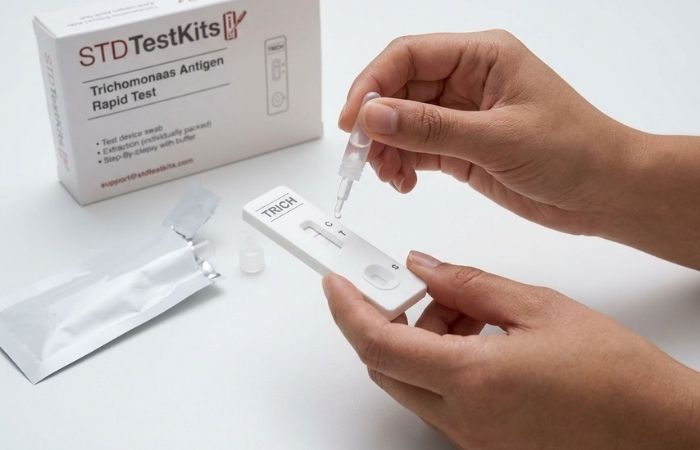
That is why testing is important. If someone has had sex and then experiences painful ejaculation, it is important to test for infections such as chlamydia, gonorrhea, or trichomoniasis. Once the infections have been detected, antibiotics may treat many of the infections.
If someone is unsure and does not want anyone else to know the results of the test, they may want to check out the STD Test Kits website. They have at-home testing kits that may be used to identify the infections.
If the individual is experiencing other symptoms along with the pain while ejaculating, testing is important.
The Role of the Prostate in Painful Ejaculation
The prostate is a small gland located just under the bladder. Its main function is to produce part of the fluid that makes up semen. When a man has an ejaculation, the prostate contracts to force this fluid into the urethra.
If the prostate gets inflamed, which is known as prostatitis, these contractions can become painful suddenly.
In fact, prostatitis is one of the most common causes of painful ejaculation, particularly for men under the age of 50. However, not all prostatitis results from an infection. Sometimes, the inflammation results from tension in the muscles in the pelvic area, previous infections, or other sources that cannot be explained by a doctor.
Men with prostatitis tend to describe a deep ache in the pelvic or rectal area when they are having an orgasm. Others describe a sensation of pressure located behind the penis or in the area known as the perineum, which is located between the scrotum and the anus.
One guy told me this when he had prostatitis: “It’s like I have a bruise inside my pelvis that only hurts when I climax.” This guy’s description of prostatitis is surprisingly accurate.
Other symptoms that are often associated with prostatitis include urinary urgency, pelvic pressure, discomfort when sitting, and back pain.
Comparing STD Symptoms and Prostate Symptoms
| Symptom Pattern | More Common With STD | More Common With Prostatitis |
|---|---|---|
| Burning urination | Common | Possible |
| Penile discharge | Common | Rare |
| Pelvic pressure | Uncommon | Very common |
| Pain during ejaculation | Possible | Very common |
| Frequent urination | Possible | Common |
| Recent sexual exposure | Often present | Not required |
Table 2. Symptom patterns that help distinguish infections from prostate inflammation.
None of these signs are perfect for making a diagnosis on their own. But when used together, they help doctors figure out what the most likely cause is.
Prostatitis is more likely if a person has painful ejaculation, pelvic pressure, and a strong need to urinate. Testing for STDs should be the first thing you do if you have burning urination and discharge after having sex with a new partner.
Other Causes Most People Never Think About
However, not all cases of painful ejaculation are caused by infections or inflammation of the prostate. There are a number of other factors that may also cause this problem.
Urinary tract infections are a common cause of painful ejaculation. This type of infection is less common in men than in women. However, it does occur in men. The infection causes a burning sensation in the urethra and bladder. This causes a burning sensation in the ejaculation.
Pelvic muscle tension is also a common cause of this problem. The muscle used in ejaculation can get tense because of stress, sitting for a long time, or conditions such as prostatitis. This tension in the muscle causes a sharp pain in ejaculation.
On some occasions, certain medications can also cause this problem. Some antidepressants and medications used to treat an enlarged prostate can cause this problem.
Sometimes this problem also results from a general state of irritation. This irritation may be caused by dehydration or excessive sexual activity.
In the case where there is pain in ejaculation after sex and where the patient has had sex with new partners, it would be advisable to test for infections. This is because there are a number of infections that may be in the body without any symptoms. The pain in ejaculation may be a symptom of this infection.
In cases where there is pain in ejaculation accompanied by other symptoms such as burning urination, unusual discharge, pelvic pain, and testicular pain, it would also be advisable to test for infections.
One of the easiest ways to eliminate the confusion is to test for the infections at home using products such as the 6-in-1 At-Home STD Test Kit, which can be performed discreetly without the patient having to visit a clinic.
When to See a Doctor About Painful Ejaculation
Not all the pain that is experienced in the ejaculation is a medical emergency since some may be mild. Therefore, it is advisable that if the pain persists, one should seek medical attention to determine the causes of the pain that is experienced in the ejaculation.
However, if the pain that is experienced in the ejaculation lasts more than a few days, is accompanied by fever or pressure, or interferes with the sex life of the patient, then it is advisable that the patient should seek medical attention to eliminate the confusion.
Some of the reasons that may be responsible for the pain that is experienced in the ejaculation include the infections that may be treated by the doctor as well as the inflammation of the prostate gland.
It is important to note that the pain that is experienced in the ejaculation is not the problem but the symptom, and the real problem is the determination of the causes of the irritation that is experienced in the reproductive system.

What Prostatitis Actually Feels Like in Real Life
One of the things that makes prostatitis confusing is the fact that it doesn’t always let people know that it is there. Most people think that an infection should come with warning signs such as fever or pain. However, prostate inflammation is not as loud or as easy to deal with as most people expect.
For instance, a person may experience a dull ache in the pelvis that comes and goes for a few weeks. They may even get uncomfortable when they sit for long periods of time. However, there is one time when the pain is likely to occur. For instance, a person may experience pain during ejaculation, whether they are having sex or simply masturbating. The pain may not occur during every ejaculation, but rather after they have ejaculated multiple times in a row or after they have not ejaculated in a long time.
There are four different categories of prostatitis. The most common is the chronic prostatitis or the chronic pelvic pain syndrome. This is the one that occurs without an infection. This means that the prostate is inflamed, even though there is no infection in the body.
This is the main reason why prostatitis is likely to mimic the symptoms of an STD. For instance, the burning sensation during ejaculation, the pain in the pelvis, and the pain during ejaculation are all symptoms of an STD. However, they are also symptoms of prostatitis. Therefore, most people are likely to suspect an STD before they suspect prostatitis.
How Ejaculation Triggers Pain in the Prostate
When orgasm is achieved, the prostate contracts strongly to force semen into the urethra. When everything is normal, the process is completely pain-free. However, in the event that the prostate is inflamed, the process can be extremely painful.
Think of trying to contract a muscle that is already sore from exercising. The act of contracting the muscle hurts. The same is true in the prostate.
Some men say that the pain is deep and aching, while others say that they have a sharp internal cramping feeling that goes away after a few seconds. Some men even say that the pain lasts for minutes or hours after they have had an orgasm.
The location of the pain can also be deceiving, as the prostate is located deep in the pelvis, and the pain can be located in the back of the penis, near the rectum, in the perineum, or even in the back.
This is one reason that people assume that something is seriously wrong. The fact is, prostatitis is extremely common and can be treated once it is identified.
When Pain After Ejaculation Is Not an Infection at All
There’s another type of painful ejaculation that isn’t often discussed in online forums: pelvic floor tension.
The pelvic floor is a group of muscles that support the bladder, prostate, and other pelvic organs. These muscles are important in ejaculation, as they contract in a rhythmic motion to help propel semen out.
If these muscles are tense, irritated, or overworked, ejaculation can become painful. This is often the case for people who sit for long periods, cycle regularly, or have high stress.
One physical therapist who specializes in pelvic pain described it this way: “For some patients, ejaculation pain is essentially a muscle cramp that occurs in the pelvic area.”
Unlike an infection, pelvic floor tension tends not to produce discharge, fever, or burning urination. Pain from pelvic floor tension tends to occur during ejaculation, but may go away once the ejaculation is over. Some people may still feel pelvic tension.
Temporary Causes That Can Surprise People
Painful ejaculation caused by irritation is not a medical condition.
For example, if one is dehydrated, this may cause the urine to become more concentrated and irritate the urethra, leading to a slightly burning sensation. In addition, if one is engaging in too much sex or sex that is too intense, this may cause temporary inflammation.
Some men may experience pain after a long time without ejaculation and then a sudden surge in sex. In this case, the prostate and the muscles may simply be irritated by the sudden change.
Some men may also be experiencing pain as a result of their medication. For example, some antidepressant medication, blood pressure medication, and medication used to treat prostate enlargement may affect nerve signals that lead to orgasm. In this case, the ejaculation may be painful or uncomfortable.
However, the above situations will go away after a few days. In case the pain continues, it is worth investigating.
Signs That an Infection Might Be Involved
However, while many painful ejaculations may be caused by prostate inflammation or tension in the pelvic muscles, some symptoms may point to the possibility of infection.
When painful ejaculation is accompanied by symptoms such as burning urination, cloudy urine, unusual discharge from the penis, or testicular pain, the possibility of infection is high. These may include infections such as chlamydia or gonorrhea, or even a urinary tract infection.
Another factor that may point to the possibility of infection is the timing of the painful ejaculation. When painful ejaculation is accompanied by the recent acquisition of a sex partner, STD testing is recommended.
However, the difficulty with infections is that they may manifest with only the mildest of symptoms. A person may only feel the slightest discomfort after ejaculation while everything else is perfectly fine. That is why health experts recommend testing as soon as the symptoms manifest after recent sex.
What Doctors Usually Check When This Symptom Appears
When an individual goes to the doctor with the problem of painful ejaculation, there are a few main areas of concern that the doctor will likely investigate. These include infections, prostate inflammation, and urinary difficulties.
The doctor may first conduct urine tests or an STD test to check for infections such as chlamydia or gonorrhea. If the individual still has the problem after the urine or STD tests, the doctor may then proceed with checking the prostate for the problem.
This may include a physical exam or sometimes even images of the prostate, depending on the severity of the symptoms. Often, the doctor will simply diagnose the problem of prostatitis based on the symptoms that the individual is experiencing.
For individuals experiencing the problem of painful ejaculation repeatedly, anti-inflammatory drugs or even lifestyle changes that reduce the level of tension in the muscles of the pelvis may be recommended as a solution.
The problem of painful ejaculation is not as serious as it may seem, as the underlying cause of the problem is not difficult to manage.
Painful ejaculation is seldom caused by any one symptom. Doctors look at the general trends that go along with the pain.
If a man is experiencing a burning sensation while urinating and then feels pain after ejaculation, this could be a sign of inflammation of the urethra, which is often caused by infections such as chlamydia or gonorrhea. If a man is feeling pressure deep in the pelvis and pain while sitting, this is more likely a sign of inflammation of the prostate.
As time goes on, the trends become more apparent.
| Symptom Pattern | What It May Suggest | Why It Happens |
|---|---|---|
| Burning during urination and ejaculation | Urethral infection or STD | Inflammation of the urethral lining |
| Deep pelvic ache during orgasm | Prostatitis | Inflamed prostate contracting during ejaculation |
| Pain only after multiple ejaculations | Pelvic muscle fatigue | Overworked pelvic floor muscles |
| Pressure in the rectal or perineal area | Prostate irritation | Swelling around the prostate gland |
| Sharp pain with discharge or cloudy urine | Bacterial infection | Bacteria irritating reproductive tissues |
Table 3. Symptom patterns that help narrow down possible causes.
Why STD Testing Is Often the First Step
Even though a doctor may suspect prostate inflammation, the first thing he will try to rule out is an infection. This is not an assumption that a person has an STD. This is simply the easiest way to rule out one of the easiest infections to treat.
Infections caused by chlamydia and gonorrhea are two common infections that cause urethral inflammation. These infections will cause painful ejaculation for a man. These infections are easily treated and diagnosed.
The problem with these infections is that they will not always show symptoms. Symptoms will include a little discomfort when ejaculation occurs, but other than that, everything will be normal.
Therefore, testing should be considered if painful ejaculation is a side effect of a new experience. This should not scare people. This is simply a way to rule out an infection that is easily treated.
If a visit to a testing facility is not convenient or comfortable, a person can simply test for an STD from the comfort of their own home. Many people find that purchasing a test kit from STD Test Kits is a discreet way to test for an STD.
Why Pain After Ejaculation Sometimes Comes and Goes
One of the biggest mysteries when it comes to painful ejaculation is that it may come and go. A man may have painful ejaculation one week, but the next week, he may not feel anything.
One reason for this back-and-forth effect is that it may be related to prostatitis and pelvic floor tension. This is because the inflammation in the prostate may fluctuate based on stress, physical activity, hydration, and sexual activity.
For example, if a man sits at a desk for an extended period, he may cause inflammation in his pelvic area. This may cause pressure on the prostate, resulting in painful ejaculation. After a rest from sitting, he may feel better, at least for a little while.
The same thing may happen when it comes to pelvic floor tension. This is when stress and tension in the pelvic area cause the pelvic muscles to contract harder when ejaculation occurs. This may cause painful ejaculation. If the muscles relax, the pain may go away for a little while.
The unpredictable nature of painful ejaculation may cause people to wait too long before doing anything about it. If painful ejaculation persists, it may be worth looking into, even though it may go away for a little while.
What Usually Helps Once the Cause Is Identified
The good news, however, is that most of the possible causes of painful ejaculation can be treated or managed once they are identified.
If tests confirm that the man has contracted chlamydia or gonorrhea, antibiotics can cure the man’s painful ejaculation in just a matter of days.
In addition, the type of prostatitis that a man has can determine how it can be treated. For instance, antibiotics can cure bacterial prostatitis, while anti-inflammatory drugs can treat chronic pelvic pain syndrome.
Physical therapy can also work well to alleviate the condition. In fact, it can be very effective in eliminating painful ejaculation.
The important thing to bear in mind, however, is that painful ejaculation is not a permanent condition. With the right treatment strategy, a man can go back to normal.
FAQs
- 1. Can an STD really make ejaculation hurt?
- Yes, it can. STDs such as chlamydia or gonorrhea can irritate the lining of the urethra, the same tube that semen passes through when ejaculation occurs. And if the lining of the urethra is irritated, orgasm can quickly change from a pleasurable experience to one that burns. The problem is that it can have very few other symptoms, so the only way to know for sure is to get tested.
- 2. How do I know if it’s prostatitis instead of an STD?
- The location of the pain can give away whether it is prostatitis or an STD. In the case of prostatitis, the pain tends to feel more inner, like pressure behind the penis or in the rectum, particularly when orgasm occurs. In the case of STDs, the pain tends to feel more like burning in the penis, or irritation while urinating.
- 3. Is it normal for ejaculation to hurt occasionally?
- Believe it or not, it can be. The human body is strange. Dehydration, overuse from sex or masturbation, or even too much time spent sitting can irritate the reproductive organs. However, if it happens once and then goes away, then it probably isn’t anything that needs worrying about. However, if it continues to occur, then it might be worth investigating what’s going on.
- 4. Why does the pain sometimes come and go?
- This is extremely common when there is inflammation of the prostate gland and tension in the pelvic muscles. It's like having a sore muscle that may be okay one day, but the next day it hurts because of some other factor, such as stress or dehydration. A man may have pain in his ejaculation one day, but the very next day it may not hurt at all. This is one of the reasons that prostatitis can be hard to diagnose.
- 5. Can stress really cause pain in ejaculation?
- Indirectly, yes it can. Stress has the weird side effect of causing the muscles in your body that you didn’t even know existed to tense up. And guess what? These muscles in the pelvic region contract in rhythmic motion when you have an orgasm! If the muscle is already tense because of stress, it can cause pain in the ejaculation. It's not the most logical connection, but it's one that pelvic floor specialists see time and time again.
- 6. What does the pain of prostatitis really feel like?
- The pain can manifest in many different ways, but one common factor is that it's not really a burning sensation. Instead, it's a deep pain inside the body that can manifest as a pressure in the pelvic region. Some people say that it's like having a bruise inside the body that hurts when you orgasm. The pain can also radiate to the lower back or the rectal region because that's where the prostate gland is located in the body.
- 7. Do I really need to get tested if my ejaculation hurts?
- Yes, if there's a possibility that the pain in the ejaculation could have been caused by a recent exposure to a sex partner, it's a good idea to get tested for STDs. Not because anything is wrong, but because it's one of the easiest things to test for and can eliminate that as a possibility right off the bat. It's always better to know what's going on in your body so that you can do the right thing to fix it instead of guessing at it.
- 8. Will the pain in the ejaculation go away on its own?
- Sometimes, yes. Temporary annoyance, dehydration, or inflammation can resolve on its own in a few days. However, when the symptom persists, recurs, or worsens, it’s a good idea to see a doctor or get tested for infections. This could be a sign of something irritating the reproductive system and should be checked out.
- 9. Is painful ejaculation dangerous?
- For the most part, no. While it’s definitely uncomfortable and will definitely grab your attention, the underlying causes of painful ejaculation, such as prostatitis, infection, and muscle tension, are usually easy to deal with once you know what’s going on. The danger of painful ejaculation, however, is in not addressing the underlying cause soon enough, especially in the case of infection.
- 10. What’s the fastest way to stop worrying about it?
- Honestly, getting tested or evaluated. The human brain has a terrible time coping with uncertainty, and this is why we spend hours scouring the internet for answers to symptoms like this. A simple test or evaluation replaces speculation with actual facts, and this, in and of itself, often helps alleviate a tremendous amount of worry.
It’s Time to Stop Guessing and Get Answers
The pain associated with ejaculation can be disconcerting. When pain strikes suddenly, the mind is quick to go to worst-case scenarios. However, in most cases, pain is a result of something as simple as inflammation, infection, or muscle tension. All of these are common problems that doctors face every day.
The biggest mistake people make is in their hesitation. Sexual health is best when questions are answered promptly. Whether it is prostatitis, irritation, or an infection that needs to be treated, knowing is a huge stress-reliever.
If you’re in a state of constant “what if,” then testing is a surefire way to a state of mind where you can move forward. Discreet testing options available through STD Test Kits can provide you with a state of mind where you can move forward.
This article combines guidance from leading medical organizations with peer-reviewed research and clinical experience in sexual health and urology. We reviewed approximately fifteen sources including public health agencies, urology research journals, and sexual health education resources to ensure the information reflects current medical understanding. The sources below represent the most accessible and authoritative references used while writing this guide.