STD Testing for Trans Men: A Complete Guide for Every Stage of Transition
Yes, trans men need STD testing at every stage of transition, but what to test for, which sample type to use, and which screenings still apply changes significantly depending on where you are in that process.

Yes, trans men need STD testing at every stage of transition, but what to test for, which sample type to use, and which screenings still apply changes significantly depending on where you are in that process. Pre-T, on testosterone, post-top surgery, post-hysterectomy, and post-lower surgery each carry a different testing picture. This guide breaks that down stage by stage, with the exact panels, windows, and sample-type considerations that apply to each one.
STD testing for trans men is one of those topics that falls into the gap between gender-affirming care and sexual health care. Hormone providers focus on T levels and physical transition milestones. Sexual health clinics default to frameworks built around cisgender bodies. The result is a significant portion of trans men moving through transition without a clear picture of what their actual testing needs are at any given point, and a documented pattern of testing avoidance that has real consequences for infection rates. This guide fills that gap. One stage at a time, with specifics.
The honest starting point is this: being a trans man doesn't reduce your STD risk. In some respects, the specific changes that transition brings, tissue changes from testosterone, surgeries that alter anatomy, healthcare avoidance driven by discrimination, can make infections harder to detect and easier to miss. According to a 2025 peer-reviewed study on healthcare barriers for transgender and gender nonconforming adults, providers' lack of knowledge and discriminatory attitudes were among the most frequently cited reasons trans people avoided or delayed preventive care, including STD testing. Understanding what you actually need, at each stage, is the first step toward not being in that statistic.
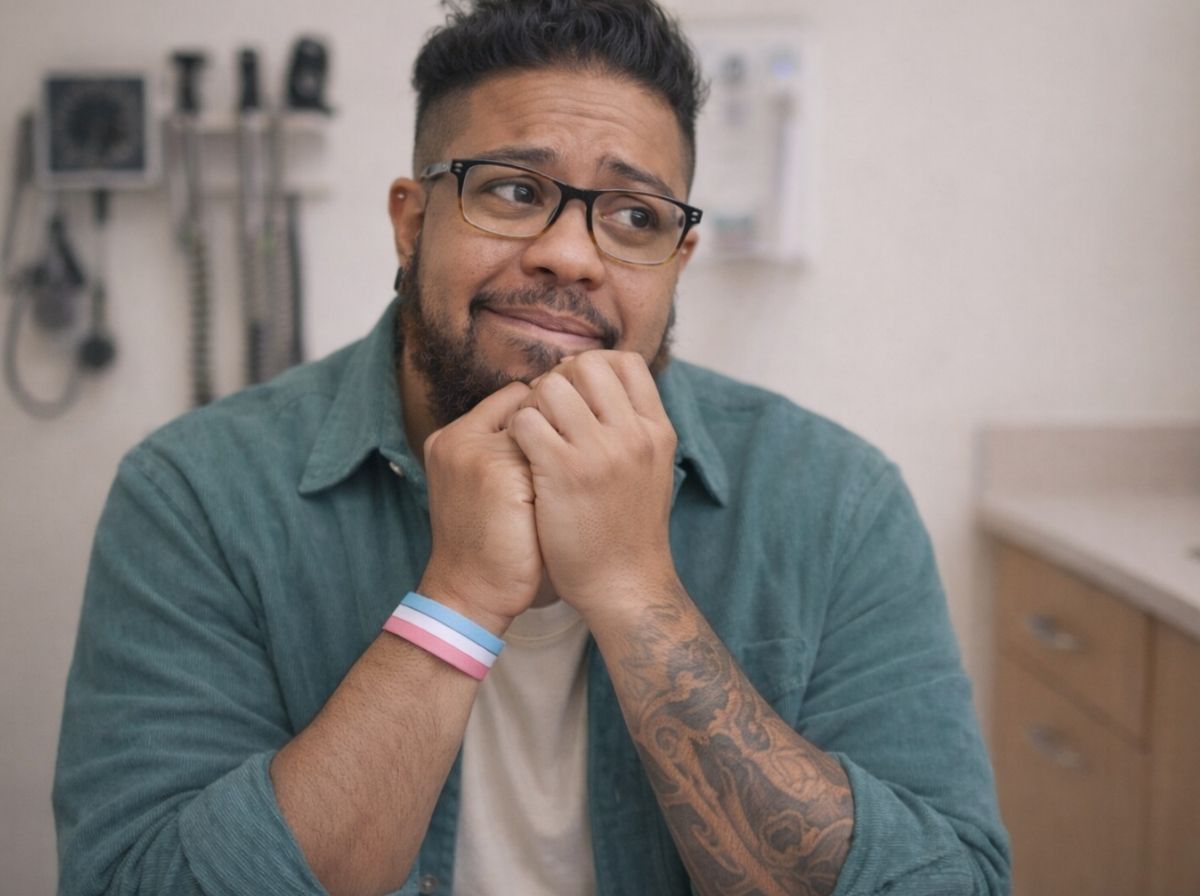
Why Standard STD Tests Often Miss Infections in Trans Men
Before going stage by stage, it helps to understand why the default sexual health framework produces gaps for trans men specifically. Most STD screening protocols were designed around two populations: cisgender women and cisgender men who have sex with men. Trans men, who may have a combination of anatomy that doesn't fit either template, a hormone profile that changes how tissue looks and behaves, and sexual practices that don't follow assumed patterns, get squeezed into whichever box seems closest. Neither fits well.
The core issue is cisnormativity in clinical design. A urine-based STD screen, the default at most walk-in clinics, is built around the assumption that the person in front of you is either a cisgender man with a penis or a cisgender woman with an intact, estrogen-maintained vaginal tract. For a trans man on testosterone, neither assumption holds. Testosterone-induced changes to vaginal and cervical tissue affect how swab samples read in the lab. A urine sample alone will miss rectal infections entirely if you're having receptive anal sex. A throat swab is rarely offered unless you ask for it explicitly. The CDC's treatment guidelines for transgender and gender-diverse persons specifically flag that provider knowledge gaps and discrimination result in trans people avoiding preventive care and missing HIV and STI prevention opportunities.
The other structural problem is that trans men have higher healthcare avoidance rates than almost any other group in sexual health research. A large analysis using US Transgender Survey data found that trans men had meaningfully higher odds of avoiding healthcare due to anticipated discrimination, compared even to trans women. When the clinical encounter itself is a source of anxiety, misgendering, inappropriate questions, providers visibly uncertain about what panel to order, and testing stops happening consistently. And inconsistent testing is how infections go undetected for months.
| Transition Stage | Key Anatomy Considerations | Priority Tests | Unique Factors |
|---|---|---|---|
| Pre-T / Early social transition | AFAB anatomy, estrogen-maintained tissue | Full panel: HIV, syphilis, chlamydia, gonorrhea, herpes, hep B & C, HPV, trich | Baseline before hormones alter symptom picture; cervical screening applies |
| On testosterone (no surgery) | AFAB anatomy, atrophic tissue changes | Full panel; site-specific swabs; cervical screening still required | T changes symptom presentation; urine tests less reliable; atrophy increases transmission risk |
| Post-top surgery only | Chest reconstructed; lower anatomy unchanged | Same as on-T panel; cervical screening still required if cervix retained | Top surgery doesn't change STD risk; testing needs unchanged below the waist |
| Post-hysterectomy (cervix removed) | No uterus or cervix; may retain vaginal canal | Full panel minus HPV/cervical; HIV, syphilis, chlamydia, gonorrhea, herpes, hep B & C | Cervical cancer screening no longer needed; STD risk and testing windows unchanged |
| Post-phalloplasty / metoidioplasty | Surgically constructed genitalia; anatomy varies significantly | Full STD panel; site-specific based on sexual practices | Standard swab protocols may not apply; provider familiarity with post-op anatomy critical |
None of this is inevitable. Knowing what you need and being able to name it clearly when you walk into a clinic, or choosing at-home testing that sidesteps the friction entirely, is what makes the difference. That starts with knowing your stage.
STD Testing Before Starting Testosterone: What to Do Pre-T
You're either not yet on testosterone, or you're in early social transition without medical intervention. Your anatomy is still operating on its pre-T baseline, estrogen-maintained tissue, the microbiome and cervical cellular structure that comes with it, and the same STD risk profile as anyone with AFAB anatomy who is sexually active. This is also the stage where a lot of trans men are navigating a particular kind of clinical friction: presenting as male or masculinely while having anatomy that prompts providers to make assumptions, ask questions that don't fit, or default to screening frameworks that don't match your actual situation.
At this stage, the case for getting a comprehensive baseline test is strong. You're about to embark on a transition that will change how your tissue looks, how symptoms present, and how reliably certain tests detect infections. Having a clean, documented baseline before those changes begin is genuinely useful, both medically and for your own peace of mind. If you're sexually active, a full panel covers HIV, syphilis, chlamydia, gonorrhea, herpes HSV-1 and HSV-2, hepatitis B, hepatitis C, HPV, and trichomoniasis. This is the stage where the standard sexual health framework comes closest to fitting, because the tissue biology hasn't yet been altered by testosterone.
Cervical screening is still fully relevant here. Anyone with a cervix between the ages of 21 and 65 should be following standard cervical cancer screening intervals, a Pap smear every three years, or HPV co-testing every five years after 30, per current guidelines. The USPSTF's December 2024 draft recommendation noted that only 64.3% of trans men are up-to-date with cervical cancer screening, compared to 73.5% of cisgender women, a gap that isn't explained by biology and almost certainly reflects the discomfort of the clinical encounter for transmasculine people. That gap has real consequences: cervical cancer is preventable when caught early, and skipping screening because the appointment felt unbearable is a problem with the healthcare system, not with you.
If you're having receptive anal or oral sex, this is also the stage to get comfortable asking for site-specific testing. Urine alone won't catch a rectal gonorrhea or chlamydia infection. A throat swab is the only way to detect pharyngeal gonorrhea. Neither is automatically included in a standard screen, you need to ask for them by name, which means knowing to ask in the first place. Most providers who work with LGBTQ+ patients regularly will understand immediately; providers who don't may need a moment to work out the logistics, and that's a sign it might be worth finding a different clinic for ongoing care.
STD Testing on Testosterone: How the Picture Changes on T
You've started testosterone. Your body is changing, and so is your STD testing picture, not because T raises your risk of any specific infection directly, but because the tissue changes it produces alter how infections present, how reliably certain tests detect them, and how easy it is to mistake an STD symptom for a side effect of your HRT. This is the stage most trans men are in for the longest period, and it's the one where the cisnormative clinical default produces the most gaps.
The key tissue change is vaginal atrophy, the thinning and drying of vaginal and cervical tissue as testosterone suppresses estrogen. Estrogen is what keeps that tissue thick, lubricated, and populated with Lactobacillus bacteria that maintain a protective pH. When estrogen drops, those protections erode. The tissue becomes more fragile, more prone to micro-abrasions during sex, and those micro-abrasions are exactly the kind of entry points that HIV and other infections exploit. This is a biological mechanism, not a reason to change your sex life, it's a reason to know about it and to factor consistent testing into your routine.
The atrophy also affects swab-based test quality. A 2024 study published in Frontiers in Reproductive Health found that transmasculine people had unsatisfactory cytology rates of 16%, compared to just 2% in cisgender women, because atrophic tissue doesn't yield the same quality sample. A swab-based test that produces an unsatisfactory sample isn't a failed test, but it is an inconclusive one, and following up is essential rather than treating a non-result as a negative. Blood-based tests for HIV, syphilis, hepatitis B, and hepatitis C are completely unaffected by testosterone, the hormone doesn't interfere with blood draw accuracy, so those panels work exactly the same way they do for anyone else.
Site-specific testing matters even more at this stage. If you're having receptive anal sex, your urogenital swab tells you nothing about what's happening rectally. Research consistently shows that extragenital screening increases detection of gonorrhea and chlamydia by anywhere from 6% to 50% compared to urogenital testing alone, and the CDC's guidelines for transgender patients specifically flag extragenital testing as critical rather than optional. The practical upshot: tell your provider or your at-home testing approach which sites were involved in sex, and make sure those sites are actually tested.
| Infection | Test From | Sample Type | Note for Trans Men on T |
|---|---|---|---|
| Chlamydia | 14 days after exposure | Vaginal swab preferred over urine; rectal/throat swabs if applicable | Urine misses up to 10% compared to swab; atrophy can reduce sample quality |
| Gonorrhea | 3 weeks after exposure | Vaginal swab, rectal swab, throat swab (based on exposure sites) | Urine alone misses rectal and pharyngeal infections entirely |
| Syphilis | 6 weeks after exposure | Blood test | Unaffected by testosterone; blood draw accuracy unchanged |
| HIV | 6 weeks (first indicator); retest at 12 weeks for certainty | Blood test (finger-prick for at-home rapid) | Atrophic tissue increases micro-abrasion risk; testing window unchanged |
| Herpes HSV-1 & HSV-2 | 6 weeks after exposure | Blood test | Sores may be confused with friction abrasions from dry, atrophic tissue |
| Hepatitis B | 6 weeks after exposure | Blood test | Unaffected by testosterone |
| Hepatitis C | 8–11 weeks after exposure | Blood test | Unaffected by testosterone |
| HPV | As part of cervical screening schedule | Cervical swab (if cervix retained) | No longer needed post-hysterectomy if cervix fully removed with no prior abnormal history |
| Trichomoniasis | As indicated by symptoms or exposure | Vaginal swab | Symptoms may overlap significantly with T-related discharge changes |
Cervical screening remains relevant as long as you have a cervix; testosterone doesn't change that. What changes is how uncomfortable and technically difficult the procedure becomes. According to clinical guidance from Englewood Health, transmasculine patients undergoing hormone therapy are nearly ten times more likely to produce an unsatisfactory Pap smear sample than cisgender women, due to cervical atrophy. This doesn't mean skipping it, it means knowing that an unsatisfactory result requires follow-up, that certain techniques (like swabbing a wider area or using a smaller speculum) can improve sample quality, and that providers experienced in trans care will handle this differently than those who aren't.
Can Trans Men Use At-Home STD Tests? Yes, Here's What They Cover
You've been on testosterone for a year. You need to get tested. The prospect of walking into a clinic and explaining your body, your anatomy, your hormone history, why you need a particular swab rather than the default screen, is enough friction that a lot of trans men simply don't do it. This is documented: research using the 2015 US Transgender Survey found that nearly one in four trans people avoided healthcare because of anticipated discrimination, and trans men specifically showed higher avoidance odds than trans women. That anticipatory friction has a direct effect on whether testing happens at all.
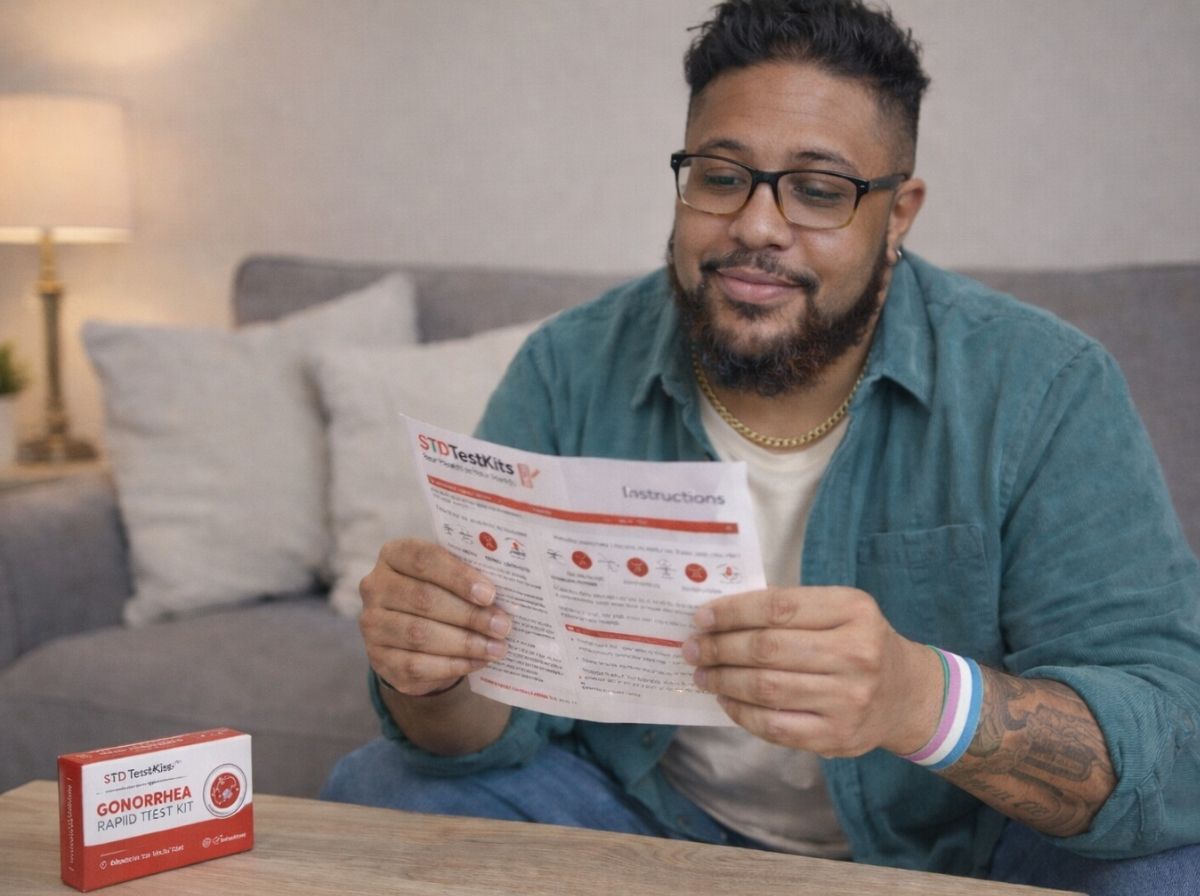
At-home rapid testing removes a significant portion of that friction. For the infections where blood-based testing is both accurate and unaffected by testosterone, HIV, syphilis, hepatitis B, hepatitis C, and herpes, at-home rapid testing is not a compromise or a lesser option. It is a fully valid, clinically reliable method. A finger-prick blood sample processed with the same technology as point-of-care clinical tests gives you accurate results within the testing window, on your own timeline, without a waiting room or a provider who may or may not know how to handle your situation.
For a trans man who is sexually active and wants comprehensive coverage, the 7-in-1 Complete At-Home STD Test Kit covers HIV, syphilis, hepatitis B, hepatitis C, herpes HSV-2, chlamydia, and gonorrhea, the core bacterial and viral infections relevant at every stage of transition. If you retain a front hole and want trichomoniasis and HPV coverage as well, the Women's 10-in-1 At-Home STD Test Kit covers all ten of the most commonly tested STDs. Testing is the fastest way to stop the guessing game, and doing it from home means you're not betting that consistency on whether this particular clinic appointment goes well.
The one limitation of at-home rapid testing that's worth knowing clearly: rectal and pharyngeal swabs for gonorrhea and chlamydia aren't currently available in rapid at-home formats. If you're having receptive anal or oral sex, those sites require a clinic visit or a specialist postal testing service for accurate extragenital screening. That's not a reason to skip at-home testing for the blood-based panels; it's information about where to supplement it.

STD Testing After Top Surgery: What Actually Changes (and What Doesn't)
You've had chest reconstruction. This is often the first gender-affirming surgery trans men pursue, and it changes a lot about how you move through the world, but it doesn't change your STD testing needs below the waist. If you're on testosterone and have had top surgery but no lower surgeries, your testing picture is exactly the same as it was before the operation: same panel, same site-specific considerations, same cervical screening requirements if you retain a cervix.
The reason this stage deserves its own mention is that top surgery can create a kind of psychological transition milestone that doesn't map onto the biology. Some trans men, understandably, feel significantly more aligned after chest surgery, more comfortable in their body, more comfortable in sexual contexts. That shift in comfort is real and valid. What doesn't shift is the need to keep testing consistently, because the infections that STD tests detect don't respond to surgical milestones.
If you had any period of reduced sexual activity around the surgery itself, recovery time, or the discomfort of a clinical encounter at a moment when your body was in flux, it's worth getting a full baseline test once you're back to your usual level of sexual activity. Not because the surgery created a new risk, but because a gap in testing frequency is a gap in your picture of your own status. Peace of mind is one test away, and that remains true at this stage exactly as it does at every other.
The site-specific testing logic from Stage Two applies here without modification. If you're having receptive anal or oral sex, those sites need separate swabs. Your chest reconstruction is irrelevant to rectal gonorrhea. Your testing approach should follow your actual sexual behaviors, not the anatomy that's most visible.
STD Testing After Hysterectomy: What Trans Men Still Need to Test For
You've had a hysterectomy, the uterus is gone, and in most gender-affirming procedures, the cervix is removed as well. This is the stage where the testing picture changes most significantly, and where getting accurate information matters most, because the standard clinical default may not update correctly to reflect what you actually need.
The most important change: if your cervix was fully removed during a complete hysterectomy, and you have no prior history of cervical cancer or abnormal cervical cells, cervical cancer screening is no longer needed. The Pap smear and HPV test that were a regular part of your healthcare up to this point are no longer part of the protocol. This is confirmed across major guidelines; the USPSTF, ACOG, and OncoLink all specify that routine cervical screening is not recommended after a complete hysterectomy for benign reasons. If you had abnormal cells or a cancer history prior to surgery, that changes the guidance, and your provider should be explicit about whether any further monitoring is required. But for most trans men who pursue hysterectomy as part of gender-affirming care, this is a permanent removal from the screening list, not a gap, an intentional revision to your healthcare needs.
What doesn't change is everything else. HIV, syphilis, chlamydia, gonorrhea, herpes, hepatitis B, and hepatitis C testing needs are completely unaffected by hysterectomy. The testing windows remain the same. The blood-based tests work the same way. If you're having receptive anal or oral sex, those sites still need site-specific swabs. A hysterectomy doesn't create a sexual health blank slate; it removes one specific screening requirement while leaving the rest intact.
One thing worth flagging for this stage: some trans men find that a hysterectomy reduces the dysphoria associated with pelvic examinations significantly, which can make clinical sexual health encounters more manageable than they were before. If that's true for you, it may be a good moment to establish a relationship with a sexual health provider who offers comprehensive testing in a gender-affirming setting, not because your risk has changed, but because the barrier to accessing in-clinic care may have lowered.
There's also a practical consideration around the vaginal canal post-hysterectomy. Unless you've also had a vaginectomy, the vaginal canal typically remains, which means urogenital swabs for chlamydia and gonorrhea remain relevant if you're having frontal penetrative sex. Some providers assume otherwise. Be specific about your anatomy and sexual practices, and ask for the swab explicitly if you need it.

STD Testing After Phalloplasty or Metoidioplasty
Lower gender-affirming surgeries, phalloplasty and metoidioplasty, create anatomy that has no direct cisgender equivalent, which means the standard clinical STD testing framework applies even less than it did at any previous stage. The relevant anatomy varies significantly depending on the specific procedure, the surgical technique, whether vaginectomy was included, whether a urethroplasty was performed to enable standing urination, and the individual outcome. A provider who has not worked with post-operative trans men and who doesn't ask detailed questions about your specific surgical anatomy is going to default to the wrong protocol.
The key principle at this stage: STD testing should be guided by your actual anatomy and your actual sexual practices, not by any assumed category. If you've had a urethroplasty and are having insertive sex, urethral swabs become relevant in a new way. If a vaginal canal remains (vaginectomy was not performed), frontal swabbing for chlamydia and gonorrhea may still apply. If you're having receptive anal sex, rectal swabs are needed regardless of any lower surgery. Blood-based testing for HIV, syphilis, hepatitis B, hepatitis C, and herpes is entirely unaffected by any surgical procedure and works the same way at this stage as at every other.
The most important practical recommendation at this stage is to seek a provider who has specific experience with post-phalloplasty or post-metoidioplasty patients for any swab-based STD testing. The mechanics of sample collection change when anatomy changes, and an experienced provider will know what adjustments are needed. Major trans health centers, university-affiliated gender clinics, and sexual health clinics with explicit trans surgical care expertise are the most reliable options. For blood-based testing, at-home rapid testing remains fully valid; your post-op anatomy doesn't affect a finger-prick blood sample in any way.
If navigating specialist clinical care feels like more friction than you can manage right now, covering the blood-based panel at home while identifying the right provider for swab-based testing is a reasonable interim approach. Partial coverage is better than no coverage, and the 8-in-1 Complete At-Home STD Test Kit covers HIV, both strains of herpes, syphilis, hepatitis B, hepatitis C, chlamydia, and gonorrhea, giving you a comprehensive blood and urogenital panel while you arrange the site-specific clinical piece.
How Often Should Trans Men Get STD Tests?
Frequency should track two things: your actual sexual behaviors and the stage of transition you're in. The stage affects which tests you need; your sexual behaviors determine how often those tests should happen. The general framework from sexual health guidelines is: at minimum annually if you're sexually active with new or multiple partners, every three months if you have multiple partners, have condomless sex regularly, or are engaged in sex work. If you're on PrEP, quarterly HIV and STD testing should already be part of your PrEP protocol, that frequency is built in for good reason.
For trans men specifically, there's a case for erring toward the more frequent end of that range during the period when testosterone is first altering your tissue. The reason isn't that T increases infection risk directly, it's that the symptom picture becomes less reliable as a warning system during this period, which makes proactive testing rather than symptom-reactive testing the smarter framework. Someone who tests every three months and picks up a chlamydia infection early is in a completely different position from someone who waits until something feels clearly wrong, and on testosterone, the point where something feels clearly wrong may be months into an established infection.
A useful mental model: think about STD testing the way you think about blood draws for your T levels. It's monitoring, not diagnosis. It's how you stay informed about what's happening in your body, on a schedule that reflects how your body actually works rather than how symptoms you may or may not have fit into a clinical framework. That reframing tends to make consistent testing feel like a health decision rather than a response to worry, which is exactly what it is.
How to Find Trans-Competent STD Testing, and What to Ask For
The clinical encounter problem is real. A 2025 study examining gender-affirming practices in healthcare settings found that trans and nonbinary young adults who experienced gender-affirming care from providers were significantly more likely to get tested for HIV, a direct link between how a clinical encounter feels and whether testing happens at all. That's not a soft finding about comfort; it's a public health outcome. When the clinical environment is sufficiently hostile or incompetent, trans men stop getting tested. The downstream consequence is infections going undetected for longer.
Identifying a genuinely trans-competent sexual health provider takes some upfront effort but pays off significantly in consistency. Sexual health clinics with explicit LGBTQ+ competency, Planned Parenthood locations, community health centers in larger cities, and university-affiliated gender health programs tend to have the highest familiarity with the specific needs of trans patients, including site-specific testing, trans-appropriate cervical screening techniques, and post-surgical anatomy awareness. Searching explicitly for "LGBTQ-affirming sexual health clinic" or "trans-competent sexual health care" in your area is more likely to surface appropriate options than a general clinic search. GLMA (the LGBTQ+ Medical Association) also maintains a provider directory.
When you're in any clinical encounter, being specific is your most effective tool. Rather than waiting for the provider to work out what panel to order, come in knowing what you want: name the sites you need swabbed based on your actual sexual behaviors; flag your testosterone use and its duration explicitly; ask for a vaginal swab rather than urine if you have a front hole and have had frontal penetrative sex. The CDC's guidance for transgender patients explicitly endorses anatomy-based and behavior-based screening; you have clinical backing for asking for what you need rather than accepting a default that doesn't fit.
And where the clinical encounter is genuinely inaccessible, whether because of cost, geography, discrimination, or the simple reality that a trans-affirming provider isn't available to you right now, at-home testing for the blood-based panel is not a workaround. It's a valid, accurate alternative that puts you in control of your own testing timeline. Take control of your sexual health today: testing at home removes the friction that keeps too many trans men from having a clear picture of their status.
FAQs
- 1. Do trans men need STD tests?
- Yes, and the need doesn't reduce with transition; it just changes in character. Being on testosterone or having gender-affirming surgeries doesn't eliminate STD risk. What changes is which tests are most relevant, which sample types give the most reliable results, and how symptoms present. Every sexually active trans man, at any stage of transition, benefits from regular STD testing.
- 2. What STDs should trans men test for?
- The core panel is HIV, syphilis, chlamydia, gonorrhea, herpes HSV-1 and HSV-2, hepatitis B, and hepatitis C. If you retain a cervix and a front hole, adding HPV (as part of cervical screening) and trichomoniasis is recommended. After a complete hysterectomy with full cervix removal and no abnormal cell history, HPV and cervical screening are no longer part of your routine panel.
- 3. Does testosterone affect how STD tests work?
- Blood-based tests, HIV, syphilis, herpes, hepatitis B, and hepatitis C, are completely unaffected by testosterone. Swab-based tests for chlamydia and gonorrhea can be affected by the tissue changes testosterone causes: vaginal atrophy can reduce the quality of swab samples, and a urine test is somewhat less sensitive than a vaginal swab for people with a front hole. Testosterone doesn't change testing windows, those are determined by the biology of the pathogen, not your hormone levels.
- 4. Do trans men still need cervical cancer screening?
- If you have a cervix, yes. Standard cervical screening guidelines apply regardless of gender identity, Pap smear every three years starting at 21, or HPV co-testing every five years after 30. If you've had a complete hysterectomy with cervix removal for non-cancerous reasons, routine cervical screening is no longer needed. If your cervix was partially removed or you have a history of abnormal cells or cervical cancer, talk to your provider about what ongoing monitoring is needed.
- 5. How does STD testing change after top surgery?
- Top surgery, chest reconstruction, doesn't change your STD testing needs at all. Your lower anatomy, cervical screening requirements, and testing panel remain exactly the same after chest surgery as before. Testing should reflect your actual anatomy and sexual behaviors, not which surgeries you've had above the waist.
- 6. How does STD testing change after hysterectomy?
- The main change is that cervical cancer screening and HPV testing are no longer required if your cervix was fully removed for non-cancerous reasons. Everything else, HIV, syphilis, chlamydia, gonorrhea, herpes, hepatitis B and C testing, remains the same. Testing windows don't change. Blood-based panels don't change. If you retain a vaginal canal, frontal swabs may still be relevant depending on your sexual practices.
- 7. Can trans men use at-home STD tests?
- Absolutely. At-home rapid testing is fully valid for all blood-based STD tests, HIV, syphilis, herpes, hepatitis B, and hepatitis C, regardless of where you are in transition. For chlamydia and gonorrhea at the urogenital site, at-home swab kits work well. The limitation is that rectal and throat swabs for gonorrhea and chlamydia aren't available in rapid at-home formats, those sites require a clinic or postal testing service if you've had oral or anal sex exposure.
- 8. What are the STD testing windows for trans men?
- The windows are the same as for anyone else; testosterone doesn't change them. Chlamydia: test from 14 days after exposure. Gonorrhea: test from 3 weeks after exposure. Syphilis: test from 6 weeks after exposure. HIV: test at 6 weeks for a strong first indicator, retest at 12 weeks for certainty. Herpes HSV-1 and HSV-2: test from 6 weeks after exposure. Hepatitis B: test from 6 weeks after exposure. Hepatitis C: test from 8–11 weeks after exposure.
- 9. What if a clinic refuses to test me or gets my anatomy wrong?
- You have several options. First, be specific about what you need, name the tests and the sample sites based on your anatomy and sexual practices. Second, look for a clinic with documented LGBTQ+ or trans health competency rather than a general practice. Third, at-home testing for the blood-based panel removes the clinical encounter entirely for the most common STDs. If a provider refuses care based on your gender identity, this may constitute illegal discrimination in many states, you can file a complaint with your state health department or the HHS Office for Civil Rights.
- 10. How often should trans men get tested?
- At minimum annually if you're sexually active with new or multiple partners. Every three months if you have multiple partners, have condomless sex regularly, or are in a period of higher activity. If you're on PrEP, quarterly testing is already built into your protocol. During the early period on testosterone when your symptom picture is shifting, erring toward more frequent testing is a reasonable approach, because the warning signs that might otherwise prompt you to test are less reliable during this phase.
Test on Your Terms, Whatever Stage You're At
Your transition is yours. Your testing needs change with it, not as a burden, but as a reflection of the fact that your body is doing something real and worth staying informed about. Whether you're pre-T, years into hormone therapy, post-surgery, or anywhere in between, knowing your status is information. It doesn't tell you anything about how you've been living; it tells you what you can do next.
At STD Test Kits, at-home rapid testing is available for every stage of transition. The 7-in-1 Complete At-Home STD Test Kit covers HIV, syphilis, hepatitis B, hepatitis C, herpes HSV-2, chlamydia, and gonorrhea, the full bacterial and viral panel that matters at every transition stage. For trans men who retain a front hole and want trichomoniasis and HPV coverage, the Women's 10-in-1 At-Home STD Test Kit covers all ten of the most commonly tested STDs. For the most complete coverage including HSV-1, the 8-in-1 Complete At-Home STD Test Kit adds oral herpes to the full panel. Results in minutes, fully discreet, no waiting room. Browse the full range at STD Test Kits and find the right test for where you are right now.
Our article was constructed based on current advice from the most prominent public health and medical organizations, and then molded into simple language based on the situations that people actually experience, such as treatment, reinfection by a partner, no-symptom exposure, and the uncomfortable question of whether it "came back." In the background, our pool of research included more diverse public health advice, clinical advice, and medical references, but the following are the most pertinent and useful for readers who want to verify our claims for themselves.
- CDC, STI Treatment Guidelines: Transgender and Gender Diverse Persons
- Frontiers in Reproductive Health (2024): Bacterial Vaginosis Testing Gaps in Transmasculine Patients
- PMC (2025): Updates on Testing, Treatment, and Prevention of STIs in the United States
- USPSTF Draft Recommendation: Cervical Cancer Screening (December 2024)
- PMC (2025): Barriers to Quality Healthcare Among Transgender and Gender Nonconforming Adults
- OncoLink: Cervical Cancer Screening for Transmasculine and Gender Non-Conforming Individuals