Tested Too Early for Syphilis? Here’s When to Try Again
Quick Answer: The best time to test for syphilis is 6 to 12 weeks after exposure, when antibody levels become reliably detectable. Maybe you had symptoms but didn’t know what they were.

Quick Answer: The best time to test for syphilis is 6 to 12 weeks after exposure, when antibody levels become reliably detectable. Early testing (around 3 weeks) can catch some cases, but a retest is often needed to rule out false negatives.
Who This Guide Is For (And Why It Matters)
This guide is for anyone who panicked and tested too early. It’s for the reader who got a negative result but still feels that itch, or dread, in the pit of their stomach. It’s for the person who had oral sex and was told “it doesn’t count,” only to find out syphilis doesn’t follow rules. And it’s for anyone who didn’t realize that early symptoms don’t always appear, or disappear fast.
Maybe you’re in a new relationship, and your partner just disclosed they tested positive last month. Maybe you had symptoms but didn’t know what they were. Maybe you’re pregnant and your doctor mentioned syphilis screening, and now your last partner’s status is eating at you. Whatever the story, you’re not alone, and this article will walk you through testing timelines, retesting logic, and how to make sense of what’s next without spiraling.
Because the truth is: syphilis is sneaky, but testing doesn’t have to be.
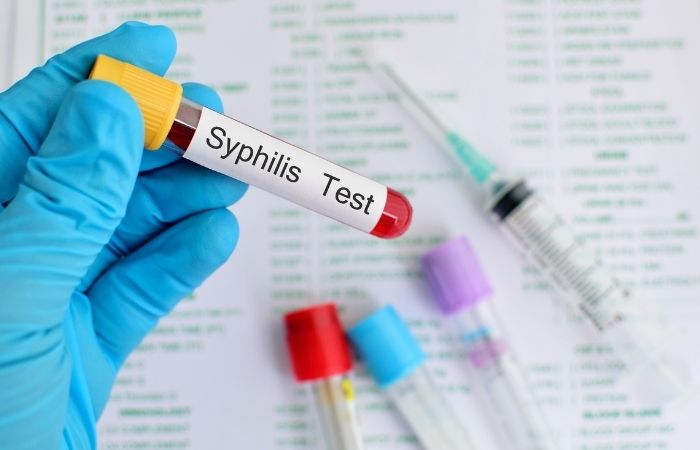
Syphilis Symptoms: Why Feeling Fine Doesn’t Mean You’re Clear
Most people expect an STD to come with obvious signs, burning, discharge, pain. But syphilis breaks that expectation. You can be infected and feel completely fine. Or you can have a sore in a place you never thought to check, like the mouth, anus, or under foreskin. That’s why so many cases go undetected until much later stages, or after someone else tests positive first.
Here’s the catch: even when symptoms appear, they often vanish before people test. The classic syphilis sore (called a chancre) shows up around 2–3 weeks after exposure, but it’s painless. You might miss it entirely, especially if it’s hidden. After that, a rash or flu-like symptoms can appear, often misread as stress, allergies, or eczema.
So if your test is negative and you don’t feel sick, that doesn’t mean you're safe. It just means the test might have been too early, or that your body hasn't produced enough antibodies yet to trigger a positive result. According to the CDC, syphilis can go undiagnosed for months if not timed right.
Window Periods vs. Incubation: The Timing You Actually Need to Know
There’s a difference between when syphilis starts causing symptoms (incubation) and when a test can detect it (window period). And this difference is why so many people test too early.
- Incubation Period: This is how long it takes after exposure for symptoms, if any, to appear. For syphilis, that’s usually 10 to 90 days, with 21 days being most common.
- Window Period: This is how long it takes before a test can reliably detect the infection. Antibody tests for syphilis (the most common type) may not pick up the infection until at least 3–6 weeks post-exposure.
That means you could feel symptoms before a test shows a positive, and vice versa. Or neither could show up yet. It’s frustrating, but knowing this helps you time things properly and avoid false reassurance.
| Syphilis Timeline | What Happens | Can You Test Positive? |
|---|---|---|
| 0–7 Days | Too early for symptoms or antibodies | Unlikely |
| 7–21 Days | Chancre may appear (often painless) | Sometimes (but false negatives common) |
| 3–6 Weeks | Antibodies start to rise; rash may develop | Increasing accuracy |
| 6–12 Weeks | Immune response is strong | Peak test accuracy |
| 12+ Weeks | Latent or ongoing symptoms may emerge | Reliable detection |
Figure 1. Syphilis timeline showing incubation and window periods with test detection likelihood.
What If You Were Exposed? Real Scenarios That Affect When to Test
Syphilis isn’t just a “promiscuity problem.” It affects people in monogamous relationships, people experimenting sexually, people who assumed oral sex was low risk, and even people who used condoms, because syphilis can spread through skin-to-skin contact, not just fluids.
Let’s look at a few common exposure stories and what they mean for testing timelines:
Case 1: The One-Night Stand
Nico hooked up with someone they met while traveling. No symptoms yet, but they tested five days later “just to be safe.” The result was negative, but it was too soon. Syphilis antibody levels don’t rise that quickly, so Nico needed to retest around week 6 for a more accurate result.
Case 2: Oral Sex With No Protection
Jordan received oral from a new partner. They didn’t consider it high risk until a painless sore appeared on their lip weeks later. They were positive for syphilis, proof that even oral exposure can transmit the infection. Testing around the 4-week mark helped detect it in time.
Case 3: Long-Term Partner Tested Positive
Anya was in a monogamous relationship but learned her partner had tested positive. She had no symptoms, but they’d had sex a few weeks earlier. She tested at week 5 (negative), then again at week 8 (positive). This kind of delayed seroconversion is why follow-up testing matters.
If you’re unsure about timing, you’re not alone. That’s why many providers recommend testing twice, once at 3–4 weeks post-exposure, then again at 6–12 weeks if the first result is negative and you’re still worried.
At-Home, Mail-In, or Clinic? How Each Test Method Compares
You don’t have to go to a clinic to get tested, but you do need to know what kind of test you’re using. Syphilis can be detected with a blood sample that looks for antibodies. These are available through several types of testing methods, each with pros and cons.
Here's how the options compare for privacy, accuracy, and speed:
| Method | Privacy | Speed | Accuracy | Best For |
|---|---|---|---|---|
| At-Home Rapid Test | Very high | 10–20 minutes | Moderate to High (after 6+ weeks) | Quick reassurance, private settings |
| Mail-In Lab Kit | High | 2–5 business days | High (especially after 4 weeks) | Lab-level accuracy from home |
| Clinic-Based Test | Moderate | Same-day to several days | Very High (multiple test options) | Symptoms present or urgent care |
Figure 2. Comparison of syphilis test methods based on privacy, accuracy, and timing.
An at-home syphilis rapid test is a good choice if you want to keep your privacy and get results quickly, especially if you haven't been exposed in six weeks. Just make sure to follow all the steps, and if you were recently or continuously exposed, think about getting tested again.
If your head keeps spinning, peace of mind is one test away. Order your discreet at-home test here and get clarity without the clinic wait.
False Negatives Happen, Here’s How to Avoid Them
One of the most frustrating outcomes of testing is seeing a negative result… and still feeling unsure. That gnawing “what if” usually comes from testing during the window period, before the body has produced enough antibodies to register a positive on a standard test.
For syphilis, most tests rely on your immune system to react. If you test too early (especially within the first 2–3 weeks), your body may not have responded strongly enough to create detectable antibodies yet. That’s how false negatives happen, even when exposure did occur.
Other false negatives come from user error. Not collecting enough blood. Rushing the timing window. Misreading a faint line. Even mail-in samples can go bad if they aren’t shipped promptly or handled correctly. That’s why following the instructions to the letter, and retesting when in doubt, is critical.
And remember: if your symptoms change, if your partner tests positive, or if you feel that something’s still off, it’s okay to test again. Accuracy isn’t about the first test, it’s about the right timing.
When to Retest After Exposure, Treatment, or Risky Encounters
Retesting isn’t just for people with ongoing risk. It’s also for those who may have tested too early or need to confirm a treatment worked. The CDC recommends retesting for syphilis in several scenarios:
- After early testing: If you tested negative before 6 weeks after exposure, you should test again between 6 and 12 weeks after exposure. This lets your body make antibodies that can be found.
- After the Treatment: Penicillin is the most common medicine used to treat syphilis. Retesting is often done at 6 and 12 months after treatment to make sure the infection is gone, especially if you had late-stage syphilis or symptoms that didn't go away.
- New partners: If you're not monogamous, have recently changed partners, or had unprotected sex again, it's a good idea to reset your testing schedule and check again.
- Pregnancy: If there are any risk factors, pregnant women should get tested in the first trimester, again in the third trimester, and at delivery. Many places are seeing an increase in congenital syphilis, and finding it early is very important for stopping it from spreading to the baby.
It’s not obsessive to test more than once. It’s protective.
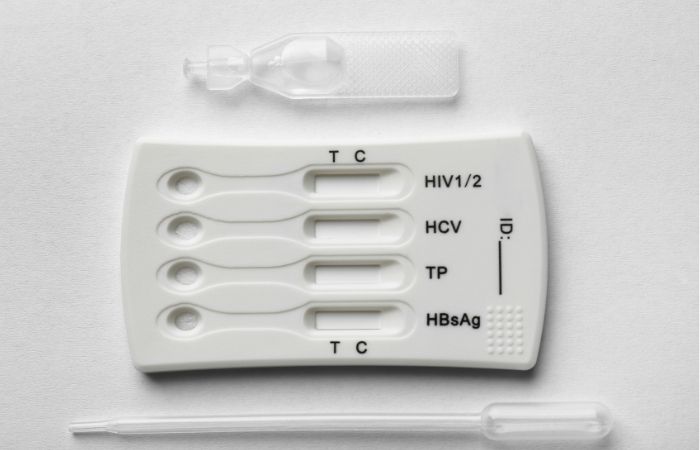
Privacy, Shipping, and Getting Results Without the Stigma
Sometimes the hardest part of testing isn’t the needle, it’s the fear someone might find out. Whether you live with family, travel frequently, or just want control over your health info, privacy matters. That’s where at-home options come in.
STD Test Kits ships in unmarked, discreet packaging with no visible health labels. Inside, you’ll find everything you need to collect your sample and read your result, no appointments, no awkward waiting rooms.
Shipping typically takes 1–3 business days, depending on your location. Many users report ordering from hotels, Airbnbs, or even friends’ addresses when privacy is a concern. No ID is required to order, and the results are yours to share, or not.
Case Example: Marissa was staying with her parents between semesters. After a recent hookup, she felt uneasy but couldn’t drive to a clinic without raising questions. She ordered an at-home syphilis test to a friend’s apartment, took it quietly in the bathroom, and had her result in 20 minutes. “I felt like I could breathe again,” she said. “Even though it was negative, I waited and retested later just to be sure. No one had to know except me.”
That’s the power of privacy-driven care. You get the answers you need, on your own terms.
FAQs
- 1. Can you test too early for syphilis?
- Yes , and it happens a lot. If you test within the first two weeks after exposure, there’s a good chance your body hasn’t made enough antibodies yet. That doesn’t mean you’re in the clear; it just means the test can’t see what’s brewing. If you tested early, plan on retesting around the 6-week mark. No shame in doing both , early check and later confirmation.
- 2. How soon after sex can a syphilis test show positive?
- For some folks, a positive result can show up as early as 3 weeks after exposure , especially if a sore (chancre) has already popped up. But that’s not a guarantee. Most tests are more reliable after week 6. Think of it like waiting for film to develop: the picture is blurry at first, then sharpens over time.
- 3. I got a negative result, but something still feels off. Should I retest?
- Absolutely. Your gut matters here. Maybe you’ve got a weird rash, or maybe your partner told you something after the fact. Either way, if your test was before 6 weeks post-exposure, a follow-up is a smart move. Symptoms can show up before tests do. You're not being paranoid , you're being responsible.
- 4. Does syphilis show up after oral sex?
- It sure can. Syphilis doesn’t care if it was “just oral.” A lot of people catch it from unprotected oral contact, especially if there’s a sore in the mouth or on the genitals. It’s sneaky, and it doesn’t always announce itself. So yes, oral counts , and yes, you should test if that’s how you were exposed.
- 5. Is a rapid syphilis test at home actually legit?
- Yes, if you use it right , and at the right time. Most rapid tests look for antibodies, which means they’re most accurate after 6 to 12 weeks. Follow the directions closely (seriously, don’t rush it), and remember that a faint line still counts. When in doubt, retest or confirm with a clinic. Better safe than sorry , and you deserve peace of mind.
- 6. How often should I test for syphilis?
- That depends on your sex life. If you have new or multiple partners, don’t always use protection, or you're part of a community with rising syphilis rates (like men who have sex with men), testing every 3 to 6 months is smart. One-time hookup with risk? Test at 6 weeks, then again if anything changes. Testing isn’t about fear , it’s about knowing where you stand.
- 7. Can syphilis come back after treatment?
- Not exactly. If you’re properly treated, syphilis doesn’t reactivate , but you can get reinfected. Treatment clears the infection, not future risk. So if you’re back in the dating world or having sex again, protect yourself and keep testing on your radar. It’s not about guilt , it’s about staying in control.
- 8. I’m pregnant , should I test for syphilis even if I have no symptoms?
- Yes, 100%. Syphilis during pregnancy can pass to the baby, and the outcomes can be devastating if it’s not caught early. The test is simple and safe. Most OBs will screen you in the first trimester, but if you have new risk later in pregnancy, ask for a repeat. Protecting your baby starts with protecting you.
- 9. Why do I have to test again after treatment?
- Think of it like checking if the fire is fully out. Even if you feel fine, follow-up tests make sure the treatment worked and the infection is really gone. It’s especially important if you had late-stage syphilis, or if your symptoms were weird or long-lasting. Retesting is part of healing , not a failure.
- 10. Will anyone know I ordered a test?
- Nope. At-home syphilis kits ship in plain packaging , no logos, no “STD” label, nothing to raise eyebrows. It looks like any other boring mail. You get to control who knows, when you test, and where you take it. Total privacy, total power.
You Deserve Answers, Not Assumptions
If you tested too early, it doesn’t mean you messed up. It means you cared enough to act, and that matters. Syphilis can be silent, tricky, and unpredictable. But your next test doesn’t have to be. The right timing gives you the clarity you deserve.
Don’t wait in the dark. Order a discreet at-home syphilis test today and know where you stand, without the judgment, the wait, or the guessing.
How We Sourced This Article: We combined current guidance from leading medical organizations with peer-reviewed research and lived-experience reporting to make this guide practical, compassionate, and accurate. In total, around fifteen references informed the writing; below, we’ve highlighted some of the most relevant and reader-friendly sources.