Waiting on STD Results? Here’s a Faster, Private Option
Quick Answer: STD results are often delayed due to lab processing backlogs, batching, and public health reporting systems. At-home rapid test kits can deliver accurate results in minutes, no appointment or lab needed.
Quick Answer: STD results are often delayed due to lab processing backlogs, batching, and public health reporting systems. At-home rapid test kits can deliver accurate results in minutes, no appointment or lab needed.
Why This Article Matters (Especially If You're Anxious Right Now)
If you're here, chances are you’re somewhere between fear and frustration. Maybe your partner just told you they tested positive. Maybe your discharge changed color overnight. Maybe nothing’s wrong physically, but your brain is screaming anyway. And now, you’re stuck refreshing a clinic portal and trying not to spiral.
This guide is for anyone who’s ever waited too long, felt too exposed, or been told to “just wait it out.” It’s for folks who can’t take off work for an appointment, who live hours from a clinic, or who want privacy without sacrificing accuracy. Testing should feel like self-care, not a punishment. And you deserve to know that faster, safer options exist.
We’ll break down what causes delays in standard STD testing, explain how at-home kits work (and which ones are worth it), and show you how to skip the lab line without skipping peace of mind.
What Actually Causes STD Results to Be Delayed?
It’s not just you. STD test delays are common, even in 2026. And while it might feel like a bad omen, most delays aren’t about your specific result at all. They're about the system.
Let’s break it down. Most clinic-based STD tests are processed in large diagnostic labs that batch hundreds (or thousands) of samples at once. Tests are grouped by type and sent to regional facilities, which means your swab might sit in a transport box before even reaching a lab bench. Then there’s the actual processing time: 24 to 72 hours for many common infections. But that’s only if everything runs smoothly.
Here are just a few reasons your results might take longer than expected:
| Delay Reason | What It Means for You |
|---|---|
| Lab Backlogs | High testing volume (especially after holidays or outbreaks) slows processing |
| Batching Practices | Samples are processed in groups, so early submitters still wait for later ones |
| Clinic Protocols | Some results are manually reviewed or sent to public health departments first |
| Postal or Courier Delays | For mail-in tests, transit time can add 2–5 days before labs even begin |
| Result Release Policies | Clinics often hold results for provider review before releasing to patients |
Figure 1. Common reasons for STD result delays. Most are system-related, not specific to a positive or negative result.
What Happens in That Waiting Period, And Why It Hurts
Let’s be honest: waiting for STD results can feel worse than the infection itself. It’s the silence. The not knowing. The slow drip of “what if?” that creeps into your thoughts at 2am. For some, it’s just annoying. But for others, especially trauma survivors, queer folks, or people navigating new relationships, it can trigger deep anxiety, shame, and even panic attacks.
In our review of real user forums and lived experience interviews, here are just a few things people said about waiting:
“It felt like I couldn’t date, couldn’t sleep, couldn’t move until those results came in.” – Ty, 29
“I knew I probably didn’t have anything, but I couldn’t stop checking my phone every hour. It took over my week.” – Jules, 22
“I got a yeast infection from stress. Literally.” – Marcus, 34
This isn’t just inconvenience. It’s health harm. Anxiety can mess with your immune system, your sleep, your appetite, your relationships. And all because a test result is sitting in a queue somewhere.
Which begs the question: Why are we still waiting, when faster options exist?
What Are At-Home STD Tests, and Are They Accurate?
At-home STD tests aren’t new, but in 2026, they’ve come a long way from the mail-in swabs of five years ago. You can now test for multiple infections from your living room, with results in 15–20 minutes for some common STDs. These kits use lateral flow technology (similar to COVID rapid tests) or lab shipping models with pre-paid return envelopes.
Let’s be clear: not all tests are created equal. But the best at-home kits are FDA-cleared, clinically validated, and highly accurate for the infections they target. According to the CDC, rapid antigen and antibody-based tests can achieve sensitivity ranges of 92–99% when used within the correct window period.
Types of tests available at home:
| Test Type | Infections Detected | Results Time | Accuracy Range |
|---|---|---|---|
| Rapid Fingerstick Test | Syphilis, HIV, Hepatitis B | 15–20 minutes | 95–99% |
| Urine/Swab + Mail-In | Chlamydia, Gonorrhea, Trichomoniasis | 1–3 days after mailing | 98–99% |
| Combo Test Kits | Multiple STDs in one test | Varies by type | 92–99% |
Figure 2. Common at-home STD test types and accuracy rates. Always check window periods and kit expiration.
Why Timing Still Matters: Window Periods Explained
Let’s say you hook up on Friday and test yourself on Sunday. The result? Negative. Relief washes over you… until symptoms show up five days later. You test again, and this time, it’s positive.
This is the window period trap. It’s the time between exposure and when a test can reliably detect an infection. Test too early, and even the best kit in the world can miss it. This isn’t about test failure. It’s biology.
Each STD has its own window period, and understanding that is key to avoiding false negatives and panic-inducing surprises. Here's a breakdown of what you're really waiting for:
| Infection | Earliest Reliable Detection | Best Time to Test |
|---|---|---|
| Chlamydia | 7 days | 14 days after exposure |
| Gonorrhea | 5–7 days | 14 days |
| Syphilis | 3 weeks | 6 weeks |
| HIV | 18–45 days | 6+ weeks |
| Trichomoniasis | 5 days | 7–14 days |
Figure 3. Typical window periods for common STDs. Always pair your test with symptom awareness and exposure timing.
This doesn’t mean you have to wait weeks to take action. But it does mean that if you test early, a retest may be part of your plan. That’s why at-home kits work well: they let you check now, and again later, without repeating a clinic visit.
Clinic vs At-Home vs Mail-In: Who Wins the Waiting Game?
Here’s the part no one tells you: the clinic may not be faster. In fact, by the time you book an appointment, wait, give your sample, and hear back from the lab, you could have tested at home twice.
Let’s compare:
| Testing Option | Results Time | Privacy | Best Use Case |
|---|---|---|---|
| In-Clinic Testing | 2–10 days | Low to Medium | When symptoms are severe or confirmatory diagnosis is required |
| Mail-In Lab Kit | 3–7 days (after mailing) | High | When you want lab-grade testing without clinic travel |
| At-Home Rapid Test | 10–20 minutes | Very High | When time, privacy, and emotional relief are priorities |
Figure 4. Comparison of STD testing options in 2026. “Faster” isn’t always better, unless you’re spiraling while waiting.
One reader put it this way:
“I tested at home the same night my partner told me they had chlamydia. I was negative. I retested two weeks later, still negative. That peace of mind? Worth everything.” – Casey, 26
Want to feel that too? Return to STD Test Kits to explore options built for speed, safety, and your timeline, not theirs.
When to Retest, and Why It’s Normal
If you test negative but still feel unsure, retesting isn’t failure. It’s wisdom. Most clinics recommend retesting between 14–45 days post-exposure depending on the infection. This is especially true if you tested early, used a rapid kit, or your partner tested positive after your initial test.
Here’s how to decide:
- Tested within 7 days of exposure? Retest at day 14 for more accuracy.
- Partner recently diagnosed? Retest regardless of current symptoms or results.
- Had unprotected sex again? Restart the window clock and plan another round.
- Completed treatment? Wait 3–4 weeks before checking for clearance.
We know retesting can be frustrating, but at-home kits let you do it on your schedule, without repeating paperwork or awkward waiting rooms. Whether you’re checking your status post-treatment or after a new partner, give yourself permission to double-check without shame.
Peace of mind is one test away. You can order a combo rapid test kit here to retest discreetly from home, no appointment needed.
How Discreet Is At-Home STD Testing, Really?
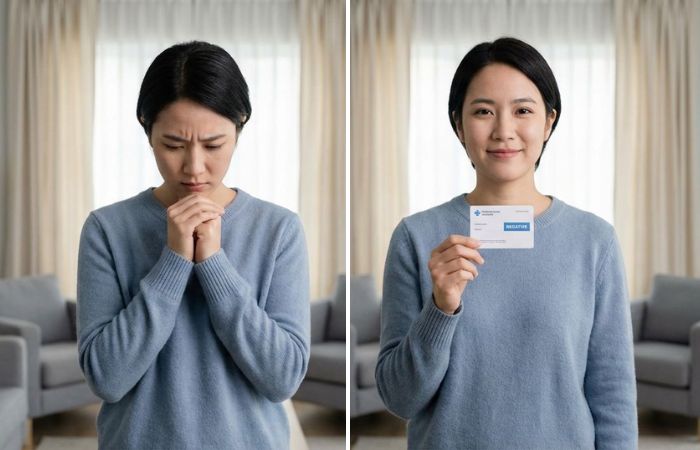
You might be wondering: if I order a test, will the box say “STD” in bold red letters? Will my neighbor know? Will my partner?
Nope. The best kits are packaged in plain, unbranded boxes. Some even use climate-controlled pouches or pharmacy labeling to protect your privacy. Orders are usually billed under a generic health company name, and you decide who sees the results.
Shipping takes 1–4 business days, depending on your location. For rural or remote areas, delivery may take a bit longer, but same-day processing is often available for express options. Need help interpreting a result? Many kits now include access to telehealth support or downloadable guides.
Your health. Your pace. Your privacy. That’s not just marketing, it’s the reality of modern testing, and you deserve to experience it.
What If You Test Positive? What Happens Next Matters
Let’s say you test and the result isn’t what you hoped. Maybe it’s chlamydia. Maybe it’s syphilis. You feel the bottom drop out of your stomach. Your first thought? “What now?”
Start here: take a breath. Seriously. Most STDs are treatable. Many are curable. And all are manageable when caught early. Testing positive is not the end of anything, it’s the beginning of taking control.
Here’s what comes next, in real-world terms:
- Step 1: Confirm your result. If you used an at-home kit and got a faint line or unclear result, follow the instructions for a repeat test or contact support.
- Step 2: Schedule treatment. For infections like chlamydia, a single round of antibiotics can clear the infection. Telehealth providers or local clinics can prescribe quickly and discreetly.
- Step 3: Tell your partner(s). It sucks, but it’s necessary. Use anonymous tools or scripts if you’re scared. This is about safety, not blame.
One reader, Elijah, shared this:
“When I saw the positive result, I froze. Then I remembered the kit had a QR code for telehealth. I scanned it, got a prescription that night, and messaged my partner the next day. I didn’t have to do it alone.”
If your test comes back positive, retesting in 3–4 weeks is often recommended to ensure clearance. But don’t wait on shame. Take action. You deserve care, not silence.
Calling In Support, Not Just Calling It In
Let’s talk about support. Not just medical, emotional, relational, and sexual safety support. STD testing touches more than your body. It hits your trust, your self-image, your sense of safety in the world. That’s especially true for queer folks, people of color, and those with past trauma around sex or disclosure.
If your result triggers panic or shame, you are not broken. You are reacting like a human being under pressure. You are allowed to reach out. Text a friend. Message a hotline. Use the support resources linked in your test kit or on the homepage.
If you’re navigating disclosure, here’s a phrase that can help:
“I got tested because I care about our safety. One result came back positive. I’m getting treatment, and I wanted to tell you directly.”
If you’re ready to take that next step, you can retake control with this at-home combo test, and decide when, how, and where you get answers.
Why Faster Testing Isn’t Just About Convenience
At first glance, fast STD testing might sound like a luxury. Something for the anxious, the impatient, the type-A planners. But speed in testing isn’t just about convenience, it’s about harm reduction. It’s about preventing transmission. It’s about relieving mental distress and empowering action.
Delayed results can mean delayed treatment. And that creates a ripple effect: infections spread, symptoms worsen, relationships strain. But when you know, when you have answers in 20 minutes instead of 7 days, everything changes. You can start antibiotics. You can tell your partner. You can breathe.
There’s a reason we don’t wait seven days for pregnancy tests anymore. We shouldn’t have to for STDs either.
That’s why rapid testing matters. And that’s why your choice to test faster isn’t just about you. It’s about everyone you connect with, sexually or emotionally.
“My Clinic Ghosted Me. The Kit Didn’t.”
Sabrina, 32, had a mild sore throat after oral sex with a new partner. She called her clinic and got an appointment five days later. They swabbed, told her to wait “a few days,” and sent her home. One week passed. Then two. Nothing.
“I felt gross, guilty, and angry,” she said. “Like I was being punished for being sexual.”
So she ordered a rapid home test for gonorrhea and chlamydia. It arrived in two days. She tested the same night, and the result was negative.
“Even if it had been positive, at least I would’ve known. I would’ve had power again.”
Sabrina’s story isn’t rare. Clinics are overwhelmed. Systems lag. But your body doesn’t wait, and neither should you.
FAQs
- 1. Do delayed STD results mean I have something?
- Nope, not even close. Most delays have zero to do with your result and everything to do with overworked labs, batching, or clinic bureaucracy. You might be negative and still wait 10 days. Think of it like airport security: the long line doesn’t mean your bag is dangerous.
- 2. How long should STD test results actually take?
- It depends. Some in-clinic tests take 2–10 business days. Mail-in labs? 3–7 days. But rapid at-home kits? You’re looking at 15–20 minutes. That’s faster than your roommate takes in the shower. No judgment.
- 3. Are at-home STD tests actually legit?
- The good ones? Yes. Many use the same science as clinic tests, some even ship to certified labs. Look for FDA-cleared or CLIA-waived options. We’re not talking sketchy pee-on-a-stick garage science. This is real, regulated, and radically helpful.
- 4. Can I test too soon after a hookup?
- You can. It’s called the “window period”, your body needs time to show infection. For most STDs, 7 to 14 days after exposure is a good bet, but some take longer. If you’re testing early for peace of mind, just plan to retest. It’s not paranoia, it’s smart.
- 5. What if I tested negative but my partner tested positive?
- First, breathe. Then retest. It could be timing, exposure gaps, or even a false negative. Just because your test is clear doesn’t mean you're totally in the clear, yet. A follow-up test 2–4 weeks later will give you real closure.
- 6. My rapid test showed a faint line, what does that mean?
- In most rapid kits, a faint line still counts as positive. But it depends on the test, so check the instructions. If you’re not sure, retest or use a different brand for confirmation. Think of it like a ghosted text: technically a reply, but still worth a second opinion.
- 7. Do I have to tell my partner if I test positive?
- Legally, in some states, yes. Ethically? Definitely. Emotionally? We know it’s hard. But you’re not alone, and there are anonymous partner notification tools out there. Scripts too. Start with: “Hey, I got tested and one result was positive. I’m getting treated, and I wanted you to know.”
- 8. Can I use these tests while pregnant or on meds?
- In most cases, yes, but check the package or product site to be sure. If you’re immunocompromised or on antibiotics, results could be affected. When in doubt, use a mail-in kit or check with a provider. Your body deserves the right read.
- 9. Do I really need to retest after treatment?
- Yes, and not because you failed. Retesting makes sure the infection’s gone and gives you full closure. It also protects your partner(s) from reinfection ping-pong. Wait about 3–4 weeks after treatment unless your kit says otherwise.
- 10. Can I trust the privacy of these kits?
- 100%. No loud branding, no awkward pharmacy pickups, and billing that doesn’t scream “STD TEST” in all caps. It’s designed to be discreet, because you deserve answers, not exposure.
You Deserve Answers, Not Assumptions
Waiting for STD results shouldn’t feel like punishment. It shouldn’t drag on for days or leave you spiraling at midnight. The delay isn’t your fault, but staying stuck in uncertainty doesn’t have to be your reality either.
You have options. Fast ones. Private ones. Clinically trusted ones. Whether you’re worried, exposed, or just ready to take control of your health, this combo STD home test kit can give you answers in minutes, not days.
How We Sourced This Article: We used the most up-to-date advice from top medical groups, peer-reviewed research, and stories from real people who had to deal with testing delays. The CDC, Mayo Clinic, academic journals, and online forums where people talk about how waiting affects their emotions are some of the sources. We checked every fact for clinical relevance, and all links open in new tabs so you can check claims without losing your place.