What Does Herpes in the Eye Look Like? A Symptom-by-Symptom Guide
Quick Answer: Herpes in the eye often looks like redness, swelling, watery discharge, or blister-like lesions on the eyelid or cornea. Maybe a partner with oral herpes kissed your eyelid, and now it’s red and irritated.
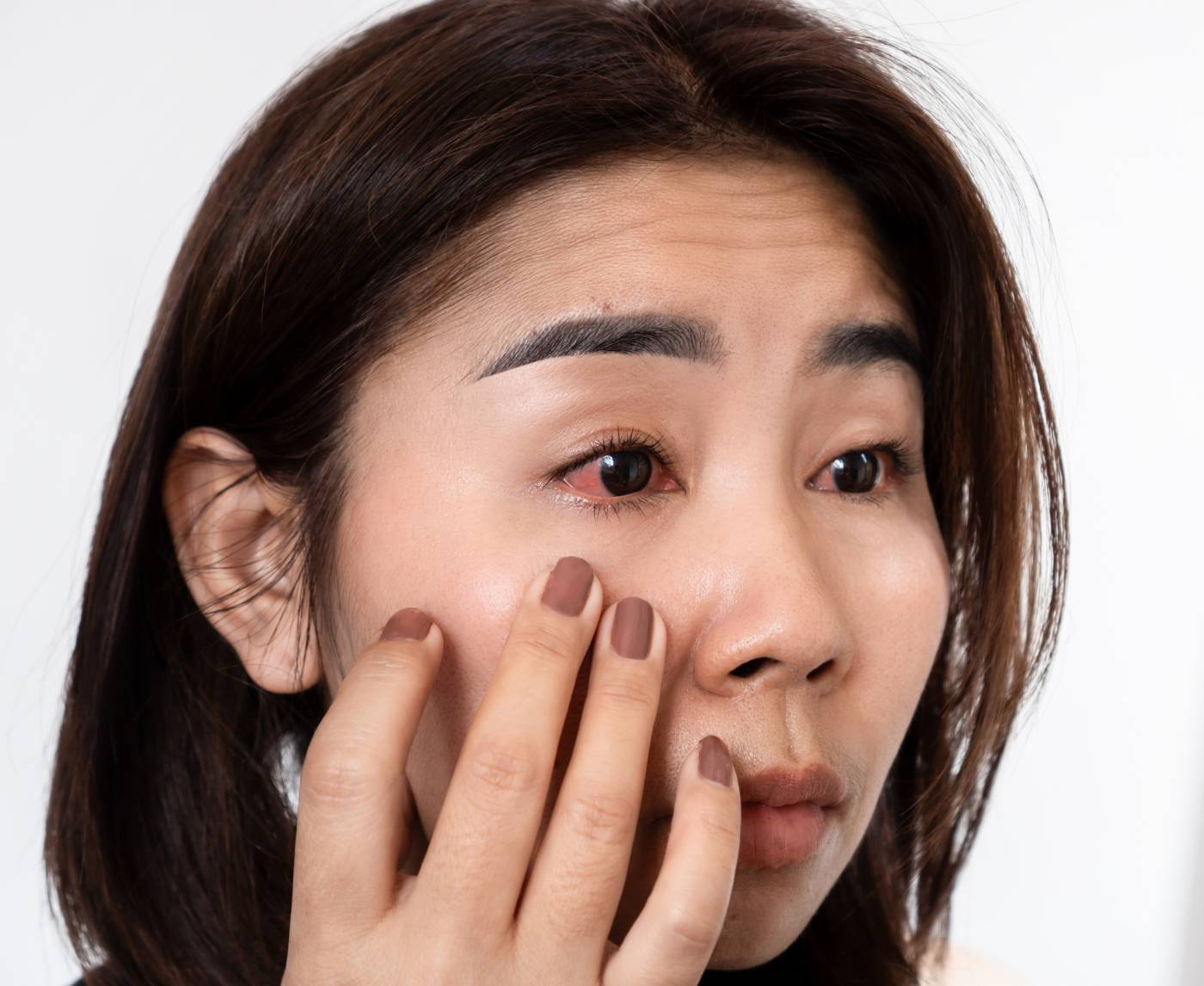
Quick Answer: Herpes in the eye often looks like redness, swelling, watery discharge, or blister-like lesions on the eyelid or cornea. It may mimic pink eye at first but can quickly become painful with blurred vision and light sensitivity.
Why You Might Be Looking This Up Right Now
Maybe your eye started hurting after a cold sore flared up. Maybe a partner with oral herpes kissed your eyelid, and now it’s red and irritated. Or maybe you’ve been dealing with what seems like a stubborn case of conjunctivitis that just won’t quit.
If any of that sounds familiar, you’re not alone. HSV-1, the virus behind cold sores, is the usual suspect behind herpes eye infections. It’s estimated that about 90% of adults are exposed to HSV-1 by the time they’re 50. But when it travels to the eye, often through touch or a reactivation inside the body, it can cause a condition called ocular herpes or herpes simplex keratitis.
We created this guide for people who are scared, Googling blurry-eyed in the bathroom mirror, unsure if they need help. You’ll get honest answers, symptom-by-symptom descriptions, and clear steps forward. No shame, no scare tactics, just clarity.
What Herpes in the Eye Actually Looks Like
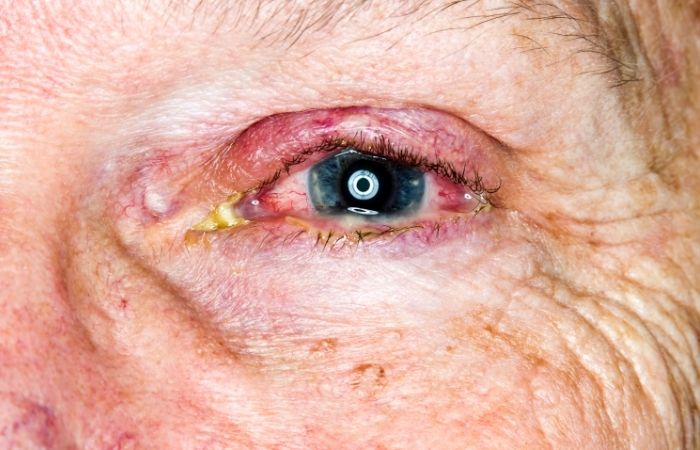
Ocular herpes doesn’t look the same for everyone, but it typically starts with one eye becoming red, irritated, and watery. Some people think it’s pink eye. Others describe it as a burning sensation or say it feels like a grain of sand is stuck under the lid.
The most common signs of herpes in the eye include:
| Symptom | What It Looks or Feels Like | When It Shows Up |
|---|---|---|
| Redness | Bloodshot eye, especially around the cornea | Early stage |
| Watery discharge | Tearing without pus; clear and constant | Early to mid-stage |
| Light sensitivity | Squinting or pain in sunlight | Mid-stage |
| Blurry vision | Cloudy or hazy sight, like a smudge over your eye | Mid to late stage |
| Eye pain | Stabbing, throbbing, or constant irritation | Mid to late stage |
| Blisters on eyelid | Small fluid-filled bumps near lash line | Any stage |
| Corneal ulcers | Grayish or white marks on the cornea seen under exam | Severe stage |
Table 1: Visual signs and stages of ocular herpes. Symptoms may vary based on the type and severity of infection.
“I Thought It Was Just a Stye”
Rosa, 32, had a cold sore two weeks ago. She thought it had cleared up, but then her left eye started swelling. “It felt like a stye at first,” she said. “But then the light from my phone screen started hurting my eyes, and I couldn’t focus my vision.”
“I finally went in when I saw a tiny blister on my eyelid. That’s when the doctor said it was herpes simplex in my eye. I had no idea that was even possible.”
Rosa was treated with antivirals and made a full recovery, but her doctor warned that recurrences can happen. Ocular herpes, once it shows up, often reactivates, especially during times of stress, illness, or sun exposure.
How It Starts: From Cold Sore to Cornea
Most cases of herpes in the eye happen when a person touches a cold sore, often on the lip or mouth, and then touches their eye. It can also reactivate from within, especially in people who’ve had oral herpes outbreaks in the past.
The virus travels along the trigeminal nerve, which connects the face and eye. If it reaches the cornea, it can cause epithelial keratitis (in the outer layer of the eye) or stromal keratitis (deeper inflammation). The deeper the infection, the more serious, and the greater the risk of scarring or vision damage.
According to the American Academy of Ophthalmology, herpes simplex keratitis is the leading cause of infectious blindness in the United States. But it doesn’t have to get that far, if you know the signs early
This Isn’t Just Pink Eye, And Here’s Why
It’s common to mistake herpes in the eye for conjunctivitis, aka pink eye. Both can cause redness, tearing, and sensitivity. But while pink eye is usually caused by bacteria or viruses like adenovirus, herpes triggers deeper inflammation, and the consequences can be more serious.
If you’ve been treating “pink eye” with over-the-counter drops for a few days and it’s not getting better, or it’s getting worse, that’s a red flag. Herpes-related eye infections often don't respond to typical pink eye treatments and need prescription antivirals.
Here’s how herpes in the eye differs from pink eye:
| Feature | Pink Eye (Conjunctivitis) | Herpes in the Eye |
|---|---|---|
| Discharge | Thick, yellow/green (bacterial); watery (viral) | Watery or slightly sticky, no pus |
| Redness | All over eye, especially inner lids | More localized to cornea or one section |
| Pain | Mild discomfort or itchiness | Stinging, burning, or sharp pain |
| Blisters | Not typical | Small fluid-filled bumps on eyelid or skin |
| Vision | Usually unaffected | Often blurred or cloudy |
| Light sensitivity | Rare | Common |
Table 2: Key differences between herpes in the eye and typical pink eye. When in doubt, get it examined.
How Do You Know It’s Herpes in the Eye?
There’s no single test you can do at home to diagnose eye herpes. It usually takes a combination of symptoms, history, and an eye exam to figure it out. An ophthalmologist might use a dye (fluorescein) and blue light to detect damage to your cornea, which often shows a branching or “dendritic” pattern that’s characteristic of herpes.
In some cases, doctors may also take a swab of fluid or tissue to confirm the virus via PCR testing. But often, the diagnosis is clinical, based on what it looks like and how it behaves over time.
If you have a history of cold sores, recurring pink eye in one eye only, or sensitivity to light, bring that up. These clues matter more than you might think.
Can You Test for Eye Herpes at Home?
There’s currently no FDA-approved at-home test for herpes simplex keratitis, the technical name for herpes in the eye. That’s because diagnosis depends on examining your eye under magnification, often with specialized dyes and lights.
However, if you suspect herpes due to a cold sore, genital symptoms, or recent partner exposure, you can test for HSV-1 or HSV-2 antibodies using an at-home herpes test kit. This won’t tell you where the virus is active, but it can confirm whether you’ve been exposed before, which is useful context for eye symptoms.
For people who’ve never had a confirmed herpes infection, this type of testing can provide important clarity. If your test is positive and you're experiencing eye symptoms, that adds weight to a possible herpes keratitis diagnosis.
What to Do If You Think It’s Herpes
If you suspect you have herpes in your eye, don’t wait to see a doctor. In this situation, time matters because treatment can help halt complications that may result in lasting problems with your eyes if you wait to start treatment. Usually, doctors prescribe patients with antiviral medications in pill or eye drop form or both, including acyclovir, valacyclovir, and ganciclovir tablets or drops.
Some people can use steroids to help with the swelling, but if they aren't used correctly, they can make the problem worse. So, unless an eye doctor tells you to, you shouldn't use leftover drops or redness relievers to treat yourself.
If you don't know your history, STD Test Kits gives you private ways to check for HSV exposure. It won't take the place of an eye exam, but it can help you understand what's going on and add to the conversation with your doctor.
Is Eye Herpes Contagious?
Yes, but not in the way that most people think. You can't "catch" herpes in the eye just by looking at someone or using the same towel once. But eye herpes is contagious during outbreaks, especially if there are blisters on or near the eye or mouth.
The most dangerous thing is autoinoculation, which means you move the virus from one part of your body to another. If you have an oral herpes sore and touch it, then rub your eye, you could accidentally get the virus in your eye. This is especially dangerous during the first few outbreaks, when your body hasn't made strong antibodies yet.
Skin contact, such as kissing the baby's face with a cold sore on the face, may also spread the virus to the eyes. When babies contract the HSV, they have the possibility of developing serious conditions in the eyes and the entire body.
What Triggers Eye Herpes to Flare Up?
Ocular herpes is a recurring condition, just like other types of herpes. The virus can stay in your body after the first infection and reactivate later. For some people, it only happens once. For some people, it becomes a long-term problem that needs to be carefully managed.
Some common triggers are:
- Stress: Stress, whether it's physical or mental, can make your immune system weaker.
- UV light: Sun exposure is a known cause, and wearing sunglasses can help lower the risk.
- Sickness or fever: The virus can reactivate even with a cold.
- Injury or surgery: Eye trauma or laser surgery can wake the virus.
These flare-ups may not be as bad as the first one, but they can still hurt the cornea over time, especially if they aren't treated right away. Some people need to take antiviral medicine for a long time to keep from getting scars and losing their vision.
A study in the Journal of Ophthalmology found that about 20–30% of people with ocular herpes will have it again within the first year, and even more will have it again over time.
The Emotional Side: Shame, Stigma, and Vision Fear
Ocular herpes isn’t just a medical issue, it’s an emotional one, too. People often feel blindsided. They associate herpes with sexual activity, not eye pain. Many delay seeking help because they’re ashamed or afraid they’ll be judged.
We want to be clear: you didn’t do anything wrong. HSV-1 is incredibly common and can spread in non-sexual ways. Even toddlers can get it from a parent’s kiss. Once it’s in your system, the virus can show up anywhere nerves travel, including your eyes.
We’ve heard from readers who avoided care because they didn’t want the word “herpes” in their medical chart. Others feared losing their jobs if they had visible blisters. This stigma makes it harder to get early treatment, and harder to heal emotionally.
But getting diagnosed and treated isn’t a confession. It’s self-care. It’s prevention. And it’s strength.
FAQs
- 1. Can herpes in the eye really go away without treatment?
- It might seem like it’s clearing up on its own, but don’t bank on it. Herpes is sneaky. It can quiet down for a while, then come back with a vengeance. And in the eye, that comeback can lead to permanent vision issues. Some people try to wait it out with eye drops and good vibes. That’s a gamble. If you’re dealing with eye pain, blurriness, or light sensitivity, don’t wing it. Talk to a provider, even if it feels awkward.
- 2. What does the first outbreak of eye herpes feel like?
- Honestly? Weird. One minute your eye just feels a little off, dry, itchy, like you didn’t sleep. Then it turns red. Then it burns. Then your vision goes slightly fuzzy and sunlight feels like daggers. A lot of people think it’s pink eye or a rogue eyelash. If you’ve had a cold sore recently or touched your eye after kissing someone with one, herpes is definitely on the suspect list.
- 3. Can you actually go blind from this?
- Yes, but that’s worst-case scenario, not the norm. If left untreated, herpes can scar the cornea, mess with your vision, and in rare cases, lead to blindness. That’s why speed matters. Most people who get treatment early make a full recovery. The key is not brushing it off as “just irritation” for too long.
- 4. Is it safe to wear contacts during an outbreak?
- Not even a little bit. Contacts can trap the virus against your cornea and make things worse, way worse. During an active flare, ditch the lenses and stick with glasses until your doctor gives the all-clear. Even after you’re healed, your eye might need a break before you pop those contacts back in.
- 5. Do you have to have a cold sore to get eye herpes?
- Nope. The virus can reactivate even if you don’t have a visible sore. Some people carry HSV-1 and never get oral symptoms, but the virus can still show up in the eye. Others might get a tingle on their lip and the next day their eye is tearing up. It’s unpredictable like that. If you’ve had HSV-1 in the past, it can reawaken anytime, especially if you’re stressed or sick.
- 6. How do you even catch herpes in your eye?
- Usually, it's self-inflicted, but not in a shaming way. You touch a cold sore or even your mouth (if the virus is shedding) and then rub your eye. Boom: transmission. Other times, someone kisses your eyelid or face during an outbreak, and the virus transfers through skin contact. It’s more common than you’d think, and not a reflection of how “careful” or “clean” someone is.
- 7. Can I test for this at home?
- Not directly. There’s no reliable way to swab your own eye for herpes. But you can use an at-home test to check for HSV-1 exposure. It won’t confirm a current outbreak in your eye, but it tells you whether the virus is already in your system. That info helps your doctor piece together the full picture if you’re having symptoms.
- 8. Is HSV-2 ever involved in eye infections?
- Occasionally, yes. In fact, there is a stronger link between HSV-2 and genital herpes, but it is not limited to below the waist. Rarely, particularly with autoinoculation, HSV-2 can spread to the eye. However, the majority of eye infections with herpes are attributed to HSV-1, which is responsible for cold sores as well.
- 9. What’s the treatment like? Is it painful?
- The meds themselves aren’t painful, usually just pills or eye drops. The discomfort comes from the symptoms: burning, light sensitivity, blurry vision. It can feel intense, but once antivirals kick in, most people start improving in a few days. The tricky part is managing flare-ups long-term if you’re someone who gets them more than once.
- 10. How do I stop it from coming back?
- You can’t banish the virus forever, but you can lower your chances of flare-ups. Daily antiviral pills help if you’re a frequent flyer. Sunglasses matter more than you think (UV is a known trigger). And don’t underestimate stress, getting enough sleep and managing anxiety can make a big difference. Prevention isn’t about perfection. It’s about being gentle with yourself and listening when your body starts whispering warnings.
You Deserve Answers, Not Assumptions
If your eye hurts, your vision is fuzzy, or something just doesn’t feel right, trust that instinct. Herpes in the eye can be serious, but it’s treatable. The sooner you know what’s going on, the better your chances of protecting your vision and avoiding long-term complications.
You don’t have to panic, and you don’t have to wait. This at-home herpes test kit can confirm if HSV might be the underlying cause of your symptoms, without waiting rooms or judgment.
Your body deserves attention. Your fear deserves compassion. And your health deserves action.
How We Sourced This Article: We combined current guidance from leading medical organizations with peer-reviewed research and lived-experience reporting to make this guide practical, compassionate, and accurate. In total, around fifteen references informed the writing; below, we’ve highlighted some of the most relevant and reader-friendly sources.