You Gave Oral Now Your Eyes Red Could It Be Gonorrhea
Quick Answer: If your eyes are red, burning, or crusted after oral sex, you may have gonorrhea or chlamydia in your eye. Semen or vaginal fluids can spread these STDs, especially if there is splashback or contact.
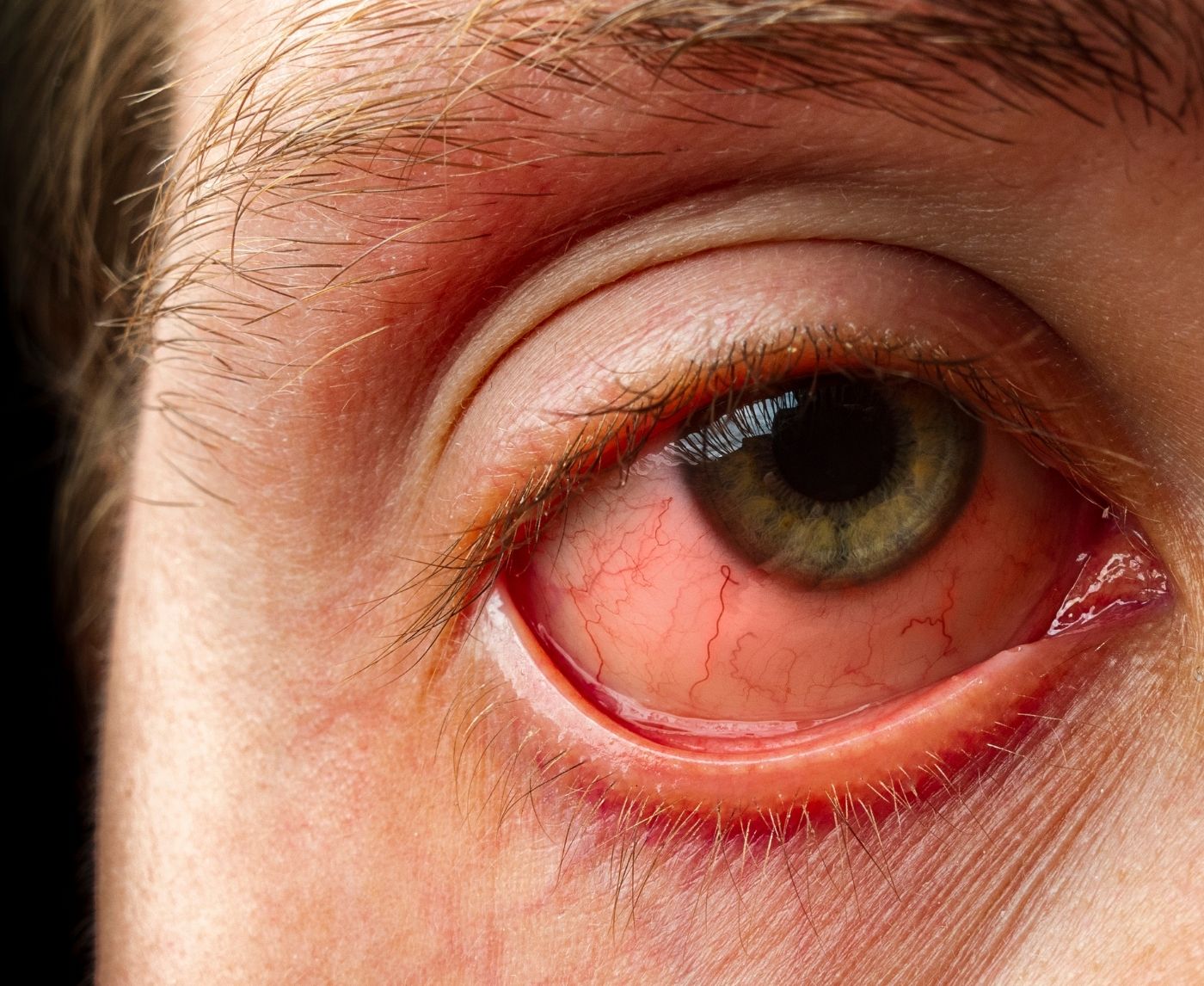
Quick Answer: If your eyes are red, burning, or crusted after oral sex, you may have gonorrhea or chlamydia in your eye. Semen or vaginal fluids can spread these STDs, especially if there is splashback or contact. To avoid serious problems, testing should be done as soon as possible.
What the Hell Is Ocular Gonorrhea?
Ocular gonorrhea is a rare but aggressive eye infection caused by Neisseria gonorrhoeae, the same bacteria that causes genital gonorrhea. It doesn’t care where it lands, if that bacteria reaches your eye, it can wreak havoc fast. Think: redness, swelling, yellow-green discharge, and intense pain. Sometimes it hits one eye; sometimes both.
People are often shocked to learn that this infection isn’t limited to genitals. It can affect the rectum, throat, and eyes, especially if there’s fluid exchange. In fact, one 2023 study found that up to 1 in 20 gonorrhea cases involve the eyes when exposure is unprotected and involves ejaculation near the face.
So no, you don’t have to be “into kinky stuff” for this to happen. It just takes one careless moment, a little splashback, or post-oral rubbing of your eyes with unwashed hands.
“I Thought It Was Just Allergies, Until My Vision Blurred”
Luis, 24, hooked up with someone he met at a queer rave. “It was one of those wild, neon-lit nights. I went down on him, no condom, didn’t think twice,” he shared.
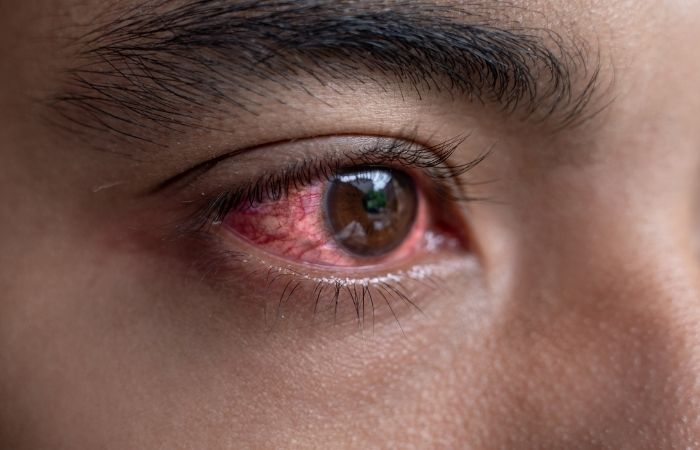
Two days later, Luis woke up with a red, painful eye. “I figured it was makeup residue or maybe a cat hair. But by afternoon, the discharge was thick. I couldn’t keep my eye open. I even had blurry vision in that eye. That’s when I panicked.”
Urgent care diagnosed him with gonococcal conjunctivitis. He hadn’t had genital symptoms. “Turns out he was asymptomatic and didn’t know he had anything. But the bacteria got into my eye somehow, maybe from my hands, maybe splash.”
It took two rounds of antibiotics and a steroid eye drop to recover fully.
“The doctor said if I’d waited longer, I could’ve had permanent corneal damage.”
Luis now tests every three months, eyes included.
How STDs Get Into the Eye (Yes, It’s Real)
The idea sounds bizarre until you understand the mechanics. The eye has mucous membranes, just like the genitals and mouth. That means it’s a viable entry point for certain pathogens, especially those that thrive in moist environments, like gonorrhea and chlamydia.
Here are the most common routes:
| Exposure Route | How It Happens | STD Risk |
|---|---|---|
| Direct semen/vaginal fluid contact | Partner ejaculates near or on face; fluid splashes into eye | High (especially for gonorrhea) |
| Touch transfer | You touch infected fluids and then rub your eye | Moderate |
| Face-sitting or oral-to-genital contact | Face close to genitals, mucosal contact with fluids | Moderate to high |
| Shared towels or eye makeup | Rare but possible with contaminated materials | Low |
Figure 1. Transmission pathways for ocular STDs following oral sex or fluid contact.
Some experts argue ocular transmission is underreported due to misdiagnosis as “just pink eye.” But unlike viral pink eye, gonorrhea-related eye infections worsen quickly, and can become dangerous in days without treatment.
Is It Just Pink Eye, Or Something Worse?
Many of us have had pink eye at some point, maybe because of allergies, dust, or a virus. But STDs that cause eye infections are a different story. At first, they might look the same, but the symptoms get worse faster and don't respond to treatment in the same way.
So, how do you know? Signs include timing, texture, and intensity. You might have an STD-related infection if your eye problems started within 1 to 3 days of giving or receiving oral sex and the discharge is thick, yellow-green, or you also feel pain or swelling.
A 2022 study found that conjunctivitis caused by gonorrhea is often worse than regular pink eye. It can make your eyes hurt more, make pus visible, and even make your eyelids swell or your vision blurry.
Eye Infection Comparison, STD vs Non-STD Causes
| Symptom | Typical Pink Eye | Ocular Gonorrhea |
|---|---|---|
| Redness | Mild to moderate | Severe, often with surrounding eyelid swelling |
| Discharge | Watery or white | Thick, yellow-green pus |
| Pain | Rare | Common and often intense |
| Vision changes | Rare | Possible blurring or light sensitivity |
| Onset | Gradual | Sudden, within 24–72 hours of exposure |
Figure 2. Comparison of standard pink eye vs gonorrhea-related conjunctivitis.
If you’re unsure, don’t try to self-diagnose. Many people wait too long assuming it’s “just irritation.” But untreated gonorrhea in the eye can cause corneal ulceration and even blindness in rare cases.
What About Chlamydia in the Eye?
Chlamydia can also cause a form of eye infection known as adult inclusion conjunctivitis. It typically appears more gradually than gonorrhea and is sometimes misdiagnosed as chronic or allergic conjunctivitis.
The discharge may be less dramatic than gonorrhea but often includes a gritty sensation, redness, and persistent eye irritation that doesn’t go away with over-the-counter drops. It may accompany or follow a genital infection.
Unlike gonorrhea, chlamydia-based eye infections can linger for weeks if untreated. It’s especially common in people with multiple partners or those exposed to asymptomatic partners who don’t know they’re infected.
If either infection is suspected, you’ll need to test, because visually, you often can’t tell them apart.
How to Get Tested (Yes, There’s an At-Home Option)
If you’re reading this with one eye squinting through gunk, yes, you can test at home. And yes, it’s legit.
The same STD Test Kits that detect genital gonorrhea or chlamydia can also help confirm eye-related symptoms. Since these infections often coexist in the throat or genitals, a positive result gives strong evidence that the bacteria may also be present in your eye.
If your only symptom is in the eye, you may still want to use a Combo STD Home Test Kit to check for oral and genital exposure first. Lab confirmation of eye swabs is possible through clinics, but the at-home route helps many people start with clarity and privacy.
When to Test: Timing Is Everything
Here’s the deal: testing too early can give you a false negative. These bacteria need a few days to replicate enough for detection.
For gonorrhea and chlamydia after oral exposure, wait 7 to 14 days before testing for the most accurate result. If symptoms are severe or worsening, test sooner, but follow up with a second test at the 14-day mark to confirm.
If you’re treating this as a wake-up call for broader screening (and you should), test for syphilis, HIV, and trichomoniasis too, especially if condoms weren’t used or if ejaculation occurred near the eyes or mouth.
Worried about the window period? Use the Window Period Calculator to get your exact timeline.
How Ocular STDs Are Treated (Don’t DIY This One)
Unlike seasonal allergies or viral pink eye, STDs in the eye require prescription antibiotics, and fast. Ocular gonorrhea is considered an ophthalmic emergency in many clinical settings because of how quickly it can damage your cornea if left untreated.
The standard treatment for gonorrhea in the eye is an intramuscular injection of ceftriaxone along with saline eye irrigation. In more severe cases, topical antibiotic drops or ointments are added. Hospitalization may be needed if the infection is deep or vision is threatened.
For chlamydia-related conjunctivitis, treatment typically involves oral azithromycin or doxycycline over several days. The key is: don’t rely on standard pink eye drops. They won’t touch this type of infection.
Here’s why speed matters: untreated ocular gonorrhea can cause:
- Corneal ulceration
- Vision loss
- Orbital cellulitis (a deep tissue infection)
- Systemic spread of bacteria in rare cases
Bottom line: if your eye is red, painful, or oozing after a sexual encounter, go to urgent care or test at home and follow up. Don’t let shame delay you.
What If You Don’t Treat It?
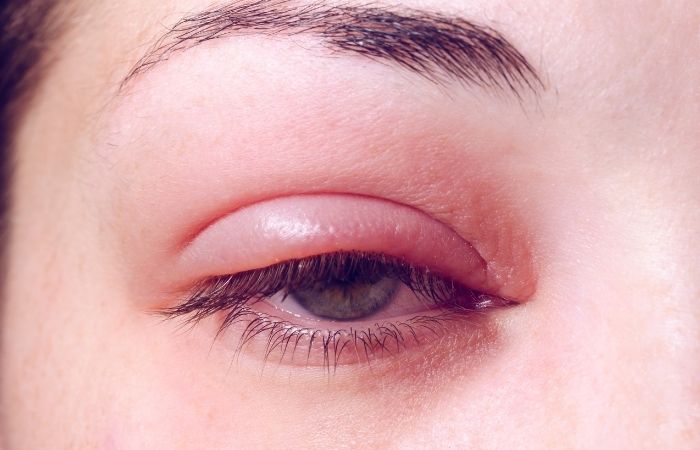
Some people wait, hoping it’ll clear on its own. This is risky. STDs in the eye rarely resolve without treatment and can worsen quickly. Unlike genital symptoms, which some people ignore due to embarrassment, eye infections are harder to hide, and impossible to ignore once they escalate.
Skipping treatment can lead to complications like:
- Chronic conjunctivitis
- Permanent scarring of the eye
- Transmission to others via contaminated hands or towels
In one 2021 case, a 29-year-old delayed treatment for 10 days after developing discharge post-hookup. By the time they sought help, they’d developed a corneal ulcer requiring long-term steroid treatment. Even after antibiotics, they had residual blurred vision.
Getting tested early means less risk, faster treatment, and a shorter recovery window.
How to Talk to a Partner (Even If It’s Casual)
Let’s say you test positive, or your doctor confirms ocular gonorrhea. What now?
You’ll need to tell anyone you were sexually active with recently. That includes oral partners, even if things never went further. Eye symptoms still count as STI exposure, and your partner deserves to know.
If it was a one-time hookup or you don’t feel safe contacting them directly, there are tools to help. Check out TellYourPartner.org, which lets you send anonymous messages encouraging them to get tested.
Try framing it like this:
“Hey, I wanted to let you know I tested positive for an eye infection caused by gonorrhea. I didn't have symptoms anywhere else. You might want to get tested just to be safe.”
This isn’t about blame, it’s about protection. Normalizing these conversations saves everyone time, stress, and health.
Can You Prevent This From Happening Again?
Absolutely. You don’t have to give up oral sex. But being informed helps you play smarter. Here’s what helps reduce the risk of oral-to-eye transmission:
- Use condoms or barriers during oral sex, especially with new or multiple partners
- Wash your hands before touching your eyes, face, or contact lenses after sex
- Avoid ejaculation near the face unless you trust your partner’s recent testing status
- Get tested regularly, you can carry and transmit STDs without symptoms
Even if you trust your partner, remember: many people with gonorrhea or chlamydia don’t know they’re infected. They may be asymptomatic and still contagious.
“I Almost Laughed It Off, Then I Googled It”
Nina, 32, initially ignored her red eye. “I thought I’d rubbed it too hard while high,” she said. “We’d hooked up the night before, oral only, and I remember touching my face right after.”
But the crust got worse. The burning didn’t stop. And her regular allergy drops didn’t work.
“Googling ‘STD in the eye’ was a trip,” she said.
“I didn’t know that was a thing. I found one article that literally said I could go blind if it was gonorrhea. That’s when I ordered a test kit.”
Her test came back positive for gonorrhea and chlamydia. Her eye infection cleared after two weeks of antibiotics, but the memory stuck. “Now I tell everyone: If your eye’s red and you gave oral, don’t brush it off.”
FAQs
- 1. Wait, can you seriously get gonorrhea in your eye?
- Yep. As wild as it sounds, gonorrhea bacteria aren’t picky. If semen or vaginal fluid ends up in or near your eye, through splash, touch, or even rubbing your eye with unwashed hands after giving oral, the infection can absolutely take hold. It’s called gonococcal conjunctivitis, and it’s more common than people realize.
- 2. How is that even possible?
- Your eye, like your mouth and genitals, has mucous membranes. That makes it vulnerable to bacteria that thrive in warm, wet environments. It doesn’t take much, just a few drops of fluid, or even touching your eye after oral contact. Most people don’t think about this, but your body doesn’t care what part it is. Bacteria will move in anywhere they can.
- 3. What does an STD eye infection feel like?
- Imagine waking up with your eye crusted shut, swollen, and burning. The discharge is thick, not watery like allergies. Some people say it feels gritty, like there’s sand in their eye. Light hurts. Vision might blur. If that sounds like your Tuesday morning after a hookup, don’t ignore it.
- 4. Isn’t this just pink eye?
- That’s the trap. Most people think it’s just run-of-the-mill conjunctivitis. But standard pink eye usually clears on its own or with mild drops. If this is caused by gonorrhea or chlamydia, it’ll get worse, and fast. We’re talking serious redness, painful swelling, and thick, colored discharge. This isn’t a vibe to wait out.
- 5. How soon after giving oral can symptoms show up?
- Pretty quickly. For gonorrhea, symptoms can start within 1 to 3 days. Chlamydia might take a little longer, up to a week or two. Either way, if you gave oral recently and your eye goes red soon after, the timing checks out.
- 6. Can I just use regular eye drops?
- Only if you want to waste time. Over-the-counter drops won’t touch a bacterial infection like this. You need antibiotics, usually oral or injected, plus medicated drops or ointments in some cases. It’s not DIY territory. Skip the guessing and get tested or treated.
- 7. I took a gonorrhea test at home. Does that count?
- Yes, especially if it came back positive. Even if you didn’t swab your eye, a positive result from urine or a throat swab confirms that the bacteria is in your system, and that eye infection? Probably not a coincidence. A combo home test is a smart first step if you're not sure where the infection is hiding.
- 8. My partner swears they’re clean. Could I still have caught it?
- Unfortunately, yes. People can carry and transmit STDs without knowing it. Gonorrhea and chlamydia are often silent in men and women. No symptoms doesn’t mean no risk. Testing is care, not accusation.
- 9. Can I still hook up while my eye’s infected?
- Let’s pause there. Until you’re treated and cleared, don’t engage in any sexual activity, oral, genital, or otherwise. It’s contagious, uncomfortable, and trust us, nothing says “romance killer” like crusty conjunctivitis. Give yourself the week off. You’ve earned it.
- 10. What happens if I ignore it?
- Honestly? It can get ugly. Think corneal ulcers, long-term vision issues, or even blindness in extreme cases. We’re not trying to scare you, we’re trying to get you treated before it gets serious. A few pills now beats an ER visit later. Don’t risk it.
You Deserve Answers, Not Assumptions
That red, swollen eye isn’t just annoying, it’s a message from your body. If you gave oral sex recently and woke up with eye discharge, don’t brush it off. Gonorrhea and chlamydia can infect the eye, and they move fast when untreated.
But here’s the good news: you can test from home, get treated quickly, and avoid long-term effects. No shame, no waiting rooms, no guessing games.
How We Sourced This Article: We combined current guidance from leading medical organizations with peer-reviewed research and lived-experience reporting to make this guide practical, compassionate, and accurate. In total, around fifteen references informed the writing; below, we’ve highlighted some of the most relevant and reader-friendly sources.