Can You Use an At-Home Trichomoniasis Test While Pregnant?
Yes, you can use an at-home trichomoniasis test while pregnant. The only things that affect whether the result is reliable are timing and sample collection, not the pregnancy.
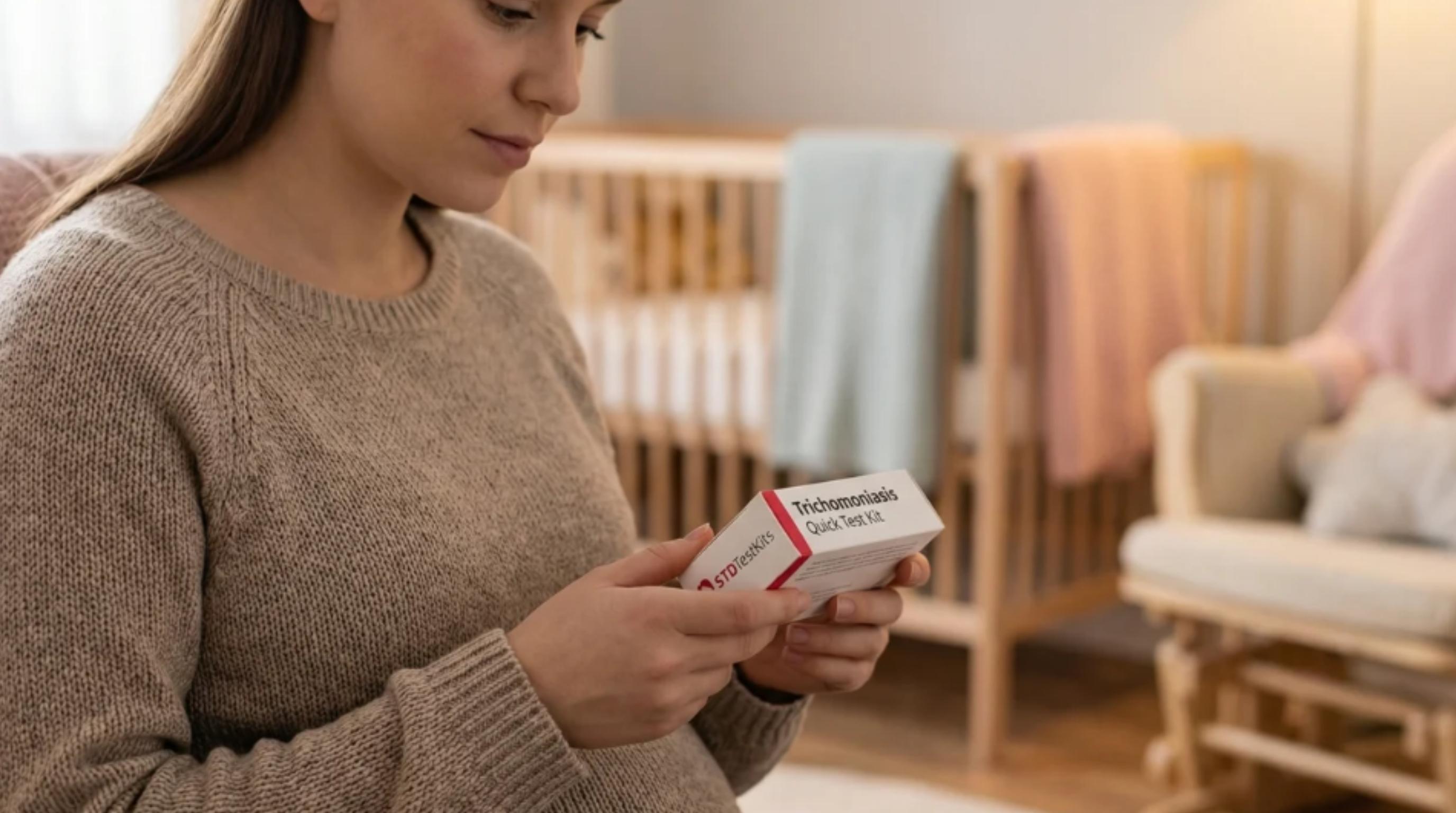
Yes, you can use an at-home trichomoniasis test while pregnant. These tests collect a vaginal swab from the lower genital tract, which is where Trichomonas vaginalis lives, and have no interaction with the uterus or the pregnancy itself. The only things that affect whether the result is reliable are timing and sample collection, not the pregnancy. Wait at least 2 weeks from a potential exposure before testing, follow the kit instructions precisely, and the result you get is one you can act on.
Why Trichomoniasis Testing Matters More During Pregnancy
Trichomoniasis is caused by a protozoan parasite called Trichomonas vaginalis, and it is far more common than most people assume. According to the CDC, trichomoniasis affects an estimated 2.6 million people in the United States, making it the most prevalent curable non-viral sexually transmitted infection in the country. The twist is that according to the CDC's trichomoniasis overview, only about 30 percent of people with the infection develop any symptoms at all. That means the majority of people carrying it have no idea.
That hidden quality is what makes trichomoniasis tricky even outside pregnancy. Add a pregnancy to the picture and the stakes shift. Pregnancy already changes vaginal discharge, blood flow, and immune function in the lower genital tract, exactly the tissue trichomoniasis targets. That overlap makes self-diagnosis from symptoms alone even less reliable than usual, because a lot of what trichomoniasis can cause looks identical to normal pregnancy changes. More discharge. Different odor. Mild irritation. Your body is doing a lot of dramatic things already, and the parasite is very happy to blend in.
There is also a clinically meaningful reason why pregnancy changes the urgency of getting a clear answer. Research has consistently linked trichomoniasis during pregnancy to adverse birth outcomes. A systematic review published in the peer-reviewed literature found that trichomoniasis in pregnant women was associated with preterm delivery, pre-labour rupture of membranes, and low birth weight in this published review of birth outcomes. The CDC's STI treatment guidelines document the same associations. This is not panic-bait. It is the specific medical reason why trichomoniasis gets attention during pregnancy rather than a casual "come back if it gets worse." For a full picture of what trichomoniasis means for a pregnancy from exposure through management, see our complete guide to trichomoniasis during pregnancy.
It also helps to understand the distinction between routine screening and targeted testing. CDC guidelines do not recommend routine trichomoniasis screening for all asymptomatic pregnant women, but they are clear that women with symptoms or known exposure should be evaluated. That means testing is not only appropriate during pregnancy, in many cases, but it is the right call. "Not screened routinely" and "never test while pregnant" are very different instructions, and confusing them leads people to sit on a question that deserves a real answer.
Is an At-Home Trichomoniasis Test Safe to Use While Pregnant?
Yes, with a clear understanding of what "safe" actually means here. An at-home trichomoniasis test that uses a self-collected vaginal swab does not interact with the pregnancy in any meaningful way. The swab collects material from the lower vaginal tract, which is where T. vaginalis lives and where the test is designed to detect it. It does not go into the uterus. It does not disturb the amniotic sac. The anxiety-fueled internet threads suggesting otherwise are not based on how these tests actually work.
What matters during pregnancy is following the kit instructions precisely. Pregnancy does not give you the flexibility to improvise the collection method. If the instructions specify how deep to insert the swab, follow that exactly. If the kit lists conditions that interfere with the sample, recent use of vaginal products, or active heavy bleeding, take those seriously. The safety concern is not about pregnancy itself. It is about whether the sample is collected in the way the manufacturer tested and validated the kit. That applies to everyone, not just pregnant people.
There is one thing worth separating clearly: "safe to use" and "guaranteed to give a reliable result" are not the same thing. A test can be completely safe to take during pregnancy and still return a misleading result if you use it too soon after exposure. The parasite needs time to establish in the vaginal tissue in detectable quantities before any test, home or clinical, can find it. Testing on the day of a potential exposure is not a pregnancy safety issue. It is a timing issue, and a false negative from testing too early is the real risk to think about here.
What Are the Symptoms of Trichomoniasis During Pregnancy?
Picture this: you are already dealing with more discharge than you have ever had in your life, your sense of smell is working overtime, and now there is a new itching sensation that you are trying to figure out. Is that just pregnancy being pregnancy? Is it a yeast infection? Is it something else? This is the exact situation that sends people to the pharmacy, back to Google, and ultimately into a loop of guessing that never actually resolves anything.
Trichomoniasis can cause frothy or thin vaginal discharge, itching or burning inside or around the vagina, a noticeable odor, and discomfort during urination or sex. But here is the complication: all of those symptoms can show up in pregnancy for completely unrelated reasons. Increased discharge is normal. Vaginal pH shifts during pregnancy can change odor. Hormonal changes increase sensitivity to irritation. The symptom overlap between "normal pregnancy stuff" and "trichomoniasis" is substantial enough that trying to tell them apart without a test is essentially guesswork dressed up as detective work.
Odor alone is a particularly poor diagnostic tool, and not just during pregnancy. Bacterial vaginosis, pH changes from semen exposure, yeast infections, and ordinary hormonal fluctuations can all shift vaginal scent without any STI being involved. Trichomoniasis is on the list of possible causes, but so is everything else. A test does not care about the story you constructed from symptoms, it tells you whether the parasite is present or not.
| Symptom | Why it's unreliable for diagnosis in pregnancy |
|---|---|
| Increased vaginal discharge | Normal pregnancy hormonal changes also increase discharge significantly. |
| Changed odor | Vaginal pH shifts during pregnancy and can alter odor without any infection present. |
| Itching or irritation | Yeast infections, BV, and general pregnancy-related skin sensitivity can all cause this. |
| Burning with urination | UTIs are more common during pregnancy and produce the same sensation. |
| No symptoms at all | Most people with trichomoniasis do not develop symptoms, meaning absence of symptoms is not reassurance. |
There is also the silent infection problem to think about. Plenty of people with trichomoniasis have no symptoms whatsoever. If you had a potential exposure, a new partner, an untested partner, a situation where protection was not reliable, the absence of symptoms is not reassurance. It is just silence. And in pregnancy, silence about a treatable infection is not a safe default. For a more detailed breakdown of how trichomoniasis symptoms specifically present during pregnancy and why they are so easy to misread, see trichomoniasis symptoms during pregnancy.
At-Home Testing for Trichomoniasis During Pregnancy: Timing, Accuracy, and What to Expect
The more useful question is not "can I test while pregnant" but "will this result mean anything yet?" Both are about timing, just for different reasons. A vaginal swab rapid antigen test for trichomoniasis works by detecting the parasite directly in the sample. For the test to find it, the parasite needs to be present in detectable quantities. That requires time after an exposure for T. vaginalis to establish in the lower genital tract.
For the Trichomoniasis At-Home STD Test Kit, testing from 2 weeks after exposure gives a reliable result. Testing at 4 weeks gives the strongest possible result. The incubation period for T. vaginalis is typically cited as 5 to 28 days, based on CDC parasite biology guidance, which is exactly why testing on the day of a potential exposure can return a false negative that feels clean but is not. Biology does not rush because anxiety is present. For more on that exact timing question, see how soon you should test for trichomoniasis during pregnancy after exposure.
Pregnancy does not change those window period rules. The parasite behaves the same way in pregnant tissue as it does otherwise; the detection timeline is biological, not circumstantial. What pregnancy does change is the importance of actually getting to a result. Waiting and wondering costs more when a pregnancy is involved. That is a reason to test at the right time, not to delay indefinitely.
Sample quality matters here too. A self-collected vaginal swab is only as good as the collection. Shallow insertion, contamination, or testing right after using a vaginal product can all weaken the result. This is not a pregnancy-specific concern, it applies to any home test. Follow the collection instructions, use the test at the right time, and the result you get is actually interpretable.
| Infection | When to test |
|---|---|
| Trichomoniasis | Test from 2 weeks after exposure; 4 weeks gives the strongest result |
| Chlamydia | Test from 14 days after exposure |
| Gonorrhea | Test from 3 weeks after exposure |
| Syphilis | Test from 6 weeks after exposure |
| HIV | Test at 6 weeks for first indicator; retest at 12 weeks for certainty |
| Herpes HSV-1 and HSV-2 | Test from 6 weeks after exposure |
| Hepatitis B | Test from 6 weeks after exposure |
| Hepatitis C | Test from 8–11 weeks after exposure |
If the concern is specifically trichomoniasis, testing for that one infection makes complete sense. But if the exposure involved an untested or new partner, it is worth thinking about the full picture. Different infections have different window periods and require different test types, some are detected from vaginal swabs, others from blood. A focused result for trichomoniasis is useful. A focused result while ignoring other potential exposures leaves gaps that matter more during pregnancy.
What a Positive or Negative Result Actually Means During Pregnancy
You have done the test. Now what? The answer depends entirely on when you tested and how carefully you collected the sample, and neither of those questions should be skipped before interpreting what you are looking at.
A negative result means the test did not detect trichomoniasis in your sample. It does not mean the infection is definitely absent. A negative taken two weeks or more after exposure, from a properly collected sample, is genuinely reassuring. A negative taken five days after exposure is not a real answer, it is an early window result that biology has not confirmed yet. If symptoms continue, if a partner has since tested positive, or if the timing was off when you tested, that negative deserves a follow-up, not a sigh of relief. Testing is only as trustworthy as the moment you took it.
A positive result means the test detected evidence of trichomoniasis in your sample. During pregnancy, that is a signal to act on, not to wait out. The next step is clinical follow-up, a healthcare provider can confirm the result, assess whether additional STI testing is appropriate, and discuss pregnancy-specific management. A positive is not a moral event. It is a clear, concrete answer that replaces the guessing game with a plan. For what treatment looks like during pregnancy, specifically, see can you treat trichomoniasis during pregnancy.
One more timing note worth having on hand: if the exposure situation involved more than just trichomoniasis as a concern, the full window period picture applies. Chlamydia is detectable from 14 days after exposure. Gonorrhea from 3 weeks. Syphilis from 6 weeks. HIV at 6 weeks for a first indicator, with a retest at 12 weeks for certainty. Herpes HSV-1 and HSV-2 from 6 weeks. Hepatitis B from 6 weeks. Hepatitis C from 8–11 weeks. Those windows are not suggestions; they reflect the biology of when each infection becomes detectable by the appropriate test type, and they apply just as much during pregnancy as at any other time.
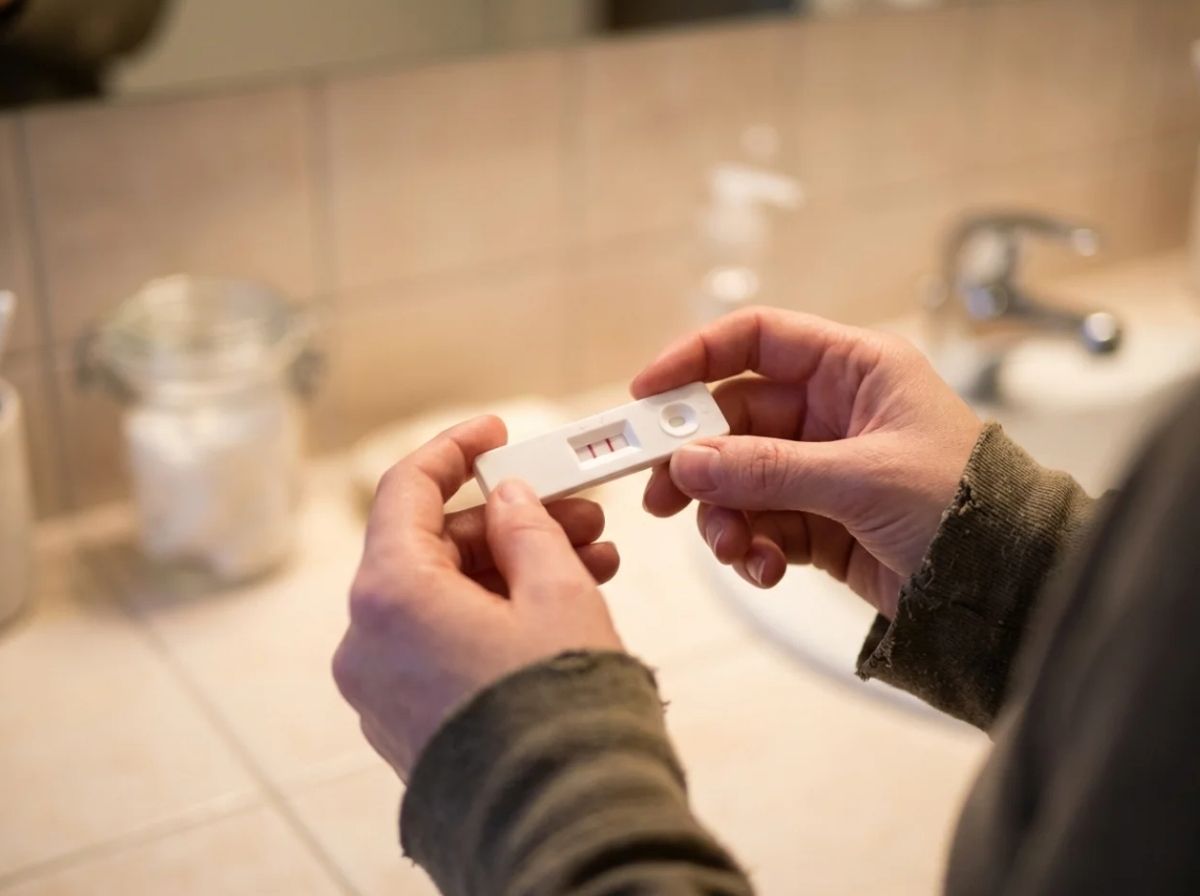
Does Trichomoniasis Affect the Pregnancy or the Baby?
Trichomoniasis during pregnancy is associated with premature rupture of membranes, preterm delivery, and low birth weight, but an association is not a guarantee of a bad outcome. The infection is curable. The risk comes from leaving it undetected and untreated, not from the diagnosis itself. A positive result during pregnancy is a reason to act, not a reason to spiral.
Here is where the internet tends to split into two unhelpful camps: "it's nothing, just discharge" and "catastrophic worst-case spiral." Neither is right. The reality is that trichomoniasis during pregnancy deserves clinical attention because of a specific, evidence-based reason, and that reason does not mean a positive result guarantees a bad outcome.
The concern comes from the inflammation the parasite causes in the lower genital tract. T. vaginalis attaches to vaginal and cervical tissue, triggering an immune and inflammatory response. That inflammation is the mechanism behind the associations researchers have documented. The CDC notes that trichomoniasis infection during pregnancy is associated with premature rupture of membranes, preterm delivery, and low birth weight. A systematic review in the peer-reviewed literature confirmed the same pattern, finding links between trichomoniasis in pregnancy and preterm delivery, pre-labour rupture of membranes, and infants who are small for gestational age. These are association findings, not guarantees, but they are grounded in real data, not scare tactics.
The practical meaning of all of this is not "panic if you test positive." It is "do not brush off a positive result or put off testing when you have a reason to test." A treatable infection that goes unidentified is the real risk. The infection itself is curable. Getting to a result is the part that requires effort, and pregnancy is a good reason to make that effort sooner rather than later. If you want to understand more about the specific pregnancy risks in detail, we cover the evidence on whether trichomoniasis can cause miscarriage or preterm birth, and separately on whether a baby can get trichomoniasis during birth.
It is also worth noting that trichomoniasis is not a reportable disease in the United States, which means epidemiologists rely on surveillance studies rather than case counts to track it. The CDC's treatment guidelines put the U.S. prevalence at approximately 2.6 million cases, and because so many infections are asymptomatic, the actual number is likely higher. You are not in unusual territory by asking this question. You are in very common territory, and getting a clear answer is the smartest thing to do with it.
How to Handle Testing and Next Steps Without the Panic Spiral
There is a version of this situation where someone spends three days deep in browser tabs, texting friends who are equally uncertain, and eventually either talks themselves out of worrying or talks themselves into full-blown panic. Neither outcome involves actual information. The better move is shorter and less dramatic: identify the exposure, match it to the right window period, use a test at the right time, and interpret the result for what it actually shows.
If you are pregnant and concerned about trichomoniasis, the goal is not to wait for a more dramatic symptom to justify doing something about it. The goal is clarity. A properly timed at-home trichomoniasis test answers one very specific question, and during pregnancy, that question has more weight than it does otherwise. Use it from 2 weeks after exposure for a reliable result, and at 4 weeks for the strongest one. If the result is positive, follow up with a clinician; that is not an emergency, it is a next step. If the result is negative but the timing was too early or symptoms are still present, that result has not fully closed the question yet. Retest when the window is open.
Testing is not an admission that something went wrong. It is how you stop running scenarios and start operating on real information. Pregnancy does not make that process inappropriate; it makes it more worthwhile. There is something genuinely useful about swapping a night of anxious Googling for a result you can actually act on. The Trichomoniasis At-Home STD Test Kit is the most direct path to that answer when trichomoniasis is the specific question.
FAQs
- 1. Is it actually safe to use a trichomoniasis home test while pregnant?
- Yes. These tests use a vaginal swab to collect material from the lower genital tract, nowhere near the uterus, the amniotic sac, or the pregnancy itself. As long as you follow the instructions, the only real concern is testing at the right time after exposure, not whether the test is safe to use.
- 2. Does pregnancy affect how accurate the test is?
- Not in the way most people think. Pregnancy does not confuse the test or mask the parasite. What affects accuracy is timing; if the organism is not yet present in detectable amounts, the test can miss it, regardless of whether you are pregnant. The variable is when you test, not the pregnancy itself.
- 3. What if I just had a potential exposure? Can I test right now?
- You can, but the result will not be reliable. Right after exposure, the parasite has not had enough time to establish in your vaginal tissue at detectable levels. Testing immediately can return a false negative that feels reassuring but is not. Wait at least 2 weeks for a reliable result, and 4 weeks for the strongest one.
- 4. Pregnancy discharge is already all over the place. How would I know if it's trichomoniasis?
- Honestly, you probably cannot tell from discharge alone, and that is exactly the point. Pregnancy increases discharge, shifts odor, and changes vaginal texture independently of any infection. Trichomoniasis causes some of those same things. The overlap is why guessing from symptoms does not work here; testing cuts through it.
- 5. If my result comes back negative, can I stop worrying?
- That depends on when you tested. A negative result after the 2-week window with a proper sample is genuinely reassuring. A negative result taken too early is more of a "not detectable yet" than a true all-clear. If the timing was off or symptoms continue, the case is not closed.
- 6. What if it comes back positive?
- Take it seriously, follow up with a clinician, and do not catastrophize. A positive result during pregnancy means the infection should be managed properly; it is a clear next step, not a crisis. The important thing is that you now have a real answer instead of a theory.
- 7. Does trichomoniasis mean something bad will happen to my baby?
- Not automatically. The research shows an association between trichomoniasis in pregnancy and outcomes like preterm delivery or low birth weight, which is why clinicians do not ignore it. But an association is not a guarantee. A positive result is a reason to get proper follow-up, not a reason to assume the worst.
- 8. Should I test for other STIs at the same time?
- That depends on the exposure. If trichomoniasis is your only concern, a single focused test makes sense. If the situation involved a new or untested partner, broader testing is usually smarter; different infections have different window periods and need different test types, so one negative result does not cover all possibilities.
- 9. If I tested too early, when should I retest?
- Wait until you are at least 2 weeks from the exposure, 4 weeks if you want the most reliable result possible. Retesting is not overthinking. It is testing at the point where the result actually tells you something useful.
- 10. Is an at-home test enough, or do I still need to see a doctor?
- An at-home test is a fast, focused answer to one specific question, and it earns its place in the process. If the result is positive, symptoms continue after a negative, or the situation involves more than one potential infection, a clinician becomes the right next step. It is not either/or, it is sequence.
Get a Clear Answer from Home
If you want to stop guessing and get a result you can actually act on, the Trichomoniasis At-Home STD Test Kit is the most direct route when trichomoniasis is the specific question. For a broader picture, if the exposure involved a new or untested partner and you want to cover more ground in one go, the Women's 10-in-1 At-Home STD Test Kit covers ten infections from a single home collection. You can also browse the full range at the STD Test Kits homepage to find what fits your situation best.
The goal is the same either way: a real answer, at the right time, without the waiting room. Testing is how you replace the spiral with a plan.
Our article was constructed based on current advice from the most prominent public health and medical organizations, and then molded into simple language based on the situations that people actually experience, such as treatment, reinfection by a partner, no-symptom exposure, and the uncomfortable question of whether it "came back." In the background, our pool of research included more diverse public health advice, clinical advice, and medical references, but the following are the most pertinent and useful for readers who want to verify our claims for themselves.