Got an STD but Didn’t Cheat? You’re Not Alone
Quick Answer: Yes, you can get an STD in a monogamous relationship. Infections can remain dormant, asymptomatic, or acquired before the relationship began. Monogamy does not equal immunity. You’re not reckless.

Quick Answer: Yes, you can get an STD in a monogamous relationship. Infections can remain dormant, asymptomatic, or acquired before the relationship began. Monogamy does not equal immunity.
Who This Guide Is For (And Why It Matters)
If you're reading this, you're probably feeling blindsided. You thought love, loyalty, or exclusivity protected you. Maybe you’re googling in the bathroom, avoiding eye contact with your partner in the next room. Maybe you're crying alone in your car after leaving a clinic. You’re not reckless. You’re not dirty. You’re human, and you’re not alone.
This guide is for people who tested positive but stayed faithful. For partners who are scared to ask the hard questions. For anyone who's been taught that monogamy equals safety, only to discover biology doesn’t care about promises. We’ll walk you through how this happens, what science says about dormant STDs and silent transmission, and what to do next, including how to retest and talk to your partner.
Testing isn’t a confession, it’s care. And knowledge isn’t betrayal, it’s protection. So let’s break down the myths and give you a real roadmap forward.
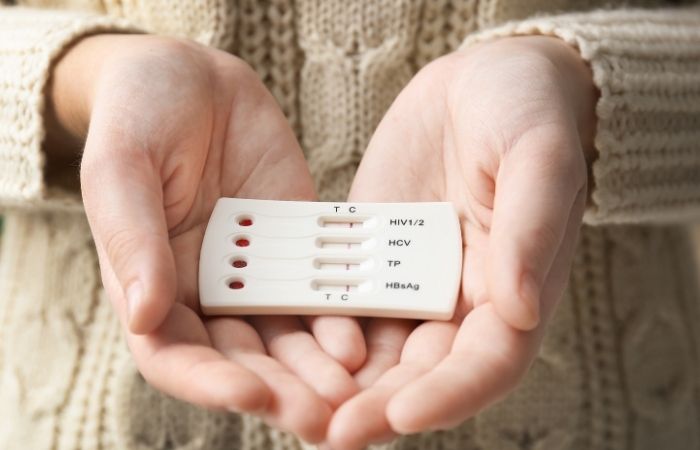
Why Monogamy Doesn’t Guarantee STD Safety
It’s a story we hear all the time: “We’ve only been with each other.” But that doesn’t mean neither partner has ever carried an STD. Many infections, like chlamydia, herpes, and even HIV, can live in the body without symptoms for weeks, months, or even years. That means one of you could have acquired the infection before the relationship started…and just never knew.
According to the CDC’s screening guidelines, most STDs can be asymptomatic, especially in people with vaginas. A partner who tested years ago, or never tested at all, might carry an infection without knowing it. Add in long incubation periods and dormant infections, and it becomes clear: the absence of symptoms isn’t proof of absence.
This is especially common with herpes, which can lie dormant for years and surface during times of stress, illness, or hormonal changes. HPV can also go undetected, especially without regular Pap smears or specific swab tests. Bottom line? Faithfulness doesn’t cancel out past exposures, and silence doesn’t mean safety.
“We Were Exclusive, But I Still Got Herpes”
Devon, 31, was in a committed relationship with his boyfriend of three years when he noticed a painful blister near his groin. “I honestly thought it was from shaving,” he said. But the discomfort got worse, and a clinic visit confirmed it: he had genital herpes. “I was floored. I hadn’t been with anyone else. And I knew he hadn’t either.”
“We both felt violated, like our trust had been broken, even though it wasn’t. The doctor explained one of us probably had it for years without symptoms.”
Devon’s story is heartbreakingly common. In fact, studies estimate that 1 in 6 people between ages 14 and 49 in the U.S. has herpes, and up to 90% of them don’t know it. Dormant STDs can surface unexpectedly and can be transmitted even without visible outbreaks. No one cheated. The virus just waited.
The Medical Science Behind Dormant STDs
So how exactly does someone get an STD without cheating? The answer lies in viral latency, incubation periods, and asymptomatic carriage. Here's what that means in plain English:
| STD | Can Be Dormant? | Asymptomatic Possible? | Can It Resurface Later? |
|---|---|---|---|
| Herpes (HSV-1/2) | Yes | Yes | Yes, with stress or triggers |
| Chlamydia | Yes (especially untreated) | Yes, up to 70% in women | Can cause symptoms months later |
| HIV | Yes (can stay undetected) | Yes (for years in early stages) | Yes, becomes symptomatic if untreated |
| HPV | Yes | Yes (often clears on its own) | May reactivate under stress |
Figure 1. How dormant or asymptomatic infections can still impact committed partners.
This is why routine testing, even in relationships, isn’t about distrust. It’s about biological reality. You can carry something silently, pass it on unknowingly, and never feel a single symptom.
When Symptoms Show Up Later, But the Infection Was Already There
One of the most painful parts of an unexpected STD diagnosis is the timing. You feel fine for months or even years, then suddenly, something appears: a sore, a strange discharge, a burning sensation. It’s easy to assume the worst. But many infections don’t play by neat timelines. The first symptoms may be the body reacting to a trigger, not a new exposure.
Take herpes, for example. The virus often enters the body and hides in the nervous system, only to reactivate years later during stress, illness, or even hormonal shifts. HPV may remain undetectable for months and then show up during a routine Pap smear. Chlamydia and gonorrhea can linger with mild or no symptoms, especially in people with vaginas, and lead to complications like pelvic inflammatory disease if untreated.
So if symptoms suddenly show up in a long-term relationship, it doesn’t always mean someone was unfaithful. Sometimes, it just means the infection finally made itself known.
How to Talk to Your Partner About a Positive STD Result
This is the part most people dread. Not because they’ve done anything wrong, but because they’re afraid of being misunderstood. A positive result feels like it comes with an accusation. But it doesn’t have to.
You can start by saying that your result is a medical fact, not a confession. Try saying, "I was shocked when I found out I had [STD]. I haven't been with anyone else. I wanted to talk to you about it because I care about you and me. Don't blame anyone; instead, frame the conversation with interest and care. When the focus is on health instead of guilt, most people feel better.
It’s okay to share your confusion, anger, or sadness. But also make space for your partner’s emotions. They may feel scared or defensive. Remind each other that this is about finding the source medically, not assuming the worst personally.
Need help navigating this? Many clinics and telehealth services offer anonymous partner notification or script suggestions. Testing together can rebuild trust rather than tear it down.
When to Test (or Retest) After a Positive or Negative Result
If you just received a positive result, confirm it with a second test, especially if it was a rapid or single-panel kit. Lab-based NAAT tests (nucleic acid amplification tests) are the gold standard for chlamydia, gonorrhea, and trichomoniasis. Blood-based antibody tests work for syphilis and HIV, though timing matters.
If you tested negative but still have symptoms, or your partner tested positive, you should consider retesting. Here’s a breakdown of ideal windows for accuracy:
| STD | Best Testing Window | Retest If? |
|---|---|---|
| Chlamydia | 14 days after exposure | Symptoms persist, recent exposure, or after treatment (in 3–4 weeks) |
| Gonorrhea | 14 days | Same as above |
| Syphilis | 3–6 weeks | Earlier test was negative but suspicion remains |
| HIV | 4–6 weeks (antigen/antibody), 10–33 days (NAAT) | Initial negative but within early window |
| Herpes | 4–12 weeks for antibody | No symptoms but partner positive |
Figure 2. Ideal test timing for accuracy. Retesting can catch what early testing might miss.
If it’s been a while since you or your partner last tested, or if testing was never part of your start-of-relationship routine, it’s worth doing now. Many people assume their partner was tested before, only to find out years later they never were.
False Positives, Missed Infections, and Other Testing Curveballs
Not all test results are perfect. False positives can happen, especially with low-prevalence infections or in certain rapid tests. False negatives are even more common if you test too soon, don’t follow collection instructions, or have an intermittent infection (like herpes).
Always treat a positive result as a reason to retest, not panic. And remember: one test is a snapshot. Two tests tell a story. When in doubt, retest after a few weeks, especially if your situation changes or symptoms appear.
Privacy, discretion, and emotional safety matter too. STD Test Kits offers fast, confidential shipping with no labels or billing disclosures. That way, you stay in control of your next move.
How Privacy, Shipping, and Support Work With At-Home Testing
When you're dealing with an STD scare in a committed relationship, discretion isn’t a luxury, it’s a necessity. That’s why at-home testing has become such a game-changer. No awkward questions at clinics, no waiting rooms filled with sideways glances. Just you, your test kit, and the clarity you deserve.
All kits from STD Test Kits arrive in plain, unbranded packaging. There are no “STD” labels, no pharmacy logos, just a neutral box that could be anything from vitamins to headphones. Inside, clear instructions guide you through every step.
Shipping typically takes 1–3 business days depending on your location. Many readers time their delivery around work trips, weekend getaways, or times when they’ll have the house to themselves. Results for rapid kits show up in minutes. Mail-in lab kits include a prepaid return envelope and results are uploaded confidentially to your account.
Whether you live off-grid, with roommates, or in a household where your partner doesn't yet know you're testing, these tools are built for real-world use, not ideal scenarios.

Preventing Reinfection in Long-Term Relationships
If one or both of you test positive, the biggest risk isn't that one of you is cheating; it's that one of you is going to get sick again. If neither of you gets treated at the same time, STDs such as chlamydia and trichomoniasis can go back and forth between the two of you. Therefore, testing your partner is not only about honesty; it's also about biology.
Here’s what works to prevent reinfection in couples:
| Prevention Tool | When to Use It | Why It Helps |
|---|---|---|
| Mutual Testing | Before sex resumes, or during treatment | Ensures both partners are clear and not reinfecting each other |
| Condoms or Barriers | During treatment and retesting periods | Reduces reinfection and protects while awaiting results |
| HPV Vaccination | Before age 45, ideally before exposure | Protects against multiple strains and helps lower cancer risk |
| Regular Screening | Annually or after new exposures (even in long-term couples) | Catches silent infections early and supports health maintenance |
Figure 3. Prevention isn’t just for new partners, ongoing care matters in relationships too.
Reinfection doesn’t mean someone cheated. It often means someone got treated, and the other didn’t. Coordinated care is key. Consider testing together to turn a moment of stress into a moment of partnership.
“I Never Asked If He’d Been Tested. I Just Assumed.”
Nora, 26, moved in with her boyfriend after dating for six months. “We were exclusive, used condoms at first, and then stopped. I never asked if he’d been tested, I assumed he had.”
Two years later, a routine pelvic exam showed she had chlamydia. “I confronted him, and he swore he hadn’t cheated. We both got tested again, and turns out, he was positive too. He’d never been tested before. He thought you only needed to if you had symptoms.”
“It wasn’t cheating. It was just ignorance. And honestly, I was just as much to blame for not asking.”
Nora and her partner got treated, retested, and now test together every year. It’s part of their wellness routine, not a threat to their intimacy.
FAQs
- 1. Can you really get an STD if nobody cheated?
- Yes, and it happens more often than people think. STDs don’t need cheating, they need contact, and that contact might’ve happened months or years ago. Dormant infections like herpes or HPV can live quietly in your body and flare up later, long after the relationship began. So no, a positive test doesn’t automatically mean betrayal.
- 2. How long can an STD stay in your body without causing symptoms?
- It depends on the infection. Herpes can lie low for years. Chlamydia might simmer silently for months. Some people never show symptoms at all. That’s why someone can pass something on and genuinely have no clue they were infected.
- 3. My partner swears they’ve never had symptoms. Could they still have something?
- Absolutely. Most STDs are sneaky. Around 70% of people with chlamydia and up to 90% with herpes don’t notice anything. No burning, no itching, nothing obvious. The infection doesn’t announce itself, it just lingers quietly unless you test for it.
- 4. I tested positive. Does that mean my partner cheated?
- Not necessarily. That’s a natural fear response, but it's not the only explanation. The infection could’ve been there before your relationship started. It could be reactivating. Or yes, it could be new, but don’t jump to conclusions until you’ve had an honest convo, done follow-up testing, and talked to a provider if you need help navigating the emotions.
- 5. Can I discuss testing with my partner without making it seem accusatory?
- Totally. Approach it with care and not suspicion. Suggest: “I have been worried about my health lately; maybe we both get tested for our peace of mind.” Believe it or not, it brings couples closer together.
- 6. If I have already tested negative for an STD, do I really need to get tested again?
- Maybe. Perhaps you were tested too early after exposure or used a less sensitive test. Most experts recommend re-testing when you have completed a window period: two weeks for chlamydia and gonorrhea; six weeks for HIV; and 12 weeks for herpes. It is not overkill; it is being thorough.
- 7. Do I really need to get tested too if only my partner tested positive for an STD?
- Yes, 100%. You are a team; don’t treat only your partner for an STD and risk getting infected again with bacterial infections like trichomoniasis and chlamydia. You both get tested and get clarity; you both move forward without wondering what if.
- 8. Is it weird to ask about STD testing if we’ve been together for years?
- Not weird at all. In fact, it’s mature. Life changes. Bodies change. You might be thinking about pregnancy, planning a new phase of intimacy, or just realizing you never really covered this topic. Late is better than never, and testing is love, not mistrust.
- 9. Can an STD show up years after I caught it?
- Yep. Some viruses hang out in the body indefinitely and only make noise when something triggers them, stress, illness, hormonal shifts. Others just never show symptoms in the first place. So if something surfaces “out of nowhere,” it might not be new at all, it might just finally be visible.
- 10. What test should we start with?
- A Combo STD Home Test Kit is a solid choice. It checks for the most common infections, chlamydia, gonorrhea, syphilis, and HIV, and you can take it in the privacy of your home. Think of it as your reset button for peace of mind.
Love Deserves Clarity, Test Without the Guesswork
Whether you’re newly exclusive, long-term committed, or somewhere in between, testing is an act of love, not suspicion. You can protect each other without shame. You can make informed choices without judgment. And you can start by testing together, or alone, at home.
Find the right test for your situation at STD Test Kits. Confidential. Fast. Partner-proof.
How We Sourced This Article: We combined current guidance from leading medical organizations with peer-reviewed research and lived-experience reporting to make this guide practical, compassionate, and accurate. In total, around fifteen references informed the writing; below, we’ve highlighted six of the most relevant and reader-friendly sources. Every external link in this article was checked to ensure it leads to a reputable destination and opens in a new tab, so you can verify claims without losing your place.