HIV From Oral Sex: Is Giving or Receiving Riskier?
Quick Answer: HIV can be transmitted through oral sex, but the risk is significantly lower than with vaginal or anal sex. what they usually want is a number that lets them sleep. HIV does not spread through saliva.

Quick Answer: HIV can be transmitted through oral sex, but the risk is significantly lower than with vaginal or anal sex. Giving oral sex carries slightly more theoretical risk than receiving, especially if there are cuts or sores in the mouth, but overall transmission through oral sex is rare.
Let’s Talk About What “Risk” Actually Means
When people Google “what are the chances of getting HIV from oral?” what they usually want is a number that lets them sleep. According to data summarized by the CDC and multiple peer-reviewed analyses, there is no reliable per-act transmission rate for oral sex because confirmed cases are extremely uncommon. In epidemiological language, it’s considered low risk. In human language, that means it happens rarely, but not never.
These fluids include blood, semen, pre-seminal fluids, rectal fluids, vaginal fluids, and breast milk. HIV does not spread through saliva. Therefore, HIV will not spread through kissing, sharing drinks, or when someone spits during sex. There are some enzymes present in saliva that prevent the spread of HIV. The virus present in saliva is very low.
Transmission requires three things: the virus must be present, it must enter the bloodstream or mucous membranes, and there must be enough viral load to establish infection. Oral sex can, in theory, create that pathway, but it’s a much less efficient route than anal or vaginal exposure.
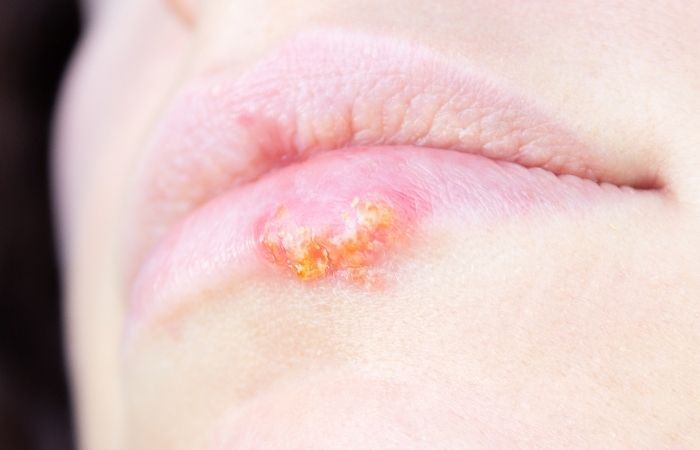
Giving vs. Receiving: Where the Risk Shifts
If you're asking whether giving oral sex is riskier than receiving it, you’re already thinking in the right direction. The small amount of documented transmission risk primarily applies to the person giving oral sex, not the one receiving it.
Why? Because the person giving oral sex may be exposed to semen, pre-ejaculate, or vaginal fluids that could contain HIV. If those fluids come into contact with open sores, recent dental work sites, bleeding gums, or inflamed tissue in the mouth, the theoretical pathway for infection increases slightly.
The person who receives the oral sex is at an even lower risk. HIV is not easily transmitted from saliva to the genitals. Even if the person with HIV is the one performing the oral sex, it is not considered a fluid that can transmit HIV. There are no documented cases of someone contracting HIV by receiving oral sex.
| Scenario | Relative HIV Risk | Why |
|---|---|---|
| Giving oral sex on a penis (with ejaculation) | Low, but higher than receiving | Exposure to semen and pre-seminal fluid in mouth |
| Giving oral sex without ejaculation | Very low | Lower fluid exposure, but pre-ejaculate still possible |
| Receiving oral sex | Extremely low to negligible | Saliva does not efficiently transmit HIV |
| Oral sex with undetectable partner (U=U) | Effectively zero | Undetectable viral load prevents transmission |
Figure 1. Relative HIV transmission risk by oral sex scenario. Based on CDC and peer-reviewed consensus on transmission efficiency.
What About Swallowing Semen?
This is one of the most searched panic questions: “If I swallowed, is my risk higher?” The presence of semen in the mouth technically increases exposure compared to no ejaculation. But the stomach’s acidic environment rapidly inactivates HIV. The risk window is before swallowing, while semen is in contact with oral tissues.
If your mouth has no open sores, bleeding, or recent dental trauma, the overall risk remains very low. If you had visible blood, significant gum disease, or a fresh extraction site, the theoretical risk increases slightly, but it still remains much lower than unprotected anal or vaginal intercourse.
It’s also important to factor in viral load. If a partner living with HIV is on treatment and undetectable, research overwhelmingly confirms that transmission does not occur, including through oral sex. Undetectable equals untransmittable. That’s not optimism; it’s data.
Cuts, Cold Sores, and Bleeding Gums, Does That Change Everything?
Not everything. But it can shift risk slightly.
If you’ve been Googling “HIV risk with cuts in mouth” or “bleeding gums oral sex HIV,” here’s the grounded answer: inflammation and open wounds increase theoretical susceptibility because they reduce the protective barrier of intact mucosa. That doesn’t suddenly make oral sex high risk, but it’s why dental health matters in transmission discussions.
Cold sores caused by Herpes are not the same thing as open bleeding wounds. They represent inflamed tissue, and while they increase vulnerability to infections in general, documented HIV transmission through oral sex remains rare even in these contexts.
If you had major oral trauma, recent surgery, deep bleeding lacerations, that’s when a healthcare provider might recommend testing at standard window intervals just for reassurance.
What the Data Actually Says (Without Fear Tactics)
Here’s the part that matters: decades of HIV research show that oral sex is not a primary driver of transmission. Large epidemiological reviews find that cases attributed solely to oral sex are uncommon and often difficult to isolate from other exposures.
Compare that to receptive anal sex, which carries a per-act transmission risk estimated around 1.38% without protection. Oral sex does not approach that level. That difference is not subtle, it’s orders of magnitude apart.
But anxiety doesn’t respond to statistics. It responds to uncertainty. So the real question becomes: do you need to test?
So… Should You Get Tested After Oral Sex?
This is usually where the spiral peaks. You’ve read that HIV from oral sex is rare. You’ve compared giving versus receiving. Maybe there was ejaculation. Maybe there were bleeding gums. Now you’re staring at your calendar wondering how soon to test for HIV after oral sex.
Testing isn’t about panic. It’s about clarity. If your exposure was oral-only, your risk is low, but testing can still provide emotional relief, especially if you don’t know your partner’s status. The key is timing. Testing too early can give you a false sense of security.
HIV tests don’t detect the virus immediately. They detect either viral RNA, p24 antigen, or antibodies, and each appears in the bloodstream at different times after exposure.
The Window Period, What Your Body Needs Time To Do
When people search “window period HIV oral exposure,” they’re really asking: how long until a test is accurate? The window period is the time between exposure and when a test can reliably detect infection. During this period, a person could technically have HIV but still test negative.
There are three common types of HIV tests, and their detection timelines differ. Understanding this removes a lot of unnecessary fear.
| Test Type | What It Detects | Earliest Detection | Conclusive At |
|---|---|---|---|
| Nucleic Acid Test (NAT) | Viral RNA | 10–14 days | 33 days |
| 4th Gen Antigen/Antibody (blood) | p24 antigen + antibodies | 18–21 days | 45 days |
| Rapid Antibody Test (fingerstick or oral fluid) | Antibodies only | 23–90 days | 90 days |
Figure 2. HIV testing window periods based on CDC guidance and peer-reviewed data.
If your only exposure was oral sex, most clinicians would consider a 4th generation test at 4–6 weeks highly reassuring. A final antibody test at 3 months is considered conclusive.
What If You Test Too Early?
Let’s say it’s been 5 days and your anxiety is screaming. You take a rapid HIV test and it’s negative. That result is expected, not definitive. The virus, if present, hasn’t triggered enough antibodies yet. That doesn’t mean you’re infected. It just means biology runs on its own schedule.
If you test at 3–4 weeks using a 4th generation blood test and it’s negative after oral-only exposure, the odds are overwhelmingly in your favor. Many clinicians consider that result highly reliable given the low transmission efficiency of oral contact.
If you’re still spiraling at week 8, a repeat test can provide emotional closure. Testing isn’t weakness. It’s agency.
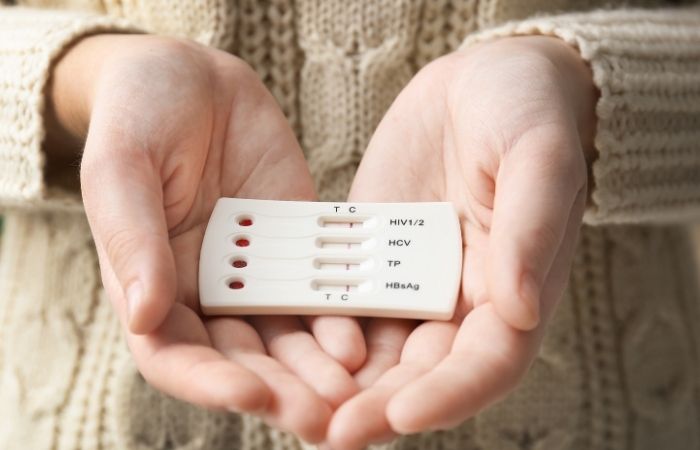
Rapid vs. Lab Testing After Oral Exposure
Another common question: is a rapid HIV test accurate after oral sex? The answer depends on timing. Rapid antibody tests are reliable, but only once antibodies have formed. That can take several weeks.
Lab-based 4th generation blood tests detect both antigen and antibodies, meaning they identify infection earlier than antibody-only rapid tests. If you're testing within the first month after exposure, lab-based testing provides stronger reassurance.
At-home rapid kits are useful when used at the right time. If you’re past the 45-day mark, a properly used at-home antibody test is considered highly accurate. If it’s earlier than that, consider follow-up testing to eliminate doubt.
If you want discreet, judgment-free options, you can explore confidential testing through STD Test Kits. Privacy matters, especially when anxiety is already high.
What If Your Partner Is Undetectable?
This changes the conversation dramatically.
If your partner is living with HIV and on consistent treatment with an undetectable viral load, transmission does not occur. This principle, known as U=U (Undetectable = Untransmittable), has been confirmed in multiple large studies involving thousands of couples. No linked transmissions were observed when the HIV-positive partner maintained an undetectable viral load.
That includes oral sex. That includes ejaculation. That includes long-term relationships.
If your partner’s viral load is truly undetectable, your risk from oral sex is effectively zero. The science here is not vague. It’s strong.
Symptoms After Oral Sex, Should You Be Worried?
Another late-night search: “no symptoms after oral sex HIV.” Acute HIV symptoms, when they occur, usually appear 2–4 weeks after infection and resemble the flu: fever, sore throat, swollen lymph nodes, fatigue. But here’s the part people miss: most low-risk exposures do not result in infection, and anxiety itself can mimic physical symptoms.
A scratchy throat the week after oral sex is far more likely to be seasonal illness than HIV. Night sweats can be stress. Swollen glands can be a cold. Symptom-checking Google spirals often amplify normal body sensations.
The only way to know your status is through testing. Not throat-clearing. Not overanalyzing saliva. Not doom-scrolling Reddit threads at 2 a.m.
When Peace of Mind Is Worth It
If you’re losing sleep, testing is reasonable, even if your risk was low. There is power in knowing. There is calm in data. There is relief in a negative result taken at the appropriate window.
And if you’re sexually active with multiple partners, periodic HIV screening is part of responsible adult health, not a reaction to one encounter. Many providers recommend at least annual testing, and more frequent screening if exposures are ongoing.
Peace of mind is not dramatic. It’s practical.
If you want fast, discreet answers from home, consider a clinically validated option like the HIV Test Kit. Your results stay private. Your timeline stays in your control.
The 2 A.M. Spiral: “It Was Just Oral… So Why Am I This Scared?”
Jordan couldn’t sleep. It had been eight days since the hookup. “It was just a blowjob,” he kept telling himself. No condom, yes. Ejaculation, yes. But no anal sex. No visible blood. Still, he found himself Googling “hiv from swallowing semen” and “what are the chances of getting hiv from oral” like the answers might change at midnight.
By week two, every sore throat felt suspicious. Every yawn felt like fatigue. He convinced himself that his lymph nodes were swollen. They weren’t. Anxiety can amplify normal body sensations until they feel diagnostic.
At week four, he took a 4th generation blood test. Negative. He waited two more weeks and tested again. Negative. What changed wasn’t just the result, it was the understanding. The risk had been low from the start. The testing simply gave his brain permission to relax.
Saliva, Kissing, and the Myths That Won’t Die
One of the most persistent fears is whether HIV spreads through saliva. It doesn’t. You cannot get HIV from kissing, sharing drinks, spit, or someone performing oral sex on you. Saliva alone does not transmit the virus.
Even deep kissing, even with tongue, is not considered a transmission route unless both partners have significant open bleeding wounds in the mouth. That scenario is extremely rare. Routine kissing does not spread HIV.
If you’re searching “does HIV spread through kissing,” the answer is no. The virus does not survive or transmit effectively through saliva. That’s not reassurance fluff. That’s decades of virology.
Why Oral Sex Is Different From Anal or Vaginal Sex
The lining of the rectum is thin and highly susceptible to microtears, which makes receptive anal sex the highest-risk sexual activity for HIV transmission. Vaginal tissue is thicker but still provides an entry point through mucous membranes. Oral tissue is more resilient and exposed to enzymes that reduce viral survival.
That biological difference is why HIV transmission rates for anal sex are measurable and significant, while oral sex cases remain rare and difficult to document as sole exposures. The body’s architecture matters.
When people compare “HIV vs herpes from oral sex,” it’s important to note that Herpes, Gonorrhea, Chlamydia, and Syphilis transmit much more efficiently through oral contact than HIV does. If someone develops symptoms after oral sex, those infections are statistically more likely explanations than HIV.
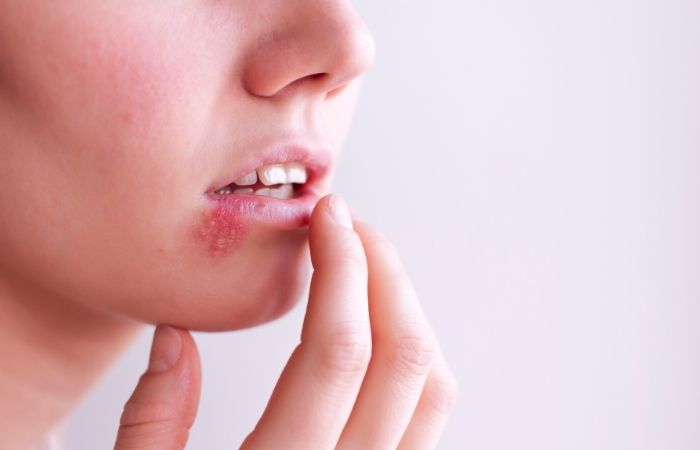
The Difference Between Possible and Probable
Here’s where fear tends to distort logic. Yes, HIV transmission from oral sex is biologically possible. But possibility does not equal probability. Lightning striking your car is possible. That doesn’t mean you panic every time it rains.
Public health experts classify oral sex as low risk because large-scale data shows it is not a common route of transmission. That classification exists to guide realistic prevention strategies, not to minimize anyone’s concern.
If your exposure was oral-only, with no visible blood, no known high viral load, and especially if your partner is on treatment and undetectable, your risk sits on the low end of the spectrum.
When Anxiety Becomes the Real Problem
There’s something clinicians see often: HIV anxiety after oral sex. The encounter was low risk, but the fear becomes intrusive. People repeatedly test despite negative results. They scan their bodies for symptoms that don’t align with typical HIV presentation. They avoid dating for months.
This isn’t stupidity. It’s human. HIV carries decades of cultural weight, stigma, trauma, outdated public messaging from the 1980s. Even though treatment has transformed outcomes, the emotional echo lingers.
If your test at the appropriate window is negative, trust it. Modern testing is highly accurate. Continuing to test repeatedly without new exposure usually reflects anxiety, not medical necessity.
Let’s Ground This in Reality
If you gave oral sex and there was ejaculation, your risk is low. If you received oral sex, your risk is even lower. If your partner is undetectable, your risk is effectively zero. If there were no cuts, no blood, and no high-risk behaviors, your body is statistically on your side.
And if you’re unsure of your partner’s status, regular screening is smart, not shameful. HIV testing is part of modern sexual health, just like dental checkups or annual physicals.
If lingering doubt is stealing your peace, you deserve clarity. A confidential at-home option through STD Test Kits can give you answers without clinic waiting rooms or awkward conversations. Knowledge replaces fear faster than speculation ever will.
FAQs
- 1. Okay, seriously, can you get HIV from giving oral sex?
- Yes, technically. But let’s keep it proportional. The risk is low. For transmission to happen, semen or pre-seminal fluid containing HIV would need to enter your mouth and find a pathway through inflamed or damaged tissue. If your mouth was healthy and there wasn’t visible blood, your body had multiple layers of protection working in your favor.
- 2. What about receiving oral sex, is that risky at all?
- This is where people overestimate danger. Receiving oral sex is considered extremely low to negligible risk for HIV. Saliva doesn’t transmit the virus. You don’t get HIV because someone went down on you. That’s not how it works.
- 3. I swallowed. Be honest, did that change everything?
- It changes exposure slightly, but it doesn’t suddenly move you into high-risk territory. The stomach is not a friendly environment for HIV; acid breaks the virus down. The relevant moment is when semen is in contact with oral tissues. Even then, the overall likelihood remains low, especially if there were no open wounds.
- 4. I had bleeding gums. Should I panic?
- Pause. Bleeding gums increase theoretical susceptibility, but they don’t flip a switch to “high risk.” If there was heavy bleeding or recent dental surgery, testing at the proper window period makes sense for reassurance. If it was mild gum irritation, your risk is still considered low. Anxiety often inflates the scenario more than biology does.
- 5. How long do I actually have to wait before testing?
- If you want strong reassurance, a 4th generation blood test at 4–6 weeks after exposure is highly reliable. If you’re using an antibody-only rapid test, waiting up to 90 days makes the result conclusive. Testing at day 5 won’t tell you much, not because you’re infected, but because the immune system needs time to show up to the lab party.
- 6. I feel tired and my throat hurts. Is that acute HIV?
- Flu-like symptoms can happen 2–4 weeks after infection, but they’re nonspecific. Stress can cause fatigue. Seasonal viruses cause sore throats. If your only exposure was oral sex, statistically those symptoms are far more likely to be something ordinary. Testing, not symptom decoding, gives you real answers.
- 7. If my partner says they’re undetectable, can I trust that?
- If they are truly undetectable and on consistent treatment, science backs them up. Undetectable equals untransmittable. Large, long-term studies have shown zero linked transmissions when viral load stays suppressed. That includes oral sex. That includes ejaculation. That includes real-world couples.
- 8. Do I need to keep retesting if my result is negative?
- If you tested after the proper window and haven’t had new exposures, no. One well-timed negative result is enough. Repeated testing without new risk usually reflects lingering anxiety, not medical necessity. Your brain might need reassurance. Your immune system does not.
- 9. Why does this scare me so much if the risk is low?
- Because HIV still carries emotional weight. Old public health campaigns were intense, and necessary at the time, but the fear stuck. Today, HIV is treatable, manageable, and preventable in ways it wasn’t decades ago. The science evolved. The stigma just hasn’t caught up yet.
- 10. So what’s the bottom line?
- Oral sex is not a primary driver of HIV transmission. Giving carries slightly more risk than receiving, but both are low. If you’re within the testing window and anxious, get tested. If you’ve tested negative at the right time, let yourself exhale. Sexual health is about informed choices, not self-punishment.
You Deserve Clarity, Not Catastrophe
If you made it this far, here’s the grounded truth: HIV from oral sex is possible, but uncommon. Giving carries slightly more risk than receiving. Undetectable partners do not transmit. And modern testing is highly accurate when taken at the right time.
Panic thrives in uncertainty. Clarity shrinks it. If testing will give you peace of mind, take that step. A discreet option like the HIV Test Kit allows you to test privately and on your own timeline. Or explore full screening options through STD Test Kits if you want broader reassurance.
Sexual health isn’t about shame. It’s about information. And you’re allowed to want answers.
How We Sourced This Article: This guide synthesizes current CDC HIV transmission data, WHO guidance, peer-reviewed studies on oral transmission risk, and large-scale U=U research trials. We reviewed approximately fifteen medical and public health sources to ensure accuracy and clarity. Only the most authoritative and reader-accessible references are listed below. All external links open in a new tab for verification.
About the Author
Dr. F. David, MD is a board-certified infectious disease specialist focused on STI prevention, diagnosis, and treatment. He blends clinical precision with a no-nonsense, sex-positive approach and is committed to expanding access to accurate testing and stigma-free education.
Reviewed by: Michael R. Kline, MPH | Last medically reviewed: February 2026
This article is for informational purposes and does not replace medical advice.