Why Your Pap Smear Might Miss HPV And What to Do Next
Quick Answer: A normal pap smear does not mean that a woman does not have HPV infection. A pap smear evaluates cellular changes due to HPV, not HPV itself. This guide is especially for: People in between clinic visits.

Quick Answer: A normal pap smear does not mean that a woman does not have HPV infection. A pap smear evaluates cellular changes due to HPV, not HPV itself. Rapid HPV testing can identify the infection directly, regardless of a normal pap smear.
Who This Article Is For (And Why It Matters)
If you’ve had a normal Pap smear but something still feels off, or you’re the kind of person who researches test accuracy at 2AM, you’re in the right place. This guide is especially for:
People in between clinic visits. Readers in rural areas. Those with anxiety after a confusing result. Anyone told “you’re fine” but still feels unsure. HPV doesn’t always show symptoms, and traditional screening can miss it, depending on timing, strain, or method.
We’re not here to scare you. We’re here to give you facts, tools, and emotional backup. We’ll cover the differences between Pap and HPV testing, what rapid tests actually detect, how accurate they are, and when to trust or question your result. We’ll also talk through next steps, like when to retest, notify a partner, or just breathe and move on.
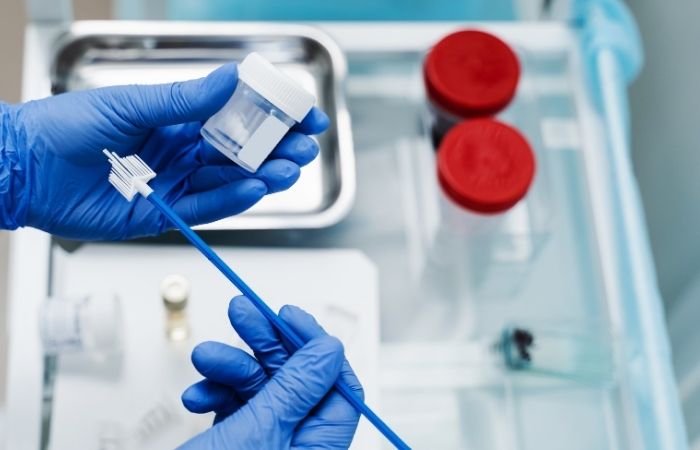
Pap Smears vs HPV Tests: What’s the Real Difference?
Let’s clear something up right away: a Pap smear and an HPV test are not the same thing, even though they often get bundled in conversations or at clinics.
A Pap smear can detect irregular changes in the cells lining your cervix. Such changes can be triggered by HPV, particularly the higher-risk types. Now, what the Pap smear is not doing is searching for the virus, but rather what it might cause.
An HPV test, especially a DNA-based or rapid test, detects the actual presence of high-risk HPV types. It doesn’t wait for cell changes. It identifies the virus before it may lead to anything worse. That means it can pick up infections long before a Pap test would flag anything wrong.
According to the CDC, about 80% of sexually active people will contract HPV at some point. Many clear it on their own, but some don’t, and that’s where early detection matters. A normal Pap might miss HPV if there are no visible cell changes yet, especially in the early stages of infection.
What HPV Rapid Tests Actually Detect (And Why That Matters)
HPV rapid tests do not look for cancer or pre-cancer. Instead, they look for viral DNA. They look for specific ones that cause cancers in these parts of the body: cervix, anus, throat, and penis. They detect viral DNA by isolating it through a vaginal or cervical swab. They then amplify this swab and come back with a positive or negative result for high-risk HPV.
The key advantage? You don’t have to wait for your body to show damage. You can catch the virus early, even before any Pap smear would flag a problem. That’s powerful, especially if you’re between screenings or outside routine age brackets.
In fact, research shows that HPV DNA tests may be more sensitive than Pap smears alone. A study in the journal Cancer Cytopathology found that HPV DNA testing had a higher sensitivity for detecting high-grade cervical lesions than cytology alone.
This doesn’t mean Pap smears are obsolete, but it does mean relying on them alone could leave a gap. Especially if you’re sexually active, immunocompromised, or have a history of abnormal results, adding an HPV test could give a more complete picture of your risk.
Pap Smear vs HPV Rapid Test, Key Differences
| Feature | Pap Smear | HPV Rapid Test |
|---|---|---|
| What it detects | Cell changes in cervix | High-risk HPV DNA |
| How it works | Microscopic analysis of cells | DNA detection from swab sample |
| When it gives results | Several days via lab | In minutes (if rapid) or within days (mail-in) |
| False negatives risk | Moderate (if no cell changes) | Low (more sensitive for HPV) |
| Best for | Detecting cervical damage | Detecting HPV infection before damage |
Figure 1. Comparing how Pap smears and HPV rapid tests work, what they detect, and what they may miss.
When a Normal Pap Doesn’t Mean You’re in the Clear
The moment your Pap smear result says “normal,” it’s tempting to breathe a full-body sigh of relief. But here’s the catch, “normal” only means no visible cell changes were found. It doesn’t guarantee that HPV isn’t hanging out, quietly infecting cells and waiting for a moment of immune system weakness.
This is especially true in early infections. According to data published by the American Cancer Society, high-risk HPV can live in cervical tissue without causing visible abnormalities for months or even years. That means a Pap can come back clear while a rapid HPV test would show a positive result for the virus itself.
And sometimes it’s not just about timing, it’s about the type of HPV. Some high-risk strains may be more likely to cause lesions. Others might sit dormant or replicate in ways that escape traditional cytology. That’s why co-testing (Pap + HPV) is now considered the gold standard in many screening guidelines.
“I Trusted the Clinic, But My HPV Test Said Otherwise”
Natalie, 34, had no symptoms and no known exposure. She got her Pap like clockwork every three years. Her last one? Normal. But her new partner had never been tested for HPV, and something about their conversation nudged her curiosity. On a whim, she ordered an HPV rapid test.
“I wasn’t even worried, I just wanted peace of mind,” she said. “When it came back positive for a high-risk strain, I was floored. I felt betrayed by the system.”
She followed up with her OB-GYN, who confirmed the strain through a lab-based DNA test. The good news: no lesions yet. The better news: she caught it early, well before any permanent cell changes had occurred. But the emotional impact stuck with her.
“I wish someone had told me that a Pap isn’t the full picture. I would’ve tested for HPV sooner.”
At-Home HPV Testing: How Accurate Is It Really?
It’s natural to question any test you do outside a clinic. So how reliable are at-home HPV kits? Research says: pretty damn good, if used correctly.
One 2021 study published in BMJ Global Health found that self-collected vaginal swabs for HPV testing had comparable sensitivity and specificity to clinician-collected samples. This holds true across multiple platforms, including PCR-based mail-in tests and high-quality rapid kits.
The FDA has already cleared some at-home HPV test kits, and several are under review for broader approval. These kits use molecular diagnostics to identify high-risk HPV DNA with strong reliability, especially when timed properly post-exposure.
The biggest risks with at-home testing aren’t about the test technology, they’re about user error. That’s why it’s crucial to follow the instructions exactly: sample depth, timing, and handling all matter. Don’t rush it, and don’t guess.
At-Home HPV Test Pros and Cons
| Factor | Benefit | Drawback |
|---|---|---|
| Privacy | Test discreetly at home, no clinic visit | May not have in-person support or counseling |
| Speed | Results within minutes (rapid) or days (mail-in) | Mail-in kits require postal delay and lab time |
| Accuracy | DNA-based detection for high-risk strains | User error can affect swab quality |
| Cost | Often cheaper than in-clinic tests | Insurance may not reimburse all at-home kits |
| Follow-up | Can prompt early treatment if positive | Doesn’t replace full pelvic exam or Pap if needed |
Figure 2. The real-world pros and cons of using an HPV rapid test at home.
Ready to Test Yourself? Here’s a No-Pressure Option
If your last Pap was normal but something still feels unsettled, you're not overreacting, you're being proactive. Whether you’ve had a new partner, a missed screening, or just a gut feeling, peace of mind might be a swab away.
Order a discreet HPV rapid test kit here, it’s quick, private, and FDA-approved. No clinic. No stirrups. Just clarity when you need it most.
Testing doesn’t mean you expect the worst. It means you care enough to know the truth, before anything worse can happen.
False Negatives, Missed Timing, and When to Retest
Let’s talk about the elephant in the exam room: false negatives. They happen, and they can seriously mess with your sense of safety. Whether it’s a Pap smear or an HPV rapid test, no test is perfect. But understanding why a false negative occurs can keep you from getting blindsided later.
The most common cause? Testing too early. HPV has a window period, time between exposure and detectable levels of the virus. If you test too soon, especially with a rapid or DNA-based test, it might come back negative even though the virus is quietly setting up shop.
According to the Journal of Clinical Virology, HPV may take up to three weeks post-exposure to reach detectable levels, and in some cases longer. This is why medical guidelines often suggest waiting at least 21 days after a new exposure to test for HPV with DNA methods. Earlier than that, and you might get a false sense of relief.
If your Pap was normal but you’ve had new partners, symptoms (like unusual discharge or bleeding), or gut-level anxiety, retesting with an HPV-specific kit at the right window can catch what the Pap missed. And if your rapid test comes back negative but exposure was recent? Retest in 4 to 6 weeks to confirm.
What to Do If You Test Positive for HPV
Breathe. You’re not alone. Testing positive for HPV doesn’t mean you’re dirty, doomed, or destined for cancer. It means you’ve identified a risk early, which is the entire point of testing in the first place.
Most high-risk HPV infections clear on their own within two years, especially in people under 30. But follow-up is key. If your result is positive, here’s what to do next:
- Confirm the type (if your kit didn’t already identify it): High-risk strains like HPV 16 and 18 carry the most risk for cervical and throat cancers.
- Talk to your doctor, especially if you haven’t had a recent Pap or colposcopy. Bring your at-home test result with you, it’s valid data.
- Consider partner testing or disclosure if you're in a new relationship. It’s not about blame, it’s about care and prevention.
- Plan your next test window. Follow-up in 6 to 12 months is standard if no lesions are found. If you’re immunocompromised, your provider might want to monitor you more closely.
Remember: this is not a moral failing. It’s a virus, not a verdict.

Pap Smears Can’t Fix These HPV Myths
Let’s bust some of the most dangerous assumptions that normal Pap results can reinforce:
Myth 1: If my Pap is normal, I don’t have HPV.
Wrong. A Pap only checks for cell changes, not the virus itself. It’s entirely possible to have an active HPV infection with no cervical damage (yet).
Myth 2: If I test positive for HPV, I must have just gotten it.
Not necessarily. HPV can stay dormant for months, or even years, before reactivating. A new positive doesn’t always mean a new exposure.
Myth 3: Only people with lots of partners get HPV.
False. You can get HPV from a single partner. It doesn’t care how many people you’ve been with, it only needs one opportunity.
Myth 4: HPV always causes cancer.
Nope. While high-risk strains can increase your cancer risk, most HPV infections resolve on their own. Early detection helps prevent complications, not predict them.
FAQs
- 1. Wait, so my Pap was normal. How can I still have HPV?
- Totally fair question. A Pap smear checks for weird-looking cells on your cervix, not the virus that might be causing the damage. You can have HPV quietly doing its thing without leaving enough of a mark for the Pap to catch. That’s why HPV tests exist, to look for the virus directly, not just the aftermath.
- 2. Are at-home HPV tests actually reliable, or just expensive guesses?
- Surprisingly solid. Good ones use the same molecular detection (DNA-based) that labs use. The big difference is who collects the sample, you, not a clinician. So accuracy mostly depends on you following directions. Take your time. No need to panic-swab.
- 3. How soon after sex can I test for HPV?
- It’s best to wait about three weeks post-exposure. Testing too soon can lead to a false negative, not because the test is broken, but because the virus might not be detectable yet. Think of it like taking a pregnancy test the morning after, it’s just too early for science to do its thing.
- 4. I tested positive for HPV. Am I... doomed?
- Deep breath: nope. Most HPV infections clear on their own, especially in people under 30. A positive result means “let’s keep an eye on this,” not “start planning your memorial service.” Regular check-ins and follow-ups are the move here.
- 5. Can HPV come back after going away?
- Yep. It’s like that one ex who resurfaces just when things are calm again. Your immune system can suppress HPV for years, but stress, illness, or just biology might let it flare back up. That’s why even one past infection means future monitoring matters.
- 6. Do I have to tell my partner I tested positive?
- Legally? Usually not. Ethically? Up to you. Emotionally? It might bring you closer. HPV is absurdly common, like “almost everyone who’s ever had sex” common. Disclosure isn’t about blame, it’s about giving someone the chance to be informed, not surprised.
- 7. If my HPV test is positive but my Pap is normal, what’s the game plan?
- You’re in what docs call a “watch and wait” phase. Your cervix looks fine, but the virus is there, so your provider might want to retest in 6–12 months. If you’re over 30, this combo result is super common and doesn’t mean anything’s wrong, it just means you’re on the radar now. In a good way.
- 8. Can I use my HSA or FSA to cover an at-home HPV test?
- Most likely, yes. Many at-home test kits are HSA/FSA-eligible, especially if they’re FDA-cleared. Just save your receipt and check with your plan. Insurance coverage is murkier, but it’s changing fast as self-testing becomes more mainstream.
- 9. Is there an HPV test for men?
- Not really, not yet. There’s no routine screening for HPV in men unless there are symptoms or specific risk factors (like being immunocompromised or having anal sex). That said, men can still carry and pass HPV, which makes shared testing and vaccines even more important.
- 10. Should I stop getting Pap smears if I do HPV testing at home?
- Definitely not. These tests are teammates, not substitutes. A Pap looks for damage. An HPV test looks for the cause. When used together, they’re your best shot at early detection, and peace of mind. Keep both in the rotation if you can.
Need to Know More Before You Decide?
If you’re still feeling stuck between “I’m probably fine” and “what if I’m not,” here’s your bridge: knowledge. You don’t need permission to test again. You don’t need a symptom to justify curiosity. And you don’t need shame to motivate prevention.
Explore HPV and other rapid STD test options here, discreet, affordable, and backed by real science.
Because waiting around in the dark doesn’t make you safe. It just makes you uninformed. You deserve better than that.
How We Sourced This Article: We combined current guidance from leading medical organizations with peer-reviewed research and lived-experience reporting to make this guide practical, compassionate, and accurate. In total, around fifteen references informed the writing; below, we’ve highlighted six of the most relevant and reader-friendly sources.
- Pap and HPV Screening Tests for Early Detection of Cervical Cancer — NCBI Bookshelf
- False Negative Results in Cervical Cancer Screening — PMC / NCBI
- Pap Smear — Test Overview and Limitations (Mayo Clinic)
- HPV and HPV Testing — American Cancer Society
- Pap and HPV Tests — Office on Women’s Health
- Best Practices in Pap and HPV Screening — NCBI Bookshelf