Can You Get an STD or Hepatitis from a Nail Salon? And What to Do If You're Worried
The question most people are really asking after a salon nick isn't about the cut itself; it's about what might have been on the tool.
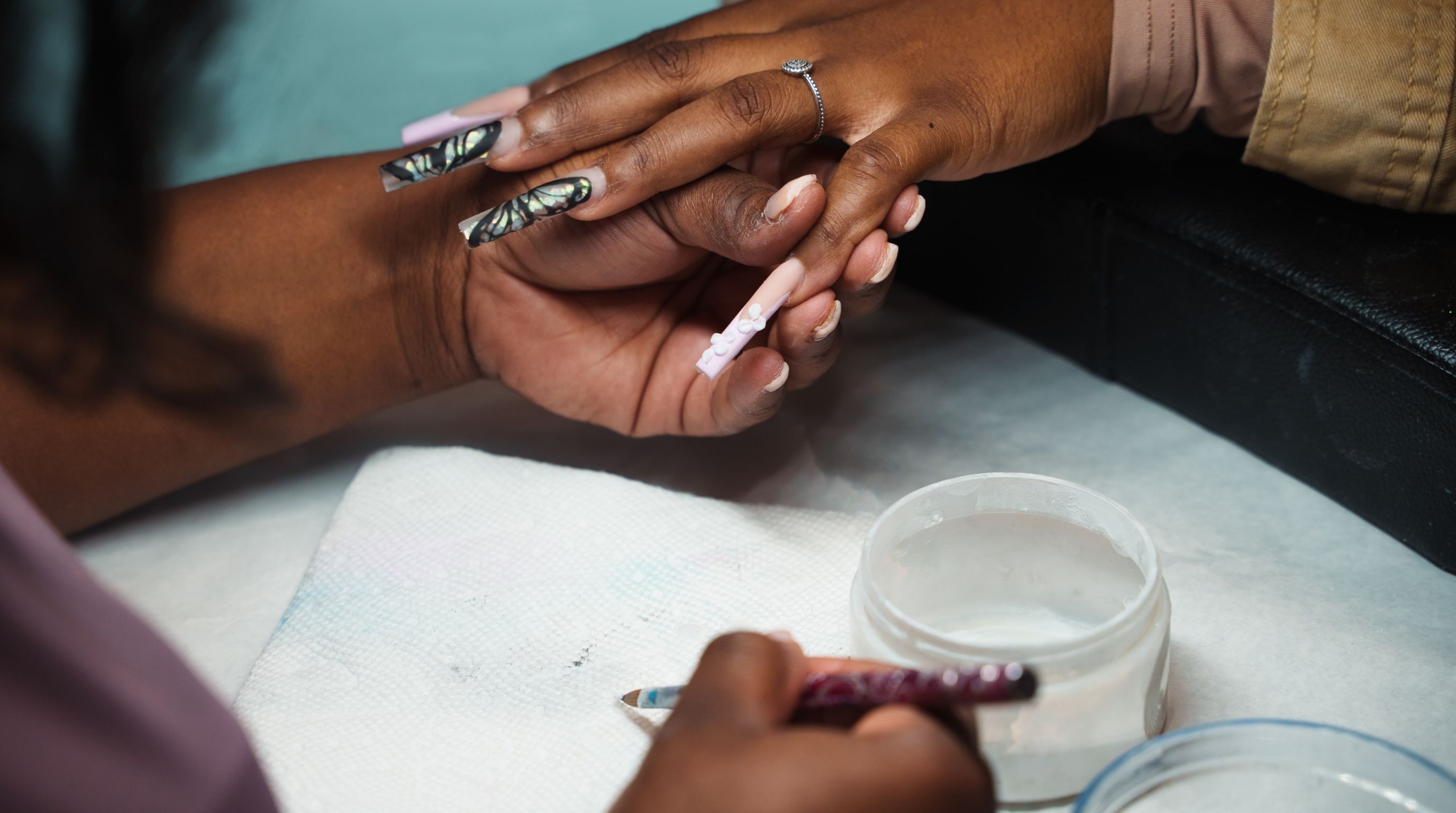
The question most people are really asking after a salon nick isn't about the cut itself; it's about what might have been on the tool. Hepatitis B, hepatitis C, and HIV are the infections that send people to Google at midnight after a pedicure.
This article cuts through what's a real concern, what isn't, and what the evidence actually says about STD and bloodborne infection risk from nail salon and barber tools. Spoiler: classic STDs like chlamydia or gonorrhea aren't part of this story. Hepatitis is, and it behaves very differently from what most TikTok comment sections suggest.
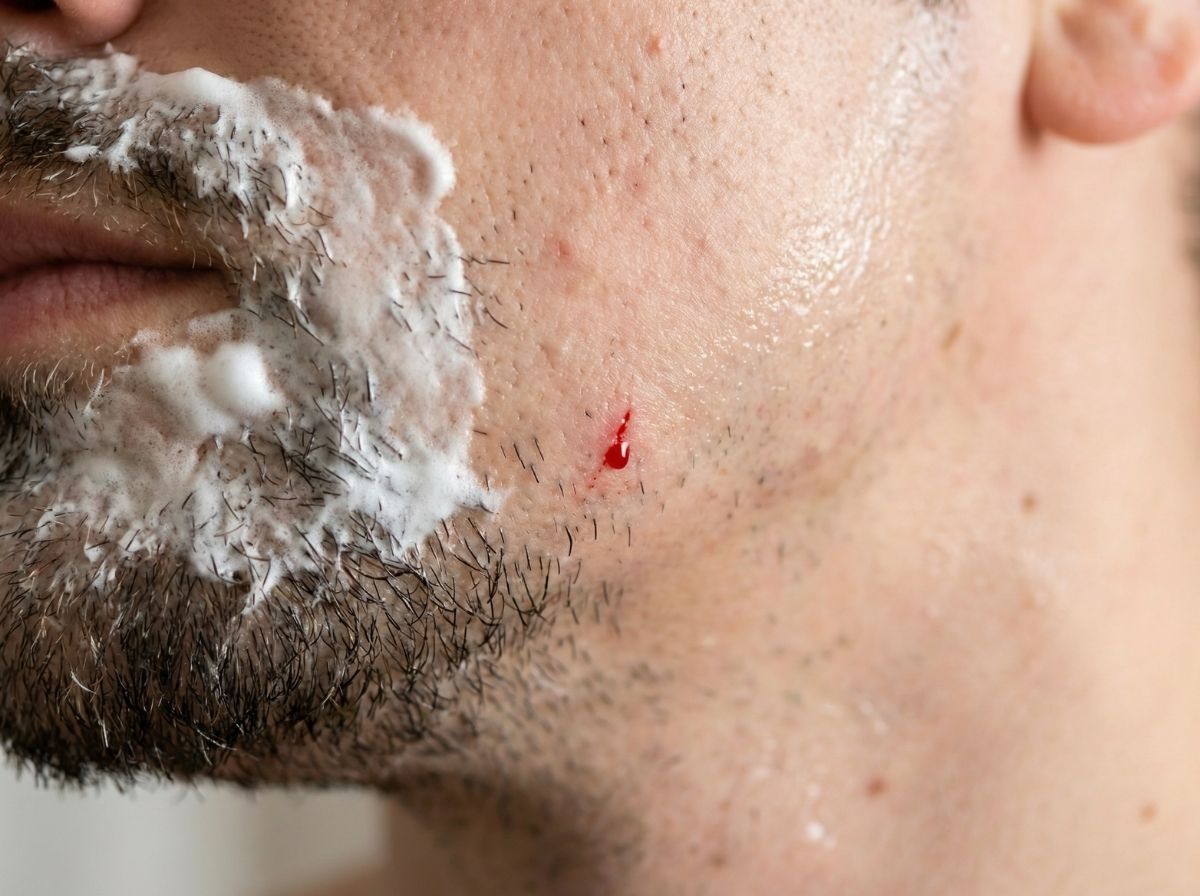
The Most Likely Infection After a Salon Cut (And It's Not Hepatitis)
Before getting to bloodborne pathogens, it's worth being honest about what actually happens after most salon cuts, because the statistically dominant outcome is not hepatitis. It's a bacterial skin infection, and specifically, it's often paronychia: an infection of the skin fold around the nail caused by bacteria entering through the break in the skin. This happens when a cuticle trimmer goes too deep, when a nail file abrades the surrounding skin, or when a tool carries environmental bacteria like Staphylococcus aureus into a fresh nick.
Paronychia develops quickly. Within 24 to 48 hours of the cut, the tissue around the nail may become red, swollen, and tender. A small collection of pus can form under the cuticle. If that happens, it's a bacterial infection that needs attention, warm water soaks several times daily for mild cases, and a doctor's visit if it's spreading, worsening after a couple of days, or accompanied by fever. Left alone, a paronychia that started from a salon cut can progress to a deeper tissue infection, though this is uncommon in otherwise healthy people. The key is catching it early, which means actually watching the cut for the first 48 hours rather than ignoring it.
The second infection worth knowing by name is Mycobacterium fortuitum, a bacteria found naturally in water and biofilm that colonizes the inside of whirlpool footbath systems when they aren't properly cleaned. This isn't a hypothetical risk. A published outbreak investigation in the New England Journal of Medicine documented 110 customers of a single California nail salon who developed furunculosis, deep, persistent boils, from M. fortuitum in the salon's footbaths. The same NEJM study found that clients who had shaved their legs before the pedicure were nearly five times more likely to develop the infection than those who hadn't (adjusted odds ratio: 4.8). A subsequent CDC survey found mycobacteria in 97% of 30 footbaths tested across 18 California salons, with half the operators reporting they had never cleaned behind the recirculation screen.
M. fortuitum infections don't announce themselves immediately. Symptoms typically appear two to four weeks after the pedicure, sometimes longer, as multiple papules or pustules below the knees that slowly develop into tender, non-healing boils. They are often misdiagnosed as regular bacterial infections or "bug bites" because the timeline doesn't obviously connect to the salon visit weeks earlier. If you develop persistent boils or nodules on your lower legs weeks after a pedicure, particularly after a whirlpool footbath, this is the infection to mention to your doctor.
| Infection | When Symptoms Appear | What to Look For |
|---|---|---|
| Paronychia (bacterial) | 24–48 hours after cut | Redness, swelling, tenderness around nail fold; possible pus at cuticle |
| Mycobacterium fortuitum (footbath) | 2–4 weeks after pedicure (sometimes months) | Persistent boils or nodules below the knees; non-healing, often multiple |
| Fungal infection (onychomycosis, athlete's foot) | Days to weeks | Nail discoloration, thickening, or scaling; itching between toes |
| Hepatitis B | Often asymptomatic; detectable from 6 weeks post-exposure | Fatigue, jaundice, abdominal discomfort, frequently no symptoms |
| Hepatitis C | Often asymptomatic; detectable from 8–11 weeks post-exposure | Frequently no acute symptoms, often discovered through testing |
What Can and Can't Be Transmitted Through a Salon or Barber Cut
The first thing to understand is that "STD" and "bloodborne infection" are not the same category, even though they overlap. Most sexually transmitted infections, chlamydia, gonorrhea, syphilis, genital herpes, require specific transmission routes that a salon tool simply cannot provide. Chlamydia and gonorrhea need mucosal tissue to establish an infection. Herpes requires direct skin-to-skin contact with an active or shedding site. A cuticle trimmer or straight razor does not create those conditions, regardless of what it has previously touched.
The infections that are genuinely relevant to a salon exposure are the bloodborne ones: hepatitis B, hepatitis C, and, in extremely rare scenarios, HIV. These travel through blood-to-blood contact. The mechanism in a salon setting is straightforward, a contaminated tool breaks one person's skin, leaves a microscopic trace of blood on the instrument, and if that instrument isn't properly sterilized before being used on the next client, it creates a potential pathway into that person's bloodstream through their own skin break.
That "if" carries a lot of weight. It depends on whether the previous client was infected, whether blood was actually deposited on the tool, whether sterilization failed, and whether your skin was broken in a way that allowed entry. Each of those conditions has to be true simultaneously for transmission to occur. In a well-run salon that follows disinfection protocol, the chain breaks almost immediately. But in a salon with compliance gaps, the biology is real.
Where people often get confused is that TikTok debates about HIV-positive clients and nail technicians tend to blur this picture. As NHS surgeon and medical educator Dr. Karan Rajan explained in a widely-shared response video to HIV advocate and content creator Bianca Carolina, the actual transmission risk of HIV in nail salon settings is minimal, HIV degrades rapidly outside the body and is not a realistic concern through salon tools. The debate around disclosure matters for stigma reasons, not because the infection risk justifies it. Hepatitis B and C are the more relevant story, and they behave very differently from HIV outside the body.
| Infection | Transmission Route | Realistic Salon Risk |
|---|---|---|
| Hepatitis B (HBV) | Blood-to-blood contact | Low to moderate if tools improperly sterilized, HBV survives up to 7 days on surfaces |
| Hepatitis C (HCV) | Blood-to-blood contact | Low, documented in manicure and barbershop settings; survives 16 hours to 4 days on surfaces |
| HIV | Blood-to-blood contact | Extremely low, virus degrades quickly outside the body; no confirmed US salon cases |
| Chlamydia, Gonorrhea, Syphilis | Sexual/mucosal contact | None, no transmission route exists through salon tools |
| Herpes HSV-1 and HSV-2 | Skin-to-skin contact with active site | None in standard salon service, not a blood-to-blood infection |
How to Read the Situation You Were Actually In
Not every salon cut carries the same level of concern, and knowing how to read yours is the difference between a reasonable assessment and 16 months of unnecessary testing, which is a real thing that has happened, documented in legal proceedings involving a client who spiraled after a pedicure cut and couldn't stop getting tested despite evidence of no transmission. The biology doesn't care about your anxiety level. It cares about whether the actual conditions for transmission were met.
The question that matters most is not "was I cut?" but "what was done with the tool that cut me, and what came before?" A nick from a fresh disposable blade, the kind that comes in sealed packaging and is used once, carries essentially no bloodborne risk because the instrument touched no one before you. The sealed packaging is the tell. If you watched the tool come out of shrink-wrap or a sterile pouch, you can stop the spiral right there.
The calculation changes if the tool was reused without visible sterilization, if the salon has questionable hygiene practices, or if you noticed instruments being wiped rather than soaked. The American College of Gastroenterology has flagged in published research that compliance with disinfection requirements is the key variable in salon infection risk; the regulations, when followed, are sufficient. Whether they are actually followed in every salon on every tool on every day is a different question entirely, and one that state inspectors are not monitoring continuously.
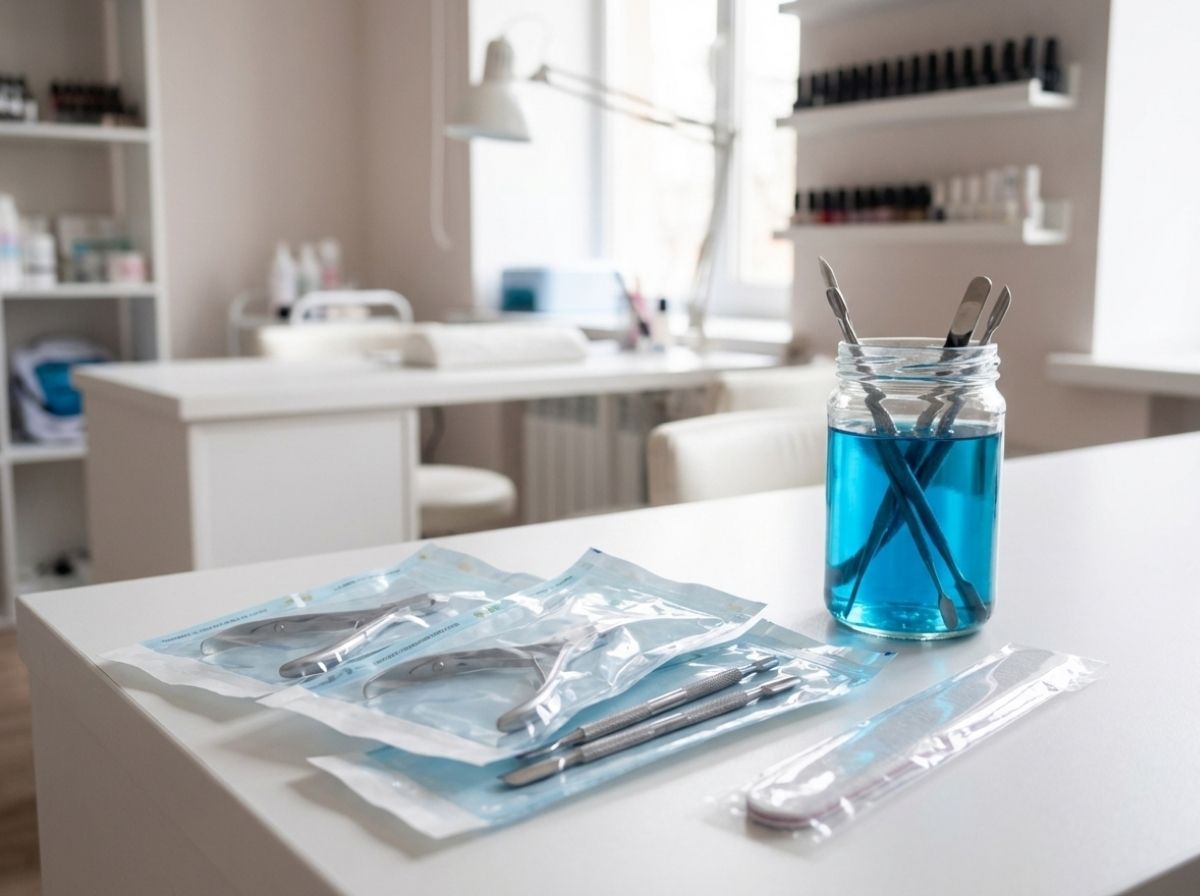
Context clues that warrant more attention: instruments stored loose in a drawer rather than emerging from sterilization packaging; a jar of blue liquid where tools are dipped and immediately removed (Barbicide requires 10-minute full immersion contact time to work, a quick dip achieves nothing); foot basins that weren't visibly cleaned between clients; or a salon that was generally disorganized and clearly low-effort about hygiene. These are not definitive proof that transmission occurred. They are signals that the risk is higher than baseline and that testing becomes a more reasonable call than an anxious overreaction.
What to Do Immediately After a Salon Cut
You're still in the chair, or you've just left, and you noticed blood. Here's the actual sequence of events that matters, stripped of drama.
First: wash the area thoroughly with soap and warm water as soon as you can. This doesn't undo a bloodborne exposure that already occurred, that's not how it works, but it limits contamination from environmental bacteria and is always the correct instinct. An antiseptic applied after washing is appropriate if the cut is more than superficial. If the wound is actively bleeding, apply gentle pressure with a clean cloth or tissue until it stops.
Second: mentally catalog what you observed. Was the tool that cut you disposable or reused? Did you see it come out of packaging? What were the general hygiene standards of the salon? You don't need to interrogate the technician on the spot. But if you observed anything that concerned you, note it while it's fresh, because that context will matter when you're deciding whether testing makes sense.
Third: don't test immediately. This is the part that contradicts the instinct but is biologically non-negotiable. Testing in the hours or days after a potential exposure will not give you accurate information. Every bloodborne infection has a window period, a gap between exposure and the point at which the infection becomes detectable in your bloodstream. Your immune system needs time to produce the antibodies or antigens that tests are designed to find. Testing inside that window gives you a false negative that feels like reassurance but isn't, because the infection simply hasn't had time to generate a detectable signal.
According to the CDC's hepatitis B guidance, the window period for HBV runs to around six weeks post-exposure for reliable antibody and antigen detection. HCV has a longer development window due to slower antibody production, making 8 to 11 weeks the reliable testing range for hepatitis C. HIV follows a similar initial timeline to HBV for a first indicator test, but requires a confirmatory retest at 12 weeks to rule out infection with certainty, because some immune responses to HIV develop more slowly.
If you're vaccinated against hepatitis B, the vaccine is highly effective and widely available for adults; you can remove HBV from your concern list entirely. The vaccine exists precisely because hepatitis B is the most resilient of the three on surfaces. If you're unsure of your vaccination status, this is a good moment to check your records or ask your doctor.
When Testing Actually Makes Sense
Testing after a salon or barber exposure isn't an overreaction. It's a reasonable response when specific conditions were met: your skin was broken, you have a genuine concern about the salon's sterilization practices, and the service involved instruments that could realistically carry blood from a prior client. The infections worth testing for are hepatitis B, hepatitis C, and, in genuinely unusual circumstances, HIV. The rest of the standard STD panel (chlamydia, gonorrhea, syphilis, herpes) is not relevant to this type of exposure and doesn't need to be part of this conversation.
The case that triggered the first formal US evaluation of salon infection risk involved a confirmed case of acute hepatitis C that health officials described as "clearly related to a manicure and pedicure treatment." That prompted the Virginia Department of Health to formally assess salon bloodborne pathogen risk and conclude that transmission cannot be excluded when non-single-use instruments are not cleaned and disinfected according to state regulations. More recently, Canadian public health authorities in Wellington-Dufferin-Guelph advised clients of a nail salon to seek testing for hepatitis B, hepatitis C, and HIV after an unannounced inspection found instruments were not properly cleaned after each use, disinfectant was not mixed or changed appropriately, and dirty instruments were stored with clean ones. The risk in that situation was described as low, but testing was recommended as a precaution.
Those cases illustrate the threshold: documented or strongly suspected sterilization failure, not just a routine cut at a clean shop. If you were cut at a well-run salon with fresh tools or visible sterilization practices, testing is optional reassurance rather than medical necessity. If you were cut and you're genuinely uncertain about what the salon was doing with its instruments, testing at the appropriate window is the fastest way to stop the guessing game.
The Testing Window Guide for Salon Exposures
If you've decided testing makes sense for your situation, the single most important rule is to wait for the biology. Testing too early doesn't prove you're safe; it just means the test doesn't have enough to detect yet. Here is the exact timing for each relevant infection.
For hepatitis B, test from 6 weeks after exposure. This is when surface antigen and antibody levels become reliably detectable in a blood test. Testing before this window can produce a false negative even in an active infection.
For hepatitis C, the window is longer. Test from 8 to 11 weeks after exposure. Hepatitis C antibody development takes more time than hepatitis B, which is why the recommended window is pushed further out. A test at 6 weeks for HCV can miss an active infection that would be clearly positive at week 10.
For HIV, test at 6 weeks for a first indicator; this is where most infections will show a detectable signal, and retest at 12 weeks for certainty. Some immune responses to HIV develop more slowly, and the 12-week confirmatory test is the standard for ruling out infection definitively. Per CDC HIV testing guidance, modern fourth-generation antigen/antibody tests can detect most infections by 45 days, with the 90-day mark providing near-complete certainty.
| Infection | When to Test | What a Negative Means |
|---|---|---|
| Hepatitis B | Test from 6 weeks after exposure | No active infection detected at that window, reliable result if timing is correct |
| Hepatitis C | Test from 8–11 weeks after exposure | No antibodies detected, reliable at 11 weeks or beyond |
| HIV | Test at 6 weeks for first indicator; retest at 12 weeks for certainty | First negative is reassuring; 12-week negative is the definitive result |
For efficient testing that covers all three infections in one session at home, the STD Test Kits guide on hepatitis B exposure covers what to expect from the testing process in more detail.
Why the TikTok Conversation Gets This Partly Right and Partly Wrong
The viral debate about HIV disclosure and nail salons is worth engaging directly, because it shaped how a lot of people think about salon infection risk. The core of the conversation, whether someone living with HIV feel obligated to tell their nail tech, is a stigma question, not really a science question. People living with HIV who are on effective antiretroviral treatment and maintain an undetectable viral load cannot transmit the virus through sexual contact, and are not a meaningful HIV transmission risk in a salon setting, regardless. The biological conditions for HIV transmission through a shared salon tool are nearly impossible to achieve: the virus degrades within minutes to hours outside the body, it requires a sufficient infectious dose, and even in the documented Brazilian case that prompted years of discussion, a woman who appeared to have contracted HIV through shared cuticle scissors with a family member, it involved repeated, prolonged shared use of the same instrument, not a single salon visit.
What the TikTok conversation sometimes misses is that hepatitis B is a different story. HBV survives up to seven days on dry surfaces, requires only a tiny infectious dose, and is significantly more resilient than HIV outside the body. Someone living with hepatitis B who visits a salon where tools are improperly sterilized is, in biological terms, a more meaningful risk vector than someone living with well-managed HIV, not because of anything moral or personal, but because of basic virology. Universal precautions in salons, treating every client's blood as potentially infectious and sterilizing instruments accordingly, address this correctly without requiring anyone to disclose their status to receive a manicure.
The practical implication for anyone sitting in that chair: the risk framework is not about who is in the chair before you. It's about whether the tools were properly handled between clients. That's the variable that matters, and it's one you can assess directly without knowing anything about the previous client's health status.
How to Reduce Your Risk at Future Visits
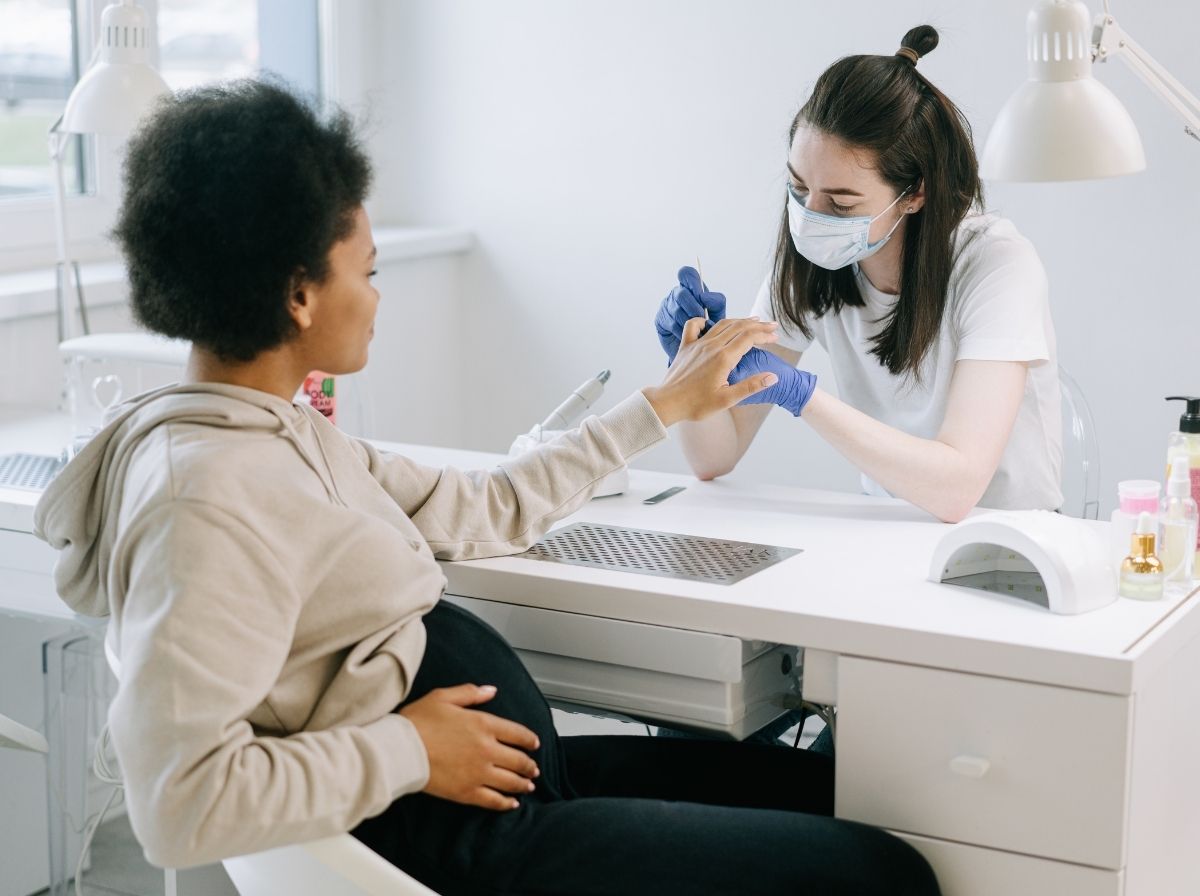
This isn't a case for giving up mani-pedis and haircuts. It's a case for being a slightly more informed customer, because the difference between a low-risk visit and a higher-risk one is mostly visible if you know what to look for.
The clearest signal of a well-run salon is what happens to the tools between clients. Metal instruments should either come in sterile sealed packaging for single use, or be soaked in disinfectant for the full required contact time, typically 10 minutes for EPA-registered disinfectants at the correct concentration. A jar of blue Barbicide, where tools are dipped and immediately retrieved, is not completing a disinfection cycle. It's decoration. The same applies to foot basins: OSHA guidelines call for basins to be disinfected after each client and cleaned at the end of each day. Asking how a salon handles its foot basin cleaning is not an awkward question, it's the kind of question a clean salon will answer without hesitation.
Bringing your own tools is one of the most effective risk-reduction strategies available. Some salons will maintain a personal set of implements for regular clients. If you go to the same place regularly, asking whether they'll keep your tools on-site eliminates the shared-instrument variable almost entirely. For a one-off visit, bringing your own nail file and cuticle tool removes the key transmission risk from the equation.
Don't shave your legs in the 24 to 48 hours before a pedicure. This isn't incidental advice; it's backed by published evidence. The NEJM outbreak investigation found that clients who had shaved before their pedicure were nearly five times more likely to develop a Mycobacterium fortuitum infection from the footbath than those who hadn't. Shaving creates hundreds of microscopic cuts across the skin surface that give waterborne pathogens direct entry. The same logic applies to bloodborne risk: abraded skin is more permeable than intact skin. Skip the razor for at least 24 hours before sitting in a pedicure chair.
Know what to watch for afterward. In the 24 to 48 hours after a salon cut, check the area for redness, swelling, warmth, or pus forming around the nail; these are signs of paronychia, a bacterial nail fold infection. For pedicure clients who used a whirlpool footbath, watch the lower legs over the following two to four weeks. Persistent, non-healing boils or nodules appearing in that window, even if the original cut seemed minor, are the hallmark of a mycobacterial infection and need a doctor visit with the salon history disclosed. If red streaking extends from any wound, or if you develop fever or chills, that is a medical appointment today situation, not a wait-and-see one.
Bringing your own tools is one of the most effective risk-reduction strategies available. Some salons will maintain a personal set of implements for regular clients. If you go to the same place regularly, asking whether they'll keep your tools on-site eliminates the shared-instrument variable almost entirely. For a one-off visit, bringing your own nail file and cuticle tool removes the key transmission risk from the equation.
Finally, if your hepatitis B vaccination status is unclear, check it. The hepatitis B vaccine is highly effective and widely available. Given that HBV is the most resilient of the bloodborne pathogens on surfaces and the most documented in salon settings, vaccination removes it from your concern list permanently, not just for salon visits, but across a range of everyday exposures.
FAQs
- 1. I got cut at the nail salon. Do I need to get tested?
- It depends on the circumstances. If the cut came from a fresh disposable tool in a clean, well-run salon, the risk is genuinely very low, and testing is a personal judgment call rather than a medical necessity. If you have real concerns about the salon's sterilization practices, reused tools, suspicious hygiene, no visible disinfection between clients, and testing for hepatitis B and C starting at 6 to 11 weeks post-exposure, it is a reasonable step.
- 2. Can you get hepatitis from a nail salon?
- Hepatitis B and C are the infections with the strongest documented link to nail salon exposure. The route? Contaminated tools, cuticle cutters, and nail files that break the skin without being properly sterilized between clients. Risk is low in well-run salons but has been documented in settings with compliance failures. Public health authorities in Canada have issued advisory notices to clients of specific salons based on exactly this kind of sterilization lapse.
- 3. Can you get HIV from a nail salon or barbershop tool?
- In practical terms, no. HIV degrades quickly outside the body and requires conditions for transmission that are extremely unlikely to be met through a salon instrument. There are no documented, confirmed cases of HIV transmission in a US professional nail salon or barbershop. Hepatitis B and C are the relevant bloodborne risks in this setting, they behave very differently from HIV outside the body.
- 4. How long do I wait before testing after a salon exposure?
- Hepatitis B can be tested from 6 weeks after exposure. Hepatitis C requires 8 to 11 weeks. HIV can be tested at 6 weeks for a first indicator, with a confirmatory retest at 12 weeks to rule out infection with certainty. Testing before these windows can produce false negatives, even if an infection is present; the biology needs time to generate detectable signals.
- 5. What's the difference between an STD and a bloodborne infection in this context?
- Most sexually transmitted infections require sexual contact or mucosal exposure to spread; they have no transmission route through salon tools. Bloodborne infections like hepatitis B, hepatitis C, and HIV travel through blood contact, which is why contaminated instruments create a theoretical pathway. This is why classic STDs like chlamydia or syphilis aren't a concern after a salon cut, but hepatitis is.
- 6. Is it safe to get a pedicure if I shaved my legs that morning?
- It's not ideal. Shaving creates microscopic abrasions across the skin surface that give pathogens easy access, even without a visible cut. The standard recommendation is to avoid shaving for at least 24 hours before a pedicure. This is one of the more practical risk reduction measures available and is referenced in dermatological guidance on salon safety.
- 7. Does the blue liquid in barbershops actually kill infections?
- Barbicide, when used correctly, at the right concentration and for the full 10-minute contact time, is effective as a disinfectant for bloodborne pathogens. The problem is that it's frequently used incorrectly: tools are dipped for a few seconds rather than soaked, or the solution isn't refreshed regularly. Properly applied, it significantly reduces risk. Used as a prop, it doesn't protect you at all.
- 8. Can I bring my own tools to the nail salon?
- Yes, and many salons will gladly use client-supplied tools. Some maintain dedicated sets for regular clients in labeled pouches or drawers. Bringing your own nail files, cuticle cutters, and clippers removes the shared-instrument variable entirely, which is the primary transmission pathway in this setting. It's one of the most effective things you can actually control.
- 9. Should someone living with HIV disclose their status to a nail tech?
- There's no public health requirement or medical reason for disclosure, because universal precautions, treating all clients' blood as potentially infectious and sterilizing tools accordingly, are designed to make disclosure irrelevant to infection control. The debate on TikTok is largely a stigma conversation, not a science one. A well-run salon with proper sterilization practices protects both the client and the technician regardless of anyone's health status.
- 10. What infections actually spread in barber shops and nail salons?
- The documented infections include hepatitis B and C through contaminated instruments; bacterial infections like Staphylococcus and Mycobacterium fortuitum through foot basins and broken skin; and fungal infections like athlete's foot and nail fungus through non-sterile tools and surfaces. Classic STDs, chlamydia, gonorrhea, syphilis, herpes are not transmitted through salon services because they lack the required biological pathway.
Stop Guessing, Start Testing at the Right Time
If you've had a salon or barber visit that left you wondering, the most useful thing you can do right now is mark your calendar for the right testing window rather than scrambling for a test today. The biology has a schedule, and working with it rather than against it is what gets you an actual answer instead of a false reassurance.
When the time is right, the Hepatitis B & C At-Home STD Test Kit covers both infections with the strongest documented link to salon exposure, results in minutes, no clinic required, no explanation to anyone. For broader coverage that includes HIV alongside hepatitis B and C, the 8-in-1 Complete At-Home STD Test Kit handles everything in a single session at home. The 7-in-1 Complete At-Home STD Test Kit is another strong option covering hepatitis B, hepatitis C, HIV, and more, results in minutes, no waiting room, your results stay yours.
Browse the full range at STD Test Kits. Testing isn't an overreaction; it's how you replace the guessing game with a real answer.
Our article was constructed based on current advice from the most prominent public health and medical organizations, and then molded into simple language based on the situations that people actually experience, such as treatment, reinfection by a partner, no-symptom exposure, and the uncomfortable question of whether it "came back." In the background, our pool of research included more diverse public health advice, clinical advice, and medical references, but the following are the most pertinent and useful for readers who want to verify our claims for themselves.
- CDC, Hepatitis B FAQs for the Public
- CDC, HIV Testing Overview
- New England Journal of Medicine, Outbreak of Mycobacterium Fortuitum Furunculosis Associated with Footbaths at a Nail Salon
- PMC, Infections Acquired in Barbershop Settings: A Review
- Infection Control Today, Hepatitis Transmission Risk in Nail Salons and Barbershops
- OSHA, Biological Hazards in Nail Salons