




Living with Herpes How I Stopped Letting Triggers Ruin My Sex Life
Quick Answer: The herpes recurrence patterns may vary in females and males due to hormonal and immunological factors. Females may experience more recurrent episodes in the first year, especially around the time of menstruation, while males may experience fewer recurrences on average but similar viral shedding patterns.
What a “Herpes Flare Cycle” Actually Means
Before we compare women and men, we need to define what we’re talking about. A herpes flare cycle refers to the pattern of viral reactivation after the initial infection. Once infected with HSV-1 or HSV-2, the virus doesn’t leave your body. It travels to nearby nerve cells and stays dormant, sometimes for weeks, sometimes for months.
When it reactivates, it follows a predictable biological sequence. Many people experience a prodrome phase, tingling, itching, nerve sensitivity, or mild soreness, followed by visible lesions or blisters. Those lesions eventually crust, heal, and the skin returns to normal. Then the virus retreats again.
The length of that quiet phase between outbreaks is what people mean when they ask, “How often do herpes flare-ups happen?” And this is where sex-based differences start to show up.
People are also reading: HPV and Throat Cancer: What a BBC Story Reveals About Early Warning Signs
Do Women Have More Herpes Outbreaks Than Men?
Short answer: often, yes, especially in the first year after diagnosis.
Clinical studies cited by the CDC show that people with genital HSV-2 typically experience more frequent recurrences than those with genital HSV-1. Within HSV-2 populations, recurrence rates tend to be slightly higher in women. In the first year after infection, women may average four to six outbreaks, while men average slightly fewer.
This difference isn’t dramatic, but it’s consistent. And it becomes more noticeable when hormonal cycles enter the picture.
That said, recurrence patterns vary wildly. One woman may have monthly outbreaks. Another may have one every two years. One man may have frequent flares during periods of stress. Another may barely notice symptoms at all. The virus behaves according to immune control, not gender identity alone.
Hormones and the Menstrual Cycle: Why Timing Matters
If you’ve ever searched “herpes outbreak during period,” you’re not imagining a pattern. Estrogen and progesterone fluctuations influence immune surveillance. In the days leading up to menstruation, the immune system shifts in subtle ways. For some women, that shift gives HSV a small opening to reactivate.
This is why many women report flares right before or during their period. It isn’t hygiene. It isn’t stress alone. It’s a combination of hormonal dips and local inflammation that can make the genital skin more reactive.
There’s also friction. Menstrual products, increased moisture, and mild irritation can create an environment where prodrome symptoms become more noticeable. The virus was already active, but the body sensations amplify the awareness.
Men, of course, do not experience cyclical hormone shifts in the same way. Testosterone levels fluctuate daily but not monthly in a patterned way that mirrors the menstrual cycle. That alone can contribute to more predictable flare intervals in women.
Recurrence Frequency: What the Data Shows
Below is a simplified comparison of typical recurrence trends for genital HSV-2, which causes the majority of recurrent genital outbreaks. These are averages, not guarantees.
Table 1. Average recurrence patterns for genital HSV-2 based on clinical data from CDC and peer-reviewed recurrence studies. Individual experiences vary.
The most important pattern here is not the difference, it’s the decline. For both women and men, herpes flare cycles usually decrease in frequency over the years as the immune system builds stronger control over viral reactivation.
Why Some People Get Back-to-Back Outbreaks
If you’re in your first year and thinking, “This doesn’t feel like it’s declining,” you’re not alone. The first 6–12 months after acquiring HSV-2 are often the most active. The immune system is still learning the virus. During this period, outbreaks can cluster together, sometimes separated by only a few weeks.
Women may experience compounded triggers: stress, sleep disruption, menstruation, friction from intercourse, or concurrent infections like yeast or bacterial vaginosis. Men may experience flares linked to intense exercise, illness, or emotional stress. The immune trigger is often the common denominator.
One patient, Aisha, described it like this: “The first year felt like my body was constantly reacting. Every time I thought it was over, I’d feel that tingling again.” By year three, she reported one mild flare every 12–18 months.
That trajectory, intense early, calmer later, is biologically typical.
HSV-1 vs HSV-2: Does Type Matter More Than Sex?
Absolutely.
Genital HSV-1 tends to recur far less often than genital HSV-2. Some individuals with genital HSV-1 have one outbreak and never experience another. Others may have a recurrence once every few years. When comparing herpes outbreaks in women versus men, the viral type often explains more variation than sex alone.
If a woman has genital HSV-1 and a man has genital HSV-2, the man may experience more frequent recurrences, even though women statistically trend slightly higher in HSV-2 recurrence frequency. Viral strain matters.
This is why understanding your diagnosis, including type, is crucial in predicting herpes flare cycles.
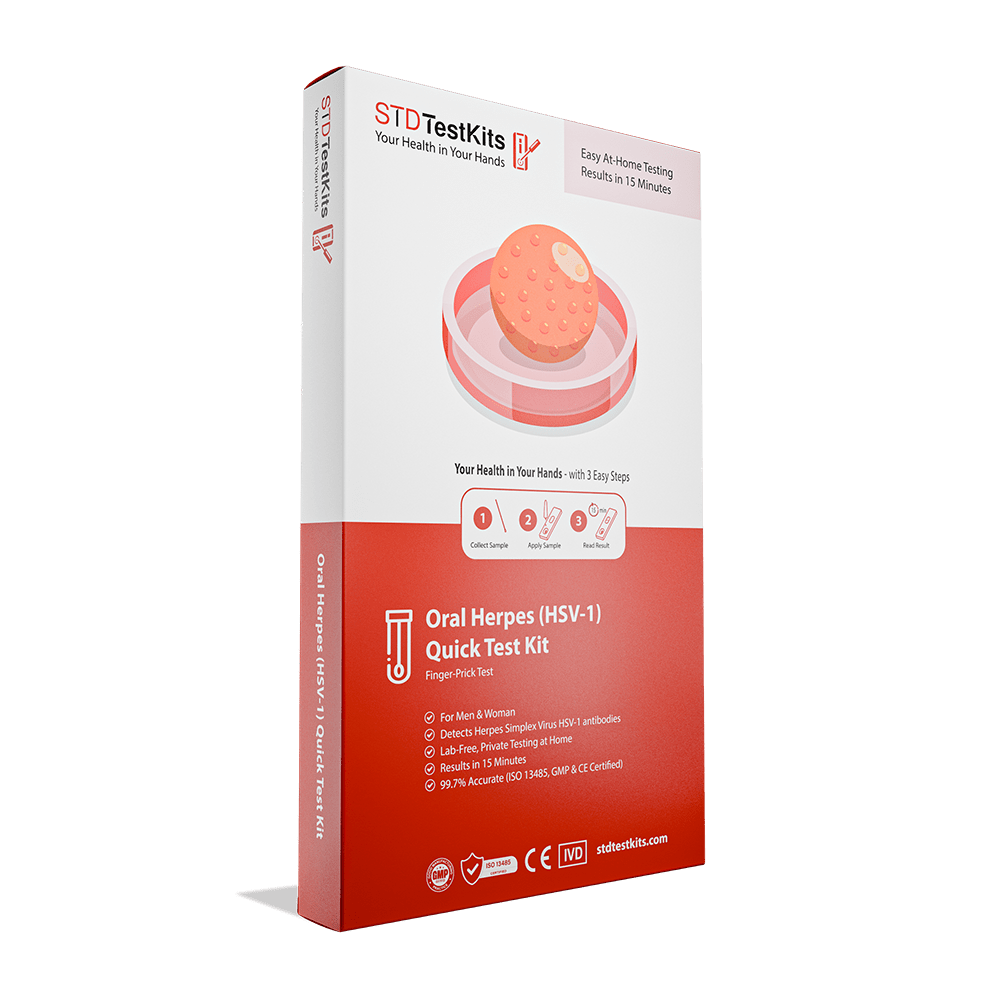
If you’re unsure which strain you carry, or you’re trying to understand whether recurring symptoms are truly herpes-related, testing can clarify that. Discreet at-home options through STD Test Kits provide type-specific results without clinic visits. Knowing whether you’re dealing with HSV-1 or HSV-2 changes expectations around recurrence frequency.
Peace of mind isn’t dramatic. It’s practical.
Anatomy Changes the Experience, Even When the Virus Is the Same
One reason herpes flare cycles feel different between women and men is simple geography. The virus reactivates along nerves, but what you notice depends on where those nerves land and how delicate the surrounding skin is. Vulvar tissue is thinner, more mucosal, and often more reactive to friction, discharge changes, and inflammation. That doesn’t mean women “handle herpes worse,” it means the same outbreak can feel louder in the body.
On the penis or scrotum, lesions may be more visible and easier to locate, but they can also be mistaken for irritation from shaving, sweat, or friction. In the vulva and vagina-adjacent tissue, outbreaks can hide in folds or show up as diffuse burning instead of obvious blisters. That’s why some women don’t realize a flare is starting until urination stings or the whole area feels raw.
So when people compare herpes outbreaks in women versus men, they’re often comparing sensation and tissue response, not viral strength. In practice, that difference matters, because it changes how quickly someone recognizes prodrome symptoms and starts treatment.
Symptom “Severity” Isn’t Just Pain, It’s How Much Life It Disrupts
In clinic language, a recurrent outbreak might be called “mild” if there are fewer lesions or the episode heals faster than the first. In real life, a “mild” outbreak can still wreck your week if it lands where underwear rubs, where you menstruate, or where you’re already dealing with irritation from a yeast infection or BV. This is why some women report that flares feel more intense even when lesion count is small.
Men often describe outbreaks as localized, one spot, a clear cluster, a defined timeline. Women more often describe outbreaks as diffuse, burning, swelling, tenderness, and sometimes internal discomfort that feels harder to pinpoint. That doesn’t automatically mean the virus is reactivating more aggressively; it can mean the affected tissue is more sensitive and inflammation spreads more easily.
Either way, your body’s experience is valid data. It’s not “overreacting.” It’s your nervous system sending a signal that something is happening.
Periods, Follicular Phase, and Why Some Cycles Line Up
When women say their outbreaks cluster around their period, the evidence is not just anecdotal. A peer-reviewed study looking at genital HSV-2 in women found that among women not using hormonal contraception, both recurrences and shedding could be more frequent during the follicular phase, which includes menstruation. That doesn’t mean every cycle will trigger a flare, but it supports the pattern many women describe when they track symptoms over time. The study is here if you want the details.
This is also where the “back-to-back outbreaks” fear can snowball. If you flare right before bleeding starts, then friction, pads, tampons, or inflammation can make the healing phase feel prolonged. By the time the skin calms down, your stress levels are up, sleep is off, and the body is primed for another reactivation. That doesn’t mean you’re doomed to monthly outbreaks; it means your system is stuck in a loop that can often be broken with a tighter plan.
Men generally don’t have that monthly immunologic and tissue shift. Their triggers tend to be less cyclical and more situational, illness, lack of sleep, major stress, or intense friction, though plenty of men also notice flare patterns they can predict.
People are also reading: Swab vs Blood vs Urine STD Tests: What’s the Real Difference?
Viral Shedding: The Quiet Part of the Cycle That Matters for Partners
Outbreaks are the visible part of herpes flare cycles, but viral shedding is the part that drives transmission risk. Shedding means the virus is present on the skin surface even when there are no sores. This is why someone can transmit HSV-2 while feeling totally normal, and why a partner can swear “nothing looked wrong.” The CDC explains the clinical reality of recurrences and genital shedding patterns, including differences between HSV-1 and HSV-2, in its treatment guidelines. CDC herpes guidelines.
Shedding is influenced by how often someone has outbreaks, how long they’ve had the virus, and whether they’re using daily suppressive medication. A large study published in 2011 found that higher recurrence frequency predicts higher shedding rates, and that even people who think they’re “asymptomatic” may still shed on a meaningful percentage of days. Tronstein et al. 2011.
Here’s the crucial point for the women-vs-men question: the difference in shedding between sexes is not always dramatic, and study designs vary. What tends to matter more is time since acquisition and symptom activity. The virus is less about gender and more about biology: how tightly your immune system keeps it pinned down.
When Sex, Friction, and Micro-Tears Trigger Flares
For both women and men, friction can be a trigger, especially if the skin is already irritated. But the mechanics differ. Women are more likely to experience micro-tears from sex, dryness, or hormonal changes that affect lubrication. Men are more likely to experience friction-based irritation from prolonged intercourse, tight condoms, or aggressive masturbation. The trigger isn’t the act itself; it’s the combination of friction plus a moment where the local immune environment is stressed.
This is one reason “I only flare after sex” shows up in real searches. It’s not a moral punishment and it’s not proof your partner “caused” it on purpose. It’s the virus exploiting a temporary opening, literally and immunologically. If you can identify those openings, you can often reduce recurrences without changing your entire sex life.
Lubrication, gentler pacing, and taking prodrome sensations seriously can make a real difference. For people with frequent flares tied to intercourse, suppressive therapy can be even more impactful, because it reduces the baseline chance of reactivation even when triggers occur.
Suppression and Episodic Treatment: What Actually Changes the Cycle
When herpes flare cycles are frequent, the most evidence-backed way to reduce them is antiviral medication. Episodic therapy means taking antivirals at the first sign of prodrome to shorten the outbreak and reduce symptom intensity. Suppressive therapy means taking daily medication to reduce outbreak frequency and lower transmission risk. The CDC summarizes these approaches and when they’re typically recommended. CDC treatment guidance.
From a practical standpoint, women often benefit from anticipatory planning around menstruation if their flares are clearly cycle-linked. That might mean being ready with episodic medication at the first tingle, or discussing suppressive therapy if outbreaks are frequent or emotionally exhausting. Men often benefit from planning around known stressors, travel, sleep disruption, illness recovery, intense workouts, because those are common trigger windows.
Neither approach is “better.” They’re just tailored to how your body tends to open the door to reactivation.
Table 2. Real-world recurrence patterns by sex. These are tendencies, not rules, and they overlap heavily between women and men.
Testing Clarity: When the “Cycle” Might Not Be Herpes
One hard truth from the field: not every recurring genital irritation is a herpes flare, even when you’ve had herpes before. Yeast infections, BV, dermatitis, shaving irritation, allergic reactions, and even fissures from dryness can mimic prodrome sensations. In men, folliculitis or friction rash can be mistaken for a recurrent outbreak. In women, BV or yeast can create burning that feels like the start of a flare but never becomes lesions.
If your symptoms are frequent but atypical, no blisters, no ulcers, no consistent lesion pattern, it’s worth confirming what’s actually happening. Sometimes the “herpes flare cycle” someone thinks they’re seeing is really a cycle of irritation, inflammation, and anxiety that keeps the nervous system on high alert. That’s not a character flaw; that’s what bodies do under uncertainty.
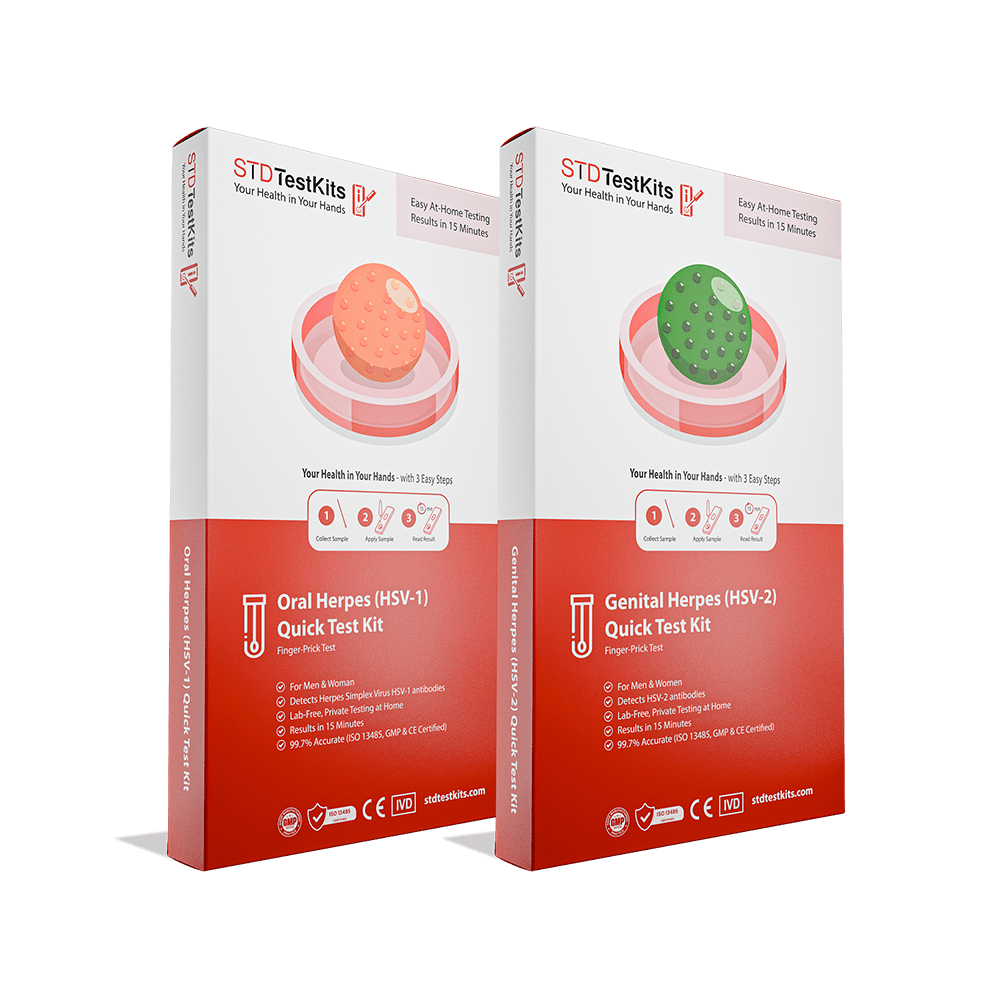
If you need private confirmation, the Genital & Oral Herpes 2-in-1 At-Home Test Kit can help clarify what you’re dealing with at home, especially when clinic access feels like a barrier. For broader peace of mind when symptoms are confusing or there were multiple exposures, some people prefer a multi-panel kit like the Complete 7-in-1 STD At-Home Test Kit, because herpes isn’t the only infection that can cause discomfort.
Knowing what you’re treating changes everything. Guessing keeps you stuck.
Does Herpes Get Better Over Time, And Does That Differ by Sex?
One of the most urgent questions after diagnosis is whether this is your new permanent reality. Weekly outbreaks. Monthly dread. Constant anticipation. The data is reassuring: for both women and men, herpes flare cycles almost always decline over time.
The immune system learns. T-cell responses strengthen. The body becomes faster at recognizing viral reactivation before it fully surfaces. That’s why the first year tends to be the most active. After that, recurrence frequency often drops by about 50 percent in subsequent years for many people with genital HSV-2.
This decline pattern does not dramatically favor one sex over the other. Women may start slightly higher in recurrence frequency, particularly in the first year, but long-term trends converge. By year three or four, many people, regardless of sex, report only occasional flares or none at all.
That trajectory matters. It means the cycle you’re experiencing right now is not necessarily your forever baseline.
Emotional Stress and Immune Control: The Hidden Driver
When people ask why their herpes keeps coming back, they often focus on hormones or friction. But stress biology is powerful. Cortisol, sleep deprivation, illness, and psychological strain all alter immune surveillance. The virus doesn’t reactivate because you “failed.” It reactivates when immune pressure dips just enough for it to surface.
In both women and men, prolonged stress correlates with increased outbreak frequency. What sometimes differs is the pattern of stress exposure. Women may experience layered stressors, caregiving, hormonal shifts, sleep fragmentation, that cluster together. Men may experience acute stress spikes related to work intensity or physical overexertion. The immune system responds to both.
One patient, Daniel, noticed his outbreaks clustered during quarterly work deadlines. “It wasn’t random,” he said. “It was every time I wasn’t sleeping.” Once he tracked the pattern and began preemptive episodic treatment during high-stress weeks, his recurrence frequency dropped significantly.
The cycle often feels mysterious until you map it.
Asymptomatic Shedding: Why You Can’t Judge Risk by Outbreak Count
Here’s something that surprises many people: someone with frequent visible outbreaks is not automatically more infectious than someone with none. Shedding patterns are complex. While recurrence frequency is associated with increased shedding, even people with very mild or rare outbreaks can shed virus on days without symptoms.
This is why comparing herpes outbreaks in women versus men based purely on visible flare cycles misses part of the story. Transmission risk is influenced by:
- Viral type (HSV-2 sheds more frequently than genital HSV-1)
- Time since infection (shedding declines over years)
- Suppressive antiviral use
- Condom use and barrier methods
Over time, shedding frequency declines in both sexes as immune control strengthens. This reinforces the long-term trend: herpes flare cycles calm down biologically, not just visibly.
First-Year Reality vs Long-Term Pattern
If you were diagnosed recently and it feels constant, you are likely in what clinicians informally call the “busy year.” During the first 6 to 12 months after acquiring genital HSV-2, outbreaks are typically more frequent and sometimes more symptomatic. This applies to women and men alike.
Women may notice first-year flares aligning with menstruation. Men may notice them aligning with illness or stress. But the immune adaptation curve is shared. The body is building durable recognition of viral proteins. Each outbreak teaches your immune system how to respond more efficiently.
By the second and third year, most people report fewer outbreaks, shorter duration, and milder symptoms. That’s not wishful thinking. It’s documented in long-term recurrence studies.
When to Consider Daily Suppressive Therapy
Suppressive therapy isn’t only for people with severe disease. It’s for people whose herpes flare cycles are interfering with their peace of mind, relationships, or physical comfort. Clinical guidelines suggest daily antiviral therapy for those with frequent recurrences, commonly defined as six or more outbreaks per year, but many providers prescribe it at lower thresholds if outbreaks are distressing.
Women with menstruation-linked flares often find daily suppression smooths the hormonal vulnerability window. Men with stress-linked clusters often benefit from consistent viral suppression during high-pressure seasons of life.
Suppression reduces recurrence frequency and lowers asymptomatic shedding. It does not eliminate the virus, but it reduces the likelihood of reactivation. For many people, that shift is enough to transform how herpes fits into their life story.

People are also reading: Does Gonorrhea Cause Itching? Here’s the Honest Answer
Is It Getting Worse, Or Are You Just Paying Attention?
There’s another layer here that doesn’t show up in clinical tables: awareness. After diagnosis, people scan their bodies differently. A nerve twitch that once would have gone unnoticed now triggers concern. A patch of irritation becomes a suspected flare. This heightened vigilance is understandable, especially in the first year.
Women may interpret pelvic discomfort through the lens of hormonal cycles. Men may interpret any genital irritation as recurrence. Sometimes, what feels like increasing frequency is actually increasing attention.
This doesn’t mean symptoms are imagined. It means context changes perception. And over time, as you learn your specific prodrome signals, anxiety often drops, and so does the sense of unpredictability.
What Actually Predicts More Frequent Flare Cycles?
Across sexes, a few predictors show up consistently in recurrence research:
- Genital HSV-2 rather than HSV-1
- Recent acquisition (first year)
- Higher stress levels
- Immunosuppression or concurrent illness
- Lack of antiviral suppression in people with frequent outbreaks
Notice what’s not on that list: gender alone. Sex-based trends exist, especially around menstruation-linked flares, but viral type and immune control remain the dominant drivers of herpes flare cycles.
If you’re trying to understand your pattern, the most useful question isn’t “Is this worse for women or men?” It’s “What are my triggers, my viral type, and my timing?”
So… Is It Actually Different for Women and Men?
If we zoom out from all the variables, hormones, friction, stress, viral type, the answer becomes clearer. Herpes flare cycles are influenced by sex, but they are not defined by it. Women are somewhat more likely to report slightly higher recurrence rates in the first year, particularly with genital HSV-2, and hormonal shifts can create predictable flare windows. Men are less likely to have cyclical hormone-driven outbreaks, but they are just as susceptible to stress-triggered or immune-related reactivations.
Over time, both patterns tend to stabilize. Both decline. Both become more predictable once the individual learns their triggers. The virus behaves according to immune pressure more than gender category.
That’s the part most people don’t hear enough.
Tracking Your Own Flare Cycle (Without Obsessing)
Data reduces fear. If outbreaks feel random, they feel uncontrollable. But when you start mapping them, even loosely, patterns often emerge. Women may notice flares clustering around menstruation or high-stress weeks. Men may notice them after illness, heavy workouts, or sleep loss.
You don’t need a complicated spreadsheet. Just note the date, any prodrome sensation, major stressors, sleep quality, illness, or hormonal phase if applicable. After three to six months, most people can identify at least one predictable vulnerability window.
This isn’t about micromanaging your body. It’s about replacing anxiety with information. When you know your cycle, you can preempt it.
When to Re-Test or Re-Evaluate Symptoms
If your “herpes flare cycles” suddenly change dramatically, for example, outbreaks become significantly more frequent after years of calm, it may be worth reassessing. Sometimes new stressors, immune shifts, or other infections are involved. Occasionally, symptoms that feel like recurrent herpes turn out to be something else entirely.
Testing can clarify viral type if it was never confirmed. It can also rule out additional infections that mimic outbreaks. Discreet confirmation through STD Test Kits allows you to verify what’s happening without waiting weeks for appointments. For people managing recurring genital symptoms, having clarity about HSV-1 versus HSV-2 can dramatically change expectations around recurrence frequency.
Knowledge shifts the cycle from mystery to management.
FAQs
1. Do women really have more herpes outbreaks than men, or does it just feel that way?
A little of both. On paper, women with genital HSV-2 tend to report slightly more recurrences in the first year. In real life, it can feel like more because hormonal shifts amplify body awareness. When an outbreak overlaps with a period, irritation, or discharge changes, it can feel bigger, even if the lesion count is small.
2. Why do my outbreaks show up right before my period like clockwork?
Because your immune system isn’t static. In the days before menstruation, estrogen drops and immune modulation shifts. For some women, that creates a small window where the virus reactivates. If you’ve noticed a pattern, that’s not paranoia, that’s data. And it means you can plan around it.
3. My partner barely gets outbreaks. Why am I the one flaring?
Viral type matters. Immune response matters. Time since infection matters. Some people’s immune systems clamp down faster. It’s not about being “stronger” or “weaker.” It’s about how your specific nervous system and immune cells interact with HSV. Two bodies. Two patterns.
4. Can stress alone really trigger a flare?
Yes. Not in a mystical way, in a biological one. Stress hormones like cortisol can dampen immune surveillance. If you’ve been sleeping four hours a night and running on adrenaline, your body has fewer resources to suppress viral reactivation. The outbreak isn’t punishment. It’s physiology.
5. Why do I feel tingling but no blisters ever show up?
That prodrome sensation, the buzzing, itching, nerve flicker, can happen even if the immune system shuts the virus down before lesions form. Think of it as your body catching the flare early. Not every warning turns into a visible outbreak.
6. Do herpes outbreaks get milder over time?
For most people, yes. The first year is usually the loudest. After that, outbreaks tend to shorten, space out, and become less intense. Many people move from “this is constant” to “oh, I haven’t had one in months.” That shift happens gradually, but it’s common.
7. Is HSV-1 different from HSV-2 when it comes to flare cycles?
Very. Genital HSV-1 typically recurs far less often than genital HSV-2. Some people with genital HSV-1 never experience another outbreak after the first. If you don’t know your type, that piece of information can dramatically change your expectations.
8. Can sex trigger an outbreak even if my partner doesn’t have herpes?
Yes, because friction and micro-irritation can wake the virus up. It doesn’t require reinfection. It requires a local trigger. Lubrication, pacing, and paying attention to early prodrome can reduce those friction-linked flares.
9. If I start daily antiviral medication, will outbreaks stop completely?
Sometimes they become very rare. Sometimes they drop from monthly to once a year. Suppressive therapy reduces recurrence frequency and lowers shedding, but it doesn’t erase HSV from the nervous system. Think of it as turning the volume way down.
10. Is it normal to feel hyper-aware of every sensation after diagnosis?
Completely. After you know you have herpes, every itch feels suspicious. Every tingle feels like a headline. Over time, you learn your real prodrome pattern, and you stop reacting to every random nerve twitch. That learning curve is part of the adaptation process.
Before You Spiral, Here’s What Actually Matters
Herpes flare cycles are not a competition between women and men. They are a conversation between your immune system and a virus that prefers quiet but occasionally resurfaces. Women may notice hormone-linked patterns. Men may notice stress-linked patterns. Both experience decline over time.
If outbreaks are frequent, confusing, or emotionally draining, you don’t have to just “deal with it.” Confirm your viral type. Consider episodic or suppressive therapy. Track patterns instead of guessing. And if clarity is what you need right now, a discreet at-home testing option can give you answers without delay.
Your body is not betraying you. It’s adapting.
How We Sourced This Article: This guide integrates CDC treatment guidelines, peer-reviewed recurrence and shedding studies, and long-term epidemiological research on HSV-1 and HSV-2. We reviewed approximately fifteen sources to ensure recurrence data, shedding statistics, and hormone-linked findings reflect current evidence. Six of the most reader-relevant sources are listed below for transparency and verification.
Sources
1. CDC – Herpes Treatment Guidelines
2. World Health Organization – Herpes Simplex Virus Fact Sheet
3. Tronstein et al., Genital HSV-2 Shedding Study
4. HSV-2 Shedding Across Menstrual Cycle Phases
5. Mayo Clinic – Genital Herpes Overview
About the Author
Dr. F. David, MD is a board-certified infectious disease specialist focused on STI prevention, diagnosis, and treatment. He combines clinical precision with clear, practical education designed to help people make informed decisions about their health.
Reviewed by: L. Carter, MSN, FNP-BC | Last medically reviewed: February 2026
This article is for informational purposes and does not replace medical advice.