Menopause Symptoms or STD Warning Signs? What Women Miss
Quick Answer: Menopause symptoms and the signs of an STD often have similarities because of the effect of the decrease of estrogen on the body. Natural lubrication decreases. Local immunity drops. It doesn’t.

Quick Answer: Menopause symptoms and the signs of an STD often have similarities because of the effect of the decrease of estrogen on the body. Any burning, pain, ulcers, bleeding, or discharge should not be assumed to be hormonal.
Why Menopause Makes STD Symptoms Harder to Spot
Menopause doesn’t just end periods. It quietly reshapes the vaginal environment in ways that can blur medical signals. As estrogen levels fall, vaginal tissue becomes thinner, drier, and more fragile. Natural lubrication decreases. Small tears can happen more easily during sex. Local immunity drops.
Those changes alone can cause itching, burning, discomfort, odor changes, and pain during sex, symptoms that look identical to early signs of infections like Chlamydia, Gonorrhea, Trichomoniasis, or viral conditions like Herpes.
Many women are told, explicitly or indirectly, that once pregnancy is no longer a concern, STD risk fades too. It doesn’t. What fades is condom use, routine screening, and suspicion that symptoms might be infectious rather than hormonal.

The Most Commonly Confused Symptoms
This is where things get tricky. Menopause-related changes and STDs don’t announce themselves differently. They share the same language inside the body. The difference isn’t always how symptoms feel, it’s how long they last, how they behave, and whether they respond to treatment.
| Symptom | Common Menopause Explanation | Possible STD Cause |
|---|---|---|
| Burning or stinging | Vaginal dryness or tissue thinning | Chlamydia, Gonorrhea, Trichomoniasis |
| Itching | Low estrogen, pH changes | Trichomoniasis, Herpes |
| Pain during sex | Atrophic vaginitis | Chlamydia, pelvic infections |
| Light bleeding or spotting | Fragile vaginal tissue | Chlamydia, Gonorrhea |
| Sores or lesions | Skin sensitivity or irritation | Herpes, Syphilis |
Table 1. Symptom overlap between menopause and common STDs. Persistence, progression, and recurrence are key clues.
“I Thought It Was Just Menopause”: A Common Midlife Delay
Denise, 52, had been divorced for four years when she started dating again. When sex became uncomfortable and burning lingered afterward, she chalked it up to menopause. Everyone had warned her this might happen. She bought lubricants. She waited it out.
“I didn’t even consider an STD,” she said. “I felt ridiculous thinking about it at my age.”
Six months later, routine testing revealed Chlamydia. The infection had been mild but persistent, masked by symptoms she’d been taught to expect from aging. By the time it was caught, pelvic inflammation had already developed.
This delay isn’t rare. Studies show STD rates are rising fastest among adults over 45, not because of reckless behavior, but because prevention messaging, screening habits, and assumptions haven’t kept up.
When Hormones Aren’t the Whole Story
Menopause symptoms tend to fluctuate. Some days are better than others. Infections behave differently. STD symptoms often persist, intensify, or recur in patterns that don’t respond to moisturizers, estrogen creams, or time.
Warning signs that deserve testing, not waiting, include symptoms that last longer than two weeks, worsen after sex, cause bleeding, involve sores, or return repeatedly despite treatment for dryness or irritation.
Another red flag is change. If something feels different from your usual menopause pattern, that difference matters. Bodies develop rhythms. Infections disrupt them.
Why Menopause Makes STDs Easy to Miss, and What That Actually Looks Like
The reason STDs are so often missed after menopause isn’t ignorance, recklessness, or denial. It’s messaging. For decades, sexual health education has centered younger bodies, pregnancy prevention, and fertility. Menopause gets framed as an ending, a point where sexual risk supposedly fades instead of simply changing.
That framing quietly rewires expectations. When symptoms show up after menopause, the default explanation is almost always hormonal. Dryness. Fragility. Aging skin. “Normal changes.” Even when discomfort interferes with sex, sleep, or daily life, it’s often treated as something to tolerate rather than investigate.
Healthcare visits reinforce this. Appointments focus on hot flashes, bone density, sleep disruption, and mood shifts. Sexual discomfort is normalized. STD screening is rarely offered unless a woman asks for it directly, and many don’t, because they’ve been taught they shouldn’t need it anymore.
At the same time, menopause actively disguises infections at the biological level. Estrogen loss changes how vaginal tissue feels, heals, and signals distress. The tissue becomes thinner and less elastic. Natural lubrication decreases. Local immune response shifts. Infections don’t disappear, they just get quieter.
Instead of dramatic symptoms, many women experience patterns like:
- Burning that lingers or flares after sex instead of resolving with lubrication or estrogen.
- Itching that follows a rhythm, after intercourse, during stress, or repeatedly, rather than coming and going randomly.
- Pain during sex that escalates over time or causes bleeding, not just dryness.
- Sores or raw patches that look like cracks, irritation, or shaving injuries and heal quickly, only to return.
- Low-grade pelvic discomfort that never quite crosses into “severe,” but also never fully leaves.
These symptoms are easy to write off when menopause already feels like a catch-all explanation. But there are patterns here that matter.
Menopause-related dryness usually improves with lubrication, estrogen therapy, or time. Infection-related burning often doesn’t. It lingers. It flares after sex. It may feel deeper than surface irritation. When burning keeps returning despite hormonal treatment, it’s not menopause being stubborn, it’s a signal.
Bacterial infections like Chlamydia and Gonorrhea are especially sneaky after menopause. They often cause low-grade burning or pelvic discomfort without obvious discharge. That discomfort can simmer for months without triggering alarm, especially when it fits the story women have been told about what midlife bodies are supposed to feel like.
Trichomoniasis is another common miss. It’s frequently misdiagnosed as irritation or yeast, even though it often causes persistent itching with subtle odor changes rather than thick discharge.
Herpes also behaves differently after menopause. Outbreaks may be smaller, less blister-like, or feel more like a paper cut than a classic sore. They may heal quickly and recur quietly, reinforcing the belief that nothing serious is happening.
This is how infections slip through, not because women aren’t paying attention, but because the signals are blurred and the expectations are wrong. The body is still communicating. It’s just using quieter language.
The cost of that silence isn’t just discomfort. Untreated STDs can increase the risk of pelvic inflammatory disease, chronic pelvic pain, urinary complications, and ongoing transmission to partners. Infections don’t become harmless with age. They just become easier to overlook.
Menopause doesn’t end sexual health. It changes the terrain. And when the map hasn’t been updated, it’s easy to miss what’s right in front of you.
Viral Reactivation: Why Symptoms Can Appear Years Later
Some women are shocked to develop STD symptoms decades into monogamous relationships or long after dating. Hormonal shifts explain why.
Estrogen plays a role in immune regulation. When levels drop, dormant viruses can reactivate. This is why Herpes outbreaks and HPV-related changes sometimes appear or worsen after menopause.
This does not mean recent infidelity. It does not mean anyone lied. It means the body changed.
Unfortunately, many women blame themselves, or their partners, before learning this basic physiology.
The Emotional Cost of Being Told “That’s Just Menopause”
Dismissal is its own form of harm. When symptoms are waved off repeatedly, women stop asking questions. They endure pain. They assume discomfort is the price of aging.
But untreated infections don’t stay contained. They affect urinary health, pelvic organs, sexual confidence, and partner safety.
Testing isn’t an overreaction. It’s a way to separate what can be treated hormonally from what needs medical care.
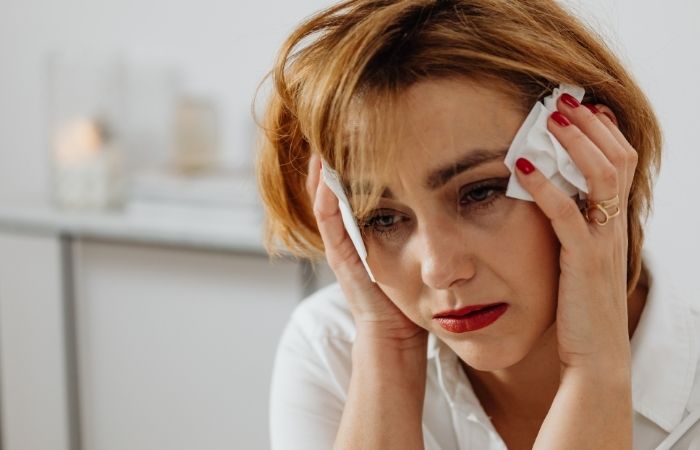
Why Older Women Are at Real Risk, Even Without “High-Risk” Behavior
Risk isn’t about age. It’s about exposure and biology.
After menopause, vaginal tissue is more susceptible to micro-injury. Condom use declines because pregnancy isn’t a concern. Many women re-enter dating after divorce or loss without updated sexual health counseling.
STD rates among adults over 45 have been rising steadily, yet screening guidelines and cultural awareness haven’t caught up.
When symptoms overlap, guessing becomes exhausting. Is it hormones? Is it aging? Is it something else? Testing answers the question instead of letting it spiral.
Many women choose at-home STD testing because it’s private, straightforward, and removes the emotional friction of asking for screening in environments that may not expect it.
If symptoms persist, clarity is care. You can explore discreet, confidential options through STD Test Kits without judgment or pressure.
When to Test, When to Wait, and Why Timing Matters More Than Speed
When symptoms overlap this much, the instinct is to test immediately. That instinct is human. You want answers. You want to stop guessing. But especially after menopause, timing matters almost as much as testing itself.
Testing too early can create false reassurance. Testing too late can mean living with discomfort longer than necessary or risking complications. The goal isn’t speed for its own sake, it’s accuracy with intention.
This is where the idea of the window period becomes important, without turning it into medical jargon. Every STD has a window period: the stretch of time between exposure and when a test can reliably detect infection. Menopause doesn’t change that window, but it can change how symptoms behave during it.
After menopause, symptoms are often quieter and less dramatic. That’s why some women test early, get a negative result, and still feel “off.” The test wasn’t wrong. It was just early.
As a general guide, bacterial infections like Chlamydia and Gonorrhea are usually detectable within one to two weeks after exposure. Trichomoniasis can take a bit longer. Viral infections like Herpes and HIV have longer and more variable windows, which means early testing may need to be followed by a repeat test for clarity.
This doesn’t mean you should sit on symptoms indefinitely. If discomfort is severe, worsening, involves sores, bleeding, fever or significant pelvic pain, clinical care should not wait. But for subtle, confusing, or menopause-overlapping symptoms, strategic timing often gives clearer answers than panic testing.
If you want a deeper breakdown of how window periods work for different infections and test types, this guide walks through it in plain language: STD testing window periods and when to test for each infection.
Testing isn’t a one-shot decision. Sometimes it’s a sequence. A test now to rule out obvious causes, followed by a retest once the window has fully passed. That approach isn’t cautious, it’s informed.
After menopause, clarity often comes not from rushing, but from choosing the right moment to look.
Testing After Menopause: What’s Different
After menopause, the body’s immune response can be slower and less dramatic. That means infections may produce fewer outward signs, even as they persist internally.
It also means that relying on symptom resolution alone, “It stopped hurting, so it must be fine”, is riskier. Some infections calm temporarily before resurfacing or spreading.
For women with ongoing sexual activity, new partners, or unresolved symptoms, periodic testing becomes a maintenance tool, not a crisis response.
At-Home Testing vs Clinic Testing: Choosing What Fits
There’s no moral hierarchy in how you test. There’s just what works.
Clinic testing offers comprehensive evaluation and is essential when symptoms are severe, unexplained bleeding occurs, or pelvic pain is present. It can also address non-STD causes like atrophic vaginitis or dermatologic conditions.
At-home testing works well when privacy matters, access is limited, or symptoms are ambiguous and you want answers without waiting weeks for an appointment.
| Testing Option | Best For | Limitations |
|---|---|---|
| At-home rapid or mail-in tests | Discreet screening, symptom confusion, routine checks | May need follow-up for confirmation |
| Clinic-based testing | Severe pain, sores, bleeding, pelvic symptoms | Access barriers, scheduling delays |
Table 2. Choosing a testing method after menopause depends on symptoms, access, and timing, not age.
Why Retesting Is Sometimes the Smartest Move
Retesting isn’t failure. It’s strategy.
If you test early and symptoms persist, a follow-up test after the full window period often resolves uncertainty. If you receive treatment, retesting ensures clearance and prevents reinfection.
After menopause, where symptoms may lag behind biology, retesting is often what closes the loop.
FAQs
- 1. How can menopause and STD symptoms feel so similar?
- Because they’re happening in the same neighborhood. Menopause changes vaginal tissue, moisture, and immune response, which can cause burning, itching, pain, or spotting, all things infections also cause. Your body isn’t being confusing on purpose; it’s sending signals that just happen to overlap.
- 2. If it was an STD, wouldn’t I know right away?
- Not necessarily. Many STDs are quiet, especially after menopause. Instead of dramatic symptoms, you might notice a vague discomfort that never quite leaves, or something that flares after sex and then settles down again. That gray area is exactly where infections get missed.
- 3. Can menopause really make infections easier to get?
- Yes, and this part isn’t talked about enough. Lower estrogen means thinner tissue and less natural protection, which makes micro-tears more likely during sex. Those tiny breaks give bacteria and viruses an easier entry point.
- 4. I haven’t had a lot of partners. Do I still need to worry?
- This isn’t about numbers. It’s about exposure and biology. One new partner, inconsistent condom use, or a long-standing infection that was never tested can be enough. Risk isn’t a personality trait.
- 5. What about herpes or HPV showing up later in life?
- That surprises a lot of people. Hormonal shifts can allow dormant viruses to wake up years, or decades, after exposure. Symptoms appearing now don’t automatically mean something recent happened.
- 6. Is pain during sex always just dryness?
- Dryness is common, but it shouldn’t feel sharp, raw, or progressively worse. Pain that comes with bleeding, burning afterward, or lingering soreness deserves a closer look. You don’t have to white-knuckle your way through intimacy.
- 7. My doctor said it’s “just menopause.” What now?
- You’re allowed to ask for more. Testing doesn’t contradict menopause, it complements the diagnosis by ruling other things out. If symptoms persist, it’s reasonable to say, “I’d feel better checking.”
- 8. Is STD testing after menopause embarrassing?
- Only if we let outdated ideas decide what’s normal. Sexual health doesn’t expire. Testing is quiet, practical, and frankly less dramatic than months of guessing.
- 9. Do at-home STD tests still work after menopause?
- They do. Menopause doesn’t break the tests. Timing still matters, and some situations require follow-up, but at-home testing is a valid, reliable starting point for many women.
- 10. What’s the biggest mistake women make with these symptoms?
- Waiting too long because they don’t want to “overreact.” Ruling something out is not overreacting. It’s how you stop discomfort from turning into a bigger problem.
Testing as Self-Respect, Not Suspicion
One of the most damaging beliefs women carry into midlife is that needing an STD test says something negative about them. It doesn’t.
It says you’re paying attention. It says you’re protecting your body and the people you share it with. It says you refuse to guess when answers are available.
Many women choose a comprehensive option like a multi-STD at-home test kit because it checks for the most common infections at once, quietly and efficiently.
That choice isn’t fear-driven. It’s clarity-driven.
We built this guide by combining current clinical guidance on menopause and sexually transmitted infections with peer-reviewed research and lived-experience reporting. Around fifteen reputable medical and public health sources informed the writing; below, we’ve highlighted some of the most relevant and reader-friendly sources. The goal was not to alarm, but to clarify where symptoms overlap and why testing can be an act of care rather than fear.