Self-Pay STD Testing: How to Decide What to Test For When No Doctor Is Guiding You
Self-pay STD testing is more common than most people realize, and it sits inside the bigger picture of STD testing costs in the US. The most common mistake isn't skipping testing. This article fixes that.

Self-pay STD testing is more common than most people realize, and it sits inside the bigger picture of STD testing costs in the US. Whether you're uninsured, navigating a coverage gap, or simply choosing not to run a test through your insurance for privacy reasons, the self-pay route puts you in the driver's seat, and that means you need to know what you're doing before you order anything. The most common mistake isn't skipping testing. It's testing for the wrong things, testing too early, or assuming a single negative result covers everything. This article fixes that.
According to the CDC's 2024 STI Surveillance data, more than 2.2 million cases of chlamydia, gonorrhea, and syphilis were reported in a single year, and most people who carry these infections have no symptoms at all. Testing is how you find out. When no one is telling you what to test for, the right framework matters.
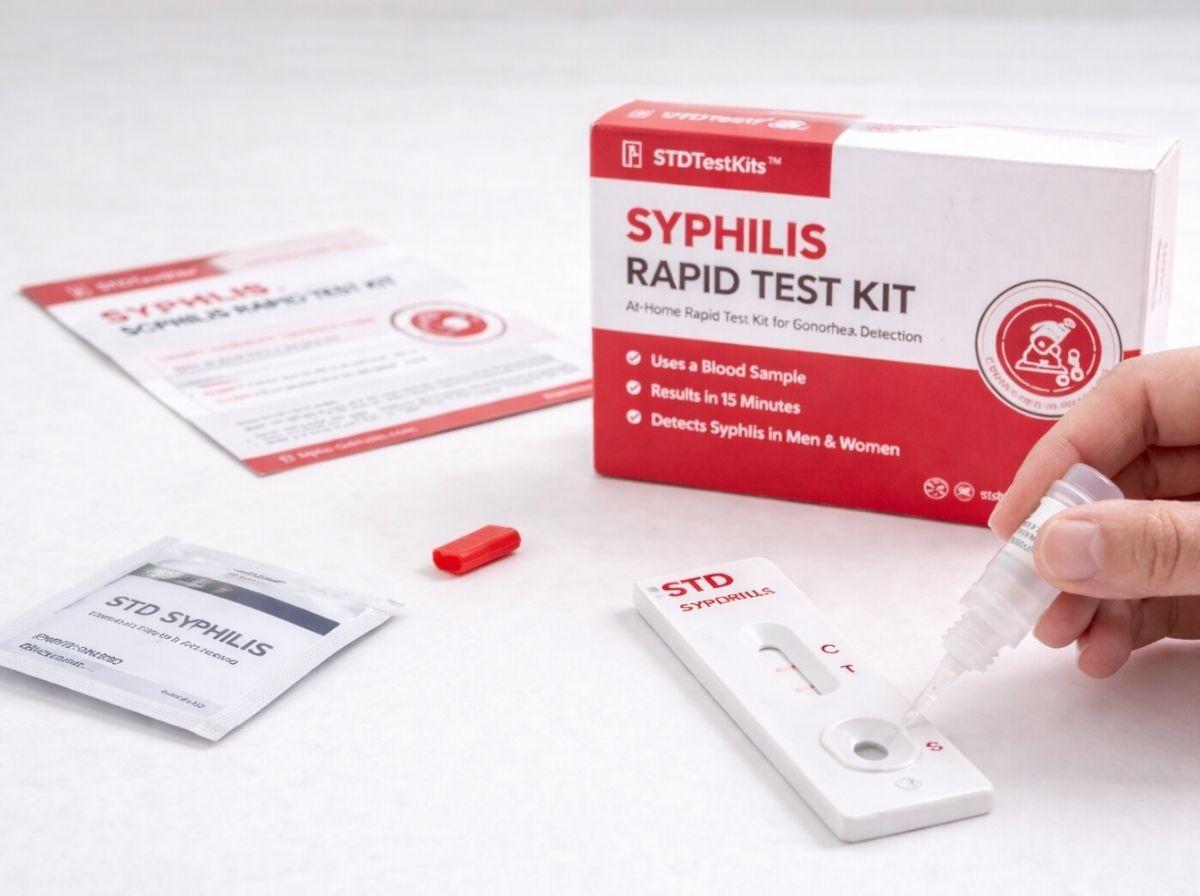
Why Self-Pay STD Testing Puts the Decision Entirely on You
There's a version of STD testing most people are familiar with: you go to a doctor, they ask about your sexual history, they decide which infections are worth screening for based on your age, partners, and risk factors, and they hand you a lab order. You show up, give a sample, and the results come back. The decision-making happened in the exam room, and someone with medical training made the call.
Self-pay testing strips that layer out entirely. You're choosing the tests, choosing the timing, and interpreting the results, often without a clinician involved at any stage. That's not necessarily a problem. Millions of people navigate it successfully. But it does mean that the framework for making good decisions has to come from somewhere, and "I Googled it" is not always enough. If the bigger issue is having no realistic budget for testing at all, start with what you actually have access to when you cannot afford STD testing before you pay for anything.
The gap is real. Research published in the journal Sexually Transmitted Diseases has consistently documented that people without access to routine clinical care are more likely to go undertested, not because they don't want to know their status, but because the process of deciding what to test for is genuinely confusing when you're doing it yourself. The result is that people either test for too little (one infection when they should be screening for four) or waste money testing for infections their actual exposure history doesn't justify.
At-home rapid test kits solve a big part of this problem, not just because they're discreet and affordable, but because the best combo kits remove the decision entirely. A well-designed multi-infection panel covers the infections most commonly missed in self-directed screening, in one flat price, with results you can read at home in minutes. That's the model this article builds toward. But first, you need to understand the decision framework so you can choose the right kit for your actual situation.
The Six Questions That Should Drive Every Self-Pay Testing Decision
Before you order anything, whether it's a clinic appointment, a lab panel online, or an at-home kit, there are six questions worth working through. They're the same questions a sexual health clinician would ask in an intake appointment. Answering them yourself gets you most of the way to the right testing decision without needing a referral.
| Question | What It Tells You | Panel Implication |
|---|---|---|
| What type of sex did you have? | Vaginal, anal, and oral sex carry different risks for different infections, and require different sample types | Oral or anal sex may require swab testing for throat/rectal gonorrhea; urine-only panels can miss these sites entirely |
| When did the exposure happen? | Every infection has a minimum window before it can be reliably detected, testing too early produces meaningless results | The longest window on your panel (hepatitis C: 8–11 weeks) sets the earliest date a full panel can be trusted |
| Do you have symptoms, or are you screening? | Active symptoms suggest targeted infections; no symptoms means the panel needs to cast a wider net | Asymptomatic screening calls for a comprehensive combo panel, the infections most worth catching are the ones with no signs |
| What were your partner's risk factors? | Known testing history, recent partners, or unknown status all shift the probability of specific infections | Unknown-status partner = full panel; recently tested partner with one new exposure = targeted approach may be reasonable |
| Have you been tested recently? | A recent clean comprehensive test narrows the field, but doesn't eliminate new-exposure risk | Recent clean panel + one new exposure: focus on highest-transmission infections; no recent test: full panel |
| Are you in a high-prevalence area? | Syphilis, gonorrhea, and HIV rates vary significantly by geography, local prevalence shifts the math on inclusion | High-prevalence metro areas strengthen the case for including syphilis and HIV even at lower individual risk |
When At-Home Rapid Test Kits Are the Smarter Self-Pay Choice
Here's the problem with building your own panel at an online lab: you have to get the list right. Miss an infection, choose the wrong sample type for your exposure, or order tests that don't match the window you're actually in, and you've spent money on a result that doesn't tell you what you needed to know. That decision-making risk is the core weakness of the DIY lab approach, and it's where at-home combo kits have a structural advantage that goes well beyond convenience.
A well-designed multi-infection at-home kit pre-solves the panel decision. The infections that belong together are already packaged together. The sample collection method is standardized to what those specific tests require. The result comes back in one read, covering the full panel, in about fifteen minutes at home. You don't need to know which infections co-occur most often, or which ones require blood versus urine versus a swab; that knowledge is already baked into the kit design. For anyone navigating the self-pay decision without a clinical relationship, that's not just convenient. It's genuinely the safer approach.
The practical advantages stack on top of that. No scheduling. No waiting room. No consultation fee added to the test cost, a major reason at-home kits often rank highly when comparing the cheapest way to get tested for STDs in the US. No separate lab bill arriving three weeks later from a company you've never heard of. One flat price, one kit, results you read yourself. And if you test positive, the path forward is clear: take your documented result to an urgent care center or telehealth provider, who will proceed with evaluation and treatment from that baseline. Most providers treat a documented rapid test positive as a valid starting point, you won't be sent back to square one. For bacterial infections like chlamydia, gonorrhea, and syphilis, treatment is straightforward and highly effective when caught early. For HIV and hepatitis C, early detection opens doors to treatments that dramatically change long-term outcomes. Knowing is always better than not knowing, and knowing faster is always better than waiting days for a lab portal to update.
The 7-in-1 Complete At-Home STD Test Kit covers HSV-2, chlamydia, gonorrhea, syphilis, HIV, hepatitis B, and hepatitis C, the full core panel outlined above, in a single kit at a single price. For anyone working through the self-pay decision without clinical guidance, that kit covers what belongs on most panels without requiring you to build the list from scratch. Women who want expanded coverage can also consider the Women's 10-in-1 At-Home STD Test Kit, which adds trichomoniasis and HPV 16 and 18 to the full core panel.
Testing is the fastest way to stop the guessing game, and at-home kits make it possible to do that without a doctor's order, a waiting room, or a lab bill you didn't see coming.
Which Infections Should Be on Most Self-Pay Panels
With no doctor guiding the panel, a reasonable default is to test for the infections that are most common, most frequently asymptomatic, and most consequential if missed. That short list is consistent across clinical guidelines and represents the core of what any sexually active adult who's had unprotected sex or new partners should be screening for regularly.
Chlamydia sits at the top of that list for both men and women. It's the most commonly reported bacterial STD in the US. It produces no symptoms in the majority of people who carry it, and, untreated, it causes real damage, pelvic inflammatory disease, scarring, and fertility complications in women, and epididymitis in men. A self-pay panel without chlamydia is missing the most common infection it should be catching. Testing window: 14 days after exposure.
Gonorrhea belongs alongside chlamydia on almost every panel. The two infections co-occur frequently; someone who has one is statistically more likely to have the other, and gonorrhea's antibiotic resistance profile means catching it early matters more than it once did. It's also worth noting that gonorrhea in the throat or rectum can persist for months while a standard urine test returns negative. If oral or anal sex was involved, testing for throat and rectal gonorrhea may require a swab, not just urine. Testing window: 3 weeks after exposure.
Syphilis has become significantly more common in recent years across the US, with the CDC noting that while rates declined 22% from 2023 to 2024, overall cases are still 13% higher than a decade ago. Primary syphilis presents as a painless sore that often goes unnoticed, especially when located internally. By the time secondary symptoms appear, rash, fever, and flu-like illness, the infection has been present for weeks or months. Blood-based syphilis testing is simple and should be on any panel that includes a new partner or unknown-status exposure. Testing window: 6 weeks after exposure.
HIV belongs on any comprehensive self-pay panel, particularly for anyone who has had unprotected sex with a partner of unknown status. Modern HIV testing is highly accurate, well within the standard testing window, and fourth-generation antigen/antibody tests have dramatically reduced the ambiguity of earlier-generation tests. Testing window: 6 weeks for a reliable first indicator; retest at 12 weeks for certainty.
Herpes is more complicated. HSV-2 (genital herpes) is common, infecting roughly 1 in 6 adults, and most people who carry it have never had a recognized outbreak. Blood-based herpes antibody testing is widely available and works well outside the acute window period. HSV-1 (oral herpes) is near-universal in the adult population, which affects how to interpret HSV-1 antibody results. Testing window: 6 weeks after exposure for both HSV-1 and HSV-2.
Hepatitis B and C round out the most clinically significant panel for most self-pay situations. Hepatitis B is vaccine-preventable, and knowing your status tells you whether prior vaccination worked or whether you need post-exposure evaluation. Hepatitis C is now curable with a short course of treatment, making early detection genuinely impactful. Neither infection produces early symptoms in most people. Testing windows: Hepatitis B from 6 weeks after exposure; Hepatitis C from 8–11 weeks after exposure.
| Infection | Symptom Rate | Test From | Consequence of Missing It |
|---|---|---|---|
| Chlamydia | Silent in 70–80% of carriers | 14 days | Pelvic inflammatory disease, scarring, infertility in women; epididymitis in men |
| Gonorrhea | Often silent; more symptomatic in men | 3 weeks | Untreated infection spreads; antibiotic-resistant strains make delay increasingly costly |
| Syphilis | Primary sore often painless and missed | 6 weeks | Progresses through stages; tertiary syphilis causes neurological and cardiovascular damage |
| HIV | Flu-like acutely; then years of silence | 6 weeks (retest at 12) | Undetected HIV means no treatment, continued transmission, and preventable health decline |
| Herpes HSV-2 | Silent or mild in most carriers | 6 weeks | Unknown status = ongoing transmission risk to partners; no cure but manageable with treatment |
| Hepatitis B | Usually none acutely | 6 weeks | Chronic hepatitis B causes liver damage over years; vaccine exists but only works pre-exposure |
| Hepatitis C | Usually none until liver damage is advanced | 8–11 weeks | Now curable, but only if caught; untreated hep C causes cirrhosis and liver failure over decades |
The Testing Window Problem: Why Timing Determines Everything
Here's the thing about STD testing that doesn't get said clearly enough: a negative result is only meaningful if the test was taken at the right time. Test too early, before the infection has had enough time to trigger a detectable immune response or reach a detectable concentration in your sample, and you can get a clean result while carrying an active infection. That's not a failure of the test. It's a failure of timing, and it's entirely avoidable once you understand how the windows work.
Every infection has what's called a window period, the gap between the moment of exposure and the point at which the test can reliably detect the infection. During that window, you may be infected and infectious without the test showing it. Testing during this period produces what's called a false negative: a negative result that doesn't reflect your actual status.
People in the self-pay situation get this wrong more often than people with clinical guidance, precisely because no one is telling them to wait. The instinct after a concerning exposure is to test immediately, which is understandable, but often produces a useless result. The right move is to know the window for each infection on your panel and wait accordingly before testing.
For chlamydia, the window is 14 days after exposure. For gonorrhea, three weeks. For syphilis, six weeks. HIV testing at six weeks gives you a reliable first indicator, but retesting at 12 weeks provides the certainty needed to fully rule out infection. Herpes HSV-1 and HSV-2 both require six weeks before antibody testing is reliable. Hepatitis B can be detected from six weeks after exposure; hepatitis C requires 8–11 weeks. If you're testing a multi-infection panel, the controlling window is the longest one. For most comprehensive panels, that means waiting 8–11 weeks after your most recent potential exposure before running the full panel if you want results you can trust for every infection on the list.
One practical note: if you're testing in two stages, a first test at 6 weeks for HIV and the core bacterial infections, then a confirmatory retest at 12 weeks for HIV certainty and hepatitis C, at-home rapid kits make that straightforward. Order the first kit, run it at the six-week mark, then order a second for the 12-week retest. Both tests cost less combined than a single urgent care visit, and you get results in minutes both times rather than waiting days for lab processing.

Testing Without a Clinical Record: Privacy and the Self-Pay Decision
A significant share of people who go the self-pay route for STD testing aren't doing it because they lack insurance. They're doing it because they've thought through what it means to test without creating a clinical record, and decided that matters to them. That's a legitimate choice, and it affects more than just who sees the bill. It shapes the entire testing loop: what you test for, how you get results, and what you do with them.
When a test runs through insurance, it generates an Explanation of Benefits, a document summarizing what was billed, for what, and what was paid. On a shared plan, that document may go to the policyholder rather than the person who received care. For anyone on a partner's plan, a parent's plan, or any shared policy, an STD test can surface in a document someone else sees. Beyond that, insurance billing creates a record in your medical history that can appear in life insurance underwriting, certain employment screenings, or shared records between providers. Most of the time, none of that matters. For some people in specific situations, it matters a great deal.
The self-pay testing loop without a clinical record looks like this: you order an at-home kit, collect your sample privately, read the result at home, and decide what to do from there, entirely on your terms. If the result is negative, that information stays with you. If it's positive, you choose when, how, and to whom you disclose it when seeking treatment. Nothing is filed unless you create the record yourself. That's a meaningfully different experience than a clinic visit, where intake forms, provider notes, lab orders, and billing documents all become part of your medical file regardless of the result.
At-home rapid test kits are the highest-privacy self-pay option available precisely because they close the loop without opening a record. The kit arrives in plain packaging, you run the test at home, you get a result in minutes, and the entire process exists only in your hands. For people who are testing privately by choice, not by necessity, that closed loop is often the most important feature of the at-home format, more than the price or the convenience.
Single-Infection Tests vs. Combo Panels: When Each Makes Sense
One of the more common self-pay testing mistakes is ordering a single-infection test when a combo panel is what the situation calls for. It usually happens because single tests are cheaper upfront, and the exposure feels like it was "probably" only one thing. That reasoning doesn't hold up well against the biology of STD transmission.
Most STDs don't come with visible labels. An encounter that produces chlamydia could just as easily produce gonorrhea; the two are transmitted through the same sexual contact and are caught by the same type of testing. Syphilis is acquired through skin-to-skin contact with an active sore, which can be present on a partner who has no visible symptoms and no awareness of their own infection. The infections that tend to co-occur don't announce themselves. A panel that covers the realistic range of possibilities is almost always the better call than a targeted single-infection test based on what you think happened.
There are specific situations, though, where a single-infection test is the right tool. If you have a recent clean comprehensive panel and you've had one new specific exposure, say, you tested clean three months ago, and you're now concerned about a specific encounter, a targeted test for the infections most likely transmitted in that specific scenario can make sense. Similarly, if you're re-testing to confirm clearance after treatment for a specific infection, a single-infection test is the logical choice. Retesting after treatment is recommended for chlamydia and gonorrhea particularly, since reinfection from an untreated partner is common.
Another valid use for single tests: adding an infection to a panel you've already run. If you tested for the core six last month but forgot to include syphilis, a standalone syphilis test fills that gap without requiring you to redo the full panel. That kind of targeted add-on is where single-infection kits earn their place.
| Situation | Better Choice | Why |
|---|---|---|
| New partner(s), unknown status, no recent panel | Combo panel (6-in-1 or 7-in-1) | Multiple infections can be present simultaneously without symptoms |
| Unprotected sex after a recent clean test (one new exposure) | Targeted 2–3 infection panel | Recent clean baseline reduces field; focus on highest-transmission infections for the specific encounter |
| Confirming clearance after treatment | Single-infection test | Testing for what was already diagnosed; full panel not needed |
| Adding a missed infection to a recent panel | Single-infection test | Filling a specific gap rather than redoing a completed screen |
| Routine annual screen (no specific exposure concern) | Combo panel | Comprehensive coverage catches asymptomatic infections that don't signal their presence |
| Symptoms suggesting a specific infection | Combo panel + symptom-targeted test | Symptoms guide prioritization but don't rule out co-infection |
Asymptomatic Infections: The Case for Testing Even When Nothing Feels Wrong
The majority of people who carry STDs don't know it. That's not an exaggeration for effect; it's a straightforward consequence of how most of these infections behave inside the body. Chlamydia produces no symptoms in roughly 70–80% of people who carry it. Gonorrhea is silent in many infected individuals, particularly in women. Syphilis begins as a single painless sore that may be internal, invisible, or mistaken for something else, and then disappears on its own while the infection continues advancing. Herpes can cause outbreaks so mild that they're attributed to razor burn, ingrown hairs, or general skin irritation without ever being connected to the virus.
This is the core argument for testing even when you feel fine. The absence of symptoms is not a reliable indicator of negative status. Anyone who is sexually active, has had new partners, or has had unprotected sex in the past year has a reasonable basis for regular STD screening, not because they have symptoms, but because the infections that are most worth catching are specifically the ones that don't signal their presence.
The practical implication for self-pay testing is that "I don't have any symptoms" is not a reason to skip a test or to order a smaller panel than your exposure history calls for. It's actually an argument for comprehensive testing, because you're precisely the person the panel is designed for, someone who wouldn't otherwise know they were carrying an infection until it had been present long enough to cause complications or spread to a partner.
At-home rapid test kits are particularly well-suited to asymptomatic screening for this reason. The experience is low-stakes, private, and fast. You don't need to be worried enough to schedule an appointment. You can test as a routine matter rather than as a response to a crisis. Peace of mind is one test away, and getting there doesn't require a waiting room, a clinic visit, or a doctor telling you that you're doing the right thing.

FAQs
- 1. If I'm self-pay, do I need a doctor's order to get STD tested?
- No. Direct-to-consumer lab platforms like QuestDirect and telehealth services let you purchase and complete STD testing without a doctor's referral, and people comparing options can also review affordable STD testing without insurance in the US. At-home rapid test kits require no order at all; you purchase, collect your sample, and read the result yourself.
- 2. What's the minimum I should test for after unprotected sex with a new partner?
- At minimum: chlamydia, gonorrhea, and syphilis. A complete panel adds HIV, herpes HSV-2, hepatitis B, and hepatitis C, and the cost difference between a partial and a full 7-infection combo panel is small enough that the complete panel is almost always worth it. The infections you'd be skipping by going partial are specifically the ones most likely to be silent.
- 3. Can I test too early after an exposure?
- Yes, and it's one of the most common self-pay mistakes. Testing before the window period closes returns a false negative: a clean result that doesn't reflect your actual status. Chlamydia: 14 days. Gonorrhea: 3 weeks. Syphilis and herpes: 6 weeks. HIV: 6 weeks for a first indicator, 12 weeks for certainty. Hepatitis C: 8–11 weeks. The longest window on your panel sets the earliest date the full result can be trusted.
- 4. What if I only had oral sex? Do I still need to test?
- Yes. Gonorrhea, chlamydia, syphilis, and herpes all transmit through oral sex, and throat gonorrhea is particularly common and usually symptom-free. A urine-only test won't detect a pharyngeal infection if oral sex was involved. Confirm that your testing method includes throat coverage, which may require a swab rather than urine alone.
- 5. Is an at-home rapid test as accurate as a lab test?
- For the infections they cover, yes, high-quality at-home rapid kits carry accuracy rates in the 98–99%+ range, comparable to clinical lab testing. The variable that matters most isn't the test format; it's timing. The same accurate test taken before the window period closes produces a less reliable result than one taken at the right time.
- 6. What do I do if an at-home test comes back positive?
- Take your documented result to an urgent care center or telehealth provider. Most will treat a rapid test positive as a valid starting point for evaluation and treatment; you won't need to retest from scratch before they'll engage. Bring the test cassette or photograph it. For bacterial infections, treatment is straightforward. For HIV and hepatitis C, early detection opens access to treatments that significantly change long-term outcomes.
- 7. How often should I test if I'm sexually active without a regular partner?
- Every three to six months is the standard clinical recommendation for sexually active people with new or multiple partners. Annual testing is the minimum baseline, but any unprotected sex with a partner of unknown status is a standalone reason to test, regardless of when your last panel was.
- 8. What's the difference between the 6-in-1, 7-in-1, and 8-in-1 kits?
- The infections covered. The 6-in-1 includes the core infections, HSV-2, HIV, hepatitis B, hepatitis C, chlamydia, and either syphilis or gonorrhea, depending on the version. The 7-in-1 covers all seven core infections, including both syphilis and gonorrhea. The 8-in-1 adds HSV-1 alongside HSV-2. For most self-pay comprehensive screening, the 7-in-1 or 8-in-1 is the right single-kit choice.
- 9. Can I test for herpes even without any sores?
- Yes, and routine screening is exactly when herpes blood testing is most useful. Herpes antibody tests detect your immune response to the virus, not the virus itself, so they work whether or not you have an active outbreak. A positive result 6 weeks or more after exposure indicates past infection. Most people find out their herpes status through a panel, not through symptoms.
- 10. Is there any reason not to use an at-home kit for self-pay testing?
- One specific limitation: at-home kits primarily cover blood-based and urine-based sample types. If your exposure involved oral or anal sex and you're concerned about throat or rectal gonorrhea specifically, a lab-based test with appropriate swab collection gives more complete coverage for those sites. For most standard self-pay scenarios, vaginal sex, a new partner, a routine screen, an at-home combo kit cover the core panel accurately and completely.
Take Control of Your Self-Pay STD Testing Today
Self-pay STD testing without clinical guidance is something millions of people navigate every year, and the gap between a good testing decision and a bad one usually comes down to understanding which infections belong on your panel, when the timing is right, and which testing format gives you the best combination of accuracy, price, and privacy. At-home rapid test kits close most of that gap in a single order.
- CDC, Sexually Transmitted Infections Surveillance, 2024 (Provisional)
- CDC, Getting Tested for STIs
- NCBI/PMC, Clinical Updates in Sexually Transmitted Infections, 2024
- Mayo Clinic, STD Testing: What's Right for You?
- MedlinePlus, Sexually Transmitted Infection (STI) Tests
- American Sexual Health Association, Latest Data on Chlamydia, Gonorrhea, and Syphilis Rates