Cheapest Way to Get Tested for STDs in the US: Clinic vs. At-Home Compared
The cheapest way to get tested for STDs in the US is a free public health clinic or county health department, genuinely $0 for qualifying income levels, and available in every state.
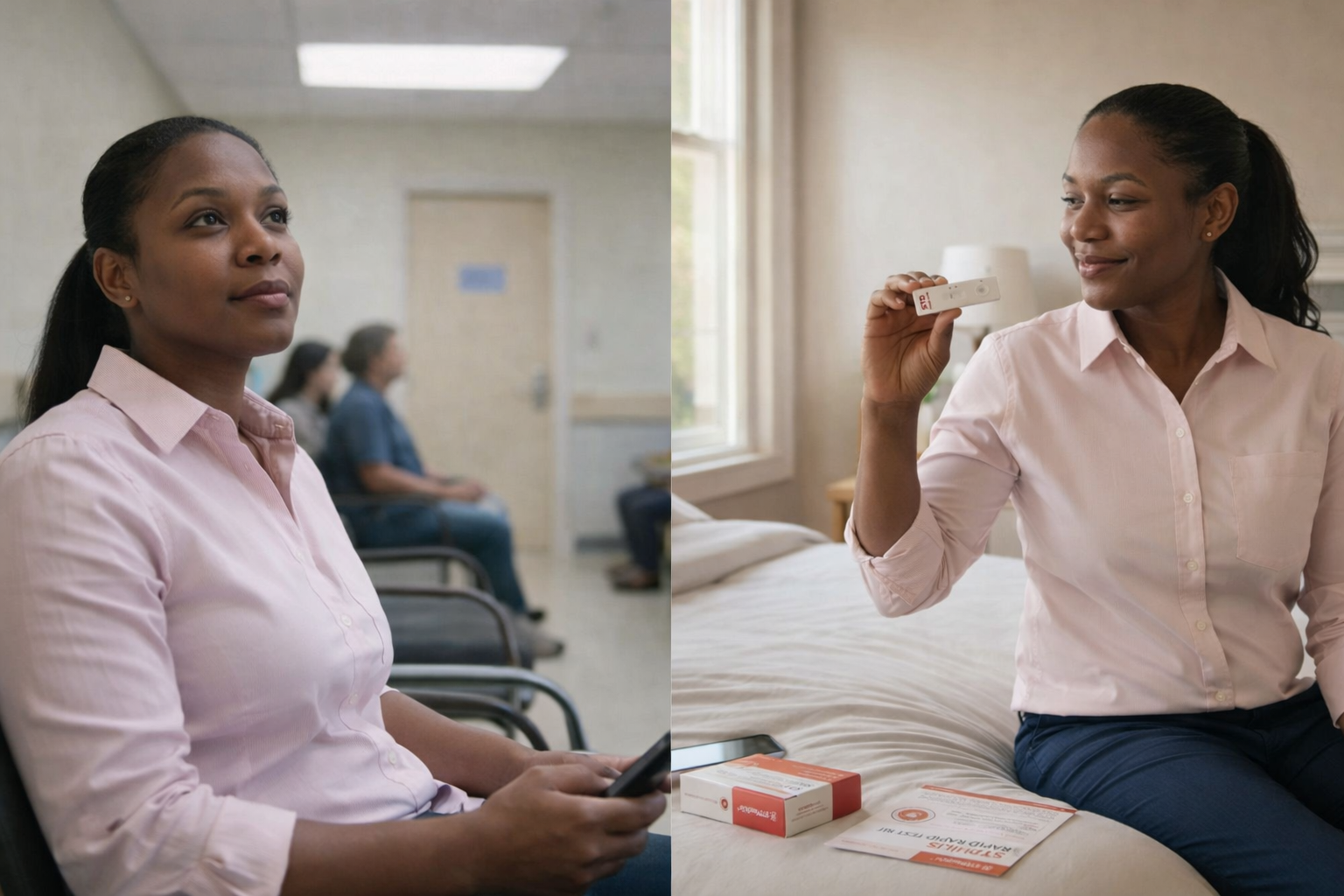
The cheapest way to get tested for STDs in the US is a free public health clinic or county health department, genuinely $0 for qualifying income levels, and available in every state. If free clinic testing isn't accessible, practical, or private enough for your situation, at-home rapid test kits are the next cheapest option: flat transparent pricing, no visit fees, no separate lab bills, and results in minutes. Urgent care and private clinics are the most expensive route for anyone without insurance, routinely running $150–$500+ once all the charges land. The right answer depends on your specific infections, your timeline, and how much your privacy is worth to you. This article breaks down every option with real numbers, and the broader STD testing costs in the US guide shows how those prices compare across every major route.
| Testing Option | Single Infection | Full Panel (7–10 infections) | Hidden Costs? | Privacy Level |
|---|---|---|---|---|
| Hospital ER | $300–$800+ | $1,500–$3,500+ | Yes, facility fees, separate lab bills | Low, goes on record |
| Private Doctor's Office | $80–$200 + lab | $250–$600 + lab | Yes, separate lab processing fee | Low, insurance record |
| Urgent Care (uninsured) | $80–$185 | $200–$450 | Sometimes, walk-in fees vary | Low, insurance record |
| Planned Parenthood (sliding scale) | $0–$130 | $0–$270 | No, transparent after income calc | Moderate, medical record |
| Public Health Dept / FQHC | $0–$50 | $0–$120 | No, sliding scale, no surprise bills | Moderate, medical record |
| At-Home Rapid Test Kit (STD Test Kits) | Fixed, transparent price | Fixed, transparent price | No, flat rate, no extra fees | High, no insurance claim filed |
The hospital ER is never the right choice for routine STD screening; the cost column alone should settle that. But even within the reasonable options, the gap is enormous. The same chlamydia test that runs $80–$150 at an urgent care center can cost nothing at a county health department, depending on your income and location. The catch is that each option delivers a very different experience in terms of speed, privacy, and convenience, and those differences have real value that the price table above doesn't capture. The sections below explain what each option actually involves, who it's right for, and where the hidden costs are buried.
The Hidden Costs of Clinic Testing That Price Guides Leave Out
Any honest guide to STD testing costs has to address what the sticker price doesn't show, especially when comparing the real cost of clinic vs at-home STD testing. The experience of a lot of Americans with clinical STD testing is that the number on the clinic's website bears little resemblance to the total bill that arrives after the visit. This isn't a conspiracy; it's the result of how healthcare billing works in the US, with multiple parties each generating their own charges for different parts of the same encounter.
The visit fee is the most obvious hidden element. Most urgent care centers and doctors' offices charge a consultation fee, often $75 to $150 or more, just for being seen, independent of whatever tests you're there to get. If you go in for a chlamydia test and the test itself costs $60, you're not walking out for $60. You're walking out having paid $60 plus the visit fee. At an urgent care center without insurance, that combination regularly lands in the $150–$200 range for a single-infection test before any lab charges are added.
The lab processing bill is the second common surprise. Many clinics don't process samples in-house; they send them to external partners like Quest Diagnostics or LabCorp, who bill you separately weeks later. You may not even know which lab received your sample until their invoice arrives in the mail. For people who paid cash at the clinic and considered the matter closed, this is a genuinely disorienting experience. The lab bill for an STD panel can add $80 to $250 on top of what you already paid at the clinic, depending on how many infections were tested and which facility processed them.
Insurance Explanation of Benefits (EOB) documents are a third "cost" that doesn't involve money but involves something many people value just as highly. When you use insurance for any healthcare service, your insurer generates an EOB, a detailed record of the encounter including the provider name and a description of the service, that goes to the policyholder. For anyone on a parent's plan through age 26, a spouse's plan, or an employer group plan, that document is a real concern. Research published in the journal Sexually Transmitted Diseases found that confidentiality concerns around insurance billing are a documented barrier to STD testing, particularly among young adults on a parent's insurance plan. At-home rapid test kits sidestep this entirely; no insurance claim is filed, no EOB is generated, and no record goes anywhere but to you.
Why STD Test Prices Vary So Wildly, and What's Actually Driving the Cost
Before going deeper into each option, it helps to understand what you're actually paying for when you get tested. STD testing isn't a single thing with a single price; it's a bundle of services that different providers unbundle and rebundle in different ways. Some bury the cost in a consultation fee. Some separate the lab processing from the test itself. Some include both in a flat rate. And some charge nothing at all because federal funding covers the bill on your behalf.
At a private doctor's office or urgent care clinic, the bill typically has two or three components: an office visit fee (charged for the consultation regardless of what you're there for), a test fee (the cost of the specific STD screening), and a lab processing fee (charged when the sample goes to an external laboratory). That structure is why comparing "test prices" between a clinic and an at-home kit on face value almost always undercounts the true clinic cost. The advertised test price is only one of three charges you'll likely receive.
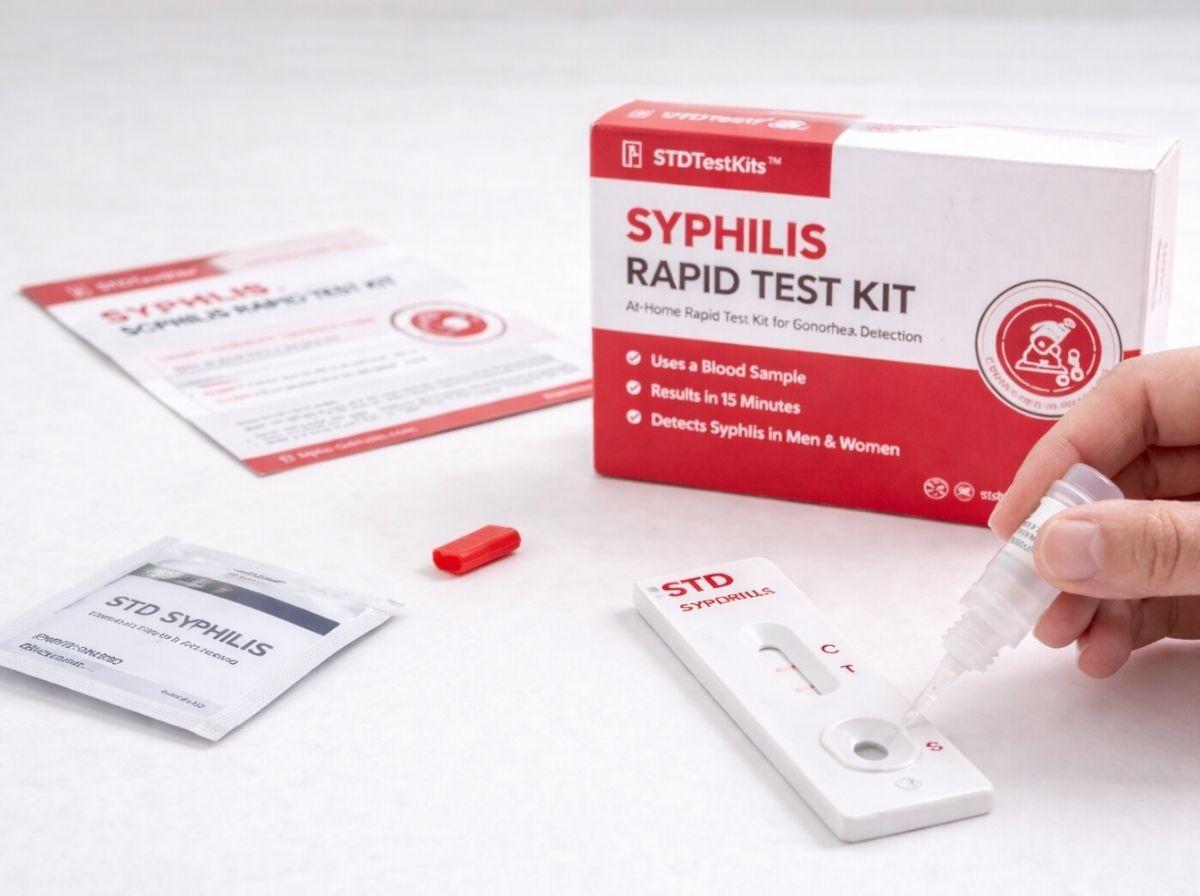
At-home rapid test kits work differently. The cost you pay is the cost of the kit; there is no office visit, no consultation fee, and no separate lab bill because the test processes at home in real time. What you see when you add the kit to your cart is what you pay. That flat-rate structure makes at-home kits far easier to compare honestly, and it's why the infection-by-infection comparison later in this article consistently favors them over uninsured urgent care pricing once all the clinic charges are counted.
Public health clinics and federally funded facilities sit at the other end of the spectrum. Because they receive government funding to serve uninsured and underinsured patients, their pricing is either free or calculated on a sliding scale tied to your income. The theoretical floor of STD testing cost in the US is genuinely zero dollars; it's just not available equally everywhere, and getting there often involves trade-offs in convenience, wait time, and privacy. According to provisional CDC data, more than 2.2 million cases of chlamydia, gonorrhea, and syphilis were reported in the US in 2024 alone, representing only the infections that were actually caught. Cost confusion is one of the documented reasons the real burden is higher.
Free and Low-Cost Clinic Testing: How to Actually Find It Near You
Free public STD testing is real; it exists in every US state, and most people have no idea how close the nearest option is until they look. The most direct route is the CDC's free testing locator at gettested.cdc.gov. Type your zip code into the search field, select which infections you want to test for, and the tool returns a map of nearby clinics with addresses, hours, and contact details. It takes about thirty seconds and frequently surfaces county health departments, community health centers, and HIV testing sites that most people have never heard of. If you haven't used it yet, start there before assuming you'll have to pay.
County and state health departments are the most overlooked resource in US STD testing. Most counties offer STD testing at significantly reduced cost or completely free, regardless of insurance status. HIV and syphilis testing are frequently offered free to anyone who walks in. Testing for chlamydia, gonorrhea, and hepatitis is typically available on a sliding scale, your cost calculated based on household income, with many low-income patients paying nothing at all. The trade-off is availability: some health departments have limited hours, appointment backlogs of several days, or constrained testing menus. Calling ahead to confirm what's offered and what the current wait looks like is always worth doing before making the trip.
Federally Qualified Health Centers (FQHCs) operate under a federal mandate to serve patients regardless of ability to pay. There are over 1,400 FQHC organizations running more than 14,000 service delivery sites across the US, in urban, suburban, and rural areas. Patients at or below 100% of the federal poverty level receive care at no cost, with fees scaling up from there. You can find the nearest FQHC at findahealthcenter.hrsa.gov. For a single person earning around $15,000 a year or less, STD testing at an FQHC is effectively free.
The honest caveat about free and sliding-scale clinic testing: it works well when you have schedule flexibility and live in a well-resourced area. If you're in a county with a backlog of appointments, if you're on a parent's insurance and the last thing you want is any paper trail, if you're in a smaller town where the clinic is familiar territory, or if you simply need an answer today rather than in three to five business days, the free route carries a real cost that its $0 sticker price doesn't reflect. For a deeper look at the no-insurance path, see this guide to affordable STD testing without insurance in the US. That's where at-home testing becomes the more honest comparison point, not just in dollars but in total value delivered.

At-Home Rapid Test Kits vs. Local Clinics: A Direct Cost Comparison for Specific Infections
The broadest price comparison is useful for orientation, but most people aren't asking in the abstract. They're asking: "I need to test for chlamydia and gonorrhea, what's actually cheapest for me right now?" That's the question this section answers, infection by infection.
For the two most commonly tested bacterial STDs, chlamydia and gonorrhea, the at-home path is frequently the cheapest all-in option once you count the full clinic cost. An urgent care visit for both infections typically involves a $75–$120 walk-in fee, plus separate test fees plus potential lab processing costs. The Chlamydia & Gonorrhea 2-in-1 At-Home STD Test Kit covers both infections in a single kit with 98%+ accuracy, no visit fee, no lab bill. If you're on a budget and you know what you need to test for, the math is straightforward.
For syphilis, which has seen a dramatic resurgence in the US, CDC syphilis surveillance data shows rates have increased over 80% in the past decade, making it one of the fastest-rising STDs in the country. The clinical testing route involves a blood draw at a lab, which usually requires either a doctor's order or an urgent care visit. The Syphilis At-Home STD Test Kit delivers the same blood-based detection from home, with no appointment needed and results in about fifteen minutes. For someone who needs a targeted syphilis test without the clinic overhead, that's a meaningful cost and time saving.
For broader panels, the at-home math becomes especially strong. Free public health testing genuinely covers multiple infections at little or no cost where it's available, but availability is patchy, wait times can stretch to days or weeks, and the in-person requirement means time off work for many people. The 8-in-1 Complete At-Home STD Test Kit covers HSV-1, HSV-2, Chlamydia, Gonorrhea, Syphilis, HIV, Hepatitis B, and Hepatitis C with 99% accuracy, eight infections screened at home in minutes, for a fixed transparent price with no add-on fees. That's the kind of coverage that runs $300–$550+ at uninsured urgent care rates for the same infections.
One important note on at-home testing: a positive rapid test result should always be confirmed with a healthcare provider before starting any treatment. Rapid tests are highly accurate, but confirmatory clinical testing is the standard next step after a positive, both to verify the result and to access appropriate care. An at-home test is your fastest and most private first step; a positive means you now know to follow up, which is exactly the information you needed.
| Infection(s) | Typical Urgent Care Cost (Uninsured) | At-Home Kit Option (STD Test Kits) | At-Home Accuracy |
|---|---|---|---|
| Chlamydia only | $80–$150 (visit + test) | Chlamydia At-Home STD Test Kit | 99%+ |
| Gonorrhea only | $80–$165 (visit + test) | Gonorrhea At-Home STD Test Kit | 99%+ |
| Chlamydia + Gonorrhea | $130–$220 (visit + 2 tests) | Chlamydia & Gonorrhea 2-in-1 Kit | 98%+ |
| Syphilis | $100–$180 (visit + blood draw) | Syphilis At-Home STD Test Kit | 99% |
| HIV | $80–$150 (visit + test) | HIV-1/2 At-Home STD Test Kit | 99.8% |
| Chlamydia, Gonorrhea + Syphilis | $180–$320 (visit + 3 tests) | Chlamydia, Gonorrhea & Syphilis 3-in-1 Kit | 99%+ |
| 7-infection full panel | $280–$500+ (visit + 7 tests + lab) | 7-in-1 Complete At-Home STD Test Kit | 98.5% |
| 8-infection full panel | $300–$550+ (visit + 8 tests + lab) | 8-in-1 Complete At-Home STD Test Kit | 99% |
Take control of your sexual health today, results in minutes, no waiting room, no surprise bills. Order your rapid test kit from STD Test Kits and know your status before the day is out.
When to Test After Exposure: Why Cheap Doesn't Help If the Timing Is Wrong
Here's the thing no one mentions in budget testing guides: a test taken too early is effectively worthless, and retesting after a premature false negative doubles your cost, whether you're using a free clinic or a paid kit. The actual cheapest way to get tested is to test once, at the right time, and get a reliable result. That means understanding window periods before you book or order anything.
Every STD has a window period, the gap between exposure and when an infection becomes detectable in your body. Testing before the window closes doesn't mean the test is bad; it means the infection hasn't yet reached concentrations that any test, clinical or at-home, can reliably pick up. A negative result inside the window is not a clean bill of health. It's an incomplete data point that will need a follow-up test anyway.
Here are the exact window periods to use when planning your test. These are clinically established minimums, not approximations:
| Infection | Test From | Notes |
|---|---|---|
| Chlamydia | 14 days after exposure | Earliest reliable detection window |
| Gonorrhea | 3 weeks after exposure | Often co-tested with chlamydia |
| Syphilis | 6 weeks after exposure | Antibody-based; needs adequate time |
| HIV | 6 weeks (first indicator); retest at 12 weeks for certainty | 4th-gen tests detect earlier; confirm at 12 weeks |
| Herpes HSV-1 & HSV-2 | 6 weeks after exposure | Antibody detection; 6 weeks minimum |
| Hepatitis B | 6 weeks after exposure | Surface antigen detectable from 6 weeks |
| Hepatitis C | 8–11 weeks after exposure | Longest window; retest if initial result unclear |
If you're currently inside the window period for your exposure, the cheapest move is to wait. Mark the calendar, set a reminder, and test at the correct time. Testing too early and getting a reassuring negative doesn't save money; it costs you the price of the test plus the cost of retesting when the window clears. Testing once, at the right time, is always the most cost-efficient approach, regardless of which option you use.
The Cheapest Way to Test for Specific STDs: A Tactical Guide
You've just had unprotected sex, and you're trying to figure out the most cost-effective path to clarity. If you are paying cash and no clinician is guiding the decision, this related guide on self-pay STD testing and what to test for can help narrow the menu before you spend money. The right answer depends on which infection you're most concerned about, when the exposure happened, and what access looks like in your area. Here's the breakdown for the most commonly tested infections.
For chlamydia, the most commonly reported STD in the United States, the cheapest option for most people is a targeted at-home test or a free public health screening if one is genuinely accessible and timely. The window period is 14 days after exposure; testing before that risks a false negative, which means retesting anyway and doubling your cost. An at-home chlamydia kit avoids the clinic visit fee entirely and delivers a result using the same immunoassay technology used in clinical settings.
For gonorrhea, which frequently co-occurs with chlamydia, the cheapest path is almost always a 2-in-1 test rather than two separate tests. Clinics bill per infection, meaning a chlamydia test and a gonorrhea test are two separate line items. A 2-in-1 at-home kit covers both in a single purchase at 98%+ accuracy. The testing window for gonorrhea is 3 weeks after exposure. If you're testing for both infections together and the gonorrhea window hasn't cleared yet, wait the extra days rather than test twice.
For syphilis, the cheapest route depends on whether your local public health department offers free screening. Many county health departments do; syphilis is a reportable disease, and local agencies are motivated to make testing accessible because early detection has community-wide benefits. If free testing is available nearby and timely, take it. If not, the at-home syphilis test kit delivers blood-based antibody detection in about fifteen minutes from home. Test from 6 weeks after exposure.
For HIV, free testing is among the most widely available options in the US. The CDC's network of community health partners, along with many pharmacies and community organizations, offers free HIV testing with no insurance required. If free HIV testing is accessible to you, that's the cheapest route. The at-home HIV kit (99.8% accurate) becomes the better choice when free testing isn't geographically convenient or when timing is urgent. Test from 6 weeks after exposure, retest at 12 weeks for certainty.
For herpes (HSV-1 and HSV-2), free clinic testing is less consistently available than for bacterial STDs. Many health departments don't routinely screen for herpes, and some urgent care centers will only test during an active outbreak. At-home herpes testing is therefore often not just the cheapest but the most accessible route for people who want to know their status outside of a symptomatic episode. The Genital & Oral Herpes HSV-1+2 At-Home Test Kit screens for both strains with 98%+ accuracy from 6 weeks after exposure. Peace of mind is one test away.
The Cheapest Full STD Panel in the US: When You Want to Test for Everything
Imagine you've been with a new partner for a few months, neither of you has tested recently, and you both want a clean starting point before dropping other precautions. You're not chasing a specific exposure; you want a full picture. That's a different cost calculation than targeting a single infection, and it's where at-home combo kits make their strongest case against clinical alternatives.
A full STD panel at a private urgent care clinic, testing for chlamydia, gonorrhea, syphilis, HIV, herpes, hepatitis B, and hepatitis C, will typically run $280 to $500 or more without insurance, before lab processing fees are added. For two people, multiply by two. The math gets uncomfortable fast, and that's before accounting for any surprise lab bills arriving weeks later.
Planned Parenthood's sliding scale can bring that cost down significantly if your income qualifies, and some locations offer full panel testing at no cost for low-income patients. But not every location offers the same test menu; herpes in particular may require additional steps or referral at certain facilities, so calling ahead is essential before assuming you can get a complete panel in a single visit.
The 8-in-1 Complete At-Home STD Test Kit covers HSV-1, HSV-2, Chlamydia, Gonorrhea, Syphilis, HIV, Hepatitis B, and Hepatitis C, eight infections, 99% accuracy, no lab bill, no visit fee, and results in about fifteen minutes per test. For women who also want to screen for trichomoniasis and HPV 16&18, the Women's 10-in-1 At-Home STD Test Kit is the most complete at-home panel available. Your results, your privacy, your power, and a fixed price with no surprise billing attached.
For anyone doing the full accounting on what a comprehensive panel actually costs, the at-home route represents a genuine saving over uninsured urgent care pricing in almost every realistic comparison, and delivers results today rather than a lab turnaround of days to a week. Testing is the fastest way to stop the guessing game.
FAQs
- 1. What is the absolute cheapest way to get tested for STDs in the US?
- A free public health clinic, county health department, or Federally Qualified Health Center, genuinely $0 for qualifying income levels and available in every state. If that's not accessible or private enough for your situation, at-home rapid test kits are the next cheapest option with transparent flat-rate pricing and no hidden fees. If even that feels out of reach, this guide explains what you actually have access to when you cannot afford STD testing.
- 2. Are at-home STD test kits accurate enough to trust?
- Yes, modern rapid tests use the same immunoassay technology as clinical lab tests, with accuracy ratings of 98%–99%+ standard across most infections when used correctly and within the right testing window. The key qualifier is the window period: testing too early produces unreliable results regardless of whether the test is at-home or clinical.
- 3. Why does urgent care STD testing cost so much without insurance?
- Because the total bill has three components: an office visit fee, the test fee, and a separate lab processing fee from an external company that bills you independently weeks later. That structure means a single-infection test can easily land at $150–$200+ even when the advertised test price is far lower.
- 4. Can I use my HSA or FSA to pay for at-home STD test kits?
- In many cases, yes, Health Savings Accounts and Flexible Spending Accounts typically cover medical diagnostic tests, and at-home STD kits often qualify. Check with your specific plan administrator to confirm, as eligibility can meaningfully reduce your effective out-of-pocket cost.
- 5. What's the cheapest way to test for herpes specifically?
- At-home rapid testing is often both the cheapest and most accessible option; many health departments don't routinely offer herpes screening, and some urgent care centers will only test during an active outbreak. Test from 6 weeks after exposure for accurate antibody detection.
- 6. Is Planned Parenthood free for STD testing?
- It can be, Planned Parenthood uses a sliding scale based on income, and costs can reach zero for patients below their income threshold. Costs vary by location and test type, so calling your local center ahead of time with a rough sense of your income is the most reliable way to know what you'd actually pay.
- 7. What's the cheapest way to test for chlamydia and gonorrhea together?
- A 2-in-1 combo kit, clinics bill per infection, so testing for both separately adds up quickly at a clinic or at home. The Chlamydia & Gonorrhea 2-in-1 At-Home Kit covers both at 98%+ accuracy in a single purchase, with no visit fee or lab bill attached.
- 8. Does using insurance for STD testing affect privacy?
- Yes, insurance generates an Explanation of Benefits (EOB) that goes to the policyholder, which may not be you if you're on a parent's or spouse's plan. At-home rapid test kits don't involve an insurance claim at all, so no EOB is produced, and no record goes anywhere but to you.
- 9. What's the cheapest full STD panel available in the US?
- Free clinic testing at a qualifying public health facility or FQHC if it's accessible and timely. Outside of that, at-home combo kits offer the most competitive all-in pricing, covering seven or eight infections for a flat transparent price versus $280–$500+ at uninsured urgent care rates for the same coverage.
- 10. Are there any free at-home STD test kits in the US?
- In some areas, yes, certain county and city health departments mail free home test kits for HIV and hepatitis as part of community health programs. Go to gettested.cdc.gov, enter your zip code, and filter by test type to see what's available near you. Commercial at-home kits carry a fixed cost, but with fully transparent pricing and no hidden add-on fees.
Find the Right Kit for Your Budget and Situation
Getting tested is the right call, and knowing your exact cost upfront makes that call a lot easier to make. At STD Test Kits, every kit is priced transparently with no visit fees, no lab surcharges, and no surprise bills. You pay once, test at home, and have results in minutes. Whether you're targeting a specific exposure or doing a full panel check-in, there's a kit built for exactly that situation.
For targeted testing on a budget, the Chlamydia & Gonorrhea 2-in-1 At-Home STD Test Kit covers the two most common bacterial STDs in a single purchase with 98%+ accuracy, no visit fee, no lab bill, results in 15 minutes. For a comprehensive panel, the 8-in-1 Complete At-Home STD Test Kit screens for eight infections, including both herpes strains, HIV, hepatitis B and C, chlamydia, gonorrhea, and syphilis with 99% accuracy. Women who want the most complete at-home screen available can explore the Women's 10-in-1 At-Home STD Test Kit, which adds trichomoniasis and HPV 16&18 to the full panel.
Your results belong to you, no insurance records, no waiting room, no one else's inbox. Take control of your sexual health today and browse the full range of testing options at STD Test Kits.
Our article was constructed based on current advice from the most prominent public health and medical organizations, and then molded into simple language based on the situations that people actually experience, such as treatment, reinfection by a partner, no-symptom exposure, and the uncomfortable question of whether it "came back." In the background, our pool of research included more diverse public health advice, clinical advice, and medical references, but the following are the most pertinent and useful for readers who want to verify our claims for themselves.
- CDC, 2024 Sexually Transmitted Infections Surveillance Report (Provisional Data)
- Planned Parenthood, Does Getting Tested for STDs Cost Money?
- HRSA, Find a Health Center (FQHC Locator)
- CDC, Get Tested: National HIV, STD, and Hepatitis Testing Locator
- NCBI/PMC, Confidentiality Concerns and STD Testing Among Young Adults (Sexually Transmitted Diseases Journal)