The Real Cost of STD Testing: Clinic vs. At-Home. Every Fee Explained
At-home rapid test kits carry one flat price with no add-ons: no visit fee, no lab bill, no follow-up charge for a negative result. Here is exactly how each option breaks down, charge by charge.
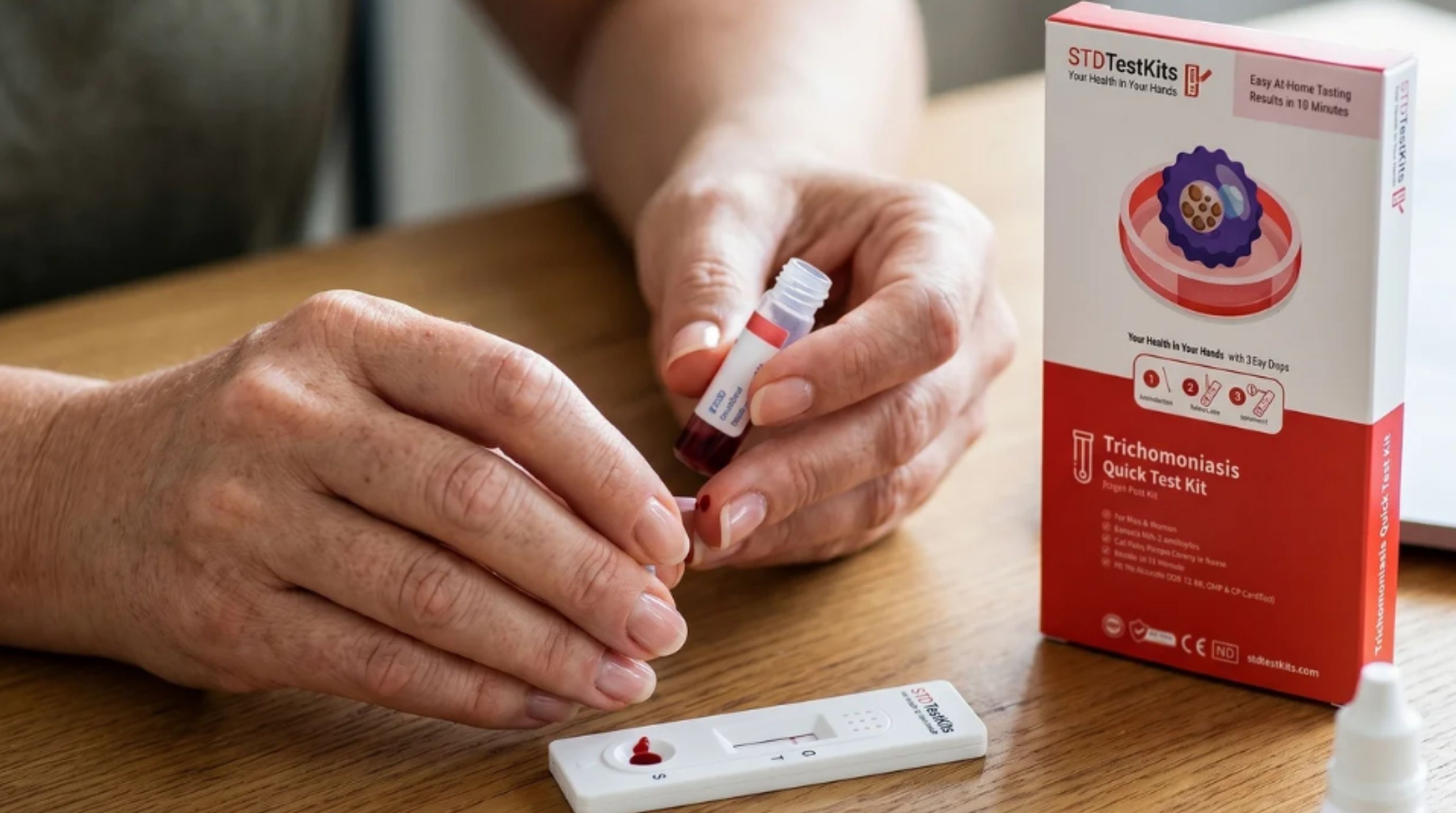
The total cost of clinic STD testing without insurance regularly runs $150 to $540 or more, once office visit fees, separate lab processing bills, and any follow-up appointments are added together, significantly more than most advertised "test prices" suggest. At-home rapid test kits carry one flat price with no add-ons: no visit fee, no lab bill, no follow-up charge for a negative result. If you have an FSA or HSA account, that flat price is also reimbursable using pre-tax dollars, reducing the effective cost by 20% to 37%, depending on your tax bracket. Here is exactly how each option breaks down, charge by charge.
| Option | Estimated All-In Cost | Hidden Fees? | Results Timeline |
|---|---|---|---|
| Public health clinic / FQHC | $0–$200 (sliding scale) | No, transparent pricing | 3–7 business days |
| Urgent care / private clinic (uninsured) | $150–$540+ once all bills land | Yes, lab bill arrives weeks later | 48 hrs–7 days (+ wait time) |
| At-home rapid test kit | Fixed kit price, no add-ons | No, one price, one receipt | ~15 minutes |
The gap between what a clinic charges and what most people expect to pay is one of the most consistent frustrations in US healthcare. The advertised test price is only one of three or four charges you may receive, and the most expensive one often arrives last. Understanding the full STD testing cost structure in the US before you walk in, or before you decide not to, is the point of everything that follows.
What a Clinic Visit Actually Costs From Start to Finish: A Real-World Example
You've had unprotected sex. You want to test for the four most commonly screened infections: chlamydia, gonorrhea, syphilis, and HIV. You go to an urgent care center without insurance. Here is how the bill builds.
At check-in, you're told the office visit is $125. The provider orders four tests. The clinic's internal test fees total $180, roughly $45 per test. You ask for results in 48 hours rather than the standard five to seven business days, which triggers an expedited processing surcharge of $30 per test, adding $120. You leave the clinic having been quoted roughly $300 to $350 for the visit and testing. That number feels high but manageable.
Three weeks later, a bill arrives from a lab company you've never heard of. It's for $215, the base lab processing fee for four tests. Below that line item is a $45 specimen handling fee. Both are labeled as patient responsibility. Total from the lab: $260. Your all-in cost for a four-infection test at an urgent care center: $560 to $610, for a panel you expected to cost around $300.
That's not an extreme example. That's a realistic accounting of how the billing works when all the layers land. The variance is wide; some urgent care centers charge less, some lab relationships are cleaner, some facilities bundle more transparently, but the structure is consistent. Multiple billers, multiple timelines, and a final number that almost no one quotes upfront. For the same four infections tested at home with a rapid kit, the total cost is one flat price paid once, with results in fifteen minutes and no lab invoice arriving three weeks later.
The Three-Layer Clinic Bill, and the Fourth One Nobody Warns You About
You go to an urgent care center for STD testing. You know the visit will cost something. What you may not know is that a single clinic visit can generate up to four separate charges from up to three different billing entities, and the most expensive one often arrives weeks after you thought the matter was closed.
The first charge is the office visit fee. This is billed by the clinic for the consultation itself, for the time the provider spends with you, regardless of what tests are ultimately ordered. At urgent care centers and private practices, this fee ranges from $75 to $200, depending on the facility and how the visit is classified. It is charged even if the appointment takes fifteen minutes and consists of a provider asking two questions and sending you to the lab. At public health clinics, this fee is often reduced or waived entirely, which is the primary reason their all-in cost is dramatically lower.
The second charge is the test fee, the cost of the specific STD screening ordered. At a private clinic, individual test fees typically run $30 to $185 per infection. A standard panel covering chlamydia, gonorrhea, syphilis, and HIV involves four separate test fees, each billed independently. Some clinics bundle these into a panel price; others itemize every line. The bundled panel price is not always lower than the sum of individual tests, and it is worth asking before agreeing to any bundled package.
The third charge is the lab processing fee. Most clinics do not process STD samples in-house. They collect the specimen and ship it to an external certified laboratory, often Quest Diagnostics or LabCorp, which processes the sample and bills you independently. That lab bill arrives separately from the clinic bill, usually two to four weeks after your visit, and it is not a small number. For a standard STD panel, lab processing charges range from $80 to $250. For expedited results, 24 to 48 hours rather than the standard three to seven business days, most labs charge an additional $20 to $50 per test on top of the base processing fee, not instead of it.
The fourth charge, the one that catches insured patients specifically, is the out-of-network lab bill. Your clinic may be in-network with your insurance. The lab your clinic uses may not be. When the lab processes your sample and submits a claim, your insurance pays at the out-of-network rate, which may cover a fraction of the total, or nothing. You receive the remainder as a patient balance. This happens because the lab relationship is between the clinic and the lab, not between you and the lab, you never chose that facility, and you may not find out you have until their bill arrives. According to the Kaiser Family Foundation, federal surprise billing protections enacted in 2022 limit some of this exposure for emergency care, but routine outpatient STD testing does not always fall under those protections. Asking your clinic which lab they use and whether it is in-network with your insurance, before any samples are collected, is the only reliable way to avoid this charge.
| Cost Component | Public Health Clinic | Urgent Care / Private Clinic | At-Home Rapid Kit |
|---|---|---|---|
| Office visit / consultation fee | $0–$80 | $75–$200 | None |
| Test fee (per infection) | $0–$50 | $30–$185 | Included in kit price |
| Lab processing fee | Often bundled | $80–$250 (billed separately) | None, processes at home |
| Expedited results surcharge | Rare | $20–$50 per test | None, results in ~15 min |
| Follow-up appointment (positive result) | $0–$60 | $60–$150 | None for negative; clinic if positive |
| Out-of-network lab bill | Rare | Common, arrives weeks later | None |
| FSA / HSA eligible? | Yes | Yes | Yes, full kit price |
| Estimated total (single infection) | $0–$130 | $150–$400+ | Fixed kit price, no add-ons |
| Estimated total (full panel, 7–8 infections) | $0–$200 | $300–$540+ | Fixed kit price, no add-ons |
What Insurance Actually Covers for STD Testing, and Where It Breaks Down
Insurance coverage for STD testing is one of those areas where the official story and the real-world experience diverge in ways that cost people money. The official story: under the Affordable Care Act, most health insurance plans are required to cover STD screening as a preventive service at no cost, no copay, no deductible, no out-of-pocket charge. The real-world experience: "no cost" applies when very specific conditions are met, and when those conditions aren't met, the bill can be substantial.
The ACA's no-cost preventive care requirement applies to screenings recommended by the US Preventive Services Task Force (USPSTF). For STDs, those recommendations cover chlamydia and gonorrhea screening for sexually active women under 25 and older women at increased risk; syphilis screening for people at increased risk; and HIV screening for adults aged 15 to 65. When you get tested for a covered infection at an in-network provider under a covered indication, the ACA requires your insurer to pay the full cost. You pay nothing.
The conditions under which this breaks down are numerous, and each one can shift the entire visit from no-cost preventive to full-deductible diagnostic. If you're at an out-of-network provider, the ACA's no-cost requirement doesn't apply. If you're tested for an infection outside the preventive care mandate, herpes, hepatitis C, or HPV, for example, it's billed as a diagnostic service subject to your deductible and copay. If you're a man seeking chlamydia screening, which isn't covered under the USPSTF preventive recommendation the same way it is for women, the no-cost coverage may not apply. And if the visit is coded as diagnostic rather than preventive, because you mentioned symptoms, or because the provider coded it differently, your deductible kicks in regardless of which infection you're testing for.
The legal landscape adds another layer of uncertainty that most guides don't mention. The 2023 Supreme Court ruling in Braidwood Management v. Becerra created significant legal ambiguity around the ACA's preventive care mandate, a federal appeals court found that requiring insurers to cover USPSTF-recommended screenings at no cost may be unconstitutional as applied to plans governed by employers who object on religious grounds. While the full legal resolution of that case is still working through the courts, some insurers have already begun reintroducing cost-sharing for certain preventive services in response to the ruling. The practical implication: even if your plan covered your STD screening at no cost last year, that may not be guaranteed today. Confirming current coverage with your insurer before any clinic visit is not optional caution; it is the only way to know what you will actually owe.
The practical takeaway: clinical testing can genuinely cost you nothing if you have insurance, you're testing under the exact circumstances the ACA covers, and your plan hasn't modified its preventive care benefits in response to ongoing litigation. If any variable is off, you may be looking at your full deductible plus coinsurance on a bill you weren't expecting. According to provisional CDC data, more than 2.2 million cases of chlamydia, gonorrhea, and syphilis were reported in the US in 2024, and cost confusion is one of the documented reasons many infections go untested and unreported.
The Privacy Cost of Using Insurance, and Why Many People Pay Out of Pocket Even When They Have Coverage
There's a cost of using insurance for STD testing that doesn't appear on any bill but matters to a significant number of people, the Explanation of Benefits document. Every time your insurance processes a claim, it generates an EOB: a detailed summary of what was charged, what was paid, and what service was performed. The EOB goes to the policyholder. If you're on someone else's insurance plan, that means the EOB goes to them.
For anyone on a parent's plan through age 26, a spouse's plan, or an employer group plan, the EOB discloses that you sought STD testing and identifies the provider, the date, and a description of the service. It doesn't list your results, but it doesn't need to. Research published in the journal Sexually Transmitted Diseases found that confidentiality concerns around insurance billing are a documented barrier to STD testing among young adults on a parent's plan, not theoretical anxiety, but a measurable factor in real testing behavior.
This is why a meaningful number of people who have insurance coverage for STD testing choose to pay out of pocket anyway. The insurance benefit has a privacy cost that, for some people, exceeds its financial value. At-home rapid test kits eliminate this trade-off entirely; no insurance claim is filed, no EOB is generated, and no record goes anywhere except to the person who ordered the kit. Your results, your privacy, your decision, with no paperwork that involves anyone else.
There's also a subtler long-term consideration worth flagging. While the ACA prohibits health insurers from using pre-existing conditions to deny coverage or raise premiums, life insurance and some disability insurance products don't operate under those same restrictions. STD diagnoses that appear in your medical records via clinical testing are part of your health history in a way that at-home testing results are not. At-home test results aren't filed with your insurer or entered into medical records, though life insurance applications may ask about diagnoses or testing history directly, and accurate disclosure is always required. For most people, this isn't a deciding factor. For some, it is worth knowing.
FSA and HSA Accounts: How to Cut Your At-Home Test Kit Cost With Pre-Tax Dollars
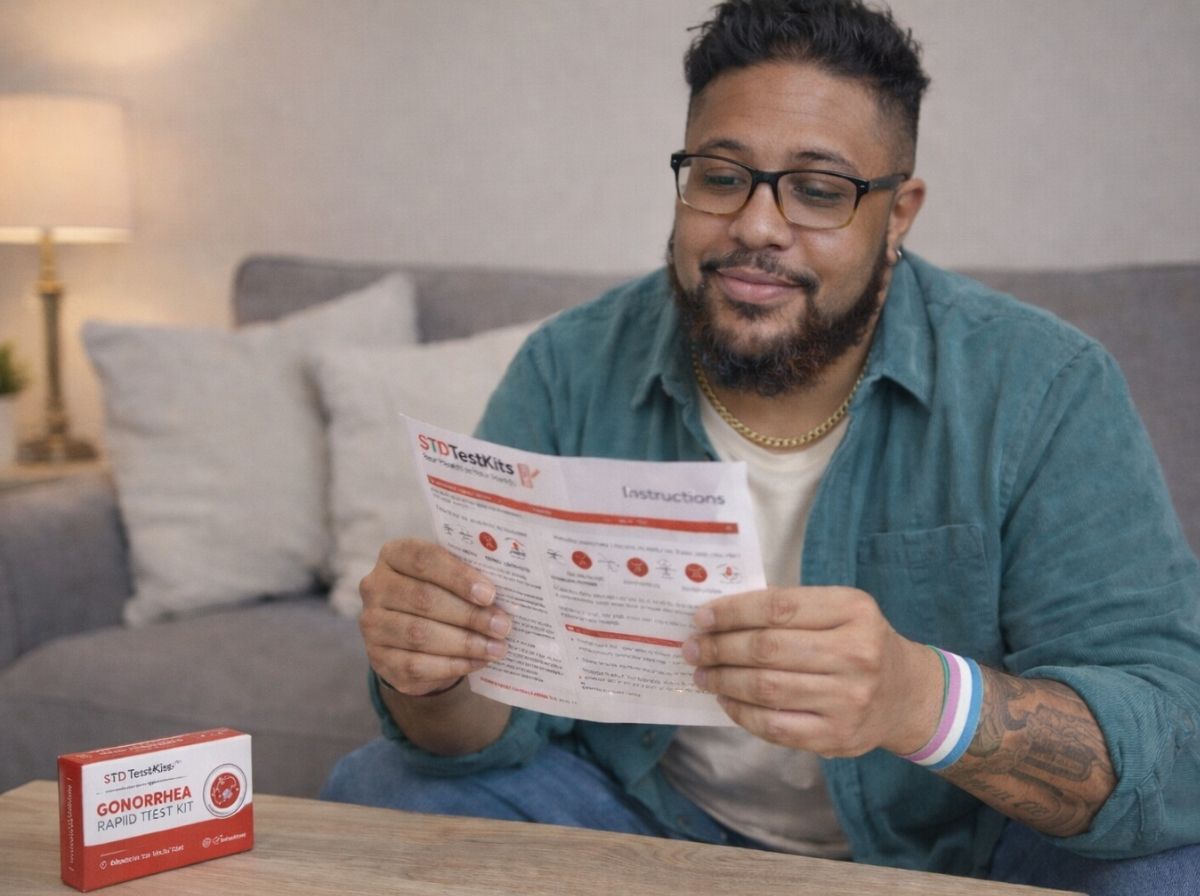
Yes, at-home STD test kits are FSA and HSA eligible. This is the financial angle most guides skip entirely, and it meaningfully changes the cost comparison. If you have a Flexible Spending Account or Health Savings Account, you can pay for an at-home STD test kit using pre-tax dollars, which reduces the effective cost by 20% to 37%, depending on your federal tax bracket. A kit that costs $80 at checkout effectively costs $50 to $64 after the tax benefit is applied.
The eligibility is unambiguous. The IRS classifies home diagnostic kits as eligible medical expenses when they're used to determine the presence of a disease or health condition. According to FSA Store's eligibility list, HIV, urinalysis, and STD tests are explicitly listed as qualifying purchases. Pay with your FSA or HSA card directly at checkout, or pay out of pocket and submit a receipt for reimbursement; the mechanics depend on your plan administrator, but the eligibility is clear and consistent across plans.
The practical advantage of at-home kits here is their pricing simplicity. Clinic visits are also FSA/HSA eligible, but a clinic encounter can generate three separate bills from three separate billers over several weeks, each requiring its own reimbursement submission. An at-home kit is one price, one receipt, one submission. Here is exactly how to use your account for an at-home kit purchase:
- Pay with your FSA or HSA card directly at checkout; it works like any debit card and the eligible amount is deducted from your account balance immediately.
- If you pay out of pocket, save the itemized receipt and submit it through your plan's reimbursement portal; most administrators process these within five to ten business days.
- Most plans do not require a letter of medical necessity for diagnostic test kits, but check with your administrator if your first submission is declined; a brief note from a provider resolves the majority of edge cases.
If you have FSA funds expiring at year-end and you've been putting off STD testing, using those dollars on a rapid test kit before they disappear is one of the more straightforward uses of money you've already committed to healthcare spending. HSA funds roll over indefinitely, so there's no year-end pressure, but the tax benefit is the same either way.
Free HIV Testing and What It Actually Covers
Among all the cost variables in clinic testing, there is one genuinely good deal: many public sexual health clinics across the US offer rapid HIV testing at no charge regardless of income or insurance status. This isn't a sliding scale arrangement, it's a flat zero-cost, funded through federal and state public health grants directed specifically at increasing HIV testing rates.
The CDC's GetTested locator lets you search by zip code to find clinics offering free HIV testing nearby. AHF Wellness Centers offer free HIV and STD testing at locations across the country. Planned Parenthood locations that receive Title X funding often offer free HIV testing as part of their preventive care mandate. University campus health centers are another consistent source of free or very low-cost HIV screening, particularly for students who may not have independent insurance.
The important context: free HIV testing covers one infection. The moment you add chlamydia, gonorrhea, syphilis, or hepatitis to the panel, the fee structure typically reactivates. For anyone whose specific exposure was genuinely low-risk for bacterial STDs but involved potential HIV exposure, a free clinic HIV test is the clearly right financial choice. For anyone who wants broader peace of mind after unprotected sex, a free HIV result is the start of the story, not the end of it. Knowing your HIV status and not knowing your chlamydia status is a partial answer to a question that deserves a complete one.
Geography matters significantly here. Free HIV testing infrastructure is concentrated in urban areas with active public health networks. Rural residents often have fewer free clinic options nearby, and for someone facing a two-hour round trip to a county health department, the calculation shifts. In that scenario, the comparison isn't free clinic versus at-home kit; it's a full-price private clinic versus an at-home kit ordered online and delivered to the door. The HIV-1/2 At-Home STD Test Kit delivers 99.8% accuracy in about fifteen minutes, the same rapid detection technology used at public clinics, without an appointment, the waiting room, or the drive. For broader screening, the 8-in-1 Complete At-Home STD Test Kit adds HSV-1, HSV-2, Chlamydia, Gonorrhea, Syphilis, Hepatitis B, and Hepatitis C to HIV coverage, eight infections, one kit, one price, results in minutes.
The Cost of Testing After a Positive Result: What Happens Next
One cost almost no guide addresses upfront is what happens financially when a test comes back positive. Whether you test at a clinic or at home, a positive result is the beginning of a process, not the end of one, and that process has its own cost structure worth understanding before you start.
At a clinic, a positive rapid test result typically triggers confirmatory testing. Clinical protocol requires confirmation through a more detailed laboratory analysis before treatment is prescribed; that confirmatory test is a separate lab order, often processed by a different facility, and it generates its own billing: a new lab fee, sometimes a new consultation charge, and in some cases a new office visit fee to review the result. For someone uninsured, this second round of clinic charges can add $100 to $300 to the total, depending on the infection and the provider.
At home, a positive rapid test is the signal to seek confirmatory clinical testing, and that's exactly the right next step. A positive at-home result means you already know what you're going to the clinic to confirm, which is more efficient medically and financially than discovering a positive for the first time at a clinic and beginning the confirmation process from scratch. The confirmatory visit is the cost of a positive result, regardless of where you first tested. The at-home kit doesn't add to that cost, it just means you arrive informed.
| Infection | Test From | Why the Window Exists | Cost of Testing Too Early |
|---|---|---|---|
| Chlamydia | 14 days after exposure | Bacterial load needs time to reach detectable levels | False negative → full retest cost at 14+ days |
| Gonorrhea | 3 weeks after exposure | Incubation varies; 3 weeks ensures reliability | False negative → full retest cost at 3+ weeks |
| Syphilis | 6 weeks after exposure | Antibody response develops over several weeks | False negative → full retest cost at 6+ weeks |
| HIV | 6 weeks (first indicator); retest at 12 weeks for certainty | 4th-gen tests detect p24 antigen earlier; antibodies confirm at 12 weeks | Inconclusive result → two retests instead of one |
| Herpes HSV-1 & HSV-2 | 6 weeks after exposure | IgG antibody detection requires 6 weeks minimum | False negative → full retest cost at 6+ weeks |
| Hepatitis B | 6 weeks after exposure | Surface antigen becomes detectable from 6 weeks | False negative → full retest cost at 6+ weeks |
| Hepatitis C | 8–11 weeks after exposure | Longest window; RNA and antibody tests differ slightly | False negative → full retest cost at 8–11+ weeks |
Testing at the wrong time also has financial consequences. Testing too early, before the infection has reached detectable levels in your body, produces a false negative that requires retesting, doubling the cost of whatever option you used. The window periods below are the clinically established minimums. Testing on or after these dates means one test, one reliable result.
FAQs
- 1. Is it cheaper to get STD tested at home or at a clinic?
- At-home rapid test kits are almost always cheaper than urgent care once all clinic charges are counted. A four-infection urgent care panel typically runs $300–$540+ in total billing; the same infections tested at home carry one flat kit price with no visit fee, no lab bill, and no expedited surcharge.
- 2. What is the total real cost of a clinic STD test without insurance?
- For a standard four-infection panel at an urgent care center, the all-in total typically runs $300 to $540+ once office visit fees, test fees, lab processing, and any expedited results charges land. A single-infection test usually comes to $150–$250 after all charges are counted.
- 3. Why does a separate lab bill arrive weeks after a clinic visit?
- Most clinics ship specimens to external lab companies like Quest Diagnostics or LabCorp, who bill you independently, often two to four weeks after your clinic visit. If that lab is out-of-network for your insurance, you may owe significantly more than expected.
- 4. Are at-home STD test kits FSA or HSA eligible?
- Yes, at-home STD test kits are explicitly listed as qualifying medical expenses under both FSA and HSA accounts. Pay with your FSA or HSA card at checkout or submit a receipt for reimbursement, reducing your effective cost by 20%–37% depending on your tax bracket.
- 5. Does insurance cover STD testing at no cost?
- It can, but only at in-network providers, for infections covered under USPSTF preventive recommendations, coded correctly as preventive rather than diagnostic, and under a plan that hasn't modified its preventive benefits in response to ongoing ACA litigation. Confirm with your insurer before any visit; the answer is not guaranteed to be the same as last year.
- 6. Is free HIV testing available near me?
- Likely yes, many public health clinics, AHF Wellness Centers, and Planned Parenthood locations offer free rapid HIV testing regardless of income or insurance. Search the CDC's GetTested tool at gettested.cdc.gov by zip code to find options near you.
- 7. What happens financially if an at-home test comes back positive?
- A positive at-home result is the signal to seek confirmatory clinical testing, a standard next step regardless of where you first tested. The at-home kit doesn't add cost to a positive outcome; it means you arrive at the clinic already knowing what you're there to confirm, which is faster and more efficient.
- 8. Does using insurance for STD testing affect privacy?
- Yes, every insurance claim generates an Explanation of Benefits sent to the policyholder, which may not be you if you're on a parent's or spouse's plan. At-home rapid kits don't involve an insurance claim, so no EOB is created, and no record goes anywhere but to you.
- 9. What's the difference between FSA and HSA for buying an at-home STD test?
- Both cover at-home STD kits as eligible expenses and let you pay with pre-tax dollars. The key difference: FSA funds expire at year-end while HSA funds roll over indefinitely. FSA is employer-offered; HSA requires a qualifying high-deductible health plan.
- 10. What is the cheapest way to get tested for STDs overall?
- A free public health clinic, or FQHC if it's accessible and timely, is genuinely $0 for qualifying income levels. If that's not practical, at-home rapid test kits are the next most cost-efficient option. See our full breakdown in Cheapest Way to Get Tested for STDs in the US.
Get Tested on Your Terms, Transparent Pricing, No Surprise Bills
The full cost of clinic STD testing is rarely what it appears when you walk in. Office visit fees, separate lab bills, expedited processing surcharges, and out-of-network surprises can turn a routine screening into a $400+ experience that arrives in pieces over several weeks. At STD Test Kits, the price is the price: one flat amount, no lab bill arriving later, no hidden fees, FSA and HSA eligible, and results in minutes rather than days.
- CDC: Sexually Transmitted Infections Surveillance, 2024 (Provisional)
- CDC: STI Prevalence, Incidence, and Cost Estimates in the United States
- CDC: GetTested, Find Free & Confidential Testing Near You
- BuyFSA: Are Lab Fees FSA/HSA Eligible?
- GoodRx: At-Home STI Test Kits, How They Work, Costs, and More
- American Family Care: How Much Do STD Tests Cost in 2025?