Chlamydia Symptoms in Women: What They Actually Feel Like and When to Test
Chlamydia is the most commonly reported bacterial sexually transmitted infection in the United States, and the majority of cases go undiagnosed because people simply don't know they're infected.

Chlamydia is the most commonly reported bacterial sexually transmitted infection in the United States, and the majority of cases go undiagnosed because people simply don't know they're infected. If you've had unprotected sex recently and something feels slightly off, or even if nothing feels off at all, understanding what to look for (and what to do about it) is the smartest move you can make.

Why Chlamydia Is So Easy to Miss, Even When You're Looking for It
You've probably had a UTI. Maybe a yeast infection. Maybe both at once. And if you're currently experiencing a burning sensation when you pee or a slight change in discharge, your first instinct is almost certainly going to reach for one of those familiar explanations, not an STD. That instinct is understandable, and most of the time it's right. But occasionally it isn't, and that's exactly where chlamydia hides.
Here's the specific biology that makes this infection so easy to overlook: Chlamydia trachomatis preferentially targets columnar epithelial cells, the type that line the cervix, not the vaginal walls themselves. This distinction matters more than most people realize. The vaginal walls are lined with a tougher squamous epithelium that's relatively resistant to bacteria. The cervix, however, is lined with the softer columnar cells that chlamydia binds to efficiently. Because the cervix sits higher in the reproductive tract, away from where most women would notice discomfort, infections can establish and grow without producing any sensation at all. Inflammation builds gradually, and for most women, it never reaches a threshold that registers as something wrong.
When symptoms do appear, they tend to mimic things women have experienced before: mild pelvic cramping, slightly different discharge, and a faint burning sensation. Nothing so alarming that it sends most people rushing to a clinic. According to the CDC, most people with chlamydia do not experience symptoms at all, which means symptoms alone, when they even appear, cannot tell you what's causing them.
Someone once described the experience this way: "Something felt slightly different for about two weeks. I kept assuming it was stress or my body adjusting to a new birth control. I only found out when my partner got tested." That story is more common than most people realize.
The Most Common Symptoms, And What They Actually Feel Like
When chlamydia does cause symptoms in women, they emerge from inflammation of the cervix, urethra, or surrounding pelvic tissue. The intensity varies widely. Some women notice several changes at once; others notice only one subtle shift that they almost dismiss entirely.
Unusual vaginal discharge is one of the most frequently reported signs. The change tends to be subtle, slightly thicker than usual, a faint yellowish or cloudy tint, or a smell that seems a bit stronger than normal. It doesn't usually look dramatically different. Because discharge naturally changes throughout the menstrual cycle and in response to hormonal shifts, a mild change is easy to rationalize. But if something feels consistently different after a new or untested partner, that's worth paying attention to rather than explaining away.
Burning during urination is the symptom most likely to send someone searching for information at midnight. It comes from urethral inflammation, when the bacteria irritate the tissue lining the tube that carries urine out of the body, passing urine becomes uncomfortable. The sensation is almost identical to a UTI, which is why so many women with chlamydia reach for UTI remedies first. If the burning persists after treatment and no UTI is confirmed on testing, chlamydia moves up the list of likely explanations.
Pelvic pain that feels like a low-grade version of menstrual cramps is moderately common. It's a dull ache in the lower abdomen that can be genuinely hard to distinguish from period-related discomfort. The difference is timing, if the ache shows up outside your normal cycle, or sticks around longer than typical cramping, that's a signal worth taking seriously.
| Symptom | What It Usually Feels Like | Why It Gets Missed |
|---|---|---|
| Unusual vaginal discharge | Slightly thicker, yellowish, or stronger-smelling than normal | Discharge varies naturally, the change seems minor |
| Burning during urination | A stinging or hot sensation when peeing | Feels identical to a UTI; most people treat that first |
| Pelvic or lower abdominal pain | A dull ache similar to mild period cramps | Easy to attribute to menstruation or ovulation |
| Bleeding between periods | Light spotting outside the normal menstrual cycle | Often blamed on hormonal fluctuation or birth control |
| Pain or discomfort during sex | Deep discomfort during penetration | Attributed to friction, position, or dryness |
| No symptoms at all | Nothing noticeable | This is the most common outcome, which is why testing exists |
That last row deserves its own emphasis. A completely silent infection isn't the exception; it's the statistical norm. The entire conversation about symptoms is really about what to watch for on the chance your body does send a signal. Most women won't get one.
Does Being on the Pill Change What You'll Feel?
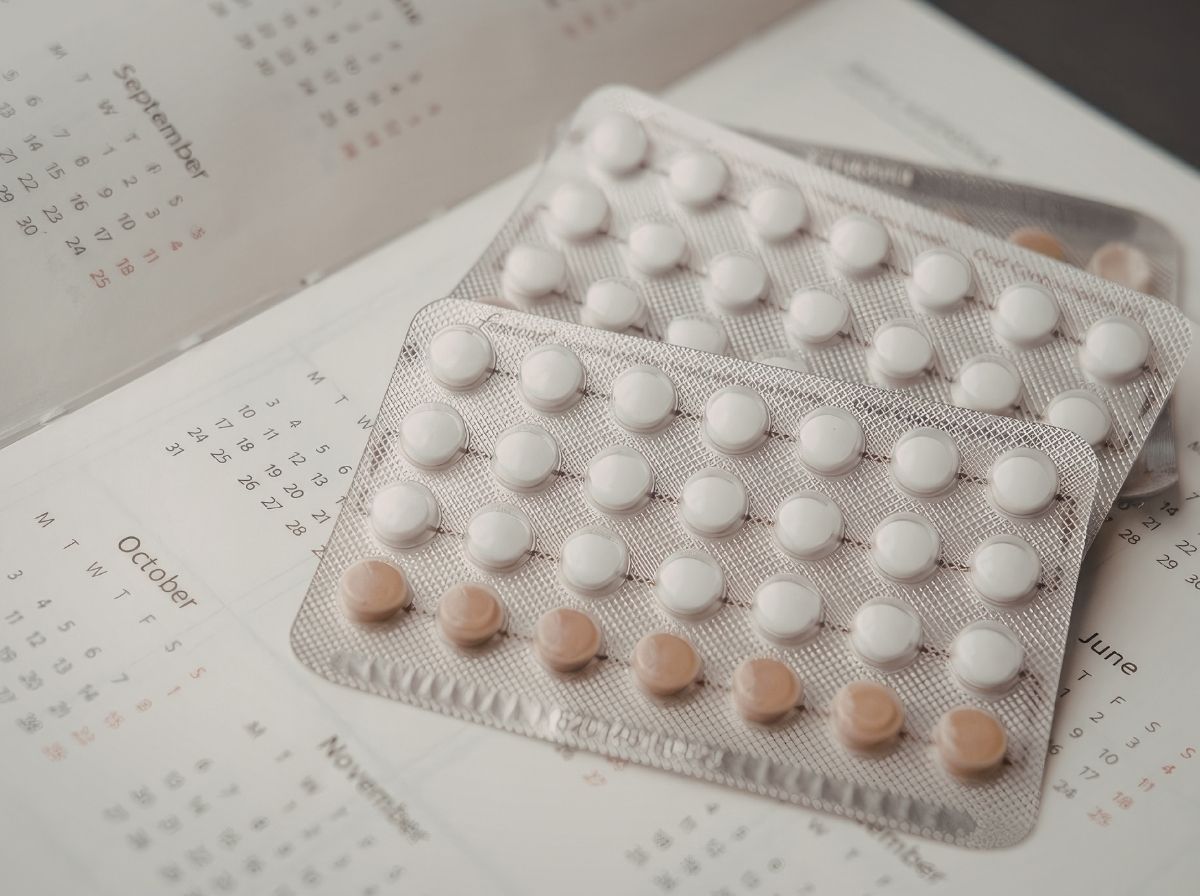
This is a question that almost nobody answers directly, and it matters. If you're on hormonal birth control, the pill, the patch, an implant, a hormonal IUD, your baseline for what's "normal" is already shifted. Hormonal contraceptives change the cervical mucus, affect discharge consistency and volume, and can suppress the cramping and bleeding patterns that might otherwise function as early warning signals. So how do you interpret subtle symptom changes when your hormones are already altering how things feel?
The honest answer is that it's harder. The discharge changes associated with chlamydia, slightly thicker, slightly yellow, slightly different-smelling, are easier to catch when you have a reliable personal baseline. Hormonal birth control blurs that baseline. Spotting between periods, which can be a cervical inflammation signal, is also more common on certain contraceptives, which means that particular symptom becomes even less diagnostic than it already is.
There's also a structural dimension. Research has shown that hormonal birth control can increase cervical ectopy, a condition where the softer columnar epithelial cells that chlamydia prefers extend further down the cervix and become more exposed. This may make the cervix somewhat more susceptible to initial infection, though evidence on whether this meaningfully increases overall chlamydia risk remains mixed.
The practical takeaway: if you're on hormonal birth control, you can't rely on symptom detection as a meaningful safety net. This is an argument for regular testing schedules rather than waiting for something to feel wrong, because the hormonal environment makes "feeling wrong" even less likely to register. The STD Risk Checker can help you think through your personal testing frequency based on your situation.
Can You Get Chlamydia in Your Throat or Rectum?
Yes, and this is where a lot of people's mental model of the infection breaks down. Chlamydia isn't only a vaginal infection. The bacteria can infect several distinct anatomical sites, and each produces its own set of signals (or none at all), depending on the type of sexual contact involved.
Cervical infection is the most common in women: the bacteria target those columnar epithelial cells and produce the discharge changes, pelvic discomfort, and post-sex bleeding described above. Urethral infection can occur alongside cervical infection or independently, causing the burning urination that gets mistaken for a UTI.
Rectal infection following anal sex is underdiagnosed largely because the symptoms, mild rectal discomfort, discharge, or itching, are easy to attribute to unrelated digestive issues. Throat infections following oral sex produce almost no noticeable symptoms. Someone who develops a mild sore throat a few days after oral sex is far more likely to attribute it to a minor cold or postnasal drip than an STD. Most of the time, they'd be right. But a throat infection can exist silently and be transmitted further without anyone realizing it's there.
| Infection Site | How It's Transmitted | Possible Symptoms | Often Missed Because |
|---|---|---|---|
| Cervix | Vaginal sex | Discharge changes, post-sex bleeding, pelvic pain | Symptoms are mild and nonspecific |
| Urethra | Spread from nearby infection or direct contact | Burning urination, urethral irritation | Identical to UTI presentation |
| Rectum | Anal sex | Rectal discomfort, discharge, itching | Attributed to digestive issues or hemorrhoids |
| Throat | Oral sex | Mild sore throat or no symptoms | Assumed to be a cold or seasonal illness |
The implication is important: standard at-home chlamydia testing screens for one site. If you've had multiple types of sexual contact, particularly if you want to rule out throat or rectal infection, discussing site-specific swab testing with a healthcare provider is worth considering alongside any at-home screening.
How Long After Exposure Do Symptoms Appear?
Chlamydia doesn't follow a predictable schedule. After the bacteria enter the body, they begin multiplying in the infected tissue, a process that takes time before any significant inflammatory response develops that is noticeable enough to produce noticeable symptoms develops. In many cases, that inflammatory response either never reaches a detectable threshold or develops so gradually that it blends into everyday background sensations.
In cases where symptoms do appear, they typically show up one to three weeks after exposure. But that window isn't reliable. Some people notice changes within a week; others don't for several weeks or longer. And a substantial portion, statistically the majority, never notice anything at all.
| Time After Exposure | What's Happening in the Body | Symptom Status | Testing Status |
|---|---|---|---|
| Days 1–5 | Bacteria attaching to and entering cervical columnar epithelial cells | No symptoms | Too early, test not yet reliable |
| Days 7–14 | Bacterial replication; immune response beginning | Possible mild irritation or discharge changes | Approaching the reliable window |
| 14 days | Bacterial load sufficient for detection in most cases | Symptoms may or may not be present | Test from this point for a reliable result |
| Several weeks or longer | Infection continues, often silently | Most people remain asymptomatic throughout | Reliable at any point after day 14 |
This timeline also explains the most common testing mistake: testing immediately after exposure. The infection needs time before the bacterial load is high enough for a test to detect it reliably. Testing too early, before 14 days, risks a false negative, not because the test kit is flawed, but because the biology hasn't caught up yet. Patience matters more than speed here.
When to Test, What a Negative Means, and What to Do If Symptoms Persist
For chlamydia, test from 14 days after exposure. At that point, a high-quality rapid antigen or PCR-based at-home test gives you a reliable answer. A negative result at 14 days, with no further exposure since, means no detectable chlamydia infection, and that's genuinely reassuring, not a consolation prize. A positive result means there's an active infection and effective treatment is available.
The situation that confuses people: you test at 14 days, get a negative, but symptoms persist. What now? A few things could explain this. First, the test may have been taken at the very edge of the detection window, retesting at 21 days covers that possibility. Second, if your symptoms include burning urination or unusual discharge, the cause may genuinely be something else entirely, a UTI, bacterial vaginosis, or a yeast infection can all produce similar sensations and wouldn't show up on a chlamydia test. Third, if you've had multiple types of sexual contact, it's worth asking whether the site you tested covers the site that's symptomatic. A cervical or urine swab won't detect a throat infection.
If symptoms persist after a negative result, the next steps are: retest at the 21-day mark, consider broader screening that includes gonorrhea (which causes nearly identical symptoms), and see a healthcare provider if things don't resolve. Symptoms that don't respond to the expected explanation are the body's way of saying the right question hasn't been asked yet. The existing blog article STD Test Was Negative, But I Still Have Symptoms covers this scenario in more detail if you're in that situation.
For women who want to test privately without involving a clinic, the Chlamydia At-Home STD Test Kit (99%+) gives you a lab-quality result at home. If you want to cover chlamydia and gonorrhea simultaneously, which makes sense given how similar their symptoms are, the Chlamydia & Gonorrhea At-Home STD Test Kit handles both in a single collection. Testing is the fastest way to stop the guessing game.
What Happens If Chlamydia Goes Untreated, And Why Silence Is the Real Risk
Chlamydia itself is straightforward to treat once it's identified. The complication isn't the infection, it's the silence. Because most infections produce no noticeable symptoms, they can persist for months without anyone knowing. And over that time, untreated chlamydia can migrate upward through the reproductive system.
When the bacteria spread from the cervix to the uterus, fallopian tubes, or surrounding pelvic structures, the result is pelvic inflammatory disease, PID. Symptoms of PID are typically more noticeable than early chlamydia: sharper lower abdominal pain, fever, or unusual bleeding. But by the time PID develops, the infection has already been present and doing damage for a while. CDC treatment guidelines document that PID can cause scarring of the fallopian tubes that affects fertility, not from a single acute episode, but from the cumulative inflammatory process of an infection that was never caught.
There's also a fertility timeline dimension that rarely gets mentioned clearly. Fallopian tube scarring from PID doesn't necessarily affect every pregnancy attempt, it increases the probability of specific complications, including ectopic pregnancy (where a fertilized egg implants in the fallopian tube rather than the uterus) and reduced fertility over time. These aren't inevitable consequences of a single chlamydia infection, they're the result of an infection that went undetected and untreated long enough for structural damage to accumulate. The article on what happens to fertility after an undiagnosed STD goes deeper on this if it's relevant to your situation.
This is what makes the silence of chlamydia so specifically consequential compared to other infections that announce themselves more loudly. Chlamydia isn't dangerous because it's acutely alarming. It's dangerous because it's patient.
Is That a UTI, a Yeast Infection, or Chlamydia? How to Actually Think Through It
You're standing in the pharmacy aisle staring at UTI test strips and yeast infection treatments, trying to figure out which one fits. It's a genuinely difficult call, and the honest answer is that symptoms alone usually can't resolve it. But there are patterns worth knowing.
UTIs tend to come with a frequent and urgent need to urinate alongside the burning, the pressure-to-go feeling is usually prominent, and the burning tends to be sharp and immediate. Yeast infections are usually defined by external itching and a thick, white, cottage cheese-like discharge with a mild yeasty smell. Bacterial vaginosis, which is often left out of this conversation, produces a thin, greyish or white discharge with a distinctive fishy odor that's particularly noticeable after sex.
Chlamydia, when it produces discharge at all, tends toward yellow or cloudy rather than white, and the burning during urination doesn't typically come with the same urgency that characterizes a UTI. Pelvic pain is more associated with chlamydia than with UTIs or yeast infections. Bleeding after sex is much more suggestive of cervical inflammation, which points toward an STD, than toward any of the other three.
| Symptom or Sign | UTI | Yeast Infection | Bacterial Vaginosis | Chlamydia |
|---|---|---|---|---|
| Burning urination | Yes, prominent | Mild, external | Rarely | Yes, similar to UTI |
| Urgency / frequency | Yes, defining feature | No | No | Sometimes mild |
| Discharge character | Rarely changed | Thick, white, cottage cheese | Thin, grey-white, fishy odor | Yellow, cloudy, or stronger-smelling |
| External itching | No | Yes, prominent | Sometimes mild | Occasionally |
| Pelvic pain | Lower back or flank pain more typical | No | No | Yes, dull lower abdominal ache |
| Bleeding after sex | No | No | No | Possible, cervical inflammation |
| Resolves with OTC treatment | Partially, with UTI medication | Usually yes | No, needs prescription | No, requires STD testing and treatment |
The critical rule: if you've been treated for a UTI or yeast infection and symptoms haven't resolved, or if they keep coming back, an STD test is the next logical move. Persistent or recurring symptoms that don't respond to the obvious explanation are telling you something. That's also a good moment to read through the most common STD myths, because misunderstanding how these infections spread is often what creates a false sense of security in the first place.
One more thing worth noting: it's possible to have a UTI and chlamydia simultaneously. Having one doesn't rule out the other. If UTI treatment resolves the urgency and frequency but burning lingers, that's the remaining chlamydia infection, not a stubborn UTI. Testing for both is a legitimate and sensible approach when the symptom picture doesn't fully resolve.
If Something Feels Off, Here's What to Actually Do
If you've read this far, you're probably in one of a few situations: something feels different, and you want to understand it, you've had recent potential exposure and want to know your options, or you simply want confirmation of your status before moving forward with a new partner or relationship. All of those are valid, and all of them have the same answer: test from 14 days after exposure and get a clear result.
The good news about chlamydia specifically is that it's one of the most treatable bacterial infections on the list. Once identified, effective treatment is available and typically works quickly. The complication is only ever the gap between infection and diagnosis, the weeks or months of silence where damage accumulates. That gap is exactly what testing closes.
If you test positive, the next step isn't panic, it's treatment and partner notification. Both matter, and the second one matters for a specific mechanical reason: if a partner isn't treated at the same time, reinfection happens immediately upon resuming sex. That reinfection cycle is one of the most common reasons people test positive a second time after completing treatment. Partner notification isn't just consideration for the other person; it's the step that actually makes treatment work. The partner notification article covers the practical side of that conversation if you need it.

FAQs
- 1. What are the first signs of chlamydia in women?
- When symptoms appear at all, the earliest ones are usually a subtle change in vaginal discharge, slightly thicker, more yellow or cloudy, or mildly stronger-smelling, or a burning sensation during urination that resembles a UTI. Most infections, though, produce no noticeable first signs whatsoever. If something feels off after recent sexual contact, testing from 14 days post-exposure is the only way to get a real answer.
- 2. Can you have chlamydia for months without knowing?
- Yes, and it's common. The majority of women with chlamydia never develop symptoms noticeable enough to prompt testing. An infection can sit undetected for months, sometimes a year or longer, while quietly producing inflammation in the cervix and potentially spreading upward toward the fallopian tubes. That's the core argument for routine testing rather than waiting for something to feel wrong.
- 3. Can chlamydia cause a negative UTI test but still have UTI-like symptoms?
- Yes. This is one of the more disorienting scenarios: burning urination, an urge to pee, and general pelvic irritation, but the UTI test comes back clean. Chlamydia infects the urethra and produces urinary symptoms that are clinically indistinguishable from a UTI but won't show up on a standard UTI urine dipstick. If your UTI test is negative but the symptoms are there, testing for chlamydia (and gonorrhea, which behaves similarly) is the logical next step.
- 4. Does being on the pill change chlamydia symptoms?
- It makes them harder to notice. Hormonal birth control alters discharge baseline, suppresses the period-related signals that might otherwise flag something unusual, and in some cases increases cervical ectopy, making the cervix slightly more exposed to infection. None of this changes how chlamydia behaves biologically, but it does reduce the reliability of symptom detection as an early-warning system. Women on hormonal contraception have an additional reason to test regularly rather than relying on symptoms.
- 5. I tested negative for chlamydia, but still have symptoms. What now?
- A few possibilities. First, if you tested before 14 days had passed since your last exposure, retest; you may have been in the detection window. Second, your symptoms may be from a different infection: gonorrhea, BV, or a UTI can produce nearly identical sensations and won't appear on a chlamydia-specific test. Third, if you've had anal or oral contact, the infected site may not have been screened. Consider broader testing and, if symptoms persist, a visit to a healthcare provider.
- 6. Can you get chlamydia from oral sex?
- Yes. Chlamydia can infect the throat through oral sex, and throat infections almost never produce noticeable symptoms, a mild sore throat at most. Someone with a throat infection can transmit the bacteria without knowing they have it. Standard at-home chlamydia tests don't screen the throat, so if oral exposure is a concern, site-specific swab testing through a clinic is worth discussing.
- 7. Does chlamydia cause bleeding between periods?
- It can. Chlamydia infects and inflames the cervical tissue, making it more fragile and sensitive than usual. When inflamed cervical tissue is disturbed during sex, it bleeds more readily than healthy tissue. Spotting between periods or after sex isn't always chlamydia; hormonal contraception, cervical ectopy, and other factors can cause it too, but in the context of potential exposure, it's one of the more specific signals associated with cervical infection rather than a more general cause.
- 8. If I test positive, will I get reinfected after treatment?
- Not from the infection itself, treatment clears it. But reinfection from an untreated partner is extremely common, and it's one of the main reasons people test positive again within weeks of finishing treatment. Both partners need to be treated simultaneously and avoid sex until both courses of treatment are complete. Skipping the partner notification step is the single most common reason chlamydia comes back after successful treatment.
- 9. Is at-home chlamydia testing accurate enough to rely on?
- Yes. High-quality at-home rapid test kits are clinically validated and deliver results comparable to standard clinic testing. The Chlamydia At-Home STD Test Kit available through STD Test Kits is 99%+ accurate. The timing matters more than the test format: testing before 14 days post-exposure risks a false negative because the bacterial load hasn't reached detectable levels yet. Test at the right time, and the result is genuinely reliable.
- 10. What's the actual risk of infertility from untreated chlamydia?
- It depends on how long the infection goes untreated and whether it spreads to the fallopian tubes. A single treated episode of chlamydia, caught before PID develops, carries minimal long-term fertility risk. The risk accumulates with repeated infections and with infections that progress to PID and cause fallopian tube scarring. This is why catching it early matters, not because a single diagnosis is a fertility sentence, but because repeated silent infections over months or years are where structural damage builds up.
Know Your Status, Then Move Forward
Chlamydia is treatable, common, and mostly silent. The only thing standing between an undetected infection and a clear answer is a test taken at the right time. From 14 days after exposure, an at-home test gives you that answer without a clinic visit, a waiting room, or a conversation you weren't ready to have.
The Chlamydia At-Home STD Test Kit (99%+) is the most direct option. If you want to cover chlamydia and gonorrhea together, which makes sense given how similar their symptoms are, the Chlamydia & Gonorrhea At-Home STD Test Kit (98%+) handles both in a single collection. For comprehensive women's health screening, the Women's 10-in-1 At-Home STD Test Kit covers chlamydia alongside gonorrhea, syphilis, HIV, HSV-2, hepatitis B and C, trichomoniasis, and HPV. One kit, one answer across the board.
Visit STD Test Kits to find the right option. Your results are your information, and having them puts you in a position to actually do something about what's happening in your body, rather than guessing.
Our article was constructed based on current advice from the most prominent public health and medical organizations, and then molded into simple language based on the situations that people actually experience, such as treatment, reinfection by a partner, no-symptom exposure, and the uncomfortable question of whether it "came back." In the background, our pool of research included more diverse public health advice, clinical advice, and medical references, but the following are the most pertinent and useful for readers who want to verify our claims for themselves.