The TikTok Debate About HIV and Nail Salons Is Missing the Real Risk, Here's the Full Picture
Last updated: April 2026 HIV advocate and content creator Bianca Carolina (@bianca.NHS surgeon and medical educator Dr. Karan Rajan responded with a widely shared video addressing the transmission science directly.
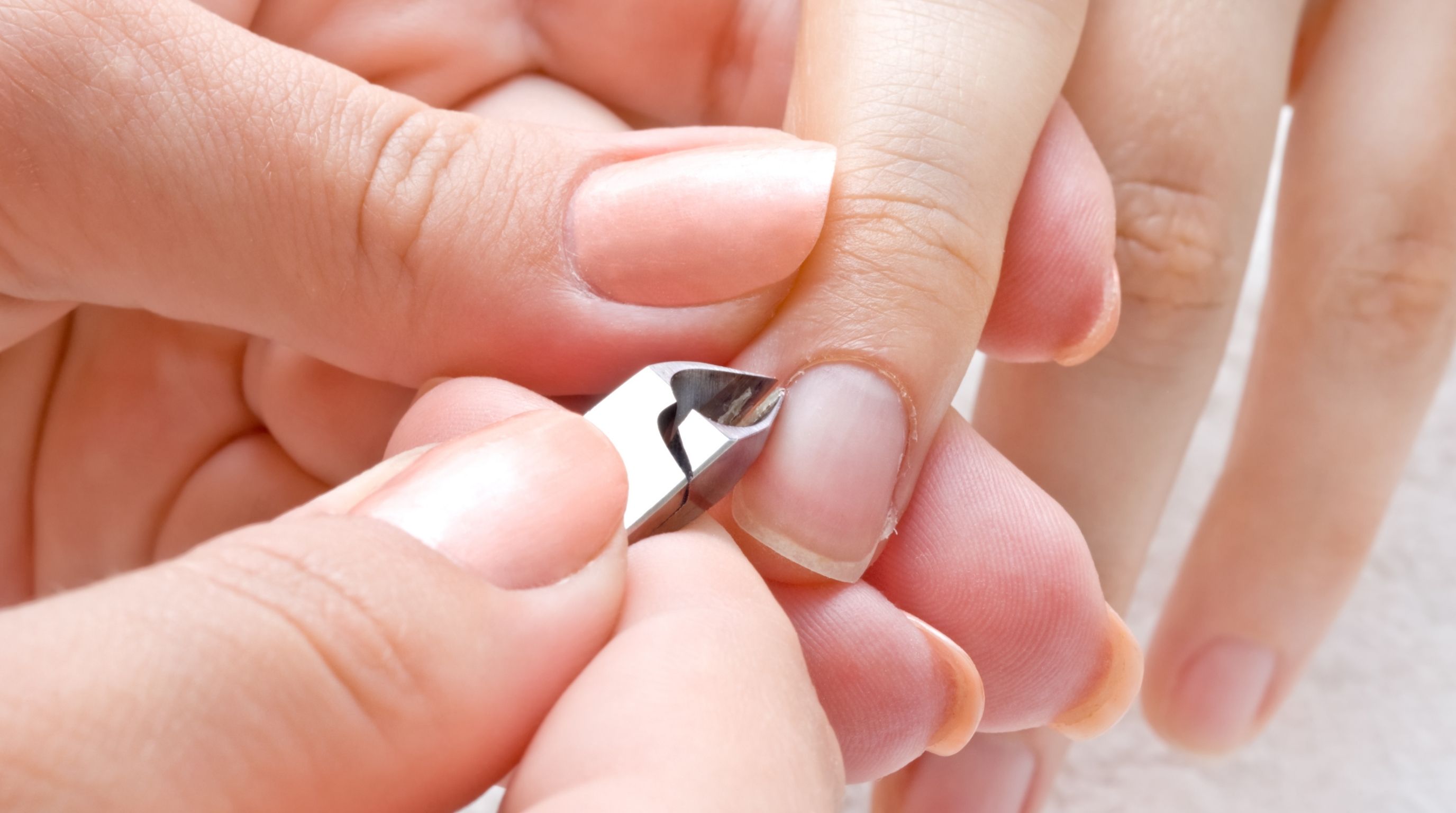
HIV advocate and content creator Bianca Carolina (@bianca.carolina_) posted a question that sent TikTok comment sections into overdrive: Should someone living with HIV tell their nail technician about their status before a manicure or pedicure? NHS surgeon and medical educator Dr. Karan Rajan responded with a widely shared video addressing the transmission science directly. The debate that followed was loud, divided, and, for the most part, scientifically off-target. It mixed up legal obligations with personal choices, focused on HIV when the more documented salon risk is actually hepatitis B and C, and largely skipped the U=U science that changes the entire conversation for people on treatment. According to the CDC, approximately 1.2 million people in the United States are currently living with HIV. Most of them are getting their nails done, their hair cut, and their skin treated without disclosing anything, and that is completely appropriate. This article covers the medicine, the law, and the real-world context that the comment sections missed.
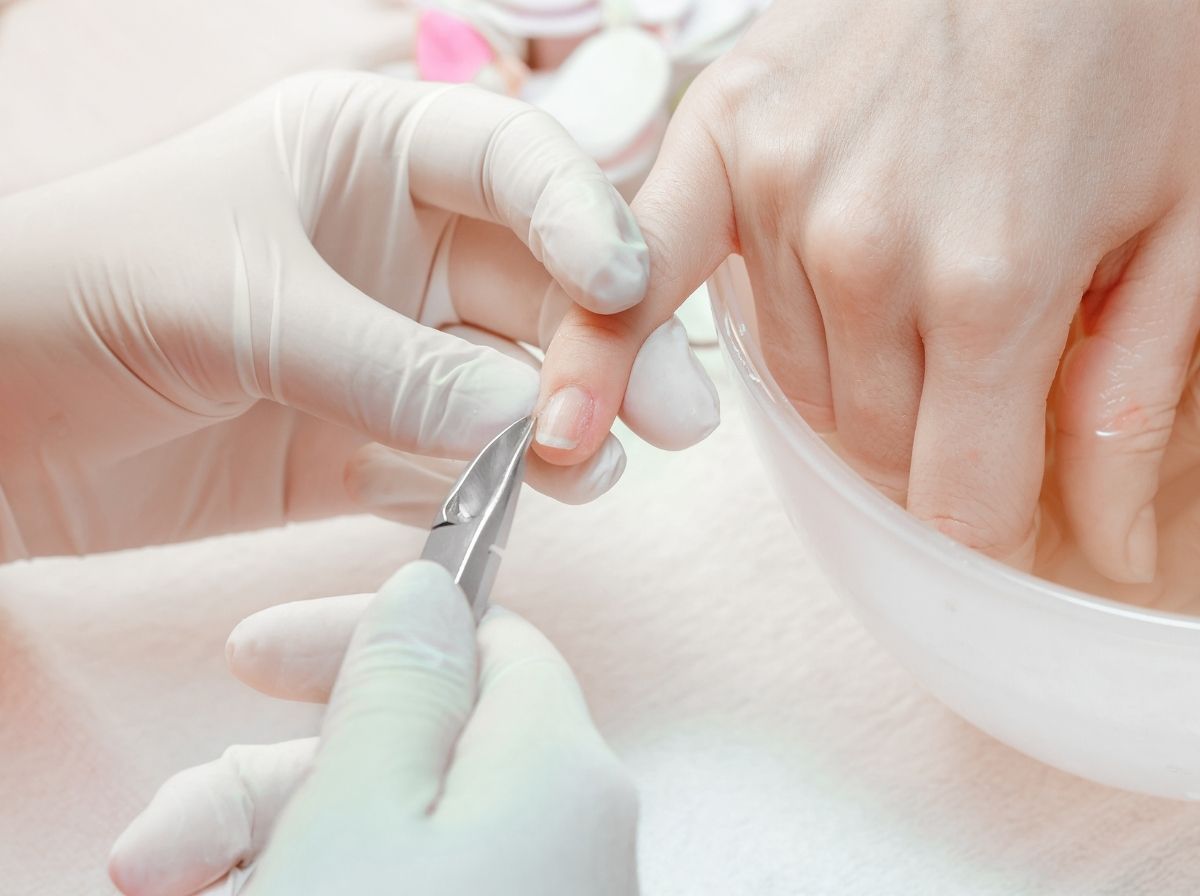
The Law Is Clear: You Don't Have to Disclose, and Salons Can't Ask
Start here, because a lot of the anxiety around this question is rooted in uncertainty about rights. Under Title III of the Americans with Disabilities Act, nail salons are classified as public accommodations, the same legal category as doctor's offices, gyms, and restaurants. Public accommodations cannot deny service to someone because they have HIV. Your HIV status is protected medical information, and you have no legal obligation to share it with a nail technician, a salon owner, or any other service provider.
This isn't theoretical. The Department of Justice has reached at least eight ADA settlement agreements with nail salons through its US Attorney Program for ADA Enforcement. The most directly relevant involved Diva Nails in Durham, North Carolina, where a salon owner followed an HIV-positive client outside after learning of his status and told him not to return. The DOJ settlement required the salon to pay damages, post a nondiscrimination policy, and train all staff, with the settlement explicitly noting that HIV transmission in a salon setting is "virtually impossible." The DOJ's own filing said that. A separate settlement in the same district later reinforced the same framework.
Crucially, the settlement also stated that it was inappropriate for the salon to have requested a doctor's note or documentation about the client's HIV status. Salons cannot require proof of health status as a condition of service. Asking a client whether they are HIV-positive before providing a pedicure is itself a potential ADA violation. The law is not ambiguous here, and the enforcement record shows the DOJ takes it seriously.
| Question | Answer | Legal Basis |
|---|---|---|
| Are you required to disclose HIV status to a nail tech? | No | ADA Title III, HIV status is protected medical information |
| Can a salon ask if you're HIV-positive? | No, it is a potential ADA violation | DOJ Diva Nails settlement, 2021 |
| Can a salon refuse service because of HIV status? | No, this constitutes disability discrimination | ADA Title III; multiple DOJ enforcement actions |
| Can a salon request a doctor's note about HIV? | No, explicitly flagged as inappropriate by DOJ | DOJ Diva Nails settlement, 2021 |
This means the disclosure debate, framed as a question of what someone living with HIV "should" do, is actually a question about personal choice and stigma, not legal obligation or medical necessity. No one is required to disclose. Whether someone chooses to, for their own reasons, is entirely their decision.
U=U: The Science That Changes the Entire Conversation
Before getting into the general biology of HIV in salon settings, there's a layer of science that the TikTok debate almost entirely skipped, and it's the most directly relevant piece for anyone living with HIV who is on treatment. U=U stands for Undetectable Equals Untransmittable. It means that a person living with HIV who takes antiretroviral therapy consistently and achieves an undetectable viral load, meaning the amount of HIV in their blood drops below the threshold that standard tests can measure, cannot transmit the virus through sexual contact. Zero transmissions. Not reduced risk. Zero.
This has been established through landmark clinical studies, including HPTN 052, the PARTNER study, and the Opposites Attract study, and was formally affirmed by officials from the NIH's National Institute of Allergy and Infectious Diseases. HIV.gov describes the evidence base as overwhelming. U=U applies to sexual transmission specifically, but its implications extend directly into the salon conversation. If the transmission risk of HIV through a shared salon tool is already characterized as virtually impossible for someone with a detectable viral load, then for someone who is undetectable on effective treatment, the biological reality is even more definitively in the direction of no risk. The infectious dose simply isn't there.
Bianca Carolina referenced being undetectable in her original TikTok post; she used the U=U framing. That context matters enormously and was largely lost in the comment sections that followed. A 2025 study published in the Journal of the International Association of Providers of AIDS Care found substantial gaps in understanding of U=U even among people living with HIV and their healthcare providers. If the people closest to the issue are still catching up on this science, it's no surprise that nail salon comment sections are working from outdated assumptions.
The Science: Why HIV Is Not the Infection Driving Salon Risk
The TikTok debate focused heavily on HIV, which is understandable given the history of HIV stigma and the communities most affected by it. But from a pure virology standpoint, HIV is actually the least concerning of the bloodborne infections in a salon context, and by a significant margin.
HIV degrades rapidly outside the human body. Within minutes to hours of exposure to air, the virus loses its ability to infect. It requires a sufficient infectious dose to establish infection, and that dose is exceptionally difficult to achieve through a contaminated salon tool. There are no documented confirmed cases of HIV transmission in a professional nail salon or barbershop in the United States. The single internationally discussed case, a Brazilian woman who appeared to contract HIV through shared cuticle scissors, involved prolonged, repeated shared use of the same instrument within a family household, not a professional salon visit. Even then, the case was flagged as exceptional enough to publish in a journal specifically because it was so unusual.
Hepatitis B behaves completely differently. It can survive on dry surfaces for up to seven days and requires only a tiny infectious dose to establish infection, making it significantly more resilient than HIV outside the body. Nine case-control studies have identified associations between manicure and pedicure exposure and hepatitis B infection. A case of acute hepatitis C that was formally described as "clearly related to a manicure and pedicure treatment" prompted the Virginia Department of Health to conduct a formal assessment of salon bloodborne pathogen risk, concluding that transmission cannot be excluded when non-single-use instruments are not properly sterilized.
The practical implication of this virology is important: a client living with well-managed HIV, particularly with an undetectable viral load, presents less biological risk in a salon setting than a client with undiagnosed hepatitis B, because HBV survives long enough on surfaces to be a credible transmission vector even through minor procedural lapses. The TikTok debate, by centering HIV, inadvertently suggests that knowing whether a client has HIV is the key variable in salon safety. The science says it isn't. The key variable is whether the tools are properly sterilized, full stop, and proper sterilization protocol makes the client's HIV status irrelevant.
What Universal Precautions Actually Are, and Why Salons Aren't Required to Use Them
Universal precautions is the infection control framework introduced by the CDC in 1985 that forms the backbone of safety in hospitals, dental offices, and medical settings. The principle is straightforward: treat every patient's blood and body fluids as potentially infectious, regardless of their health status or disclosure. Use gloves. Sterilize instruments. Handle sharps safely. Dispose of single-use items after one client. This approach eliminates the need for disclosure because it assumes the highest possible standard of care for every single person who sits in the chair.
Universal precautions are why you don't need to tell your dentist you have hepatitis C before getting a filling. The protocol already accounts for it. The same logic should apply in nail salons, and when it does, it works. OSHA's bloodborne pathogen standard covers nail salons and requires employers to evaluate exposure risk and, where risk exists, provide training, vaccination, and protective equipment. The Virginia Department of Health confirmed that its existing disinfection standards, when fully followed, are sufficient to prevent bloodborne pathogen transmission.
Here's the gap that explains why the TikTok debate keeps happening: OSHA adopted universal precautions for healthcare workers, EMTs, and police in 1991, but explicitly left the decision of whether to implement them up to individual cosmetology employers. The result is a patchwork. Oregon only made bloodborne pathogen training mandatory for cosmetology license renewal as of July 1, 2025. Most states still do not require it. The American College of Gastroenterology has formally noted that no state had health department oversight of nail salons specifically for hepatitis prevention as of their published review, and that no state required hepatitis-specific education for salon workers.
This regulatory gap is the real story behind the disclosure debate. The reason some clients feel pressure to disclose is that they can't trust the salon's protocol to be robust enough not to need that information. That's a failure of training and regulation, not a reason to require disclosure. The fix is mandatory universal precautions training, not asking clients about their health status.
What "Undetectable" Actually Means in This Context
People living with HIV who are on effective antiretroviral treatment and have achieved an undetectable viral load, meaning the amount of HIV in their blood is too low for standard tests to detect, cannot transmit the virus through sexual contact. This is the well-established U=U framework: Undetectable equals Untransmittable. It applies to sexual transmission specifically, but its implications extend to the salon context too.
If the transmission risk of HIV through a shared salon tool is already characterized by the Department of Justice as "virtually impossible" for someone with a detectable viral load, then for someone with an undetectable viral load, the biological reality is even more clearly in the direction of no meaningful risk. The infectious dose simply isn't there. Even in the theoretical scenario where a contaminated tool was used improperly between two clients in rapid succession, the viral load in the trace amount of blood on the instrument would need to be sufficient to establish infection, and in a person with undetectable HIV, it isn't.
Understanding U=U matters for the TikTok debate because it reframes what disclosure would even accomplish from a safety standpoint. If a person living with HIV is on treatment and undetectable, disclosure to a nail tech adds nothing to the safety equation. If a salon is following proper sterilization protocol, disclosure adds nothing to the safety equation for any bloodborne infection. Disclosure, in both cases, is a stigma event rather than a safety measure.
The Infection the Debate Should Actually Be About
If TikTok's comment sections were calibrated to actual documented risk rather than historical fear, the debate would look quite different. The infection that warrants the most serious attention in salon and barbershop settings is hepatitis B, not because it's commonly transmitted there, but because it's the bloodborne pathogen with the clearest documented association with salon exposures and the greatest resilience outside the body.
Hepatitis B vaccination is highly effective, widely available, and recommended for adults who haven't previously received it. Unlike HIV and hepatitis C, there is a vaccine. For nail technicians specifically, OSHA notes that employees who may be exposed to blood or infectious materials at work are eligible for hepatitis B vaccination, and employers are responsible for ensuring access to it. This is the protective measure that actually addresses the documented risk, not asking clients about their HIV status.
Hepatitis C presents a different challenge: there is no vaccine, and it has been documented in both manicure and barbershop settings through inadequately sterilized tools. The protective measure is sterilization compliance, not disclosure. A client with hepatitis C has no legal obligation to disclose, and disclosure would not substitute for proper instrument handling anyway. The science is consistent across all three bloodborne infections: universal precautions, properly applied, make individual disclosure medically unnecessary.
| Infection | Surface Survival | Documented in Salon Settings? | Vaccine Available? |
|---|---|---|---|
| HIV | Minutes to hours | No confirmed US professional salon cases | No |
| Hepatitis B | Up to 7 days on dry surfaces | Yes, multiple case-control studies | Yes, highly effective |
| Hepatitis C | 16 hours to 4 days | Yes, including one case formally attributed to manicure/pedicure | No |
According to the CDC's 2025 Viral Hepatitis National Progress Report, an estimated 14,000 new hepatitis B infections occur annually in the United States, with hepatitis C estimated at around 67,400 new infections per year. These numbers reflect a public health challenge that exists largely independently of the HIV conversation, and one that salon sterilization compliance directly touches.
Why the Stigma Conversation Matters Beyond the Science
Getting the biology right isn't the whole story here. The reason people living with HIV feel anxious about nail salon visits isn't primarily because they've read the wrong virology papers, it's because HIV stigma in everyday settings remains real and documented. According to the People Living with HIV Stigma Index 2.0 Global Report, nearly one in four people living with HIV report experiencing stigma and discrimination in the past year. That includes community settings, and it includes service environments.
The Diva Nails case wasn't an isolated incident. It was one of at least eight DOJ enforcement actions against nail salons under the ADA's disability discrimination provisions. The pattern reflects a broader reality: some nail salon owners and technicians operate with outdated or factually incorrect beliefs about HIV transmission, and those beliefs translate into discriminatory treatment. The TikTok debate, whatever its scientific limitations, emerged from that lived experience. People living with HIV have real reasons to think about what happens when salon staff find out about their status.
This is why the answer to the disclosure question isn't simply "don't bother, the science says you're fine." The science does say that. But the human experience of navigating HIV status in public spaces involves a layer of risk, the risk of stigma, of being turned away, of having a private health matter handled badly by someone who doesn't know the law or the biology, that the science doesn't erase. What erases it is better education, mandatory universal precautions training for cosmetology licenses, and consistent ADA enforcement. Until all three are in place uniformly, people living with HIV are making a personal judgment call about disclosure that goes beyond biology, and that judgment belongs entirely to them.
What Good Salons Are Actually Doing
The gap between salons that are doing this right and those that aren't is largely invisible from the client's chair, but there are observable signals. A well-run salon that takes bloodborne pathogen risk seriously uses instruments that either come in sealed sterile packaging for single use or are fully immersed in an EPA-registered disinfectant for the full contact time, typically 10 minutes, not briefly dipped. Foot basins are cleaned after each client and at the end of the day, with the recirculation screen filter cleaned regularly rather than ignored. Technicians wear fresh gloves for each client.
Autoclaves, the steam sterilization machines used in dental and medical offices, represent the gold standard for metal instruments. Some well-equipped salons have them. Where they don't, the intermediate-level disinfection standard required by states like Virginia, when fully applied, is considered sufficient by the Virginia Department of Health. The problem documented repeatedly in the research is compliance: the standard exists, but enforcement and inspection are inconsistent, and training is not uniformly mandated.
Oregon's July 2025 bloodborne pathogen training requirement for cosmetology license renewal is a meaningful step in the right direction. It means that, at minimum, licensed nail technicians in Oregon now have formal training on HIV, hepatitis B, hepatitis C, universal precautions, and post-exposure procedures as a condition of their license. The science behind why this matters is exactly what the TikTok debate needed: trained technicians understand that universal precautions protect against all bloodborne infections, that no client is required to disclose their health status, and that proper sterilization makes that disclosure irrelevant anyway.
Know Your Status, Whatever Your Situation
The deeper message underneath the disclosure debate is one that applies to everyone, not just people living with HIV: knowing your status matters. For people who are HIV-negative and want to stay that way, regular testing is how you catch exposure early, access PrEP if it's appropriate, and make informed decisions. For people living with HIV, knowing your viral load and maintaining an undetectable status is what the science shows eliminates sexual transmission risk, and further reduces the already minimal risk in non-sexual settings. For anyone who has had potential exposure to hepatitis B or C through a salon visit or otherwise, knowing your status through testing is the step that turns uncertainty into clarity.
The HIV-1/2 At-Home STD Test Kit delivers results in minutes with 99.8% accuracy, no clinic, no waiting room, complete privacy. For broader coverage that includes hepatitis B and C alongside HIV, the 7-in-1 Complete At-Home STD Test Kit covers all three in a single session at home. If hepatitis B and C are your specific concern after a salon visit, the Hepatitis B & C At-Home STD Test Kit covers both with 98%+ accuracy and results in minutes.
Browse the full range at STD Test Kits. Testing is how you replace the guessing game with real information, and in the context of a conversation that has generated far more anxiety than the biology warrants, real information is exactly what's needed.
FAQs
- 1. Do I have to tell my nail tech that I have HIV?
- No. There is no legal requirement to disclose your HIV status to a nail technician or salon. Your HIV status is protected medical information under federal law, and salons cannot require you to disclose it as a condition of service. The decision to share that information, if you choose to, is entirely personal.
- 2. Can a nail salon legally refuse to serve someone with HIV?
- No. Under Title III of the Americans with Disabilities Act, nail salons are public accommodations and cannot deny services to someone because of their HIV status. Multiple Department of Justice enforcement actions have resulted in settlements against salons that did exactly this, including required staff training and nondiscrimination policies.
- 3. Can a salon ask if I'm HIV-positive before giving me a pedicure?
- The DOJ's settlement in the Diva Nails case explicitly stated that requesting a doctor's note or documentation about HIV status was inappropriate. Asking clients about HIV status as a condition of service is a potential ADA violation.
- 4. Is HIV actually a realistic risk at nail salons?
- No. HIV degrades rapidly outside the body, within minutes to hours, and requires a sufficient infectious dose to establish infection. There are no documented confirmed cases of HIV transmission in a professional US nail salon or barbershop. The Department of Justice itself described HIV transmission in a salon setting as "virtually impossible" in a formal settlement document.
- 5. What infection should nail salons actually be focused on?
- Hepatitis B and C are the bloodborne infections with the strongest documented association with salon exposure. Hepatitis B can survive on dry surfaces for up to seven days, requires a very small infectious dose, and has been linked to salon and barbershop exposure in multiple case-control studies. There is a highly effective vaccine for hepatitis B. Hepatitis C has also been documented in manicure settings and has no vaccine, making sterilization compliance the primary protection.
- 6. What are universal precautions, and why do they matter here?
- Universal precautions is the CDC infection control framework that treats every person's blood as potentially infectious, regardless of their health status or disclosure. When properly applied, gloves, sterilized instruments, single-use disposables, clean foot basins, it eliminates the need for client disclosure entirely. The problem is that universal precautions are not uniformly mandated in cosmetology licensing across US states, which is the regulatory gap that allows this debate to keep happening.
- 7. If I'm HIV-positive and undetectable, is there any transmission risk in a nail salon?
- The risk was already described as virtually impossible for people with detectable HIV in salon settings. For someone with an undetectable viral load, meaning the amount of HIV in their blood is below the level standard tests can measure, the biological conditions for transmission through a salon tool are even further removed from realistic concern.
- 8. Should someone with hepatitis B or C disclose to their nail tech?
- There is no legal requirement to disclose hepatitis B or C status to a nail technician, either. The same ADA framework that protects people living with HIV applies to other bloodborne conditions. A well-run salon with proper sterilization protocol protects against hepatitis B and C transmission without needing to know which clients are positive.
- 9. What should I look for to know if a salon is handling sterilization correctly?
- Metal instruments should come in sealed sterile packaging or be fully immersed in EPA-registered disinfectant for the required contact time, not briefly dipped. Foot basins should be cleaned visibly between clients. Technicians should wear fresh gloves per client. If tools appear to emerge from a drawer rather than sealed packaging, or if the blue liquid jar sees tools going in and immediately coming out, those are compliance gaps worth noting.
- 10. Where can I learn more about my legal rights around HIV disclosure?
- The ADA National Network at ADA.gov covers the full legal framework for HIV and disability discrimination. HIV.gov maintains a civil rights section covering ADA protections specifically for people living with HIV. If you believe you've experienced HIV-related discrimination at a nail salon or other public accommodation, complaints can be filed with the US Department of Justice.
The Conversation Deserves Better Information
People living with HIV navigating everyday spaces deserve accurate answers, not TikTok comment section speculation. The legal answer is clear: no disclosure is required, and salons that react to HIV status with refusal of service are violating federal law. The scientific answer is equally clear: HIV is not the meaningful transmission risk in salon settings, hepatitis B and C are, and they are addressed through sterilization protocol, not disclosure. The systemic answer points toward mandatory bloodborne pathogen training for cosmetology licenses, which a small number of states have implemented, and more should.
Whether you're living with HIV, living with hepatitis, or simply curious about what actually happens from a safety standpoint when you sit down for a pedicure, the answer is the same: a well-trained technician using proper protocol protects everyone, regardless of what anyone disclosed. That's what universal precautions mean. And knowing your own status, whatever it is, is always the first step toward taking care of your health with real information rather than anxiety.
Our article was constructed based on current advice from the most prominent public health and medical organizations, and then molded into simple language based on the situations that people actually experience, such as treatment, reinfection by a partner, no-symptom exposure, and the uncomfortable question of whether it "came back." In the background, our pool of research included more diverse public health advice, clinical advice, and medical references, but the following are the most pertinent and useful for readers who want to verify our claims for themselves.
- POZ, Nail Salon Must Pay $7,500 for Refusing Service to a Client With HIV
- US Department of Justice, Settlement Reached with Nail Salon for ADA Violations
- HIV.gov, Civil Rights and HIV
- NIH StatPearls, Universal Precautions in Health Care Settings
- OSHA, Biological Hazards in Nail Salons
- Infection Control Today, Hepatitis Transmission Risk in Nail Salons and Barbershops