Why You Can Test Negative for an STD After Exposure, and What It Actually Means
STD testing is one of the most straightforward things you can do for your sexual health, but only when the timing is right. The reason people end up confused isn't the test itself.
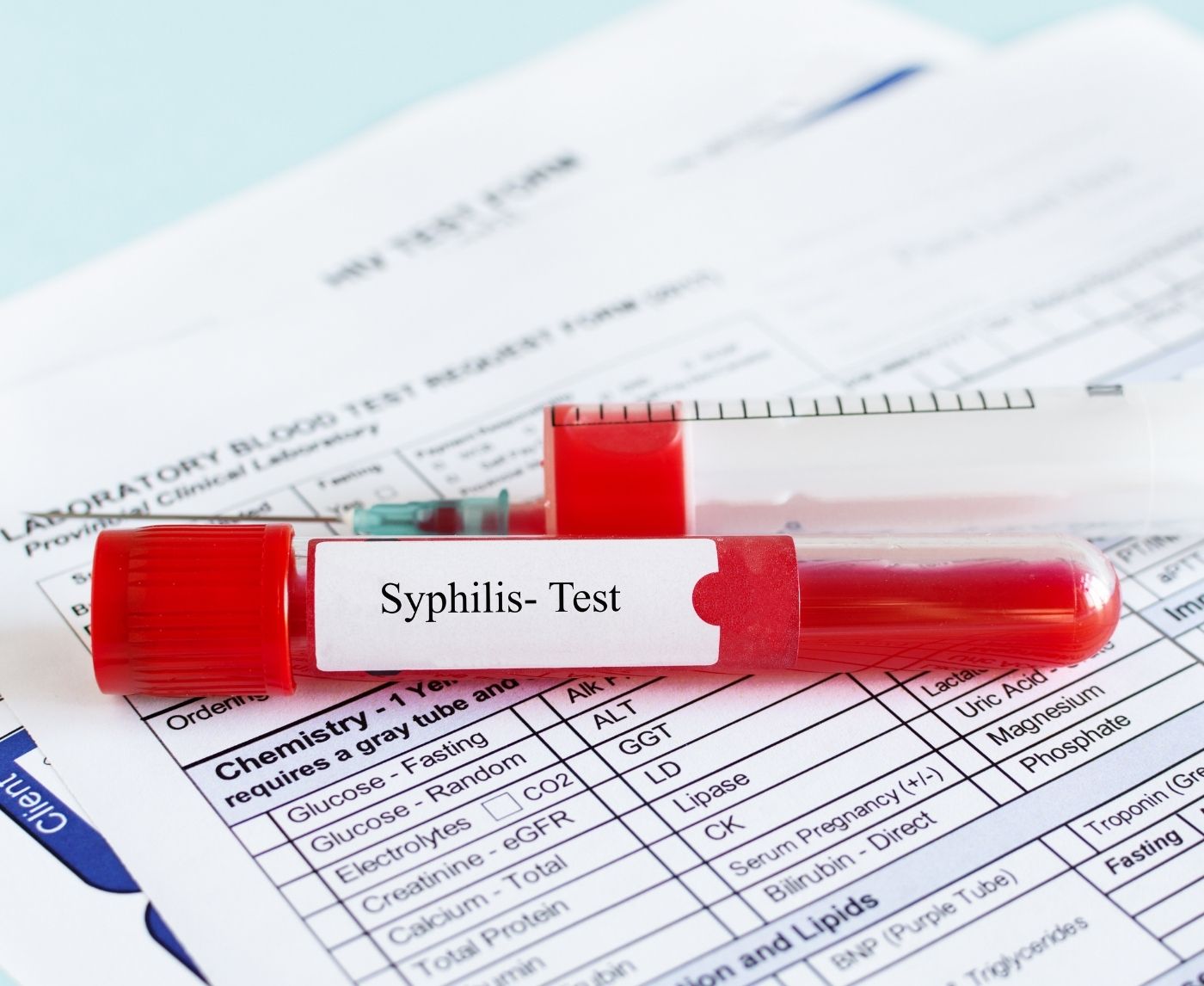
STD testing is one of the most straightforward things you can do for your sexual health, but only when the timing is right. The reason people end up confused isn't the test itself. It's that most tests can only find an infection once the body has had enough time to produce detectable biological markers, and that process takes longer than most people expect. Understanding this gap between exposure and detection is the difference between a result you can trust and one that leaves you guessing.
You can test negative for an STD and still have it. That's not a flaw in the technology; it's biology. Every infection needs time to develop to a point where a test can find it. Test too early, and the result will look clean even when something is quietly building. That window of time between exposure and detection is what makes timing the single most important factor in STD testing accuracy.
A negative result taken too early is called a false negative. It doesn't mean the test failed. It means the infection hasn't yet produced enough detectable material, whether that's bacterial DNA, viral particles, or the antibodies your immune system creates in response, for the test to pick up. According to CDC screening guidelines, timing relative to the detection window is one of the primary factors determining whether an STD test returns an accurate result.

Why STD Tests Can Come Back Negative After Exposure
The short version: detection depends on biology, not just presence. An infection doesn't flip a switch the moment it enters the body. It needs time to establish itself, replicate, and produce enough material for a test to recognize.
For bacterial infections like chlamydia and gonorrhea, the process starts with the bacteria attaching to cells and multiplying. Modern NAAT (nucleic acid amplification) tests are extraordinarily sensitive; they can pick up trace amounts of bacterial genetic material, but even they need a critical mass before they can return a positive result. Test before that threshold is reached, and the result reads negative even if the infection is actively developing. This is exactly what makes early testing for gonorrhea particularly unreliable, as explored in detail in What If You Test Too Soon for Gonorrhea?
Viral infections work differently, but face the same limitation. With HIV, for example, the virus begins replicating almost immediately after exposure. But most tests aren't looking for the virus itself; they're looking for the antibodies your immune system produces in response to it. Those antibodies take time to build to measurable levels. As the NHS explains in its HIV testing guidance, this delay between infection and detectable immune response is a fundamental biological reality, not a testing deficiency.
The practical consequence is that a negative result early after exposure is a time-stamped snapshot, not a final verdict. It tells you what was detectable at that specific moment, and if that moment was too early, the snapshot won't show the full picture. The same principle applies across all common STDs, which is why testing too soon can give you a false negative regardless of which infection you're checking for.
What Is the STD Testing Window Period?
The window period is the stretch of time between when an infection enters the body and when a test can reliably detect it. During this period, the infection is real, active, and in many cases transmissible, but invisible to testing. Nothing has gone wrong. The biology just hasn't caught up to the test yet.
Different infections have different window periods because they develop through different biological mechanisms. Bacterial infections like chlamydia work through rapid replication of genetic material, so the test window is relatively short. Viral infections and those that trigger immune responses take longer because the body needs time to mount a detectable reaction. That's why HIV and syphilis have longer window periods than chlamydia, and why someone who tests at the wrong time for either can walk away with a falsely clean result.
It's also worth knowing that the window period and the incubation period aren't the same thing, even though they're often confused. The incubation period is the time between exposure and when symptoms appear. The window period is when a test becomes accurate. Someone can be well past the incubation period, showing symptoms or none at all, and still be within the testing window. These timelines run in parallel but independently. According to the WHO's overview of sexually transmitted infections, many STDs remain entirely asymptomatic, which makes timed testing even more critical; you can't rely on symptoms to tell you when to test.
Understanding the window period changes how you interpret results. A negative test inside the window doesn't tell you you're clear. It tells you the infection, if present, hasn't reached a detectable stage yet. That distinction matters for every decision that follows.
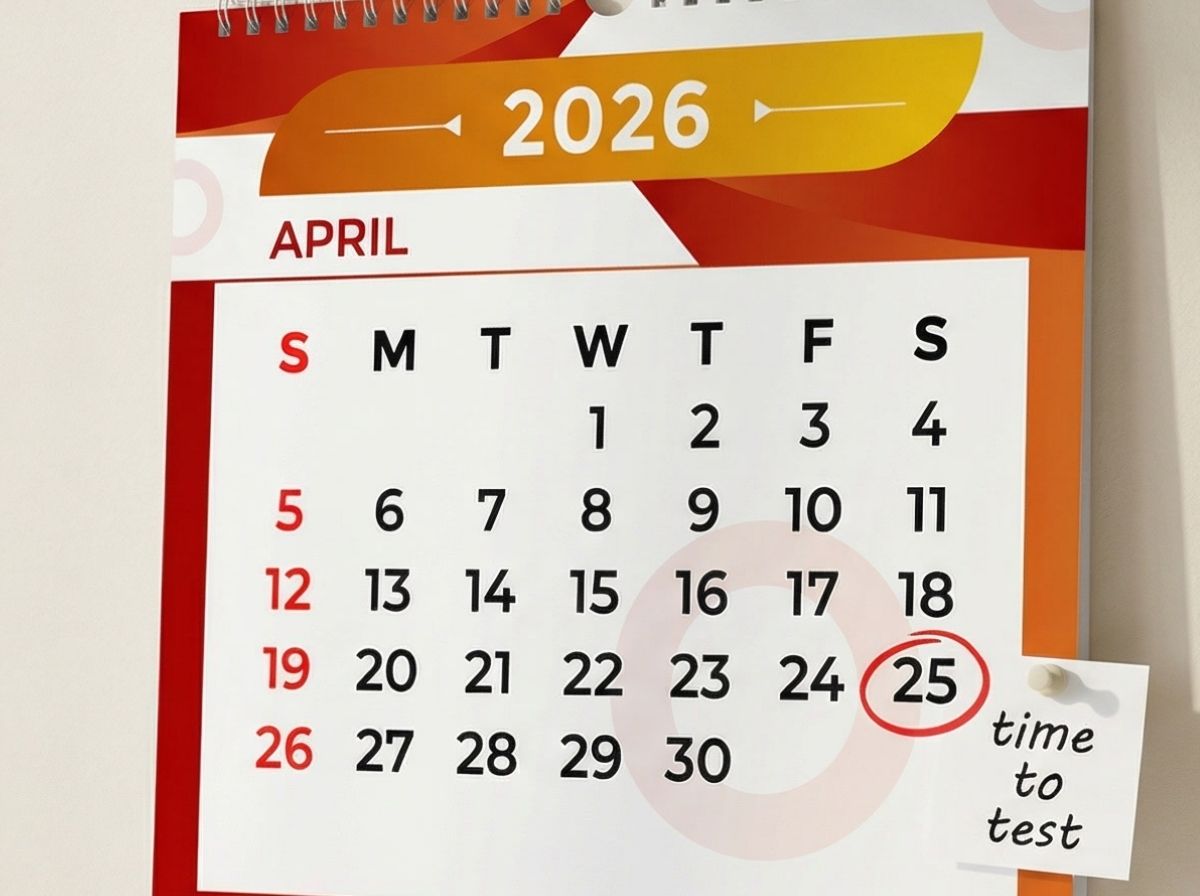
When At-Home STD Tests Become Accurate, Exact Windows by Infection
There's no universal answer to "when can I test?" because each infection follows its own biological schedule. The timing below reflects when testing becomes reliably accurate, not the earliest possible moment a test might pick something up, but the point where a negative result can actually be trusted.
Bacterial infections are detected using NAAT technology, which looks for the genetic material of the bacteria themselves. Chlamydia needs a minimum replication period before DNA levels reach detectable concentrations: test from 14 days after exposure. Gonorrhea follows a similar mechanism: test from 3 weeks after exposure. Testing before these windows risks missing an infection that's already present and developing.
Blood-based infections and those requiring immune responses operate on longer timelines. Syphilis detection relies on antibodies that build gradually in the bloodstream: test from 6 weeks after exposure. HIV testing is structured in two stages because early antibody production can be partial, test at 6 weeks for a first indicator, then retest at 12 weeks for certainty. For herpes, both HSV-1 and HSV-2 antibodies take time to accumulate to measurable levels: test from 6 weeks after exposure for either strain. If you've already tested for herpes and got a negative but still have symptoms, that's a specific situation worth understanding, covered in Herpes Symptoms but Negative Test? Read This First.
Hepatitis follows its own trajectory. Hepatitis B surface antigens take time to reach detectable concentration: test from 6 weeks after exposure. Hepatitis C has the longest window of the group because antibody development is slower: test from 8–11 weeks after exposure. Testing before these points creates a real risk of missing an active infection.
| Infection | Test Method | When to Test After Exposure |
|---|---|---|
| Chlamydia | NAAT (urine or swab) | 14 days after exposure |
| Gonorrhea | NAAT (urine or swab) | 3 weeks after exposure |
| Syphilis | Blood test (antibody) | 6 weeks after exposure |
| HIV 1 & 2 | Blood test (antigen/antibody) | 6 weeks (first indicator); retest at 12 weeks for certainty |
| Herpes HSV-1 | Blood test (antibody) | 6 weeks after exposure |
| Herpes HSV-2 | Blood test (antibody) | 6 weeks after exposure |
| Hepatitis B | Blood test (antigen) | 6 weeks after exposure |
| Hepatitis C | Blood test (antibody) | 8–11 weeks after exposure |
These windows aren't arbitrary recommendations; they reflect the minimum biological time required for each infection's markers to reach a reliably detectable level. A test used at the right point in this timeline, like the 7-in-1 Complete At-Home STD Test Kit, can screen for multiple infections with high accuracy. But the technology is only as good as the timing behind it. For a practical guide to using and reading at-home tests correctly, How to Read Your At-Home STD Test (And When to Trust the Result) walks through exactly what to look for.
Which STDs Are Most Likely to Be Missed If You Test Too Early?
Not all infections carry the same risk of early false negatives. The likelihood of a missed result depends on how quickly the infection produces detectable markers and how long your immune system takes to respond. This dynamic is explored in a broader context in How False Negatives and Late Testing Are Fueling STD Surges.
HIV and syphilis are the most likely to slip through early testing. Both depend on the immune system producing measurable antibodies, and that process takes weeks. Someone who tests for HIV at three days post-exposure, or for syphilis at two weeks, isn't getting meaningful information; the biology simply hasn't progressed far enough. This is why the two-stage HIV testing approach (6 weeks, then 12 weeks) exists: the first test catches early indicators, the second confirms or rules out infection as antibody levels stabilize. As a 2025 update on STI testing published in PMC notes, HSV glycoprotein G tests specifically "can have high false-negative rates if done too soon following exposure", reinforcing that even highly specific tests are constrained by timing.
Herpes and hepatitis follow a similar pattern. Both HSV-1 and HSV-2 are antibody-detected, which means early testing during the first few weeks frequently returns negative results even when the virus is present. Hepatitis C has the longest window of all the common STDs; testing before the 8-week mark carries a particularly high risk of a false negative, because antibody development for hepatitis C is notably slower than for other viral infections.
Chlamydia and gonorrhea carry less early-testing risk than the blood-based infections, but they're not immune to false negatives either. NAAT tests need a sufficient bacterial load to trigger a positive result. Testing before the 14-day mark for chlamydia or the 3-week mark for gonorrhea means the bacterial count may still be below the detection threshold, even if the infection is actively replicating.
The honest takeaway: no STD is reliably detectable in the first few days after exposure. Some take weeks. Some need months for full certainty. Knowing which infections have longer windows helps you build a testing plan that actually reflects reality rather than urgency.
How to Test at Home Without the Guessing Game
At-home testing has made it genuinely easier to stay on top of sexual health, no appointments, no waiting rooms, and results in minutes. But the most common mistake people make with at-home tests is using them too early, then trusting the result as final when it isn't. If you've already had that experience, tested right after sex, and got a negative, Got Tested Right After Sex? Here's Why That Result Might Be Wrong explains exactly what happened and what to do next.
The fix is simple in principle: match your test to your timeline. Before you open the kit, work out when the potential exposure happened, and check whether you've cleared the detection window for the infections you're most concerned about. If you're testing comprehensively, covering multiple infections at once, make sure you're past the longest window on the list before treating the result as definitive.
Using a broad panel like the 8-in-1 Complete At-Home STD Test Kit covers HSV-1 and HSV-2, HIV, Hepatitis B and C, Chlamydia, Gonorrhea, and Syphilis in a single session, which is genuinely useful for anyone who wants a thorough picture after a potential exposure. But that picture is only accurate when the test is done at the right point. Running it on day 5 after exposure won't give you reliable information on the majority of those infections.
One approach that works well: an early test to establish a baseline, followed by a timed retest once you've cleared the full window period for each infection you're checking. The early test can catch anything that's already in a detectable range. The follow-up test closes the loop on everything else. That two-test structure eliminates the ambiguity of a single early result and gives you a clear, trustworthy answer. According to provisional 2024 data released by the CDC, more than 2.2 million cases of chlamydia, gonorrhea, and syphilis were reported in the United States, and while that total represents a third consecutive year of decline, the overall burden remains 13% higher than a decade ago. Knowing when and how to test accurately isn't just personal reassurance; it's part of how infections get caught before they spread.
What a Negative Result Actually Tells You
A negative STD test result means one specific thing: no detectable markers of infection were found in the sample at the moment of testing. That's it. It doesn't automatically mean no infection is present. It means the test didn't find anything at the time the sample was taken.
Whether that result is meaningful depends entirely on timing. A negative result taken after the correct detection window for a given infection is a reliable, confident answer, the kind of result that lets you move on without second-guessing. A negative result taken inside the window is provisional. It's not wrong exactly, it's just incomplete. The biology is still in motion.
This is the distinction most people miss. They interpret "negative" as a final verdict rather than a time-specific data point. In reality, the accuracy of that verdict is conditional on when the test was run. A chlamydia test taken at 4 days post-exposure means almost nothing clinically. The same test taken at 3 weeks is genuinely informative. Same test, very different interpretive value. This confusion is surprisingly common, and it's worth understanding what "not detected" actually means in clinical terms, as explored in Can You Trust a "Not Detected" STD Result?
A positive result, by contrast, is always meaningful; it means the infection has reached a detectable level and the presence of the infection is confirmed. At that point, the next step is clinical follow-up and appropriate treatment, not more testing. Effective treatment exists for every infection covered by standard at-home panels, and catching an infection early makes treatment simpler and more effective.
There's also a scenario worth flagging: a situation where your partner tests positive, but your own test comes back negative. That result isn't necessarily reassuring; the timing mismatch could explain the discrepancy. Partner Positive, You Negative? The Real Reasons Behind Mismatched STD Tests covers the biology behind that specific situation in detail.
When You Should Retest After a Negative Result
Retesting after a negative isn't a sign that something went wrong. It's a rational response to how infections develop. If the first test happened before the detection window closed, a second test is required to confirm the result. There's no way around the biology.
The timing of retesting should map directly to the detection windows by infection. If you tested for chlamydia at one week post-exposure, you need to retest at the 14-day mark. If you tested for syphilis at three weeks, retest at six weeks. If you're tracking HIV, the two-stage structure applies: 6 weeks for the first pass, 12 weeks for confirmation. This isn't redundant; it reflects the progression of antibody development over time and ensures the result accounts for late seroconversion, which does occur in a small percentage of people. The broader case for why a single test is often not enough is laid out in The Truth About Retesting: Why One STD Test Isn't Always Enough.
Imagine getting a text from a recent partner saying they just tested positive for chlamydia. You tested negative two weeks ago, but that test was only 5 days after the encounter you're now worried about. That early negative wasn't a clearance; it was a snapshot taken before the window opened. The right move is to retest at the 14-day mark from the exposure date, not from the date of the first test.
The goal of retesting is to convert a provisional negative into a confirmed one. Once you've tested after the full window period has passed and the result is still negative, you have a reliable answer. Until then, the question is open, not alarming, just unresolved.
What's Actually Happening in Your Body After Exposure
After getting an STD, a series of biological events happens over the course of days and weeks. It doesn't happen all at once, and each infection has its own course. It's much easier to understand why the testing timeline works the way it does when you know what's going on beneath the surface.
The first step in bacterial infections is colonization. The bacteria attach to cells in the area that is infected and start to multiply. The numbers are too small for even a very sensitive NAAT test to find at first. As replication goes on for a few more days, bacterial DNA builds up until it reaches the level where the test can find it. This is when the test turns positive. The 14-day window for chlamydia, for instance, shows how long it takes for the replication to reach a level that can be reliably detected. Research published in a 2025 PMC review of STI testing updates confirms that even modern high-sensitivity tests remain constrained by these biological thresholds.
Viral infections take a more complicated route. The virus starts to make copies of itself right away, but many tests don't look for the virus itself; they look for how the immune system reacts to it. Antibodies or antigens are the body's response, and it takes weeks for them to fully develop. The immune system is taking time to build a measurable response, not the virus hiding. This is why HIV testing is done in two steps and why herpes antibodies can't be reliably found until six weeks after exposure.
| Stage After Exposure | What's Happening | Test Detectable? |
|---|---|---|
| Days 1–3 | Bacteria attach to cells or virus enters bloodstream. Replication begins at very low levels. | No, levels too low for any test |
| Days 4–13 (bacterial infections) | Bacteria actively replicating. DNA levels approaching detection threshold. | Possibly, but high false negative risk |
| Week 2–3 (bacterial) | Bacterial DNA reaches reliably detectable levels for NAAT testing. | Yes, for chlamydia (14 days) and gonorrhea (3 weeks) |
| Weeks 2–5 (viral) | Immune system begins antibody production. Antigen levels may be detectable for HIV. | Partial, high false negative risk for most viral infections |
| 6 weeks+ | Antibodies reach measurable levels for syphilis, HIV, herpes, hepatitis B. | Yes, reliable for most infections |
| 8–11 weeks+ | Hepatitis C antibodies reach reliably detectable concentration. | Yes, reliable for hepatitis C |
Understanding this progression changes how you think about both early and follow-up testing. A negative at day 4 isn't reassuring, the infection is potentially there, just not visible yet. A negative at 6 weeks or beyond, for the relevant infections, means the biological process has run its course and the test had a genuine opportunity to find something. That's the result you can act on.
How to Think About Testing Without the Anxiety Spiral
Most people who end up Googling STD symptoms at 2 am aren't in danger; they're anxious, and that's understandable. Sexual health carries a weight that other health topics don't. The combination of uncertainty, stigma, and unreliable information online makes a manageable situation feel worse than it is.
The simplest reframe: separate urgency from accuracy. The impulse to test immediately after a potential exposure is completely natural. But testing for peace of mind the next morning, before any infection could possibly be detectable, doesn't actually give you peace of mind; it gives you a result that may mean nothing. Testing at the right time gives you an actual answer.
If you've already tested early and got a negative, that's not necessarily bad. You've established a baseline. You know nothing was detectable at that point. Now the task is to come back at the right time, past the window period for the infections you're most concerned about, and confirm the result. That second test, done at the correct time, is the one that closes the loop. One early test plus one timed test equals a confident, reliable answer. One early test alone leaves the question open whether you realize it or not.
Testing is not a confession. It's not evidence of recklessness. It's the smartest, most practical thing anyone in this situation can do, and doing it well means doing it with the right timing. At that point, whatever the result, you have actual information to work with instead of a spiral of maybes.
FAQs
- 1. Can you test negative for an STD and still have it?
- Yes, and this is exactly where most of the confusion lives. A negative result means the test found nothing detectable at the time of testing, not that there's nothing there. If the test happened before the window period closed, the infection may still be quietly developing below the detection threshold. The result is provisional, not definitive.
- 2. When does a negative STD result actually mean I'm clear?
- Once you've tested, after the window period for the specific infection has passed. That's the point where the biology has had enough time to produce measurable markers, and a negative result reflects the true absence of infection rather than just an early snapshot. Testing at 14 days for chlamydia, 6 weeks for HIV or syphilis, and so on; those are the results you can trust.
- 3. What does a false negative feel like? Would I know?
- Almost certainly not. Most STDs don't cause obvious early symptoms, which is a big part of why false negatives are such a real issue. Everything can look and feel completely normal while an infection is developing below the detection threshold.
- 4. Are at-home STD tests actually reliable, or should I go to a clinic?
- They're reliable, the technology is solid, and at-home tests for the most common STDs are highly accurate when used correctly. The issue almost never comes down to where you test. It comes down to when. Whether you test at home or in a clinical setting, the window period applies equally. A well-timed at-home test gives you the same quality of information as a clinic test.
- 5. Why can't a test just detect the infection immediately after exposure?
- Because tests look for evidence of infection, not the moment of exposure. That evidence, bacterial DNA, viral antigens, or the antibodies your immune system produces, takes time to build to detectable levels. Testing immediately after exposure is like checking a photo that hasn't developed yet. The image might be there eventually, but it's invisible right now.
- 6. I tested early and got a negative. Did I do something wrong?
- No. Early testing is extremely common; people want answers quickly, and that reaction makes complete sense. The only issue is treating that early negative as a final answer when it isn't. Think of it as a first check-in. Schedule a second test once you've cleared the window period, and that follow-up result is the one you can actually rely on.
- 7. Which infections are most likely to be missed by early testing?
- HIV, syphilis, herpes, and hepatitis carry the highest risk of false negatives from early testing because all of them rely on antibody detection, and antibody production takes weeks to build to measurable levels. Chlamydia and gonorrhea have shorter windows but are still frequently missed in the first week or two post-exposure.
- 8. What's the difference between the time it takes for a window to open and the time it takes for an egg to hatch?
- They are connected but not the same. The incubation period is the time between being exposed to something and showing symptoms. The window period is the time between when you are exposed to something and when a test can give you the right answer. Someone can be well into the incubation period and not have any symptoms, but they can still be inside the testing window. Both timelines are important, but the window period is the one that matters most for testing accuracy.
- 9. How worried should I be if a test comes back positive?
- A positive result means that the infection was found at a level that could be measured, which is confirmed information. This is the most useful outcome of testing. With the right treatment, most STDs can be cured or at least kept under control. A positive result is not a reason to panic; it is the start of a clear path forward. The next step is to see a doctor, not more tests.
- 10. What is the best way to test after being exposed to something?
- Think in two parts. An early test can set a baseline and find anything that's already in a detectable range. A second test, done after the full window period for the infections you're most worried about, gives you the answer you need. That structure takes away the uncertainty of a single early result and gives you real, trustworthy information to use.
Get a Clear Answer, Not Just a Snapshot
If you've already tested and aren't sure whether the timing was right, the fastest way to get clarity is to test again, this time with the window period in mind. A single early negative can leave a gap in certainty that a well-timed follow-up closes completely.
For broad, reliable coverage, the 8-in-1 Complete At-Home STD Test Kit screens for eight infections, HSV-1 and HSV-2, HIV, Hepatitis B and C, Chlamydia, Gonorrhea, and Syphilis, in a single session. If you want comprehensive coverage that includes Trichomoniasis and HPV as well, the Women's 10-in-1 At-Home STD Test Kit covers ten infections in one kit. Either way, the test does its job, but only when you do yours and match the timing to the biology.
Testing is how uncertainty becomes clarity. Done at the right time, with the right kit, a negative result is something you can actually trust, and a positive is the starting point for taking control.
Our article was constructed based on current advice from the most prominent public health and medical organizations, and then molded into simple language based on the situations that people actually experience, such as treatment, reinfection by a partner, no-symptom exposure, and the uncomfortable question of whether it "came back." In the background, our pool of research included more diverse public health advice, clinical advice, and medical references, but the following are the most pertinent and useful for readers who want to verify our claims for themselves.
- CDC, STI Screening Recommendations and Window Periods
- NHS, HIV Testing and Window Period Overview
- CDC, 2024 National STI Surveillance Data Release
- WHO, Sexually Transmitted Infections Overview
- PMC, Updates on Testing, Treatment, and Prevention of STIs in the United States, 2025
- NHS, Chlamydia Testing and Diagnosis